Discover the life of local legend Elizabeth Smolen, a Polish refugee who settled in Birkenhead and became a champion scooter racer and successful businesswoman.
A keen motorcyclist and engineer, Smolen made a name for herself by repairing, dealing and racing scooters and became part of Wirral’s scooter scene. Elizabeth Smolen: Trailblazer explores Smolen’s early life against the backdrop of Soviet Poland, and how her daring escape to England allowed her to make a new home in Wirral.
Objects from Smolen’s life, including two Vespa scooters, will be on display, alongside information about Smolen’s rich life, and stories from those who remember her.

The exhibition also explores the broader Wirral scooter scene, featuring photos and memorabilia from Birkenhead-based Cloud 9 Scooter Club.
Subterranean Elevator has been conceived by artist Di Mainstone, and developed with a team of inter-disciplinary specialists. The installation invites intrepid visitors to explore the inner worlds of soil and the subconscious mind.
On entering a dark, elevator-shaped environment, they will feel a soft earth-like substance beneath their feet, where they can stand, sit, or nestle. As the elevator commences its ‘descent’, subterranean tourists will experience mesmerising sounds and projected visuals, creating the sensation of sinking deep into the earth.
Mainstone has coined the term “Subnosis” to describe this hypnotic journey, in which surreal subterranean creatures flourish amongst fleeting thoughts, tickled by roots and intersected by neural pathways that lead us into an interior universe. In this place of collective contemplation, we are invited to remember our connection to all living and nonliving things here on our precious planet.
The artwork aims to deepen our understanding of biodiversity loss and engage with the emotional landscape of the climate emergency.
Digging into the land and lineage of historical sites for the past five years, collaborative artist duo, Angela Stringer and Nicky Perrin present their formative works in an exhibition which reveals the alchemical process of turning raw earth into vibrant expressions of story and place.
Harnessing natural materials such as sandstone, soil, clay and botanical matter from their local Wirral environment and beyond, they create paint and dyes to make work which transcends its origins, merging contemporary techniques with ancient traditions.
A reconstruction of the artists’ apothecary style studio will immerse visitors in their creative practice, showcasing the tools used to hand-process rock into fine pigment, before the time-honoured method of mulling it into paint.
Un/Earthed is the materialisation of journeying between the coasts of Anglesey and woodlands of Wirral. It is an exploration of identity, heritage and tales told through natural colour, reflecting on the deep connection between people and place.
Following the loan of ‘Going to the Match’ by L S Lowry, The Williamson Art Gallery and Museum have commissioned award-winning photographer Marge Bradshaw to work with Liverpool Trans and Enby FC. Funded by Arts Council England, Marge will produce a short social documentary and portrait photography series in response to Going to the Match.
Opening in February 2025 during LGBTQ+ History Month, the exhibition will visually document participants’ stories and experiences of participating in football at the grassroots club.
Marge Bradshaw said “I proposed working with Liverpool Trans and Enby FC as I wanted to amplify the voices of trans and non-binary footballers, who are typically under-represented in football narratives. At a time when trans people face increasing hostility and discrimination, it feels more urgent than ever to create space for their stories to be seen and heard. By closely producing this work with members of the club, we aim to positively represent LGBTQ+ footballers and foster greater understanding and inclusion.”
Whilst participants’ stories will be shared through portrait and documentary photography (and text), the artist will also use alternative, sustainable photographic processes in their work.
Funded by Arts Council England.
“Tomorrow’s Music Yesterday” offers a fascinating glimpse into the rich musical history of the Bluecoat, one of Liverpool’s most iconic cultural venues.
Through a curated selection of posters, this archive display highlights the diverse and experimental music that has graced its stages over the years. Focusing on genres like jazz, improvised, electronic, world music, and contemporary classical, the exhibition pays homage to groundbreaking artists such as the Philip Glass Ensemble, John Zorn, Pierre Henry, Carla Bley, Imrat Khan, and Philip Jeck. Each poster not only serves as a visual record of these unique performances but also invites visitors to reflect on the evolution of music and its boundary-pushing experimentation.
The exhibition, open from 11am to 5pm from Friday, 15 November, brings together decades of musical innovation at the Bluecoat, celebrating the venue’s legacy as a hub for avant-garde and progressive sounds. It offers a rare opportunity to explore how these musical forms have intersected with the cultural landscape of Liverpool, a city renowned for its vibrant artistic heritage. Whether you’re a longtime fan of these artists or discovering them for the first time, “Tomorrow’s Music Yesterday” provides a compelling and immersive experience into the world of experimental music.
Born in Birkenhead, Philip Wilson Steer was a pioneer of impressionism in Britain during the late nineteenth century.
Studying in Paris in the 1880s, he was exposed to this radical way of painting after seeing works by the likes of Degas and Manet.
With his loose approach to painting and depictions of scenes that were seen as indecent for the time, Steer was widely ridiculed on his return to London, but eventually gained acclaim and prestige with the increasing influence of the New English Art Club and his teaching post at the Slade School of Art. Later in his career, Steer was inspired by masters of English landscape painting, such as Constable and Turner, with examples of these works being found in the exhibition.
As well as showcasing the Williamson’s collection of Steer, this exhibition will bring his work into conversation with both his contemporaries and local artists who followed in his footsteps. This will showcase his personal approach to colour and painting, but will also show the limitations of his radicalism, largely through his approach to depicting women.
The Williamson’s collection of works by Steer has long been considered a highlight of our collections, which we are delighted to be able to display a significant number of in this exhibition.
March 2025 will mark 80 years since the passing of Albert Richards, the youngest official war artist to be killed in action during WWII. The Williamson holds over two hundred of his works, spanning from his days at the Wallasey School of Art to the frontlines of France in 1944. These works show the incredible talent that Richards possessed, and his influences, from surrealism to Art Deco.
As well as displaying works by artists that inspired him and worked alongside him, such as Stanley Spencer and George Jardine, this exhibition will commemorate his life as a soldier, in which he served a key role in the D-Day landings. This incredible personal narrative, mixed with his unique style of painting, makes him one of the biggest ‘what ifs?’ in twentieth century British art.
Through art in the Tate Collection, The Plant that Stowed Away traces the connections between the trading history of cities like Liverpool and the global movements of plants and people.
This display is inspired by the Weeds of Wallasey series by Wirral-born photographer Chris Shaw which highlights the battle between nature and the post-industrial landscape of the area where he grew up.
The Plant that Stowed Away builds on the narratives in Shaw’s imagery, drawing attention to the extraction and shipping of plants and other products of trade. It highlights how urban and natural environments have been changed by industrialisation, colonisation, and migration.
The display includes collage by French modernist Henri Matisse, the Afro-futurist photography of Cristina de Middel, Turner Prize-nominated artist Delanie Le Bas’s textile work and Kader Attia’s caustic film exploring our relationship with oil and sugar.
Image Credit: Henri Matisse, The Dancer 1949. Tate.
“Future Retrospective” is an art exhibition that explores how our future is intricately woven into the fabric of the past.
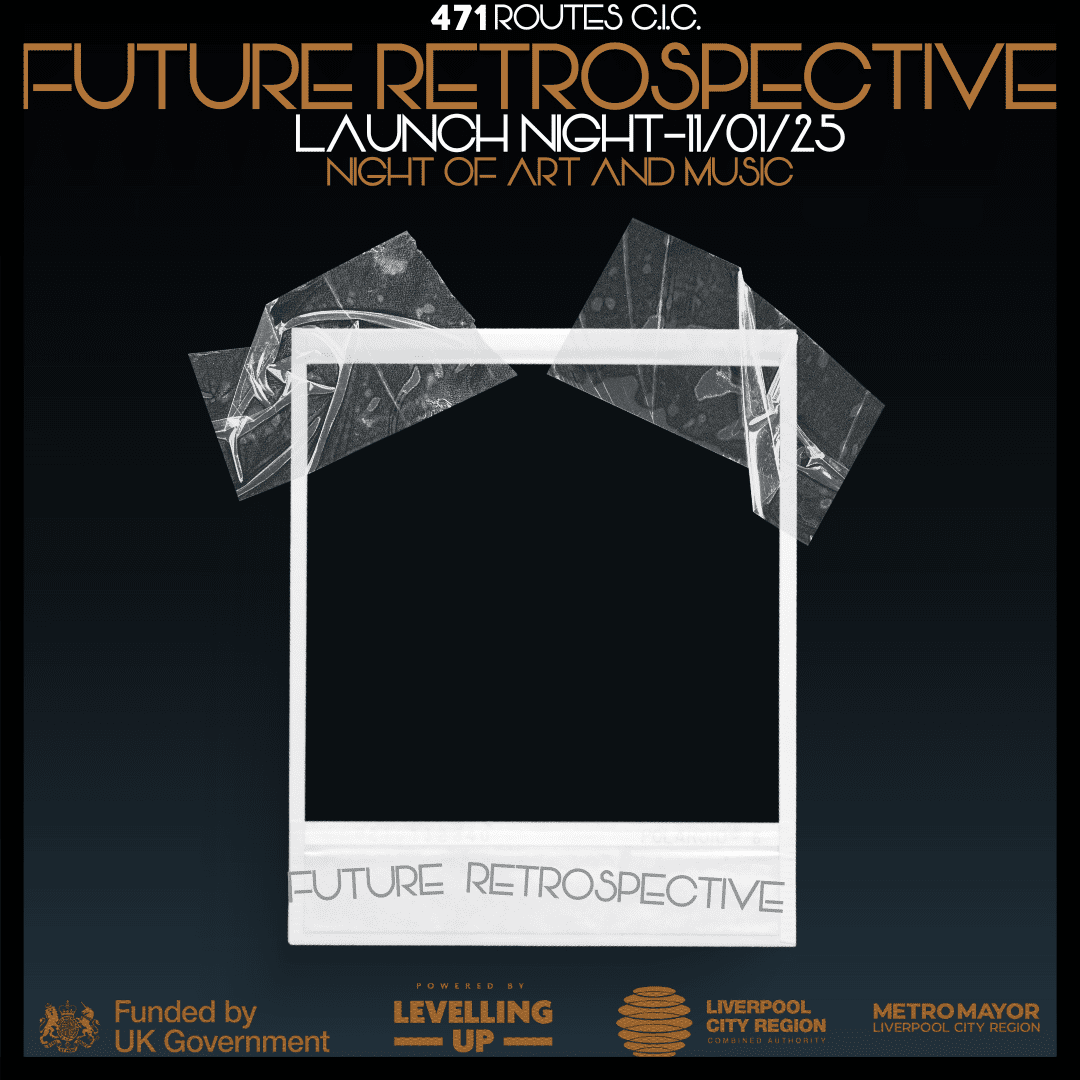
This unique event brings together a diverse collection of artworks spanning multiple mediums and disciplines, all unified by a common theme: the profound impact of historical moments and cultural heritage on contemporary creativity and societal evolution.
Gill Smith is a Liverpool based illustrator, working mostly in children’s books. This exhibition brings together work created for published picture books, children’s fiction and personal projects over the last 5 years.
For as long as she can remember, she has loved to draw people, capturing their expressions and mannerisms. Illustrating stories allows her into a character’s mind, to see the world through their eyes. She is inspired by everyday life, finding the extraordinary in the ordinary.
She graduated with an MA in Children’s Book Illustration from Cambridge school of Art in 2019. Previously Gill worked as a primary teacher, community artist and as a designer and maker. Her work has been short listed for The Klaus Flugge Prize for Illustration 2023 and longlisted for The Yoto Carnegie Prize for picture books.