
Now on display at Tate Liverpool + RIBA North, ARTIST ROOMS: Ed Ruscha offers a compelling journey through the architecture, typography and mythology of mid-century America. Running until 14 June 2026, the exhibition brings together books, photographs, paintings, drawings and lithographs by influential American artist Ed Ruscha.
Ruscha was born in Oklahoma and relocated to Los Angeles in 1956 — and that 200-mile move west shaped everything. You can feel the sense of motion and distance throughout the display: the open road, the creeping sprawl, the sense that America is always just a little further down the highway.
The exhibition takes Ruscha’s fascination with petrol stations as its starting point, inviting visitors to see the urban environment as he does. Car parks, swimming pools, delis, diners and nightclubs come into focus — fragments of the built landscape that collectively reflect the so-called ‘American way of life’. Rather than romanticising these places, Ruscha isolates and monumentalises them. The effect is quietly disorienting. You start to notice the visual power in things you’d normally drive straight past.
A standout moment is his seminal 1963 artist’s book Twentysix Gasoline Stations, documenting 26 petrol stations along Route 66. Presented digitally within the exhibition, it feels both matter-of-fact and quietly radical — a reminder that sometimes the most interesting artistic gesture is simply deciding to look. Nearby, preparatory sketches for Standard Station reveal how Ruscha transformed a simple roadside photograph into an iconic painting, stripping away unnecessary detail, sharpening perspective and amplifying its graphic punch.
Seriality runs throughout his work. In Every Building on the Sunset Strip, Ruscha methodically photographed every façade along the 1.5-mile stretch, creating a continuous visual record of storefronts, diners and dwellings. Seeing it in person, the piece feels both documentary and conceptual — preserving a specific version of Los Angeles while subtly questioning its repetition and uniformity. There’s something almost meditative about it; the longer you look, the stranger it gets.
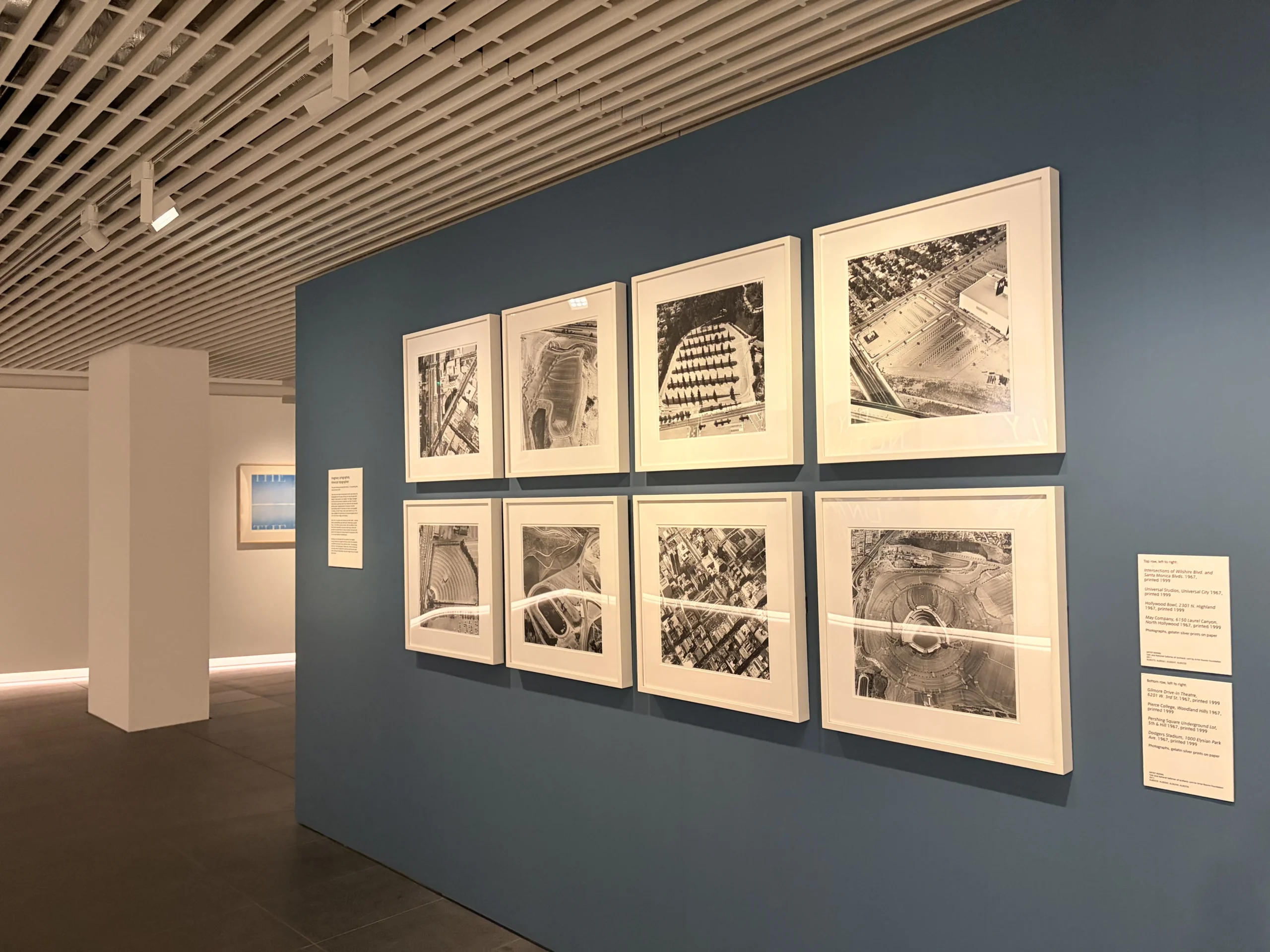
Cars and city planning continue to shape the narrative in the Parking Lot Portfolio, where aerial views flatten asphalt and vehicles into abstract compositions. It shouldn’t be beautiful, but it is. Later works such as the Los Francisco San Angeles Portfolio merge the street grids of Los Angeles and San Francisco into fictional hybrid maps — part geography, part imagination, wholly Ruscha.
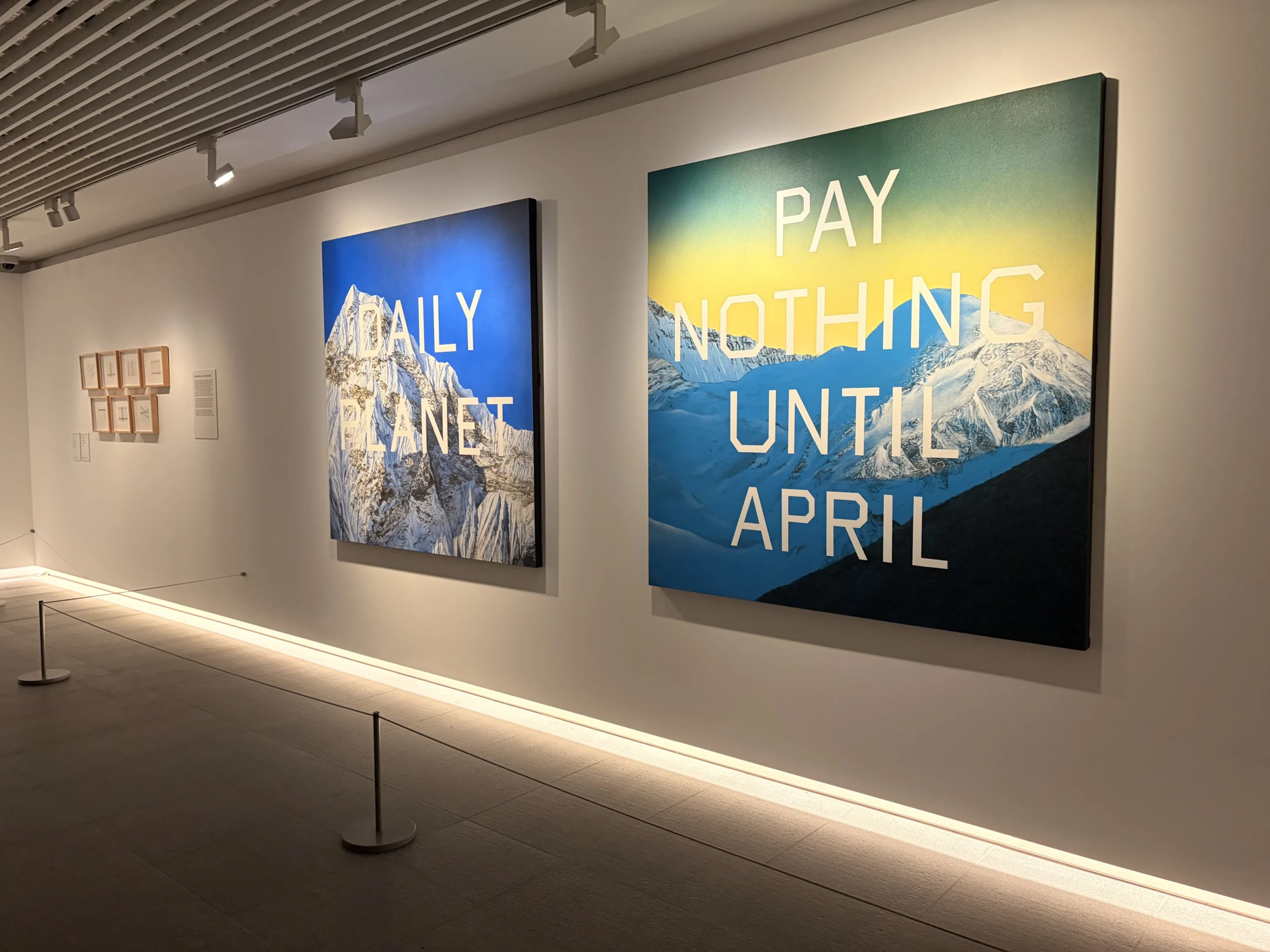
His text-based works add another layer. Made in America (1974) reflects on consumer culture and national identity, while Dance? (1973) — created using coffee and mustard — subtly references the edible iconography of American diners (and raises the very reasonable question: why not both?). In OK (State I) (1990), the word “OK” hovers between affirmation and a nod to Oklahoma, folding biography into bold graphic simplicity.
Having visited Los Angeles numerous times, I’ve long been fascinated by its sprawl, its car-dominated infrastructure and its strange mix of cinematic glamour and everyday banality. Seeing Ruscha’s work in Liverpool heightened that fascination. His depictions of petrol stations and boulevards aren’t just conceptual exercises — they capture something deeply recognisable about the city: the endless grids, the glowing signage at dusk, the quiet poetry hidden in plain sight.
ARTIST ROOMS: Ed Ruscha feels particularly resonant right now — an invitation to slow down, look closely and reconsider the ordinary spaces that shape our lives. For Liverpool audiences, it’s a striking glimpse into the visual language of Los Angeles and the enduring myth of the American Dream.
ARTIST ROOMS: Ed Ruscha
Tate Liverpool
Until 14 June
Free Entry
More info