
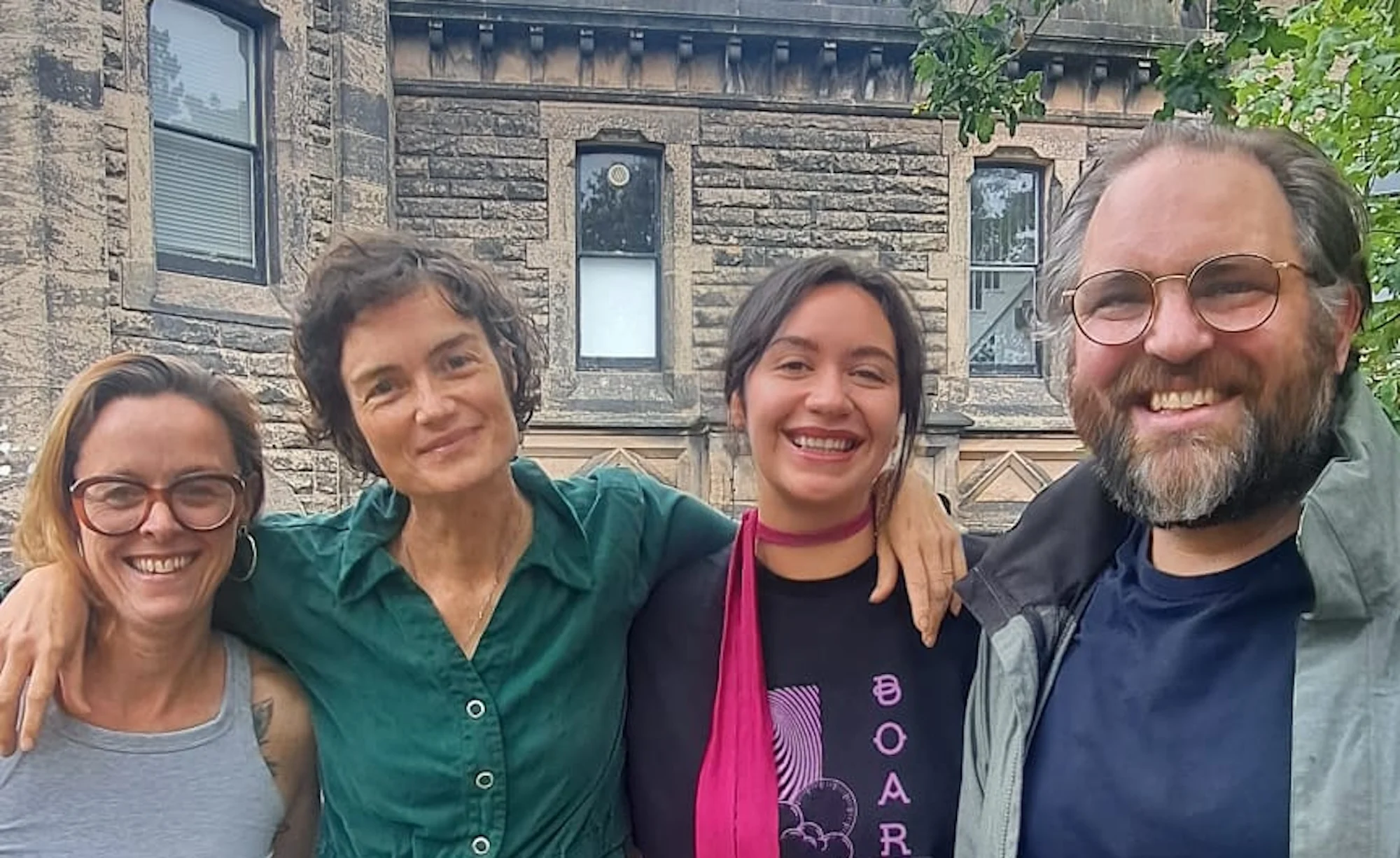
“When we were introduced to Bidston Observatory, we immediately knew it was very special,” say the co-directors of Bidston Observatory Artistic Research Centre (BOARC), Angelina Moana, Fi Fane-James, Ed Clive-Ponsonby-Fane and Kym Ward.
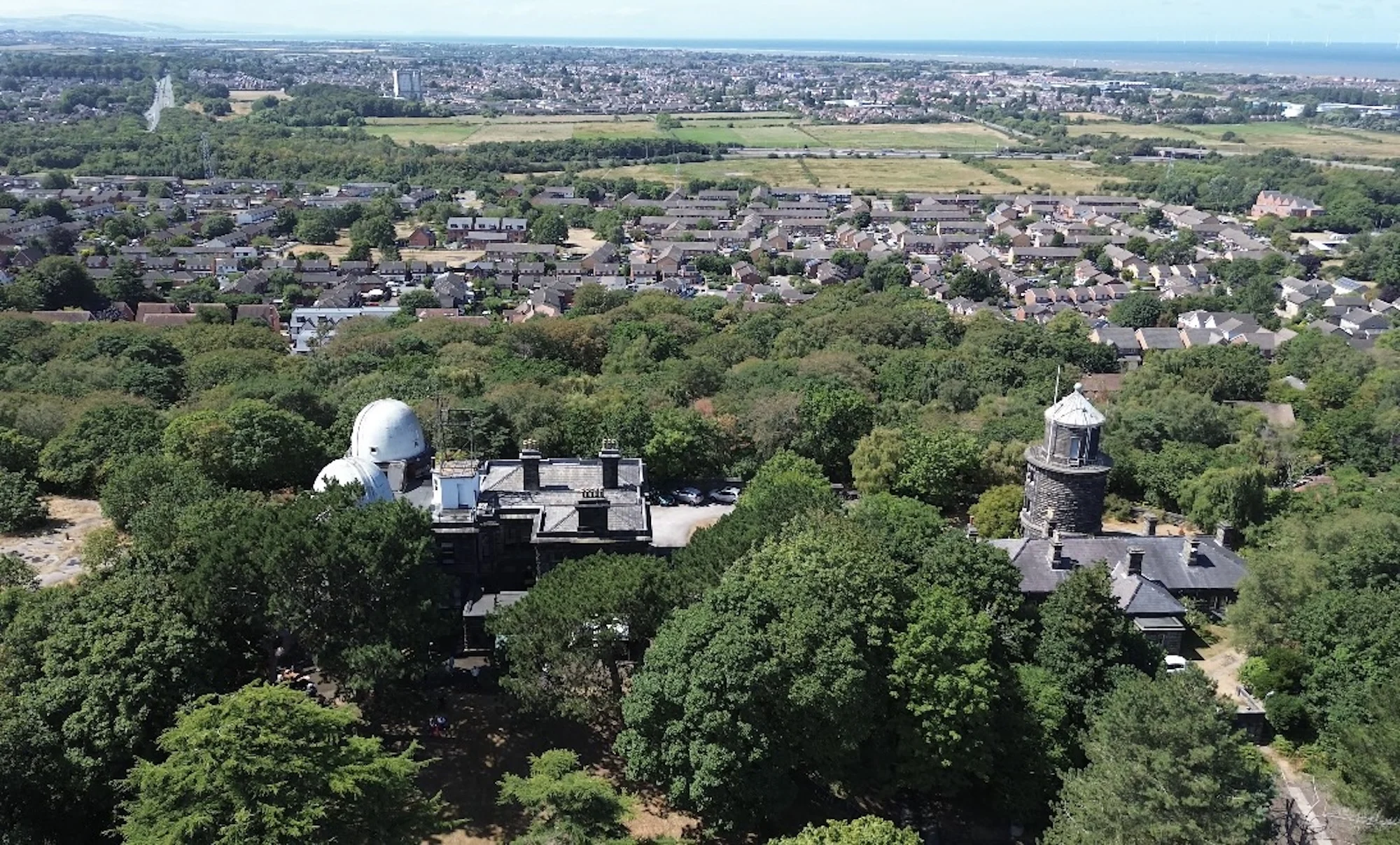
Perched above the Wirral, surrounded by woodland and stunning distant views of the Liverpool waterfront, Bidston Observatory feels a world away from the bustle of everyday life. Once a hub for scientific research, the Grade II-listed building is now home to BOARC – a self-organised residency space where artists, activists, researchers and collectives are given the time and freedom to explore their ideas without pressure.
Unlike many arts residencies, BOARC doesn’t require residents to produce finished work. Whether someone stays for a day, a weekend or several weeks, the focus is on creating the conditions for ideas to develop naturally.
A Building That Shapes Creativity
BOARC was established in 2019 after Ed, Fi and Kym spent three years searching for the right home for a project inspired by alternative arts spaces they had experienced across Europe. “There is a DIY arts space in France called Performing Arts Forum whose ethos we loved and our plan was to bring the model to the UK.”
When they discovered Bidston Observatory, they realised they had found somewhere unlike anywhere else. The three-year renovation gave the team a deeper understanding of the building and gradually reshaped their vision for the project.
“At first, we approached the building as a space to run the project, but over time the project came to be led by the building and our love for it. Our initial intentions changed shape as we discovered more about the building’s maritime and oceanographic histories.
“Because of the importance of the building’s history, we knew right away that it should be kept more accessible for the general public and that practitioners would gain a lot from being able to work with the history of natural earth science research onsite.
“It’s a real honour to be a custodian of its heritage, and we hope that people make use of it for years to come,” said Fi Fane-James
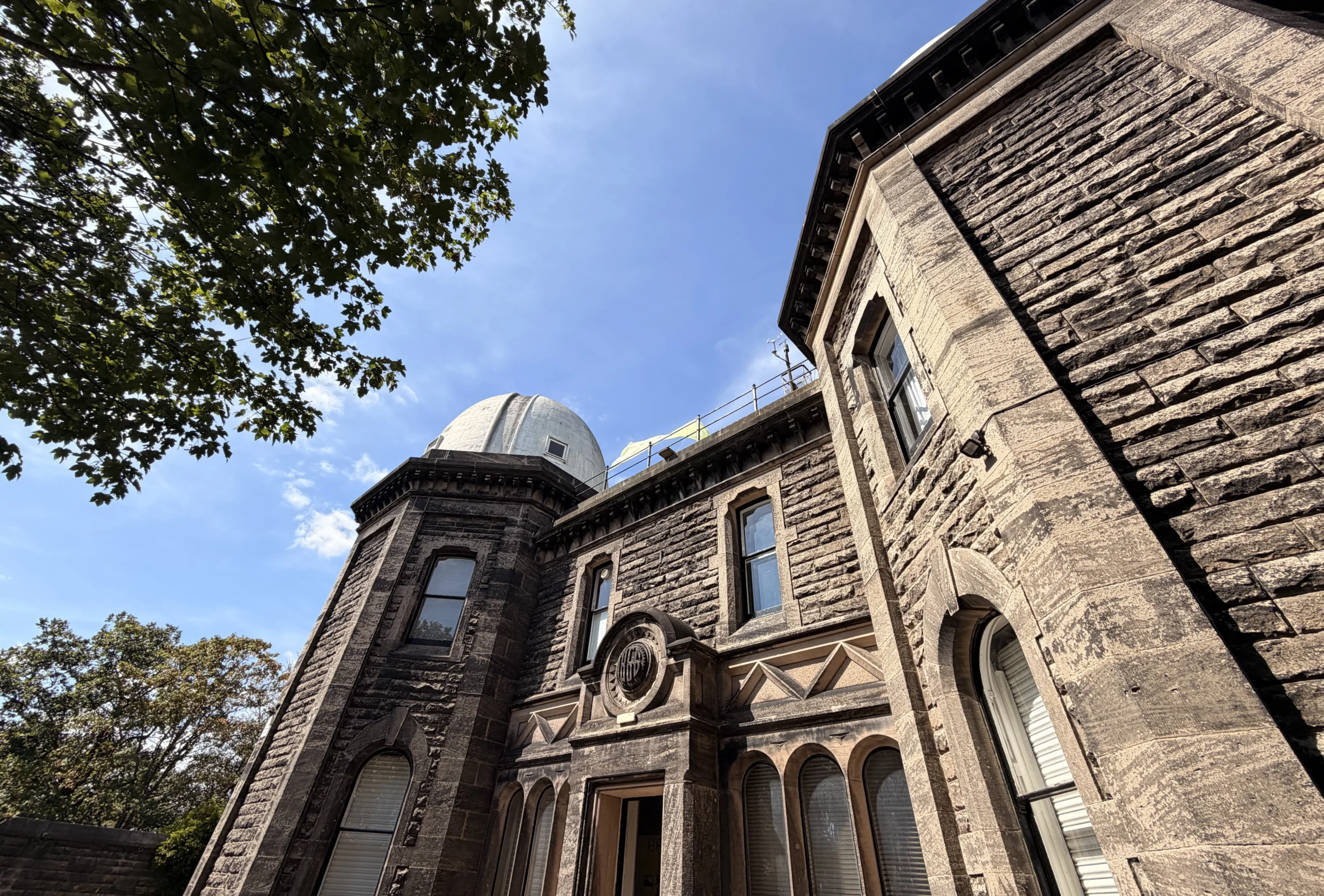
Because of its unique history, the observatory does more than simply house creative work—it actively influences it.
“The building was designed to stabilise temperature and vibrations in order to support multiple scientific instruments such as telescopes, sunshine recorders and chronometer testing beds. In this way, it is a supportive instrument in itself,” said Kym Ward
Its unusual architecture has naturally attracted musicians and sound artists, who make use of underground tunnels, circular domes and atmospheric basement spaces with unique acoustics. Elsewhere, the woodland surroundings and the building’s scientific legacy continue to inspire projects exploring climate, ecology and our relationship with the natural world.
Yet the building is only one part of what makes BOARC distinctive; its residency model is equally unique.
A Different Kind of Residency
The open approach at BOARC has attracted a diverse community. Visual artists, musicians and theatre-makers can find themselves sharing the building with philosophers, scientists, environmentalists and social activists, often exchanging ideas over communal dinners in the observatory’s central kitchen.
“People are free to use their time here in their own way,” the team explained. “This can be as an individual or with a group – just for the day, a couple of nights or even up to six weeks.”
The absence of formal applications was a conscious decision. Traditional residency programmes can unintentionally exclude people without formal arts education or established careers, whereas BOARC aims to create a space where curiosity and experimentation matter more than a CV.
One of BOARC’s defining principles is genuine experimentation — not simply trying new artistic techniques, but giving people permission to rethink their practice altogether.
“A lot of the time, people turn up with grand plans that get shelved the second they get here, in favour of something they never expected to be doing,” said Angelina Moana
Without deadlines, exhibition dates or social media expectations, residents often discover ideas that wouldn’t have emerged in their everyday lives. Some leave having started entirely new projects while others gain the headspace to reflect on existing work.
The team has also noticed that this experimentation can extend beyond residents’ creative practice. “Lots of people are actively putting themselves through processes of reinvention – you could say ‘re-emergence’. They test things out, try new ways of framing themselves,” said Kym.
Built on Trust and Community
Running a large historic building without major institutional backing is no small task, but BOARC embraces a DIY philosophy that places trust at the heart of everything it does.
“We trust the people coming to use the project. We trust they know what they need, that they will treat the space with respect and add in when they can,” said Kym
That philosophy extends beyond the residency programme itself. Many workshops, reading groups and public events have grown organically from conversations around the dinner table, while visitors are encouraged to suggest new ideas and even help shape how the organisation develops.
The team has become increasingly focused on creating a sustainable community where collaboration replaces competition and people are encouraged to contribute however they can.
Looking to the Future
As BOARC approaches its next chapter, the team hopes to involve even more people in the life of the observatory.
They’re exploring the creation of advisory groups, welcoming volunteers with skills in areas such as marketing, finance and property, while also encouraging community organisers to programme regular events, workshops and discussions within the space. Plans are also underway for community maintenance days, bringing people together to help care for the building before sharing a communal meal.
For the team, the future isn’t about becoming bigger — it’s about strengthening the community that already exists around the observatory and finding new ways for people to play an active role in its continued success.
For anyone yet to discover the space, the invitation is simple: come and experience it for yourself.
Just 30 minutes from Liverpool city centre, Bidston Observatory Artistic Research Centre offers a rare opportunity to step away from the pace of everyday life and into an environment where creativity, conversation and experimentation are given the time they deserve. In an arts landscape often driven by deadlines and measurable outcomes, that might be its most radical idea of all.
For more information visit bidstonobservatory.org. Follow BOARC on Facebook and Instagram for updates.