

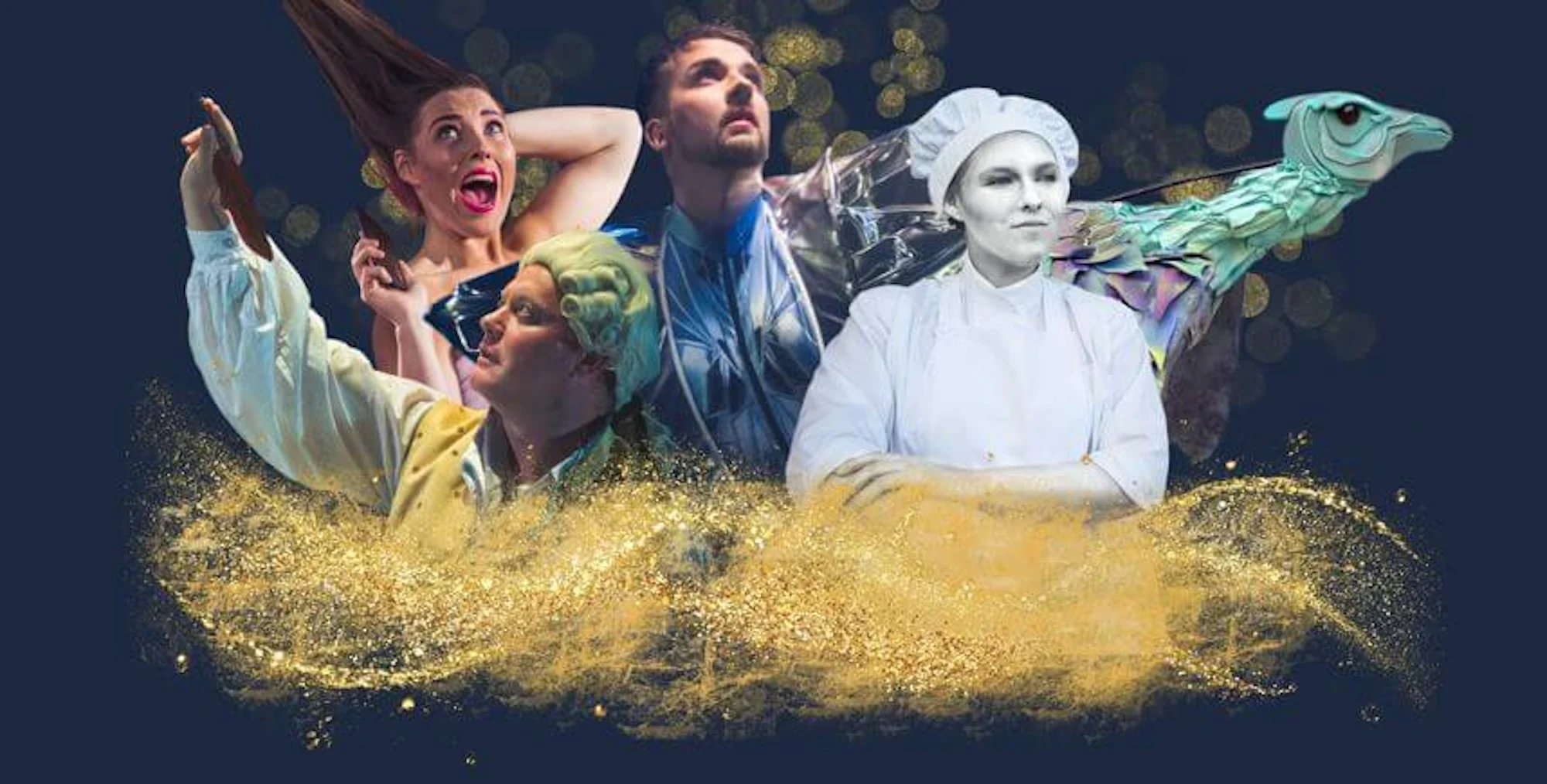
Since ArtsGroupie began in 2016, it has brought overlooked stories to life through theatre, heritage projects, walking tours and community work across the Liverpool City Region. At the heart of everything it does is the belief that arts and heritage should be accessible to everyone, regardless of income, background or previous cultural experience.
Uncover Liverpool readers may already know co-director John Maguire through his regular Buried Treasure with ArtsGroupie features, which explore fascinating people, places and lesser-known stories from Liverpool’s history.
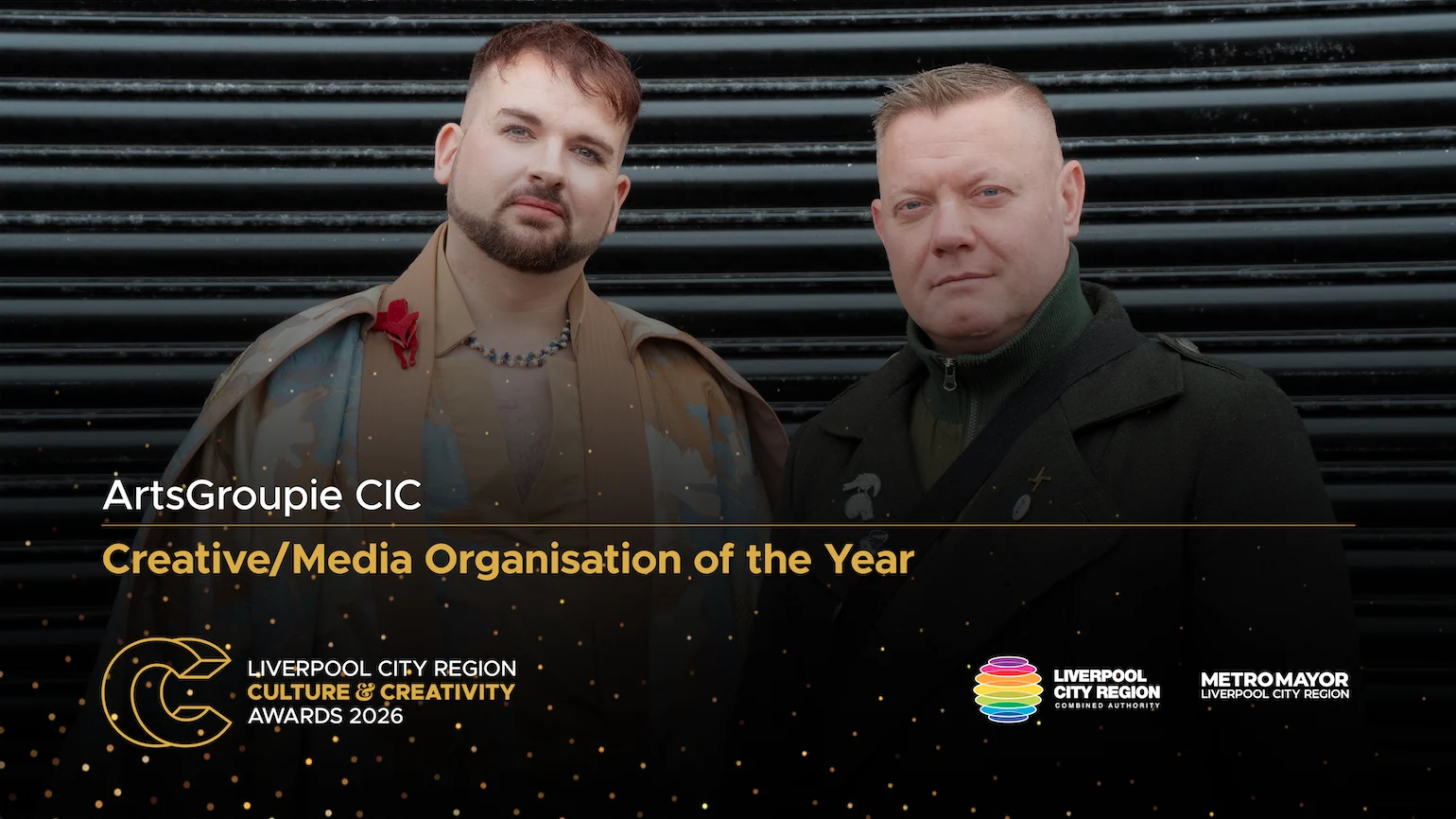
ArtsGroupie’s commitment to accessibility and creative excellence was recently recognised at the Liverpool City Region Culture & Creativity Awards, where it became the inaugural winner of the Creative / Media Organisation of the Year award.
We spoke to John about ArtsGroupie’s beginnings, breaking down barriers to culture and preserving stories that might otherwise go unheard.
Take us back to the start. How did ArtsGroupie first come about and what inspired you to start the CIC?
We had been working collectively as ArtsGroupie in 2016 – when our first production Hotel was staged at the legendary Lantern Theatre during its last season. After securing Arts Council England National Lottery Project Grant Funding funding for what would become our magnum opus, Kitty: Queen of the Washhouse, we officially incorporated as a Community Interest Company. Our late friend, Jill Smith, who sadly passed in 2025, joined myself, and my partner Mikey Garland, as the third director. We choose a CIC structure as we wanted the company to serve high deprivation communities across the city region. We initially ran the company whilst holding down full time jobs, and squeezing in ArtsGroupie in our spare time. It’s incredible have far we’ve come.
Your theatre productions such as Kitty: Queen of the Washhouse, Weave, The Liver Bird Show, A Portrait of William Roscoe, The Signalman, Who’s Afraid of Mikey Garland and Ghost Stories for Christmas all explore very different themes and periods of history. How do you decide on which stories to bring to the stage?
The productions have evolved naturally. As a collective of creatives, we all have ideas and as our mission is to really tell invisible stories, platform working class voices and make theatre more accessible, each production has fallen within this value set orgnically. It comes easy when you write from lived experience, and you genuinely believe in what you trying to achieve. We’ve never policed what we put on stage, and we trust the creative practitioners we work with to create work that champions forgotten, or rarely heard voices in theatre, we never have to force it.
Your productions often shine a light on overlooked people, working-class history and marginalised communities. Is preserving these stories one of ArtsGroupie’s core missions?
Absolutely. washhouse pioneer Kitty Wilkinson’s story was the catalyst for this approach. Her story is so inspirational, and so very Liverpudlian, that everything else has branched out from there. We’ve always staged original work with both historical and contemporary stories, but our plays that cover the lives of under-celebrated historical heroes have arguably been our most popular. This has also led us to the heritage sector for example our partnership with the Liverpool Irish Festival for the international project around the Liverpool Irish Famine Trail, to ensure that more people understand An Gorta Mór (or The Great Hunger). The impact has a profound effect on Liverpool, being the main portal that the Irish fleeing went through to either start a new life here or onwards to America, Canada and the rest of the world. We never thought we’d be involved in so many heritage projects, but it was a natural extension of what we were already doing, championing the city’s rich history.
Alongside theatre, your heritage walking tours have become another major strand of your work. How did Mersey Trails develop from the theatre side of the organisation?
We were working with The Bookworm Players, adapting the short story The Liver Bird. I stumbled upon a book from the 90’s called The Little Book of Liver Birds when I was researching for the story. It saddened me that so many Liver Birds on the buildings in Liverpool had gone. As part of the capital of culture there had been a SuperLambBanana safari, where you could have fun wandering around and spotting the super lambs in the field. I had previously worked part time as a walking tour guide so I thought what if I write a new tour and we use it to promote the play. This worked well and allowed us to develop an audience and raise monies towards the play’s match funding. We didn’t create them to compete with any other tour operators in the city so it’s never been a huge enterprise. Our sole aim is to highlight history that is rarely talked about. We focused on getting the research right and the quality, rather than expanding. It was this quality that earned us commissions from other organisation’s which was our door into the heritage sector despite being small. Our Co-Director, Mikey Garland, designed a walking tour that delved into the city rich music history, often of Black music origin, that goes beyond the Beatles, and a tour on Liverpool’s links with America. When we started these tours, no on else was covering this history in the city, but is now being widely emulated. We take this as a compliment, we often catch walking tour operators on our walks carrying notepads! We’re glad to help this history spread and be accessed by all.
Your tours cover everything from Liverpool’s theatre history and music heritage to William Roscoe, Kitty Wilkinson and even the city’s Liver Birds. What do you think visitors discover about Liverpool that they might otherwise miss?
The city is like one big open air museum, every street is layered with histories and intriguing facts. Every time we create a new tour it allows us to reveal a new side to Liverpool. For example working on our Theatre History Exhibition in 2024, when we led walks showing where the old theatres used to be, as part of that project, finishing at the exhibition in the Hornby Room, Central Library, it sparked so many people to reminisce about Liverpool. This is why we aren’t offended by anyone pinching our research, we’re able to do the deep work work to uncover neglected areas of history and come up with new tours. They don’t have a commercial purpose, every penny we do make gets reinvested to deliver free cultural activity in the community, and there’s always something new to uncover. We’ll be launching two new tours in 2027.
Community has always been central to ArtsGroupie, whether that’s creative writing workshops, working with schools or bringing performances to communities with limited access to the arts. Why is accessibility so important to you?
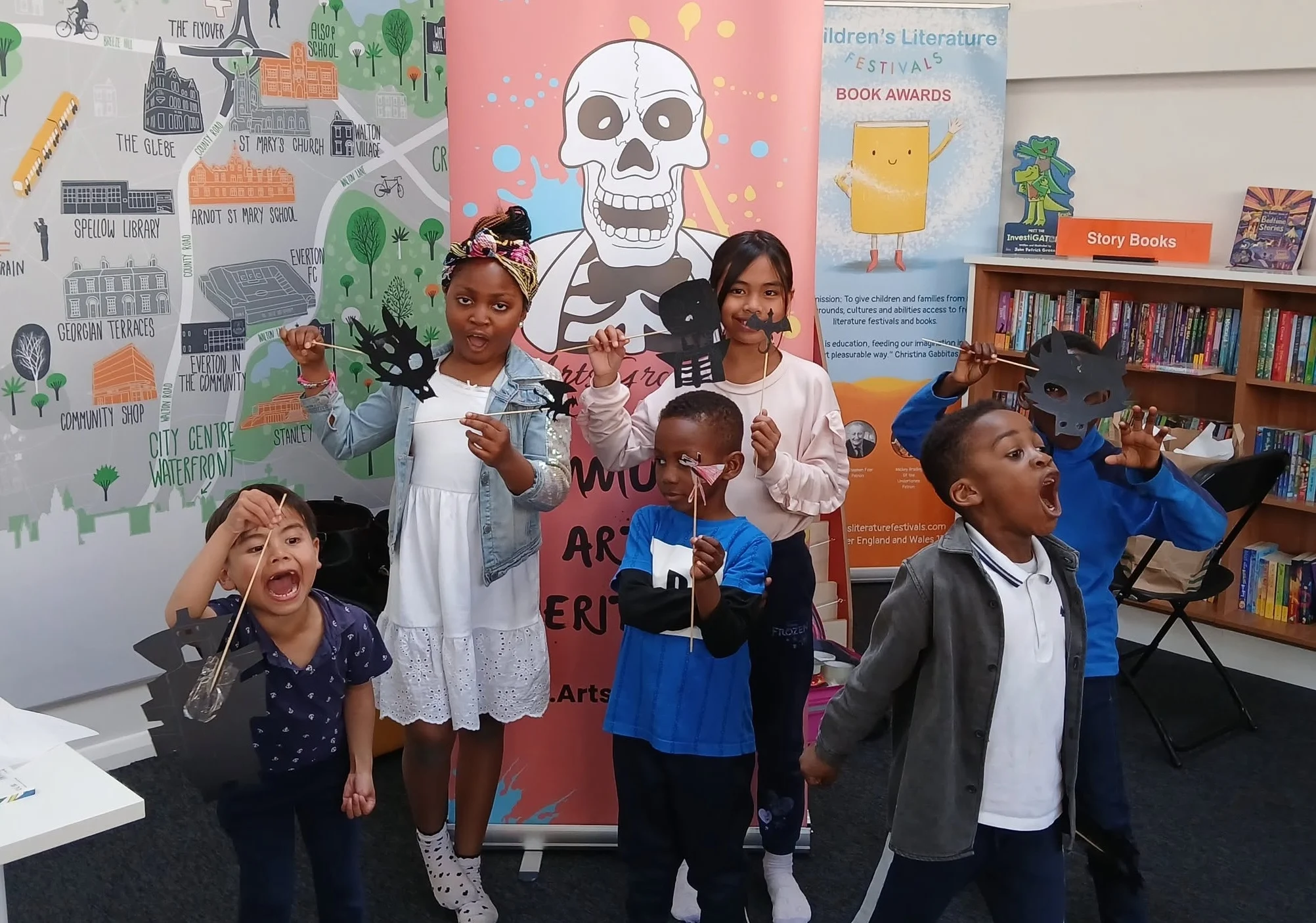
Both Mikey and I are from challenging backgrounds. I came from a really rough council estate and access to the arts was hard, as I felt that it was not for me, galleries and theatres were intimidating. My whole PhD thesis focuses on breaking this class ceiling. Sometimes people have to make choices and if the price of a theatre ticket is more than a weekly food shop, it’s obvious what is going to come first. It is most important that people can access the arts, experience the arts and make it a part of their daily life. The restorative benefits could take up a whole other interview, but I’d encourage people who are interested to read Art Cure by Daisy Fancourt. and Culture is Bad for You by Orian Brook, Dave O’Brien, and Mark Taylor. Access to libraries is key, my local library in Huyton was a portal to cultivating my imagination and volunteering at The Unity as an usher allowed me to see lots of free theatre when I was a teenager. Mikey Garland is formerly homeless, and his own work has extensively explored this through ArtsGroupie. There’s a lot of gatekeeping in the industry, and we just want to clear a path so that working class kids don’t have the same struggle we had. The right to work within culture shouldn’t be reserved for any particular class, only when stories can be heard unguarded and unfiltered in the arts can we be inspired to understand the full breadth of the human condition. It gets stale when it’s just one perspective and safe commerical choices.
What other productions, heritage projects or tours are you currently working on that you’re particularly excited about?
Both Mikey and I are writing two separate books over the summer. We are researching for our next Exhibition, preparing for the return of The Hammer and Helena in October at Shakespeare North and our annual Ghost Stories for Christmas tour, as well as preparing for the next part of the Liverpool Irish Famine Trail in 2027. We were astounded when in 2023 we were featured in the New York Times reviving the Victorian tradition of telling ghost stories at Christmastime on a theatre stage. The tradition in theatre had mostly died out, and was seen as commerically unviable, but we took it from one-off novelty event that some people were doing elsewhere, into a viable and annual live, ticketed, theatrical ghost story readings. Liverpool now has one of the strongest markets in this regard.
Winning the Liverpool City Region Culture & Creativity Award must have been a special moment, particularly as the inaugural recipients of the Creative / Media Organisation of the Year award. What did that recognition mean to you?
My Co-director Mikey Garland really summed it up: “ArtsGroupie were honoured for the first time last night at the Liverpool City Region Culture & Creativity Awards.
We made history as the first winners in a new category: Creative/Media Organisation of the Year, sponsored by The Guide Liverpool. Thank you to the judges for recognising our work.
We were dressed up to the nines, but our personal favourites for Best Dressed were Dr Emma Roberts, and Ngunan Adamu, who really turned it out. It was a joyous night with the Black Women’s Health Forum Dancing Queens giving the event so much energy.
To say we are thrilled, doesn’t quite capture the feeling. Our winner’s interview devolved into babbling due to our shock, so we’d like to make a statement here.
ArtsGroupie as a grassroots organisation only exists because a collective of talented working-class freelancers came together with the same goal of accessibility, creative excellence, and dismantling gatekeeping in the arts and heritage sectors, and the people who have supported us along the way.
We got our start at the Lantern Theatre, then run by Margaret Connell and Siobhan Noble, who were supporting new playwriting and fringe work at a time when there were almost no alternatives in the city. While some have later arrived in Liverpool with the claim of having brought this to the city for the first time, the Lantern stands as a genuine beacon of artistry in a long line of historic arts hubs which have always existed in Liverpool.
When ArtsGroupie incorporated in 2018, we found a dream team when Margaret Connell agreed to direct our plays, and actress Samantha Alton as our star player. Those first few productions built the company, particularly our magnum opus, ‘Kitty: Queen of the Washhouse.’
Since then, we have had the pleasure of working with some of the finest actors, photographers, producers, and lighting technicians in the region, including Liz Barker, Xenia Beyer, Zoran Blackie, Tom Browning, Sally Britton, Andrew Ab, Ellis Murphy, and The Bookworm Players.
When David Griffiths – Author & Director came on board, we made new strides in theatre, including reviving the Victorian tradition of live literature readings through ‘Ghost Stories for Christmas’ amongst other popular productions, gaining us recognition with The New York Times.
Thanks to the support of theatres like Shakespeare North Playhouse, and Unity Theatre, we have built a large and loyal following from audiences and participants who we greatly love and appreciate.
After gaining footing with heritage walking tours, our close partnerships with Liverpool Irish Festival, and Liverpool Libraries and Information Services have made us respected professionals in Liverpool’s heritage sector.
We’d like to thank Denise Jones, Vicki Caren, and Emma Smith for trusting us, training us, and helping us build a name in heritage work, so we can reach even more people with cultural activity.
Now, thanks to the generosity of time and effort from the illustrious Catherine Cole, we have entered academia, giving us the ability to share arts best practice and to highlight working-class barriers to culture on an international scale.
We’d like to thank the entire faculty of Liverpool Screen School at Liverpool John Moores University, LJMU RILCH, University of Liverpool, Dr Emma Roberts, Helen Tookey, and Prof Ian Fillis for working with us over the years.
All of you are ArtsGroupie, from the people we work with to our fantastic audiences.
Of course, none of this would be possible without the public funding that makes our mission of culture accessibility for all possible. We’d like to thank Arts Council England, The National Lottery, The National Lottery Heritage Fund, Liverpool BID, and The Royal Society of Literature for awarding us with the funding necessary to reach communities across the Liverpool City Region.
Liverpool, we love you. Only in a city like this could we work with the likes of Louise Waller Ceramics, Zoë Howe, John Maxwell, Eli Randle, Eithne Brown, Gina Ware, Powerful Beyond All Measure, DaDa, Pagoda Arts, LUMA Creations, Culture Knowsley, Culture Liverpool, Uncover Liverpool, and too many more to mention.
John Maguire and I grew up in high deprivation areas, and our dream is that other working-class artists can stand where we’re standing in the future with a little bit of support. We will be committed to that until our dying day.
As always, we dedicate this award to our late great friend, co-founder and sister in life, Jill Smith. We know you would have been beaming last night. We miss you and love you lots.”
To find out more about ArtsGroupie CIC visit artsgroupie.org.