This October half-term there’s a fantastic selection of family events to discover and explore in Liverpool and the city region. From fun-packed family days and spooky cinema screenings to an aquarium feeding workshop and a very special Halloween concert.
Head out with the family and make the most of this autumn half-term, here’s our selection of fun and inspiring family events to enjoy over the school holiday.
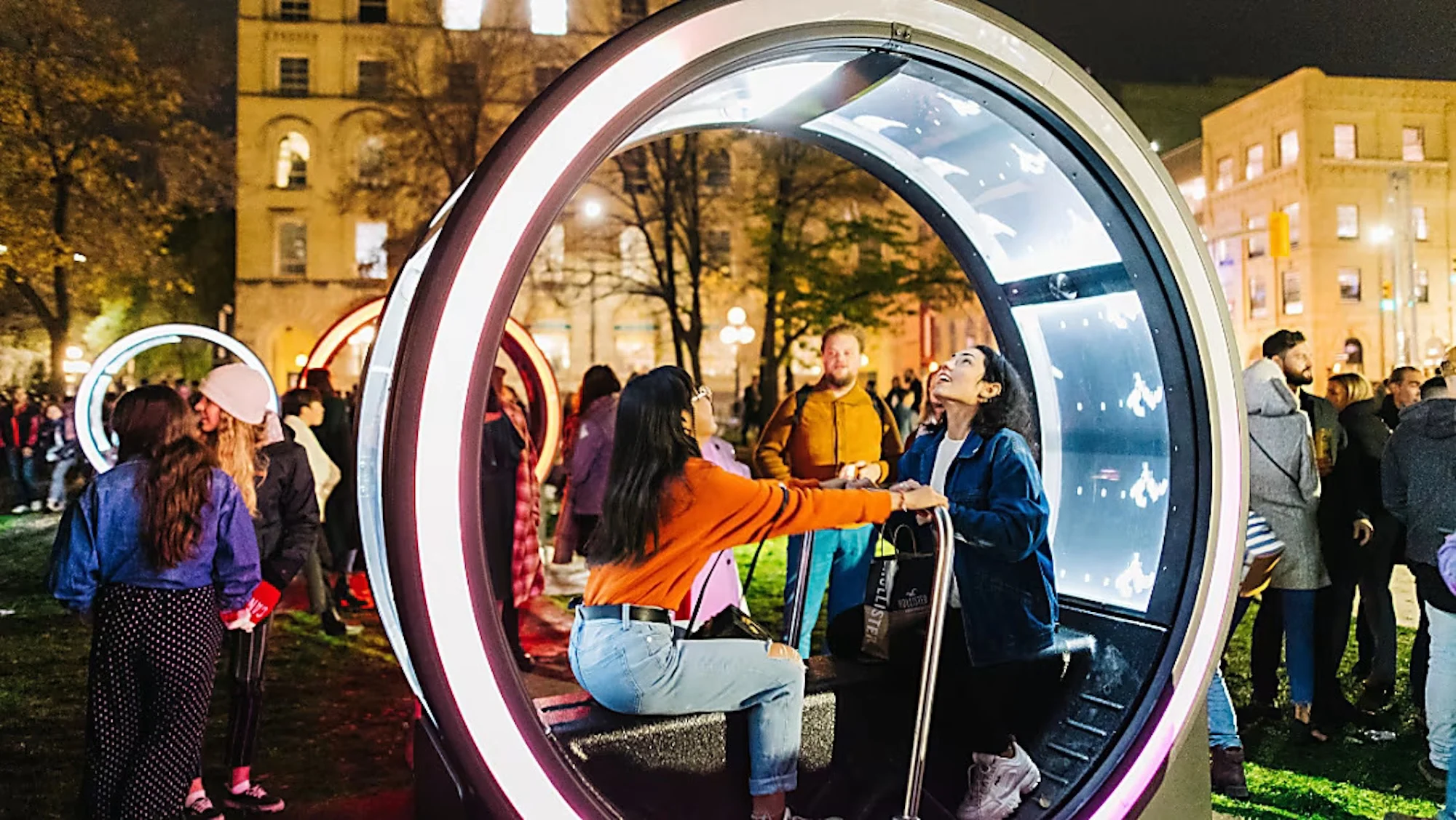
River of Light 2026: Together (23 October – 1 November)
River of Light returns this autumn half term illuminating the city with 13 free light installations inspired by the theme Together. Explore the trail across locations including Pier Head, Royal Albert Dock, Williamson Square and Liverpool ONE, daily from 5–9pm. Quiet hours take place on 28 October and 1 November, 4–5pm.
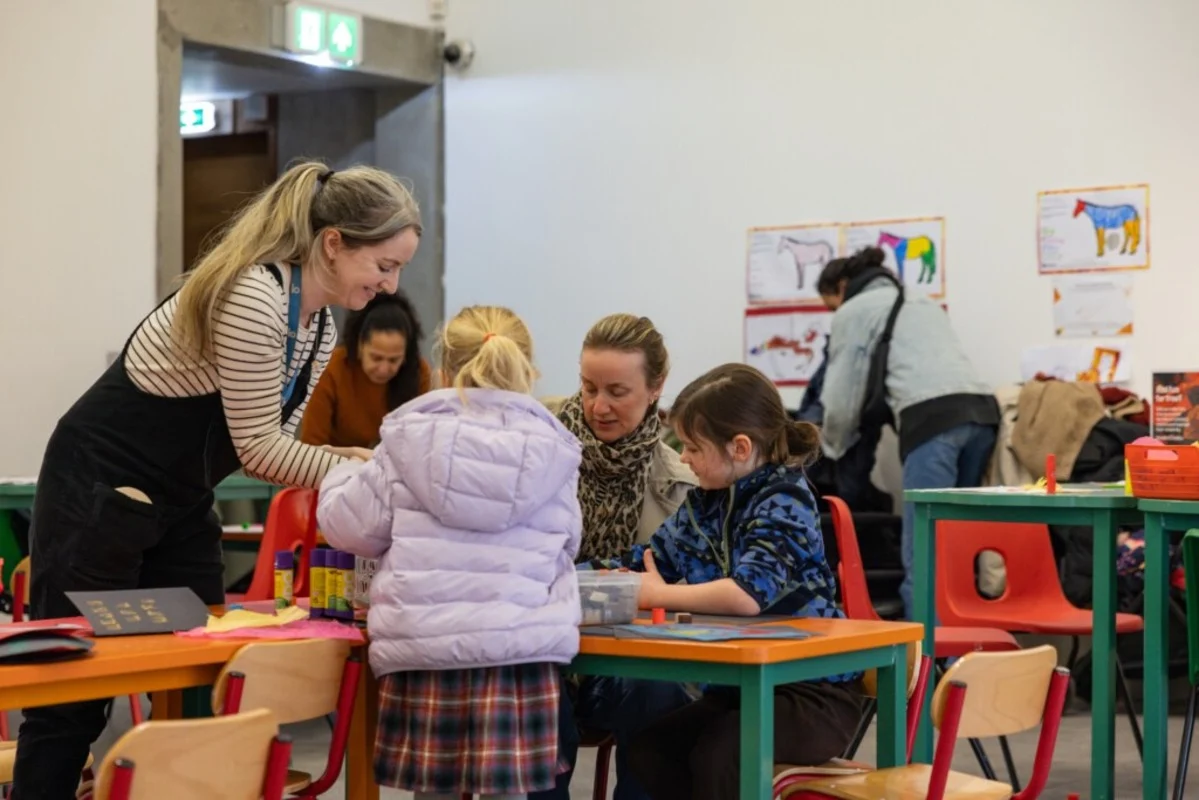
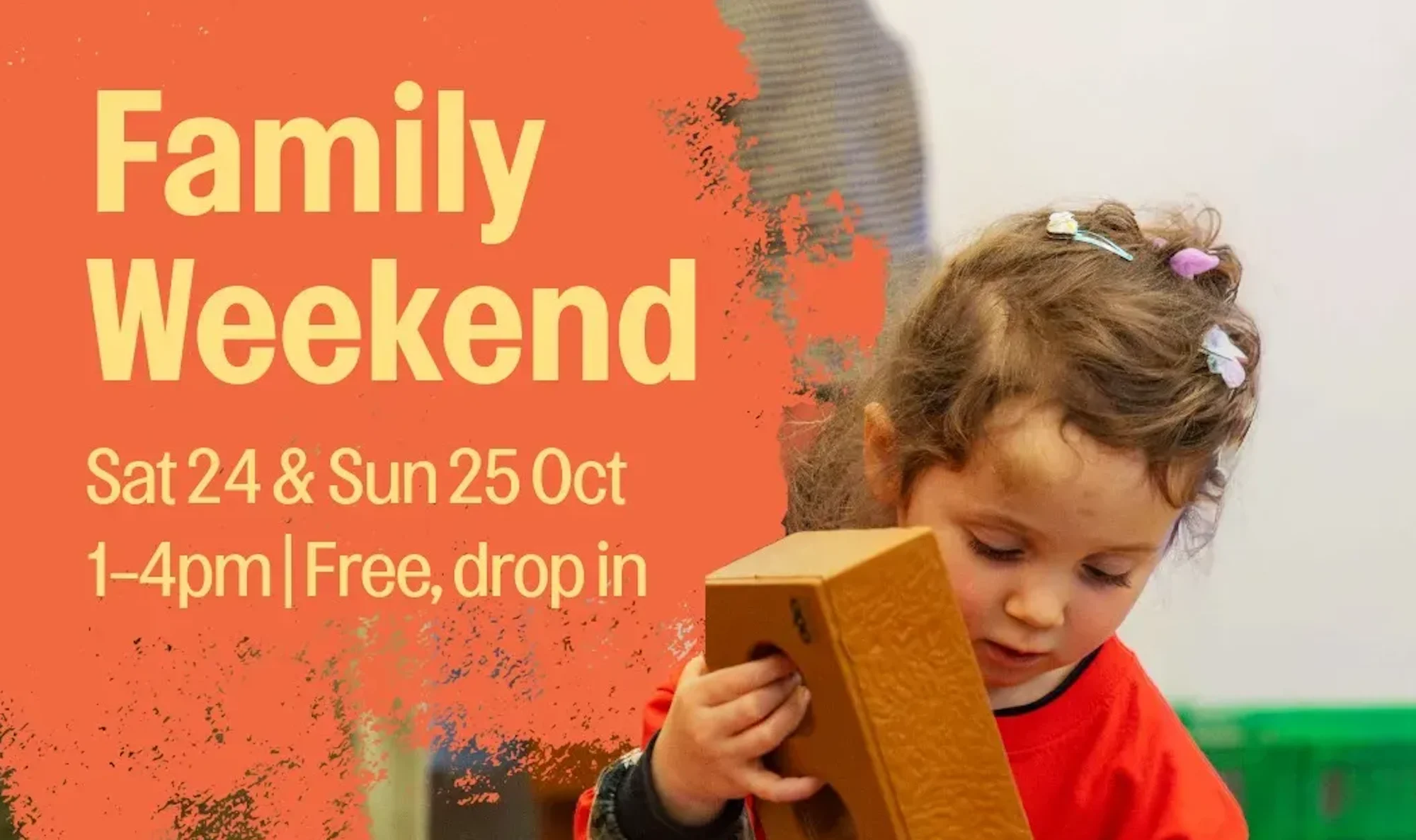
Bluecoat Family Weekend, Bluecoat (24 – 25 October)
The popular Bluecoat Family Weekend returns this October! Join the fun for two days of free family-friendly activities celebrating the Bluecoat archive.
Discover the stories, people and moments that have shaped the arts centre’s history, while exploring the archive’s transformation through The National Archives’ Archives Revealed programme. Suitable for all ages, free, drop in.
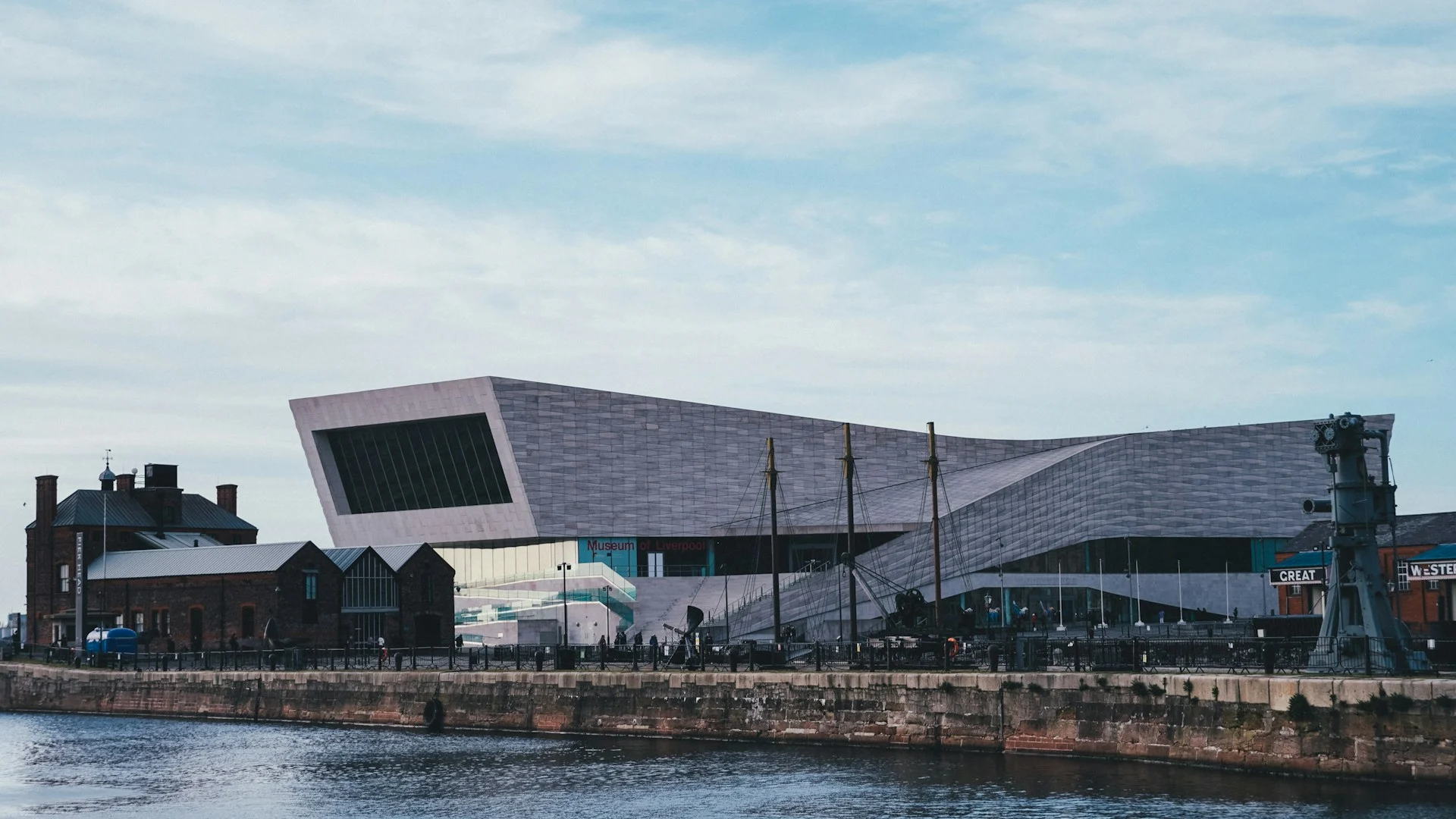
Family Day, Liverpool Irish Festival at Museum of Liverpool (24 October)
A Festival-staple and must-see; Liverpool Irish Festival invite you to pop-by for a Family Day at the Museum of Liverpool. There, they’ve a veritable array of activity to entertain kids (and adults) of all ages. The Armagh Rhymers return with their Liver Bird story helping to understand how the First Nations people of North America helped the Irish during The Great Hunger.
The Bolger-Cunningham Dance School will give it their all in the morning, before the George Ferguson School for Irish Dance produce junior and senior dance sets, whilst Melody Makers will bring their intergenerational group to play in the space.
Spooky Cinema: E.T. the Extra-Terrestrial, The Reader (24 October)
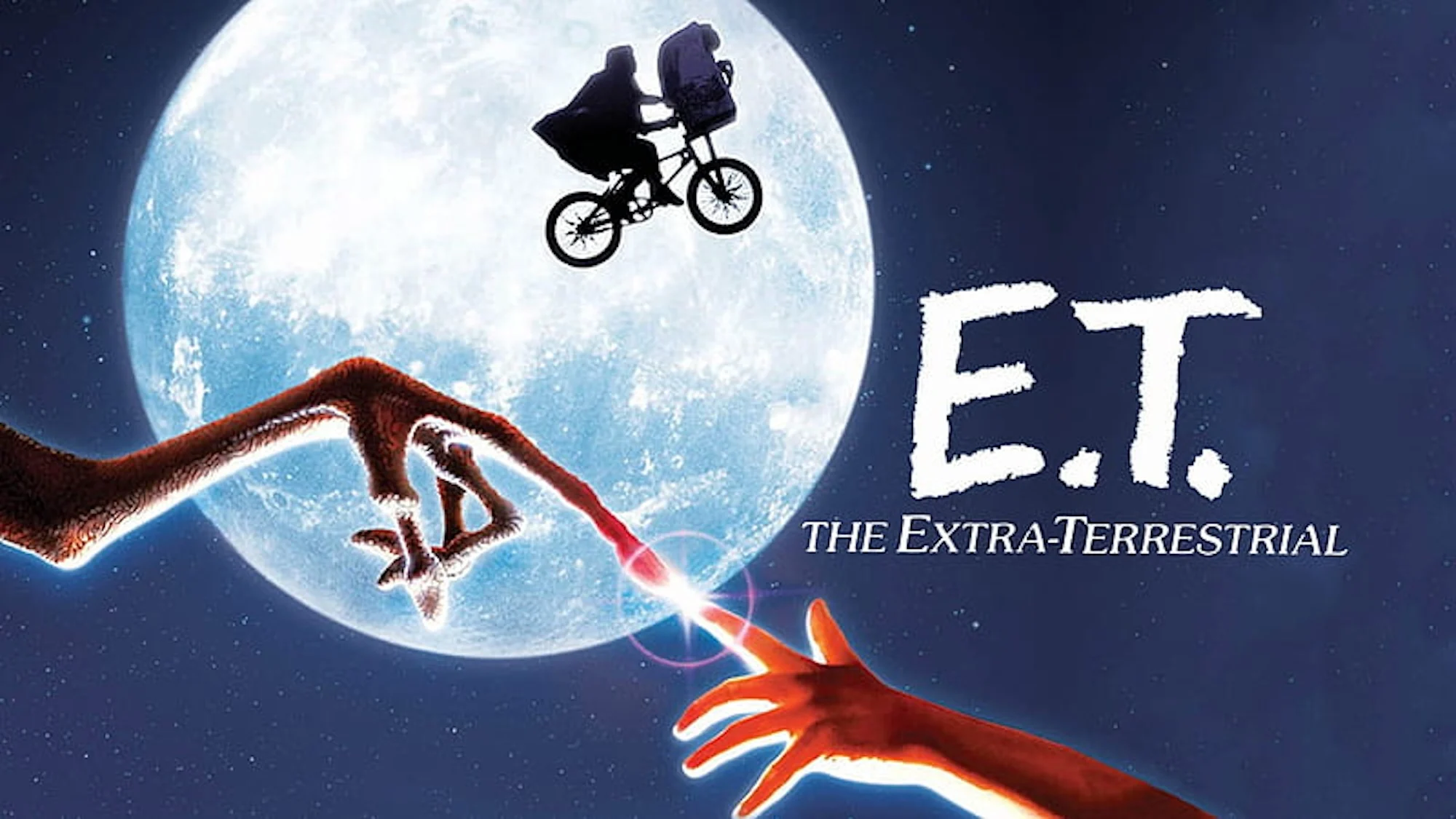
Liverpool’s biggest open-air cinema returns to the historic Calderstones Mansion for Spooky Season with a screening of E.T. the Extra-Terrestrial. This time they’re bringing you movie magic under the cosy cover of a giant canopy featuring a hand-picked selection of Halloween family favourites, cinematic masterpieces and literary adaptations.
Arrive early and soak up the autumnal atmosphere before the sci-fi classic begins with music, food and drinks. All profits support The Reader’s charitable work transforming lives through literature in Liverpool and beyond.
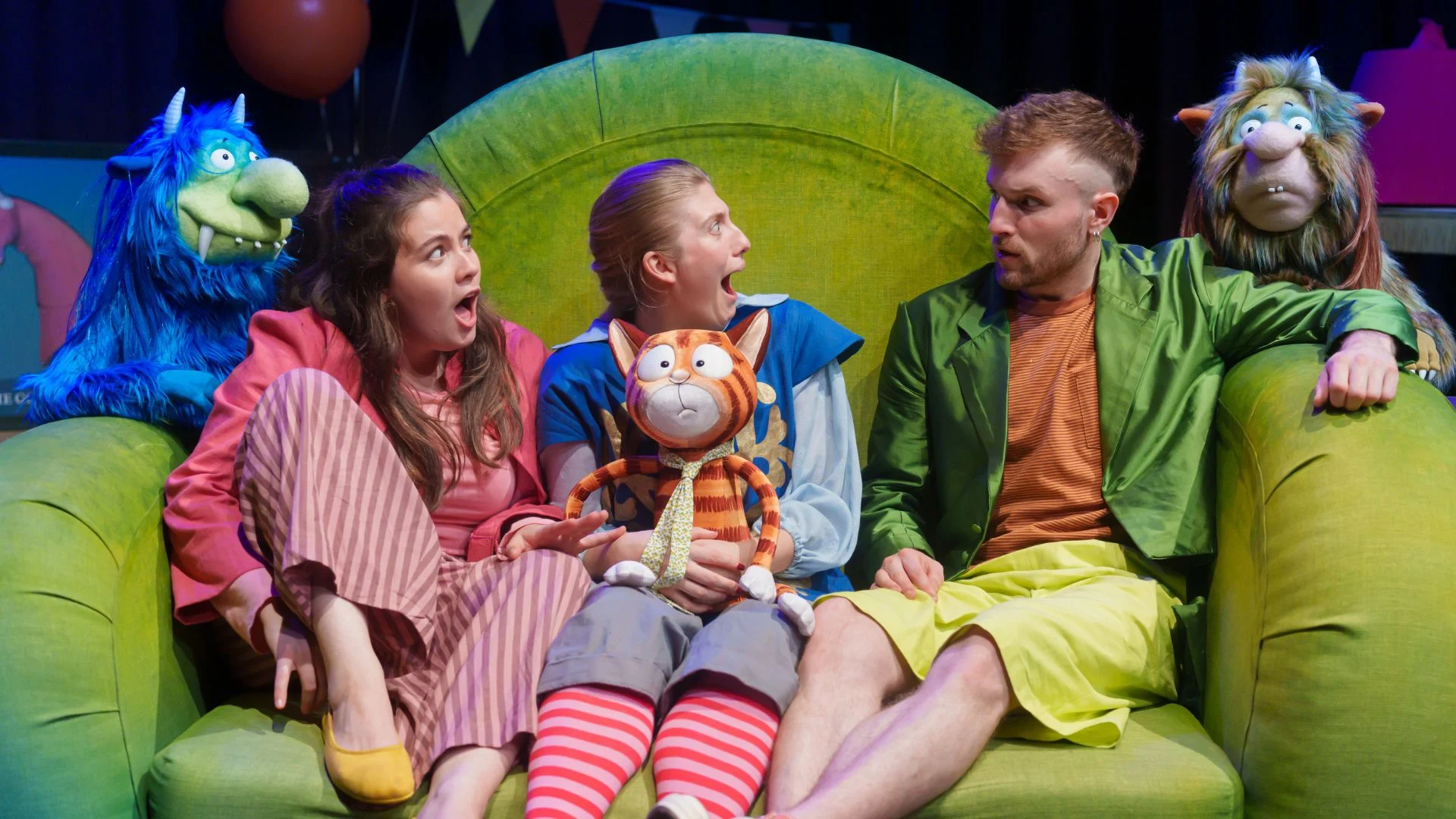
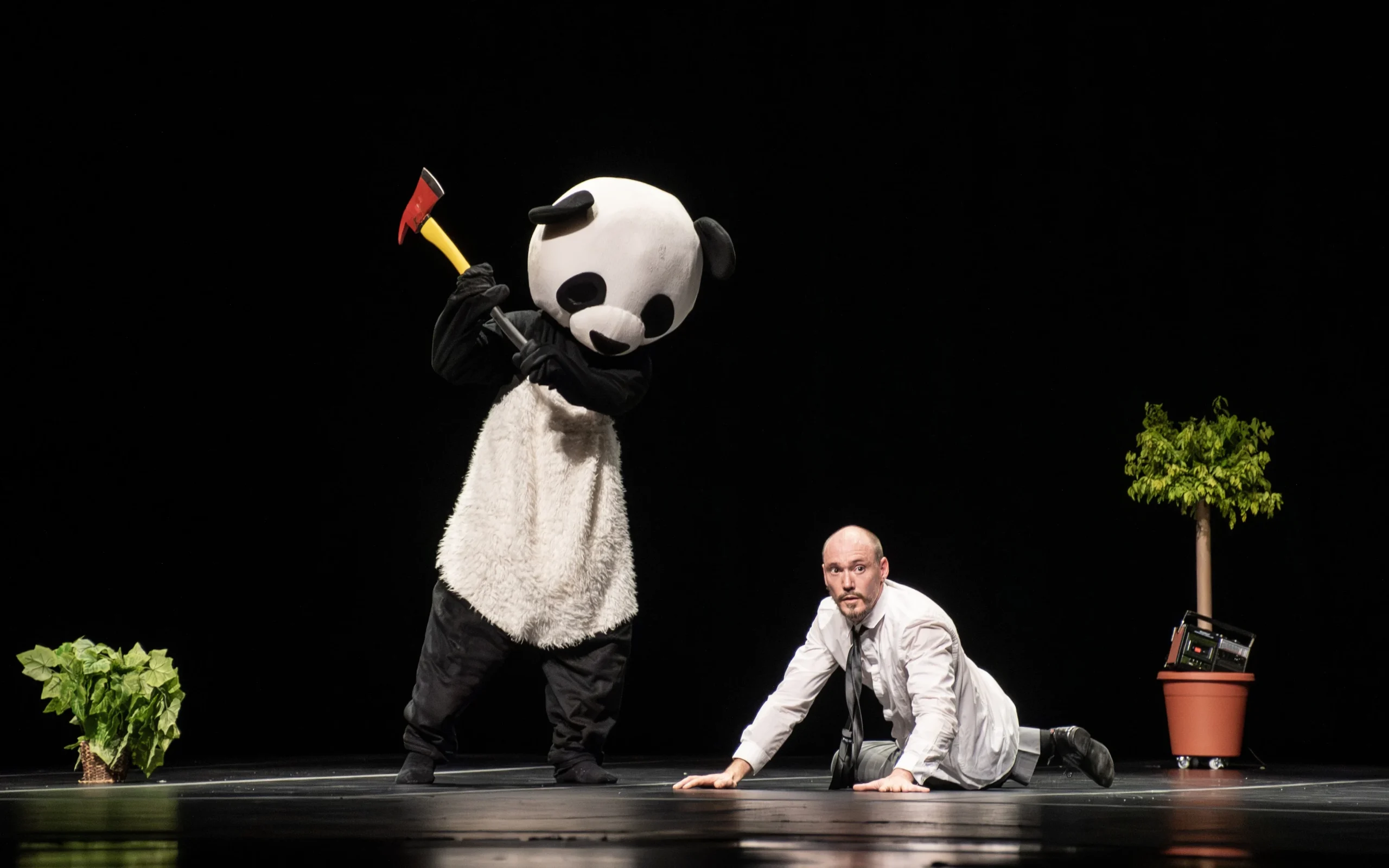
Sir Charlie Stinky Socks and the Really Big Adventure, Liverpool Playhouse (27 – 31 October)
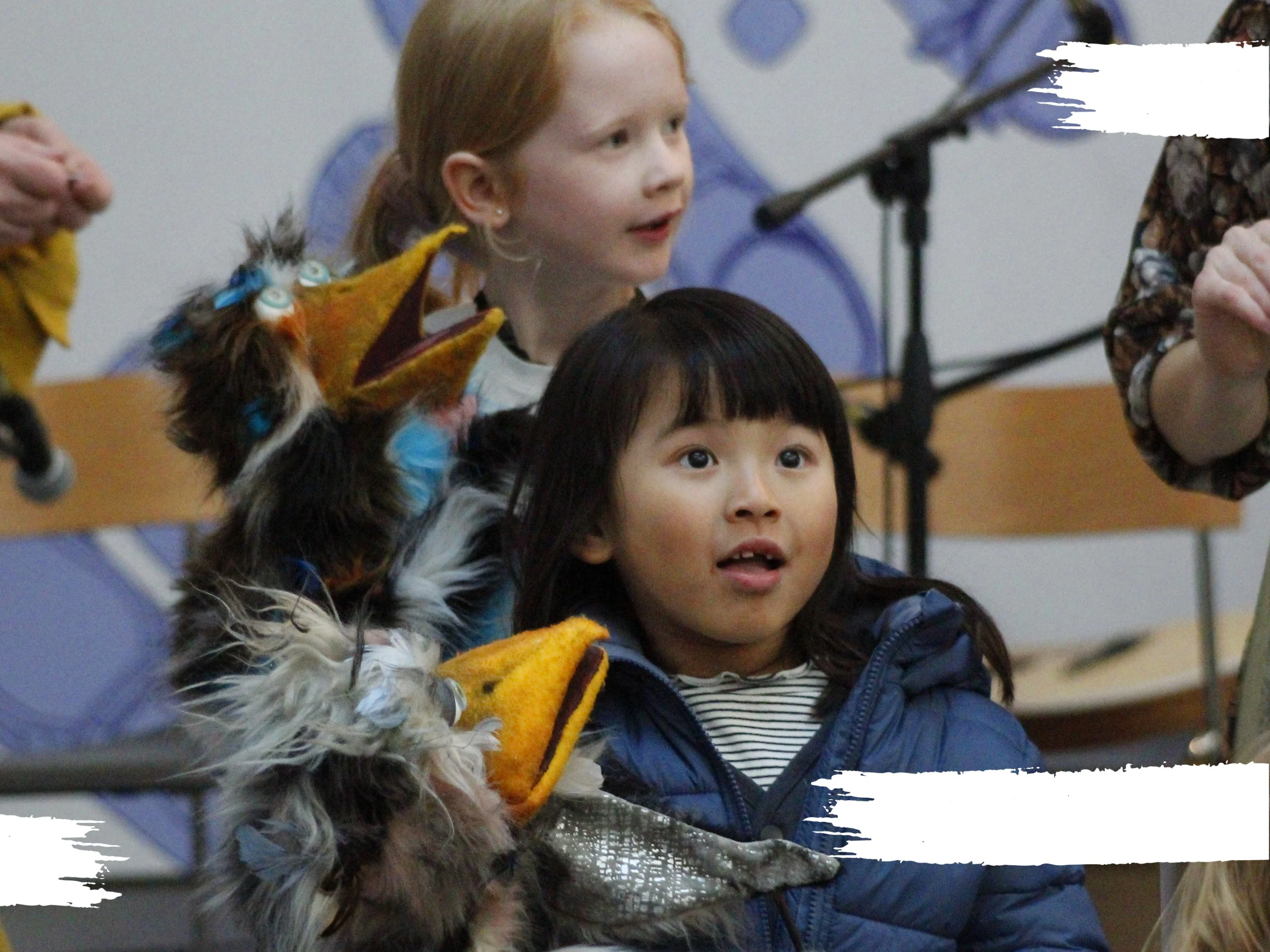
Find out in this fully interactive, inventive, and fast-paced family show that brings Sir Charlie Stinky Socks and the Really Big Adventure’s tale to life while revealing the story behind it. Celebrating the power of children’s imagination and the importance of play, young audiences are invited to become storytellers themselves, helping a troupe of travelling players build a wild adventure.
Based on the best-selling picture book by Kristina Stephenson, and created to mark the 20th anniversary of this much-loved, modern-day classic, the show features live music, glorious puppets, interactive storytelling, magical props and more laughs than you can waft away with a stinky sock.
Fintastic feeding time, World Museum (27 October)
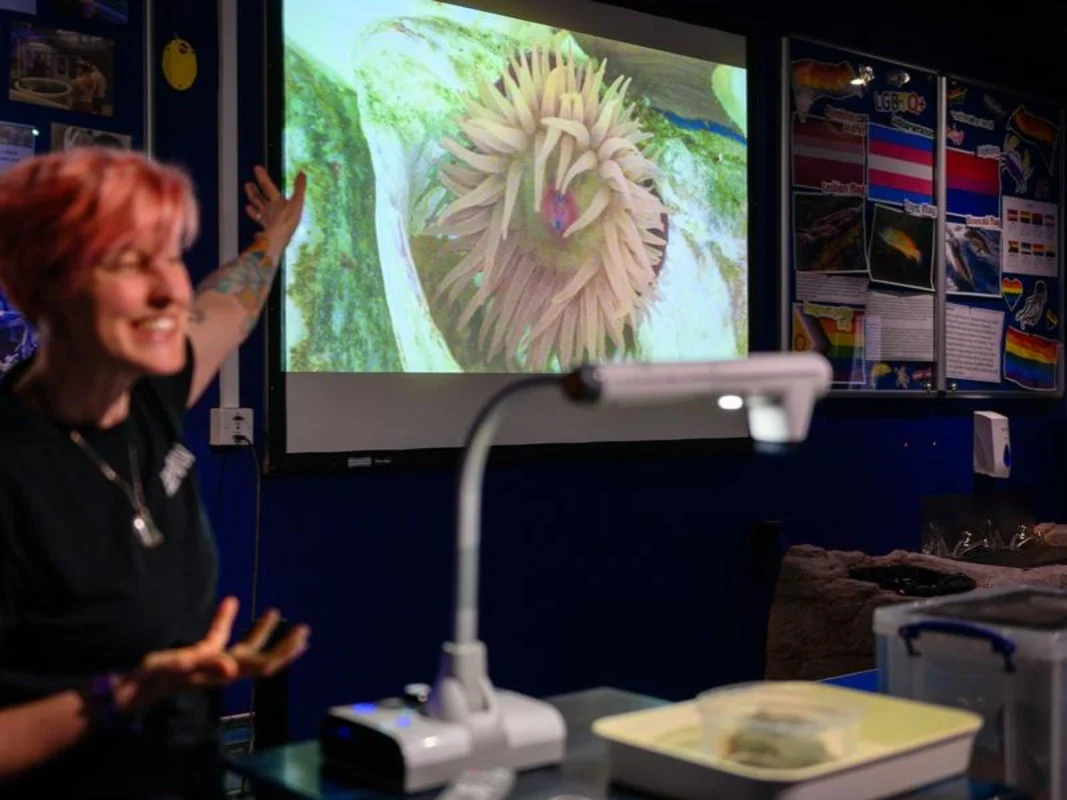
Join the museum’s marine educator as they plunge beneath the surface to discover the wonders of their underwater world with Fintastic Feeding Time . Get an up-close look at some of their most fascinating rock pool creatures on our big screen!
Through interactive games, you’ll uncover the secrets of these amazing animals and the hidden world they call home. You’ll also get to watch their educator feed one of their live animal enclosures. Whether you’re a future marine biologist or looking for a splash of fun, this exciting session promises a wave of discovery.
Freezin, The Atkinson (28 October)
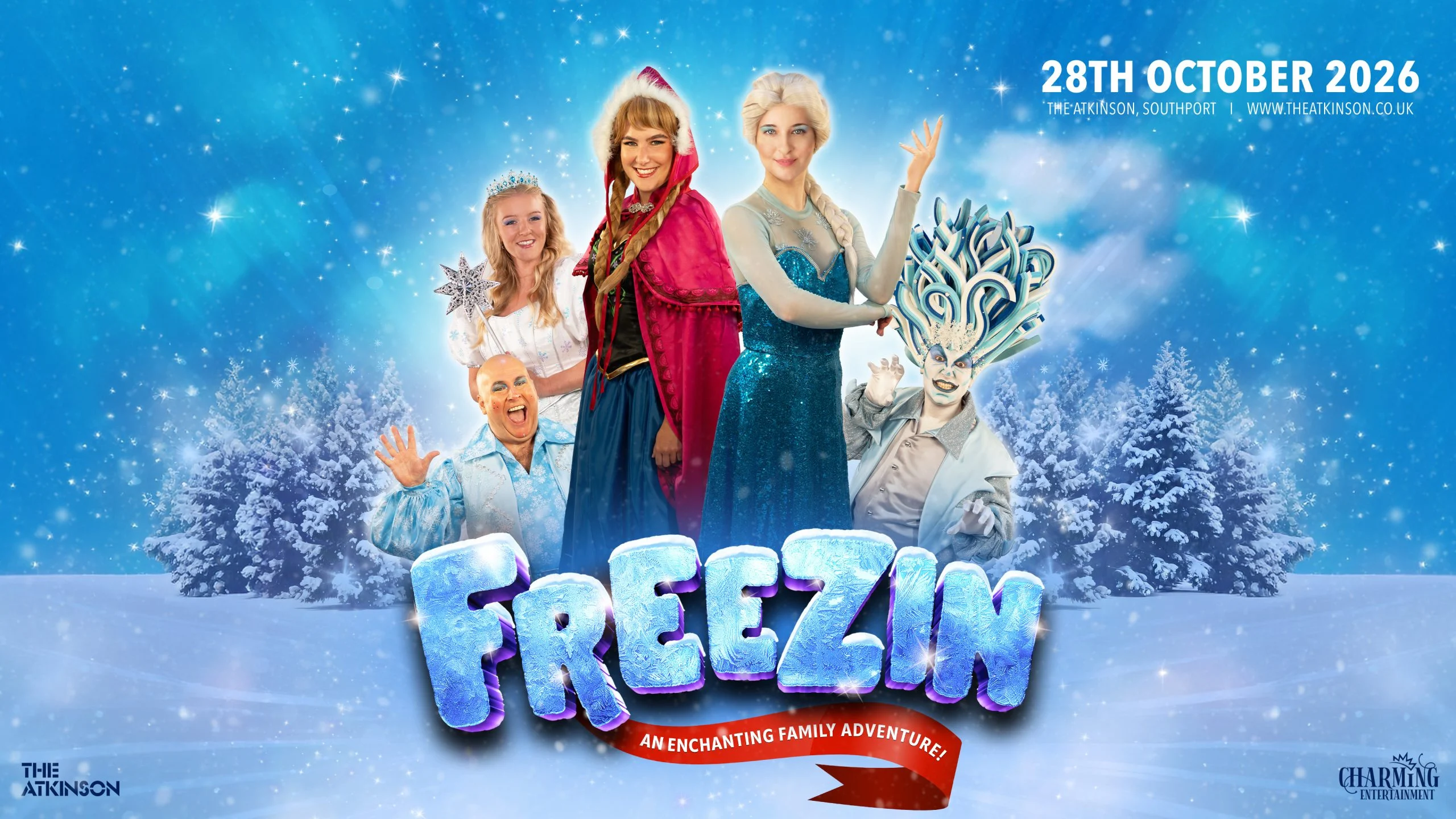
Packed with dazzling costumes, spectacular scenery, toe-tapping tunes, laugh-out-loud comedy and plenty of boos for the baddie, Freezin is the ultimate October half-term treat for the whole family.
Spooky Sudley, Sudley House (30 – 31 October)
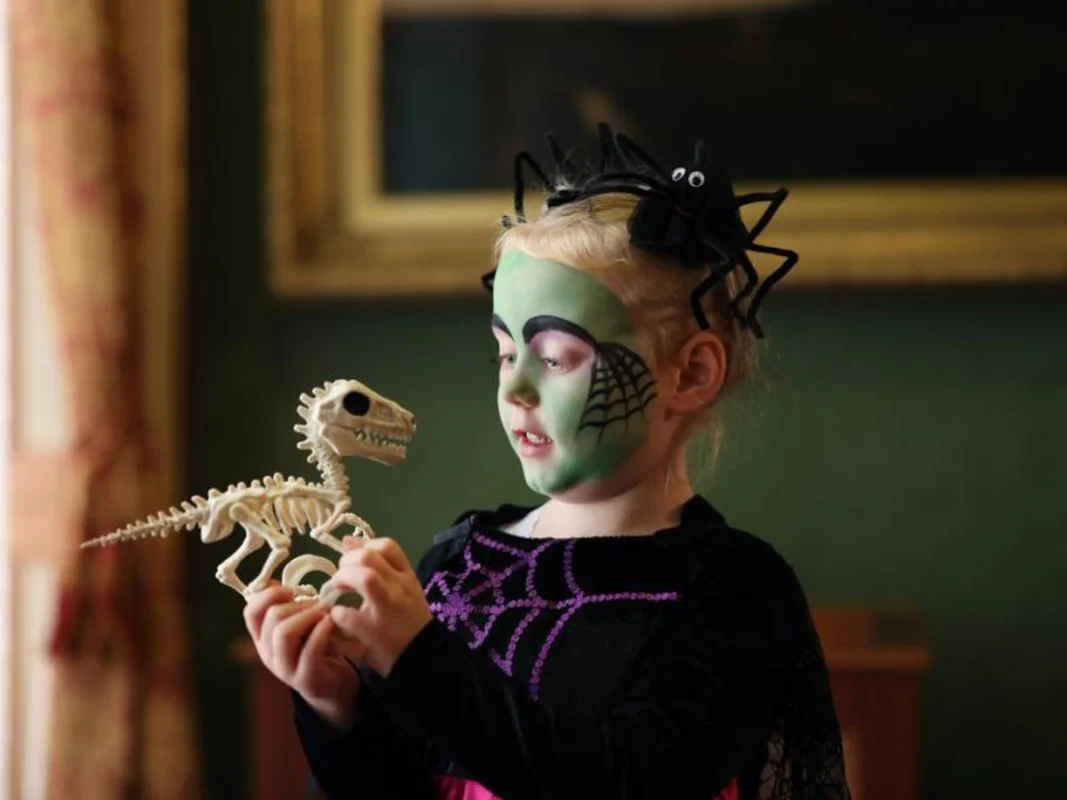
Join the fun at Sudley House this Hallowe’en for some ghostly goings on at Spooky Sudley. Hallowe’en at Sudley House will be family friendly but they do recommend that their very youngest visitors might like to be pre-warned that the theme of the event will be a bit spooky!
With crafts, storytelling, icky handling collections and face painting there will be plenty to see and do through the day at Sudley.
Halloween in Concert, M&S Bank Arena (31 October)
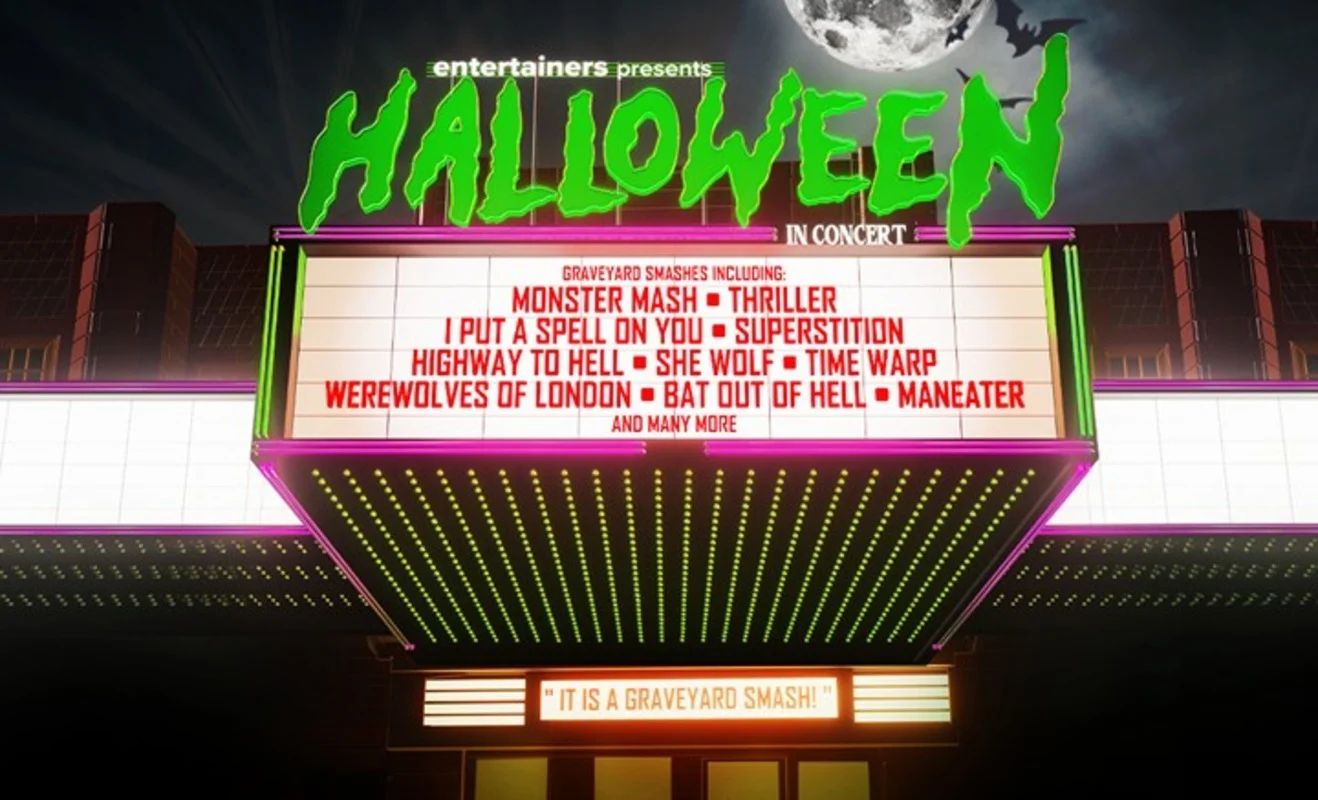
This Halloween 2026, as darkness falls across the land, join the amazing cast and live band at The Auditorium for Halloween in Concert — a brand-new live Halloween music spectacular. With stunning stage visuals, state-of-the-art production and immersive lighting effects, this electrifying concert brings to life a spine-tingling crescendo of all things Halloween… with a twist!
Arrive dressed to impress — there’s a prize for the best costume — and settle in for the music of the night in this thrilling new concert experience that’s truly out of this world.
To discover more events taking place across Liverpool and the city region, explore Uncover Liverpool’s What’s On listings.
In this latest edition of Buried Treasure, John Maguire of ArtsGroupie CIC explores the defiant story of Helena Scheuberin, the dark origins of witch-hunting text Malleus Maleficarum, and the enduring relevance of The Hammer and Helena as the production returns to Shakespeare North Playhouse.
When David Griffiths, the playwright, asked me to play the character of Heinrich Kramer in his play The Hammer and Helena, we had already collaborated successfully on productions like 1984, The Signalman, and Ghost Stories for Christmas, so I was immediately interested in the project.
As a pagan, I am drawn to the legacy of witches and the historic persecution of intelligent women in a patriarchal society. When I heard the story of Helena Scheuberin, I was hooked: a rebellious woman who stood her ground and became the inspiration behind one of the most hateful books ever written: the Malleus Maleficarum.
The play, The Hammer and Helena, explores the origins of this vile book.
Innsbruck, 1485.
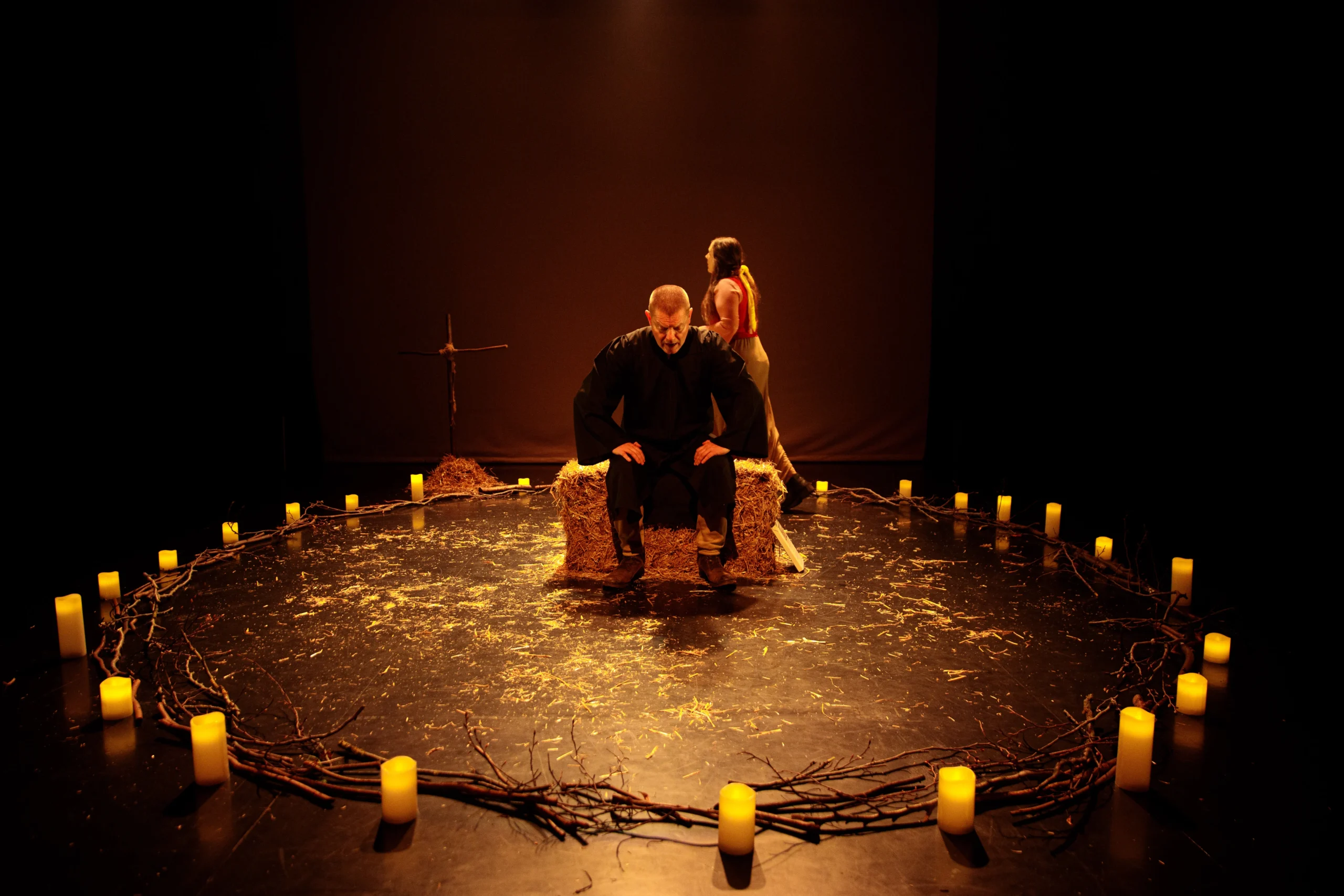
A witch trial sees Helena become the obsession of a 55-year-old religious zealot, Heinrich Kramer, who had secured a Papal Bull (an official decree from the Pope) after being denied inquisitorial authority in Germany, triggering a chain of events that doomed women for centuries. The themes covered in this piece of history echo today, for example, the online hate and misogyny we see rampant across social media.
Helena’s persecution happened after Johannes Gutenberg invented the printing press. When the Malleus Maleficarum by Kramer was published in 1487, this new technology allowed the text to become an immediate bestseller across Europe, spreading witch-hunting doctrine faster than hand-copied manuscripts ever could. A tool with the ability to share knowledge and educate was hijacked to spread hatred and fear.
The book was born out of the obsession he developed with Helena, an influential, well-known member of her community and married to a burgher. I picture her as a Princess Diana figure. Heinrich’s sermons bordered on sadism and the pornographic. Helena refused to stay silent, disrupting one of Kramer’s sermons by publicly proclaiming he was an evil man in league with the devil. When Helena stopped attending his church and encouraged others to boycott him, Kramer confronted her in the street, leading to a public argument.
Credit: Andrew AB Photography
She was reported to have said, ‘Fie on you, you bad monk, may the falling evil take you.’ Heinrich fell over and claimed her words had acted as a maleficent magical curse.
A petty man whose ego was bruised because a woman refused to submit to his authority. Strikingly familiar with today. Outraged by her defiance, Kramer put Helena and thirteen others on trial for witchcraft, even bizarrely accusing her of using magic to murder a local knight whose doctor had simply warned him to stop visiting her. During proceedings, Helena had the backing of her husband, community and the finances to pay for legal counsel. Her defence lawyer raised procedural objections while Kramer fixated heavily on her sexuality. Helena won her case with the presiding Bishop declaring Kramer had ‘presumed much that had not been proved.’ Kramer was disgraced and discredited, expelled from Innsbruck by the Bishop for his sheer insanity and obsession with Helena, and banished from the diocese.
In 1487, humiliated by his defeat, he wrote the Malleus Maleficarum, translated as ‘The Hammer of Witches’, specifically to strip away judicial protections for accused women and ensure secular courts could execute suspects without any interference from the bishops. This single act of male spite went on to become the foundation for witch-hunting doctrine. It influenced King James VI of Scotland (later James I of England), who penned his own text, Dæmonologie, drawing heavily on Kramer’s insane ideas. Decades later, Puritans carried these legal precedents across the Atlantic to Salem, Massachusetts, to persecute and murder innocent women.
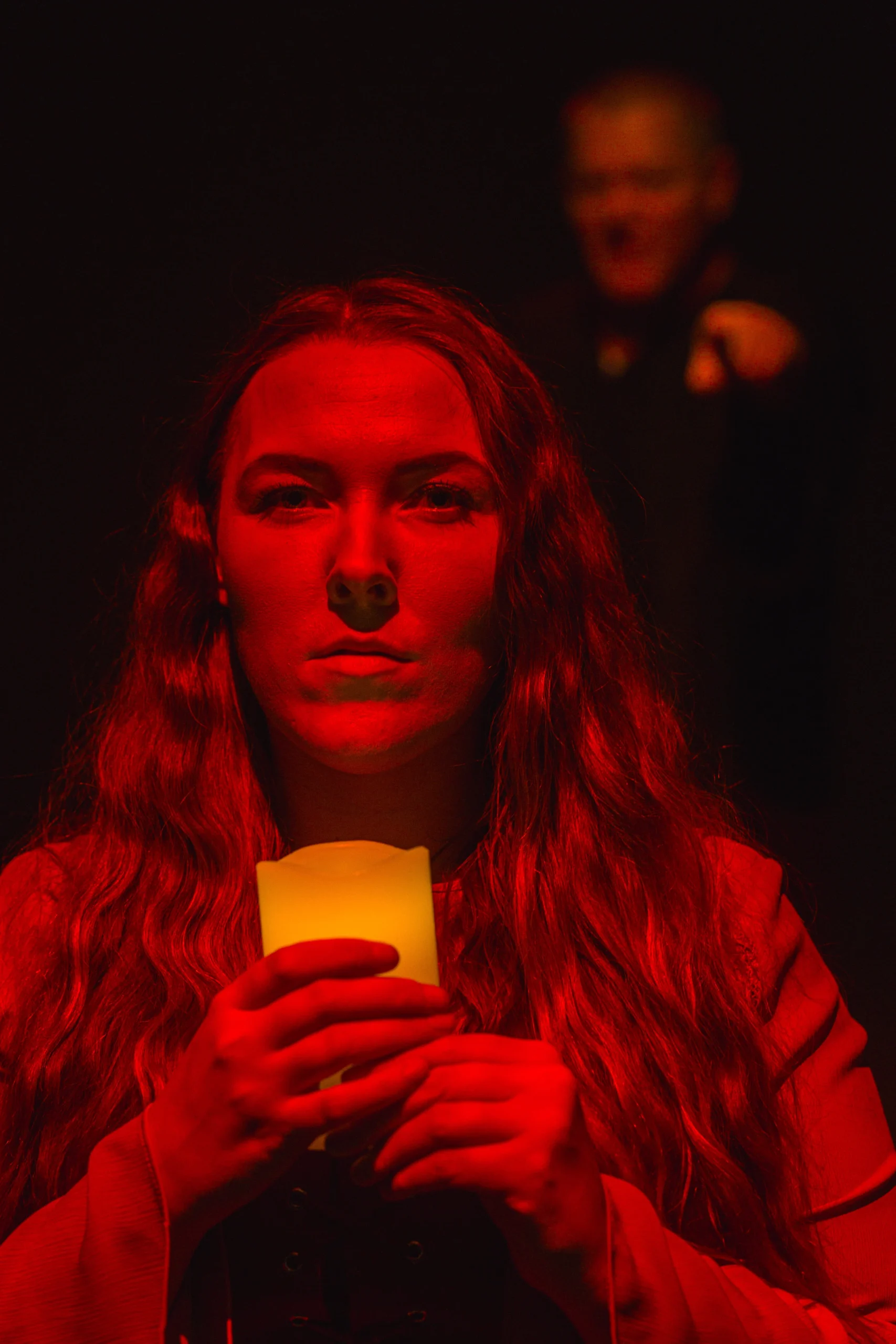
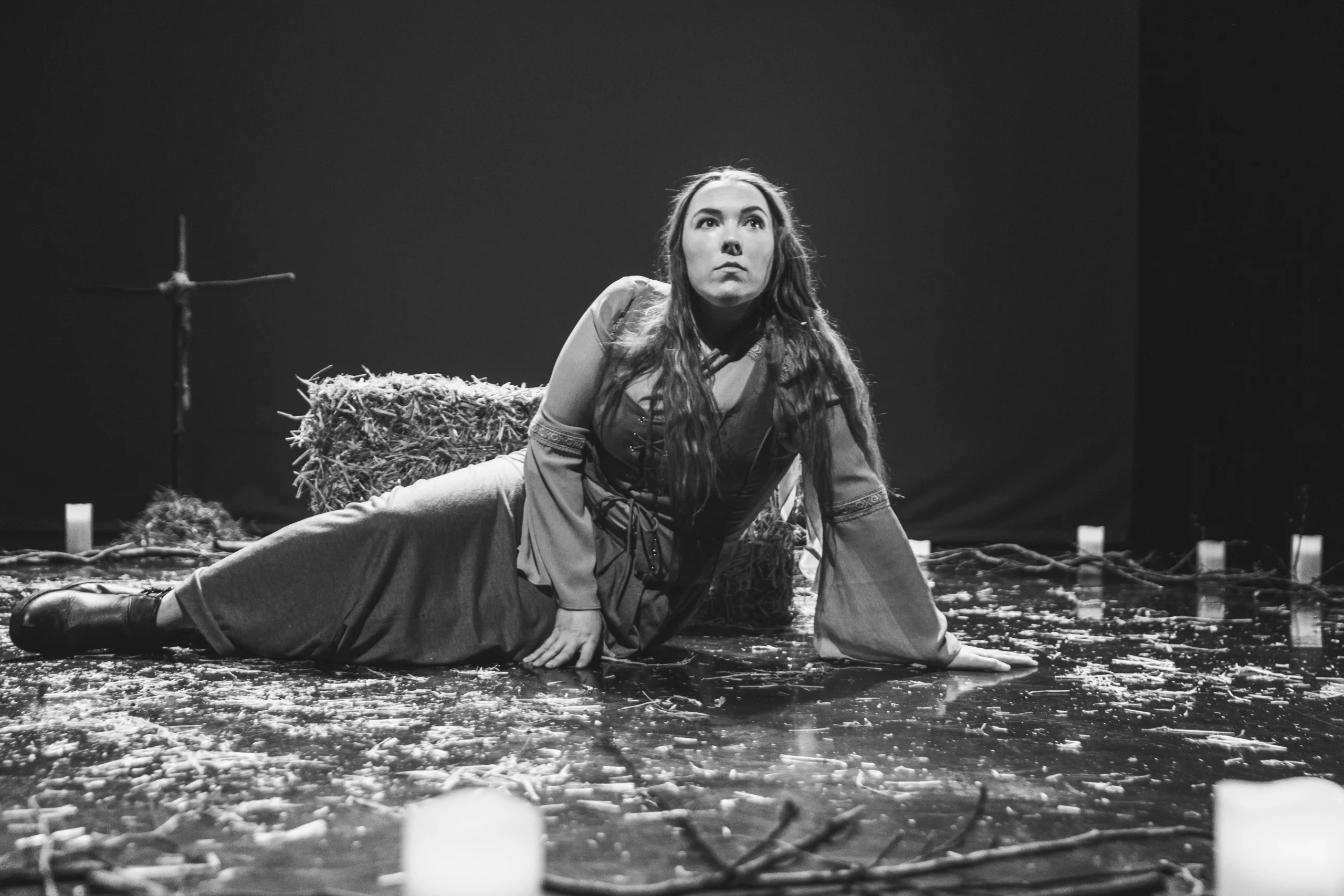
In the ArtsGroupie production of The Hammer and Helena, Helena confronts her accuser one final time with her soul on the line.
Credit: Andrew AB Photography
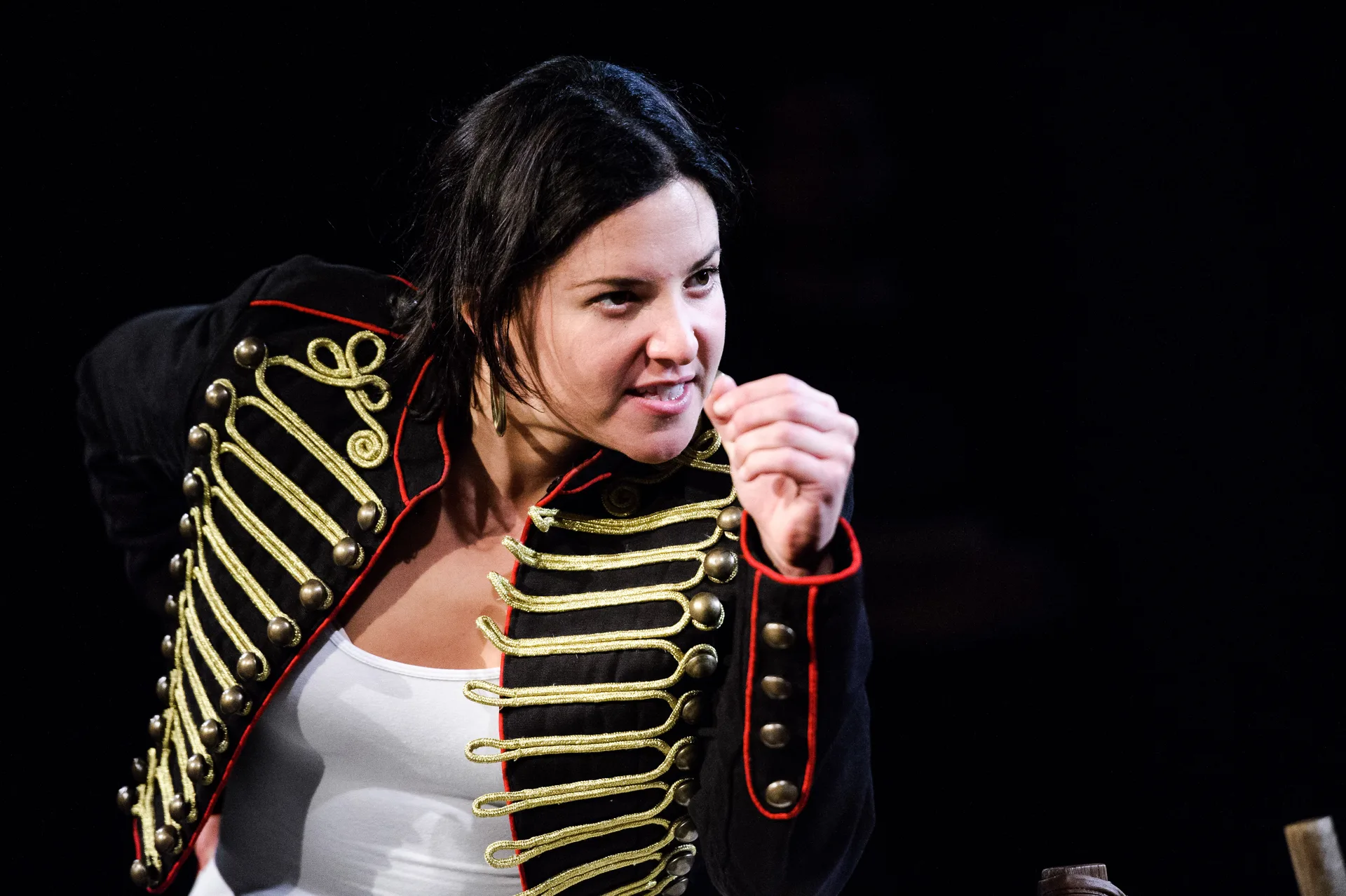
Helena is played by talented local creative, Samantha Alton, who says,
“As an actress, I found it easy to put myself into the role. Women I know, if you’re out there, you know that we come across these creepy men who overstep the mark and push against the boundaries that we set. Some of us are friendly by nature, but if you make eye contact with somebody, that’s it: they think they are taking you home or deserve your phone number. This relationship is something every woman will recognise. It will make the women in the seats squirm, but it will also make some men in the audience see aspects of themselves.”
Writer and Director David Griffiths commented,
“To speak such truth to power with the odds so highly stacked against her was an inspiration. I was struck by how little things had changed in the intervening centuries. There are so many similarities to the present day. I hope we all have the strength of conviction of Helena Scheuberin to see us through our current political landscape.”
At a time when toxic masculinity is increasing, and patriarchal bullying is rife, artists should provoke and encourage discourse. This is the reason the play went to the Edinburgh Fringe last year. A costly exercise, for the Festival has become an option mainly for people from wealthy, middle-class backgrounds who can afford to pay the fees needed to showcase work. As co-director of Artsgroupie, I said from the outset that as a company we would only go if we had a piece that spoke to people and had something to say on the ‘now.’ At a time in our society when people are arrested for protesting, it felt important to make a stand against patriarchal bullying and the pure abhorrence and misinformation we see coming from the army of haters, like Andrew Tate.
Having started at the Unity Theatre and trialled at Shakespeare North Playhouse before our community-funded run at the Edinburgh Fringe, it feels fitting to bring The Hammer and Helena back home one final time to Shakespeare North.
The Hammer and Helena 15th & 16th October Shakespeare North Playhouse Tickets
More than a century after the Titanic sank, the disaster continues to fascinate audiences. Countless books, films and stage productions have revisited the tragedy, its victims and the extraordinary circumstances surrounding that fateful night.
But Unsinkable, currently being staged at Liverpool’s Hope Street Theatre, chooses not to tell the story we already know.
Written and directed by Matthew Reynolds, the play instead turns its attention to J. Bruce Ismay, chairman of the White Star Line and one of the most controversial figures associated with the Titanic. Ismay survived the disaster. That fact would become his defining legacy.
His decision to enter a lifeboat while many passengers and crew were still aboard led to widespread condemnation, transforming him into a convenient villain in the public story of the Titanic. More than 100 years later, that reputation remains remarkably persistent.
Unsinkable asks us to look beyond it.
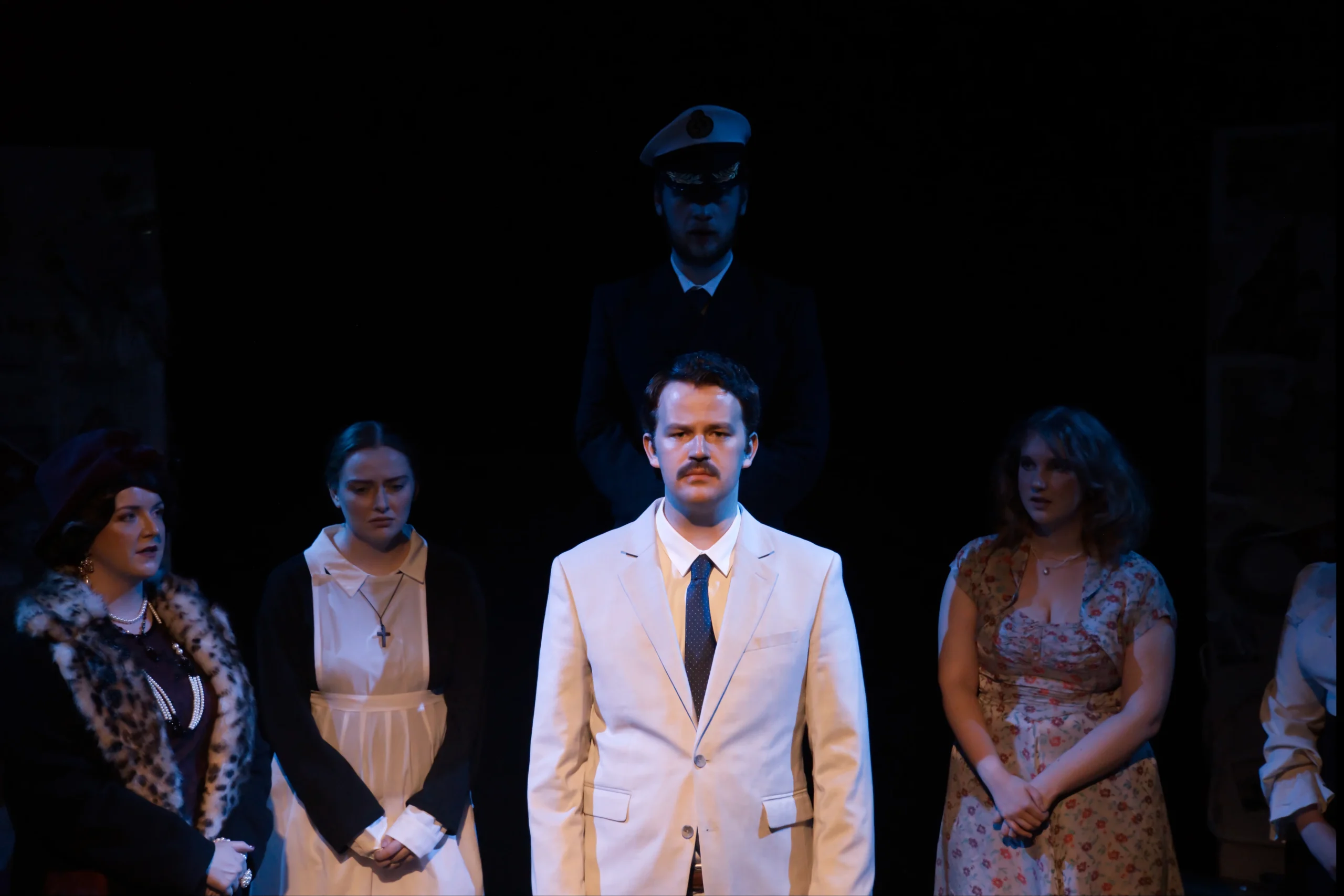
Joseph Winder takes on the role of Ismay, having previously played the character during the production’s earlier development. His performance gives the play its central focus as Ismay confronts the events of the disaster and the consequences that followed. Winder is supported by a talented cast including Christopher Forrest as The Inquirer who holds many of the scenes together whilst plaing a challenge to Isam., Emily Guilfoyle as Marian Thayer. Charlie Forrest as Officer Lightoller. Rosabelle Bennett as Florence Ismay who sruggles with the pressure put upon her marriage by the public’s feelings towards her husband. Alice McKillop plays the feisty activist Margaret ‘Molly’ Brown and Lorna Jane Ryan playing the part of Violet Jessop.
Rather than attempting to recreate the scale of the Titanic itself, Reynolds keeps the production intimate. The drama is driven by dialogue, memories and the gradual unpicking of a question that is far more complicated than simply asking whether Ismay was a hero or a villain.
What does it mean to survive when others do not? How does someone live with the knowledge that history has already decided who they are? Those questions give Unsinkable its dramatic strength. Ismay is not presented simply as a historical figure to be judged, but as a man forced to confront the consequences of an event that would define the remainder of his life.
There is also something particularly appropriate about seeing this story performed in Liverpool. The city’s maritime heritage is inseparable from the Titanic story, and Hope Street Theatre provides an interesting setting for a production that examines one of the key figures connected with the disaster.
The play itself has an interesting Liverpool theatre journey. It began life as a shorter piece entered into Tip Tray Theatre’s What Happens Next? competition before being developed into a full-length production. A sold-out staged reading subsequently provided an opportunity to test the material with an audience before its move to the Hope Street stage.
That development is reflected in a production that knows exactly where its interest lies. This is not a show about recreating the spectacle of Titanic’s final hours. It is a character-driven examination of what happened afterwards — and of the way public opinion can shape the historical reputation of an individual.
The Titanic story may be familiar, but Unsinkable demonstrates that there are still different perspectives to explore.
By placing Bruce Ismay rather than the sinking itself at the heart of the drama, Matthew Reynolds offers an alternative way of considering one of the most famous tragedies in maritime history. Whether audiences leave feeling sympathy for Ismay, continued suspicion, or simply a greater sense of uncertainty about the man behind the legend is ultimately left to them. Interestingly Reynolds touches in the issue of equal rights when touching on the allocation of lifeboat places.
And perhaps the play’s most interesting achievement: it doesn’t try to provide an easy answer to all these questions.
Unsinkable is a story steeped in devotion and ruin, where every regret feels like a love letter written too late.
October’s cultural calendar stretches from Black History Month events, River of Light and the Liverpool Irish Festival to live music, theatre and a few well-timed scares. Whether you’re planning a family afternoon, looking for an unusual night out or heading beyond the city centre, here are 12 events to explore across Liverpool and the city region this month.
1. Black History Month with Writing on the Wall (Throughout October)
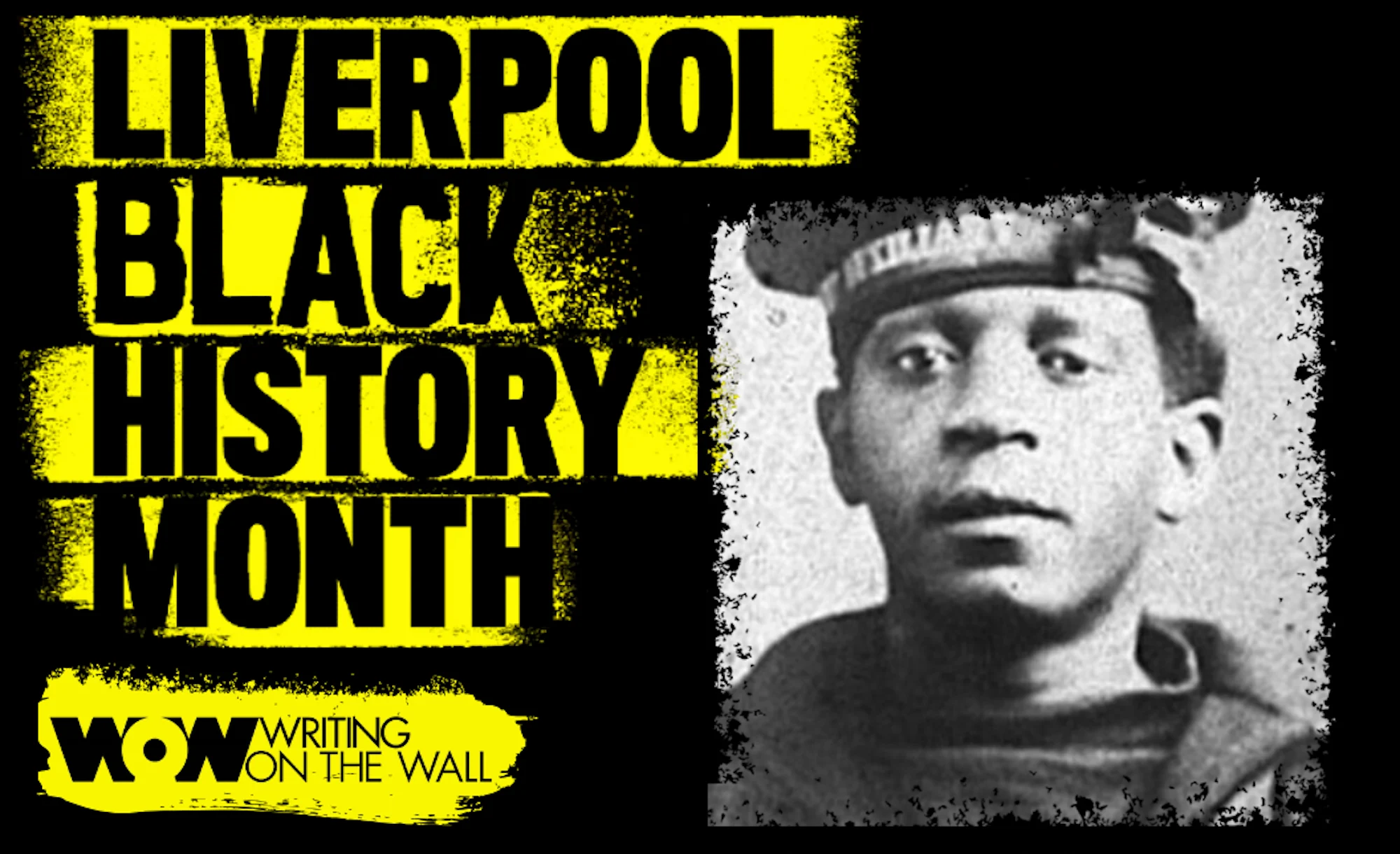
Writing on the Wall’s Black History Month programme invites audiences to engage with Black history, creativity and community action. Events announced so far include Professor Stephen Small on Black Liverpool, an evening with writer Dean Atta and walking tours exploring Liverpool’s connections to slavery, the events of 1919 and activism in L8. Check the programme for further announcements.
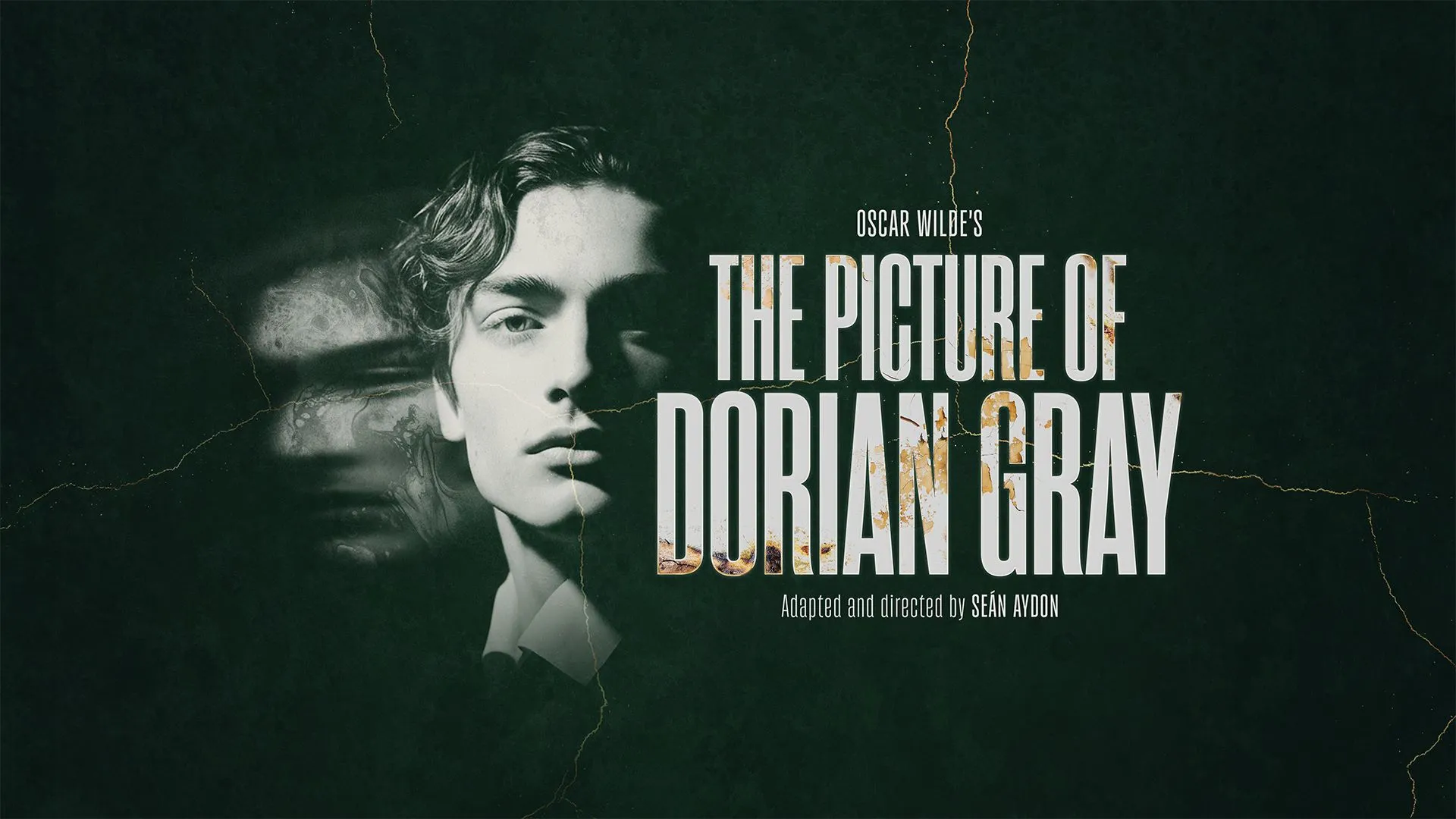
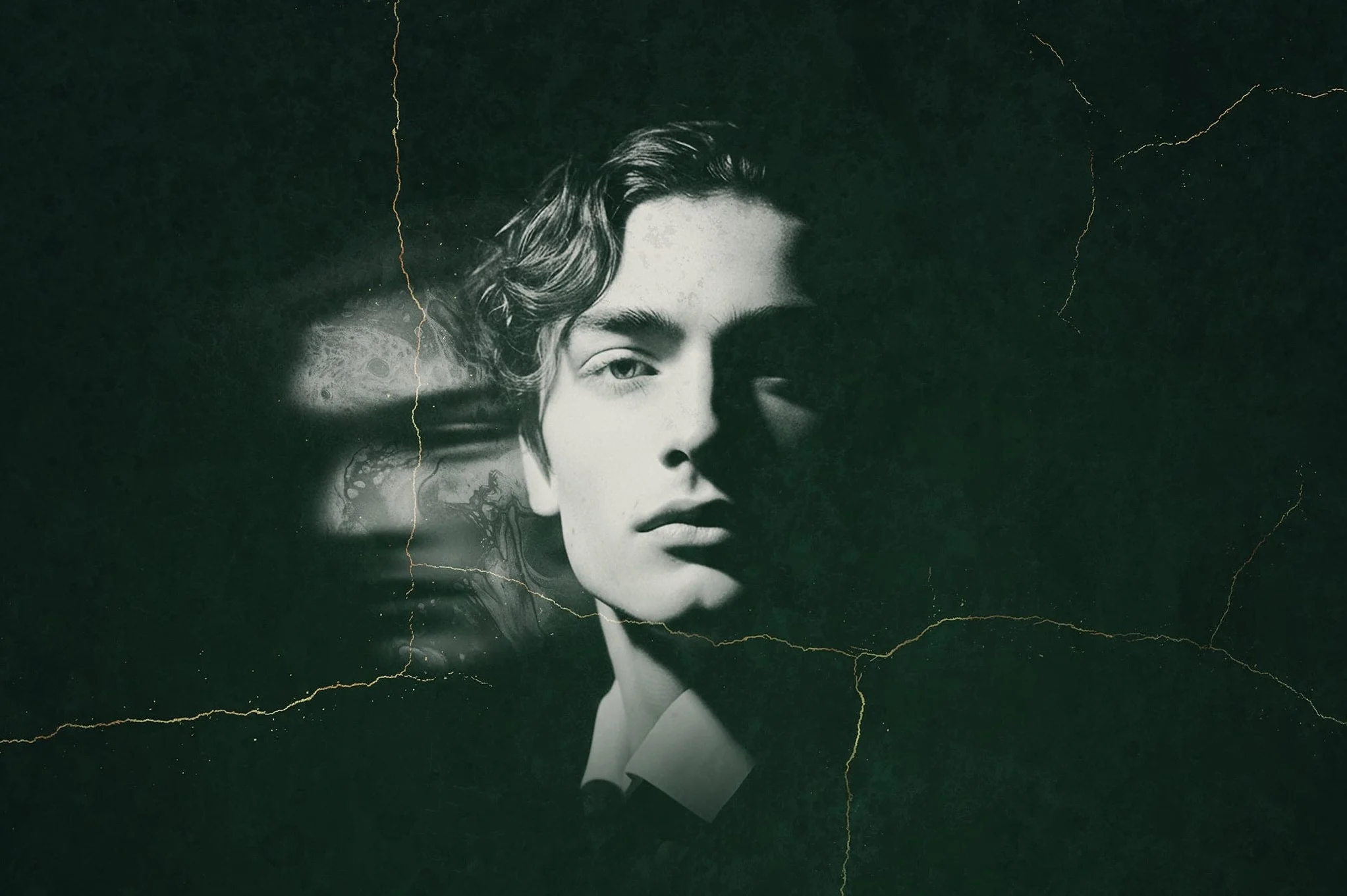
2. The Picture of Dorian Gray, Shakespeare North Playhouse (7–10 October)
Oscar Wilde’s story of beauty, temptation and a terrible bargain comes to Shakespeare North Playhouse. This new adaptation brings Wilde’s wit and dark imagination to the stage as Dorian discovers the cost of staying young forever.
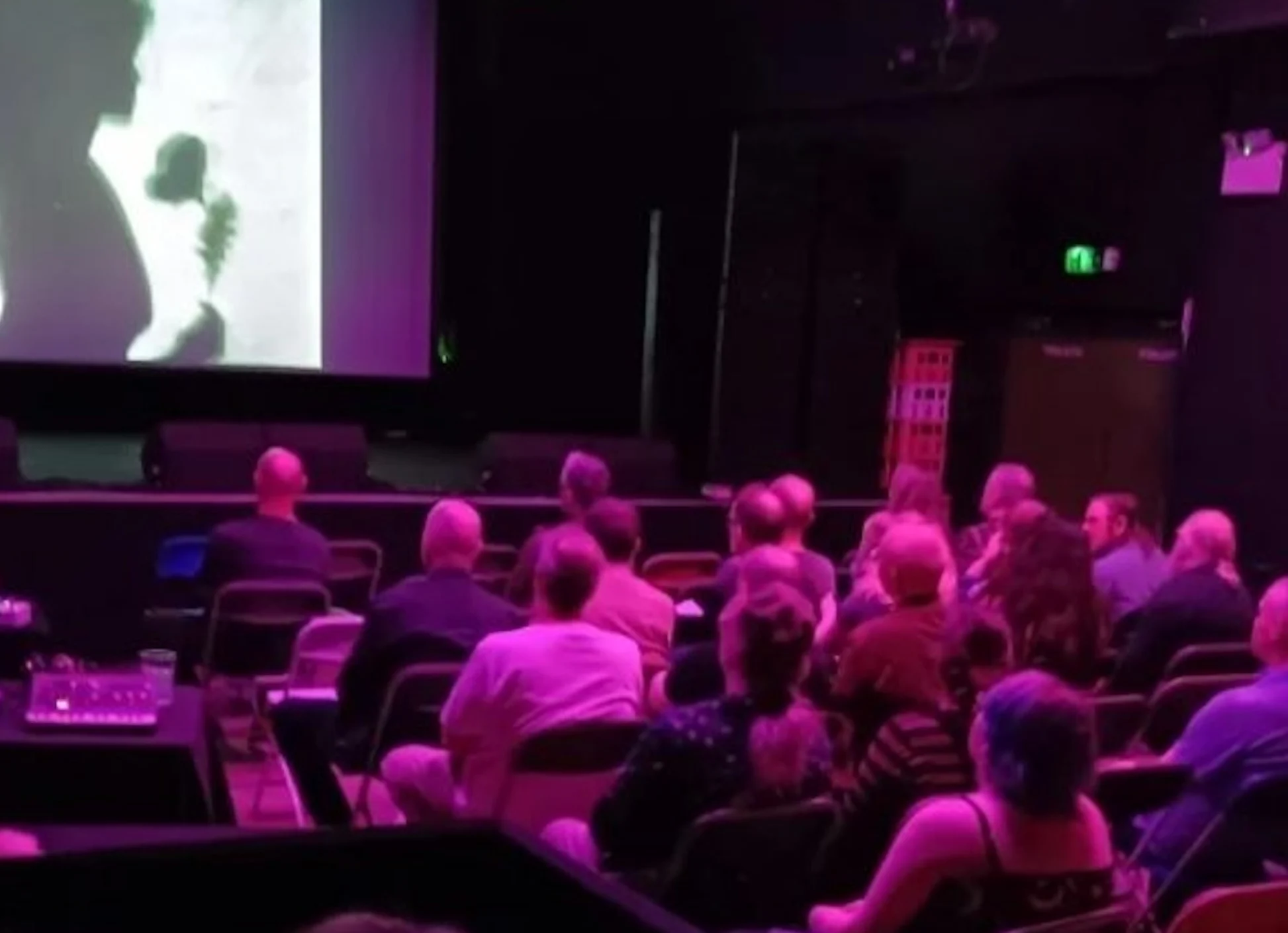
3. Silent Film Soundtracks, Future Yard (8 October)
For a night that mixes cinema and live music, head to Future Yard in Birkenhead. Moolakii Club pairs films with original electronic scores performed live by Stealing Sheep, Traindeer and LoopFader. Each artist responds to the images in real time, making this a one-off way to experience the films.
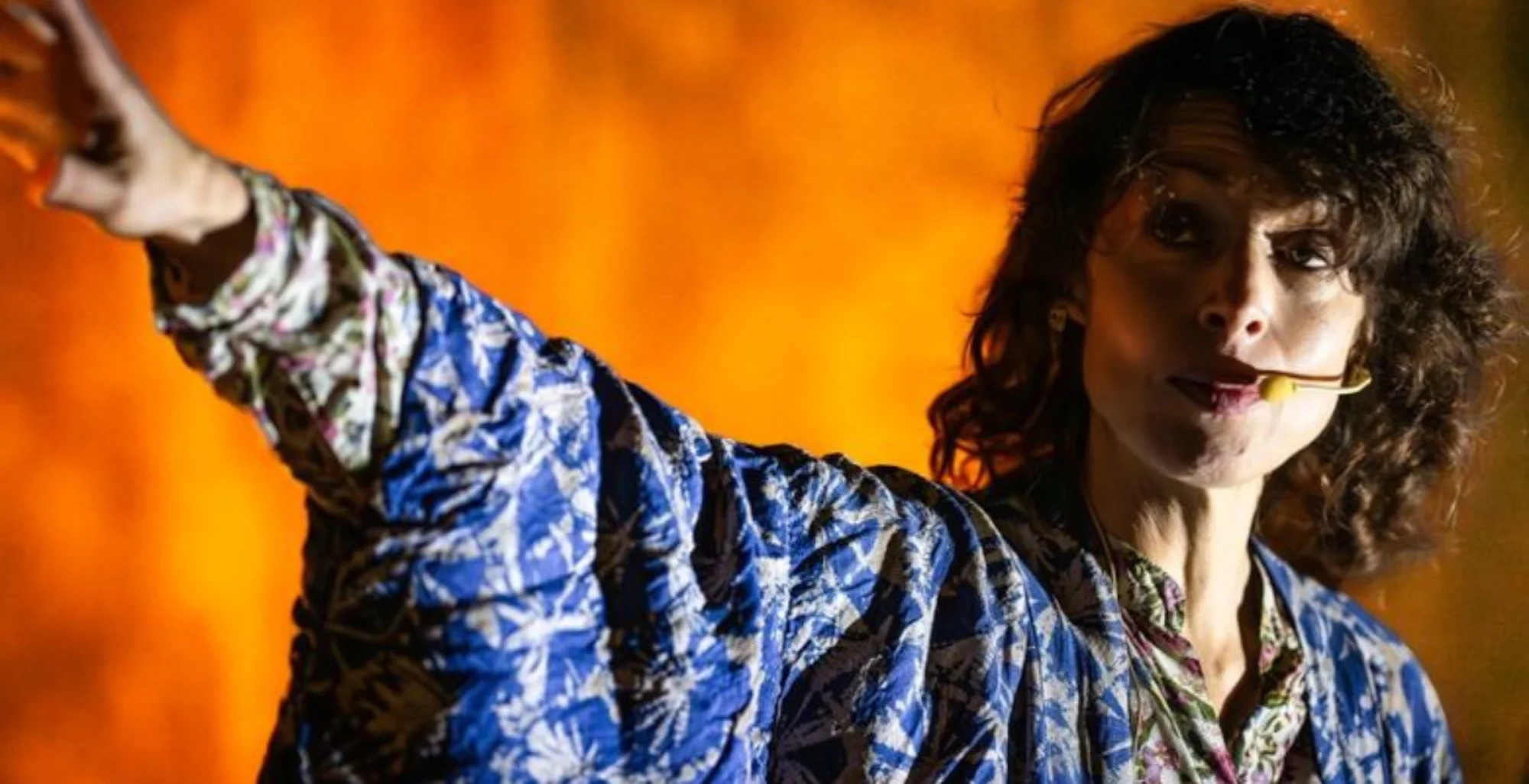
4. She’s Electric: My Strange But True Story, Capstone Theatre (9 October)
Vanessa spent a decade working as a woman electrician in the UK film industry. In She’s Electric at the Capstone Theatre, she takes audiences behind the scenes of movie sets with a funny, personal account of the work and the people she encountered along the way. The event listing includes content warnings for sexual threat, drug use and mild swearing.
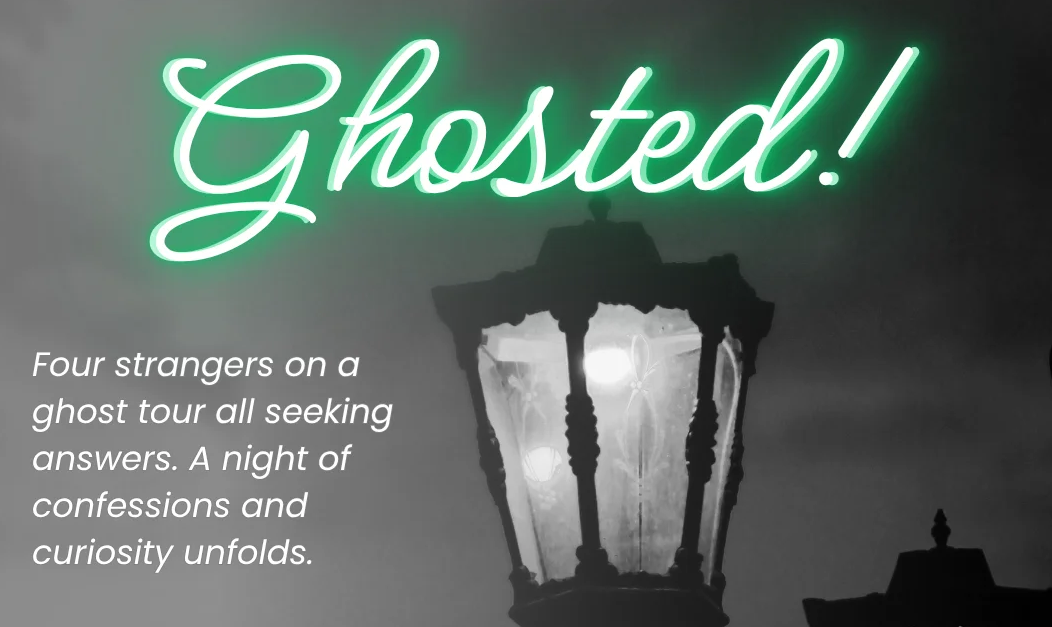
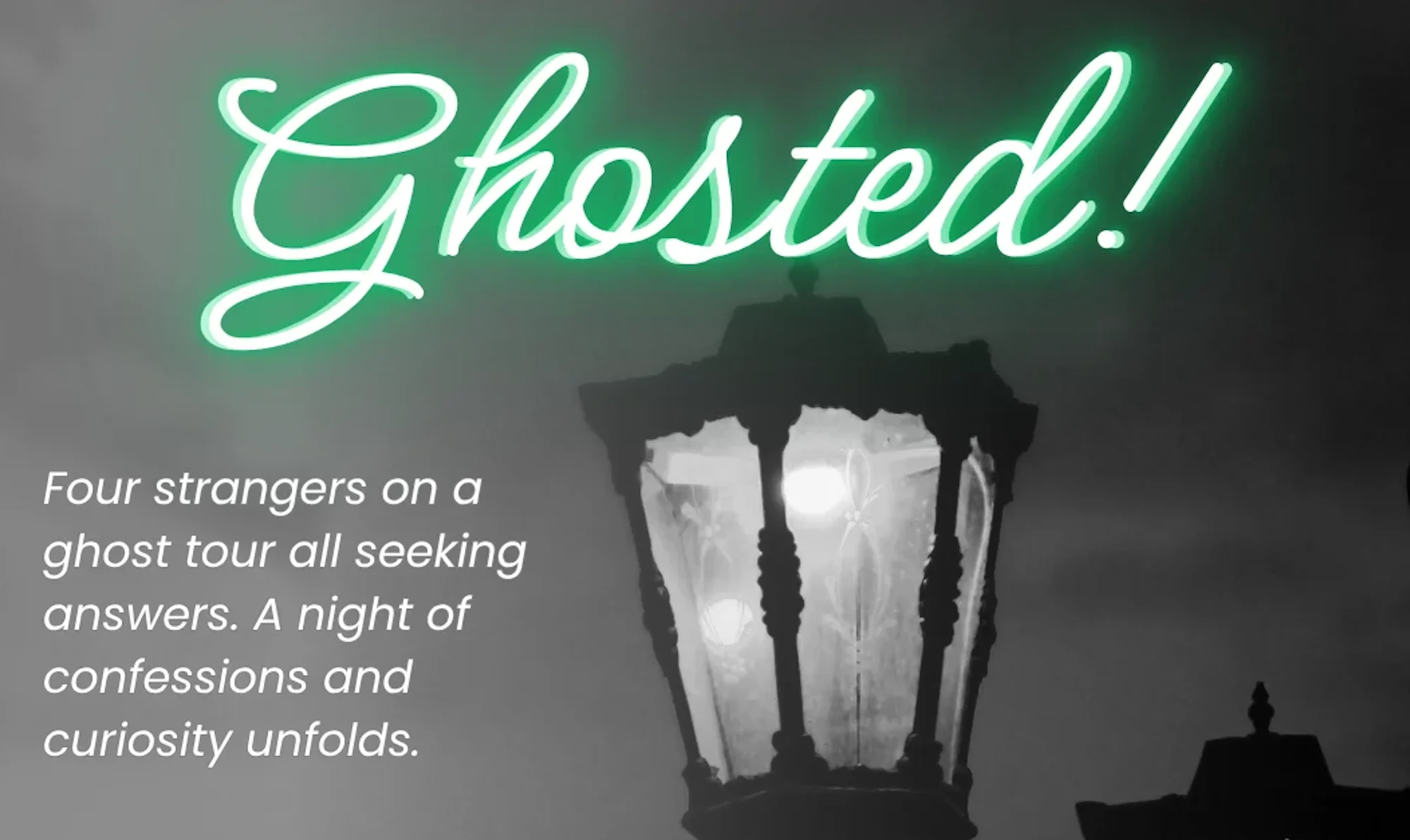
5. Ghosted!, The Studio Beyond (15 October)
Four strangers join a ghost tour, each looking for answers of their own. Set at The Studio Beyond on Wood Street, Ghosted! uses its supernatural premise to explore the past, the future and whether the things haunting us are always ghosts.
6. Liverpool Irish Festival (15–25 October)
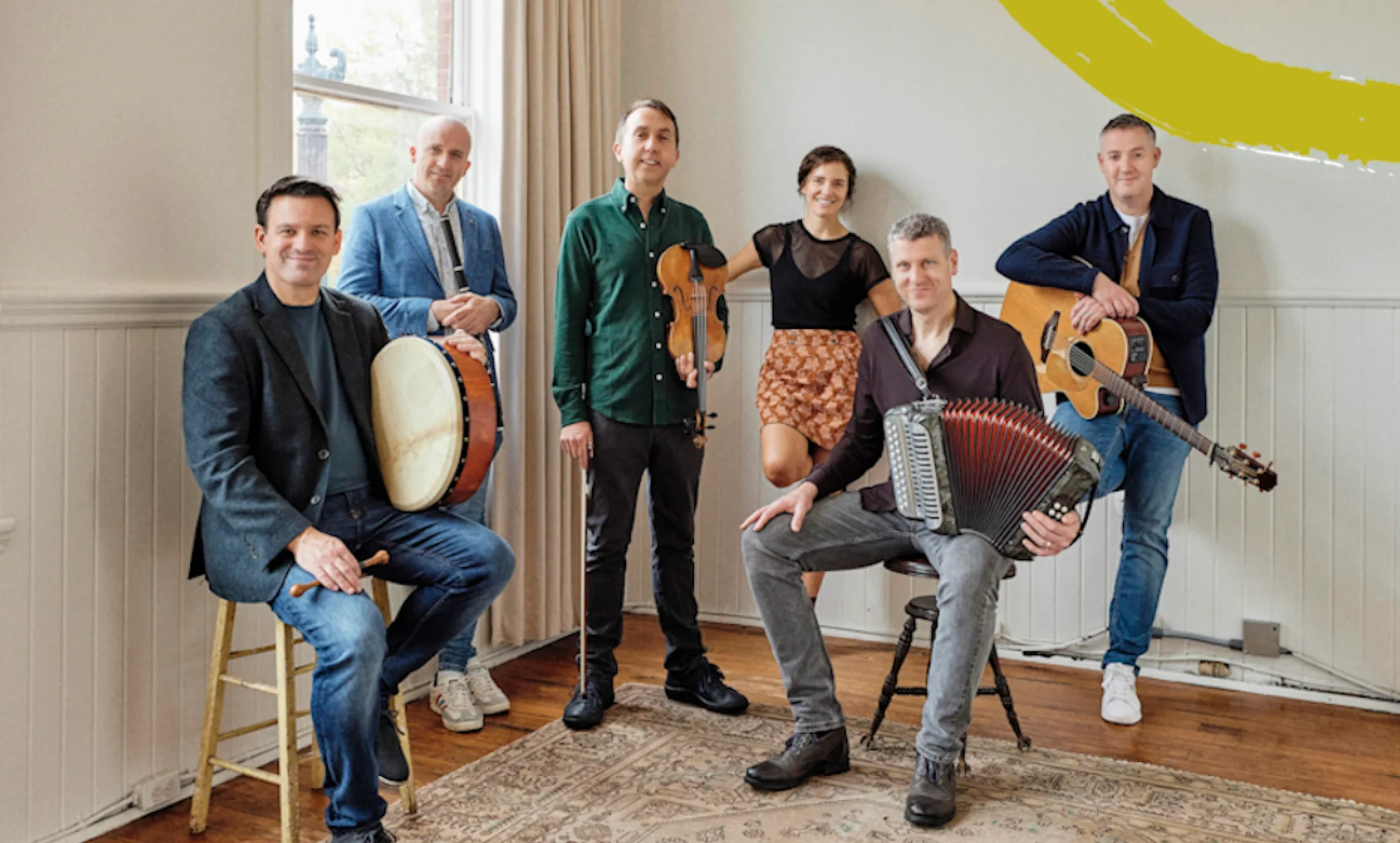
Téada
The Liverpool Irish Festival returns with music, theatre, literature, heritage walks and family events. This year’s theme, I Am Here, explores arrival, belonging and being seen. Highlights include performances from Kíla and Téada, a free author day at Central Library, and Family Day at the Museum of Liverpool. Satellite events run beyond the main festival dates.
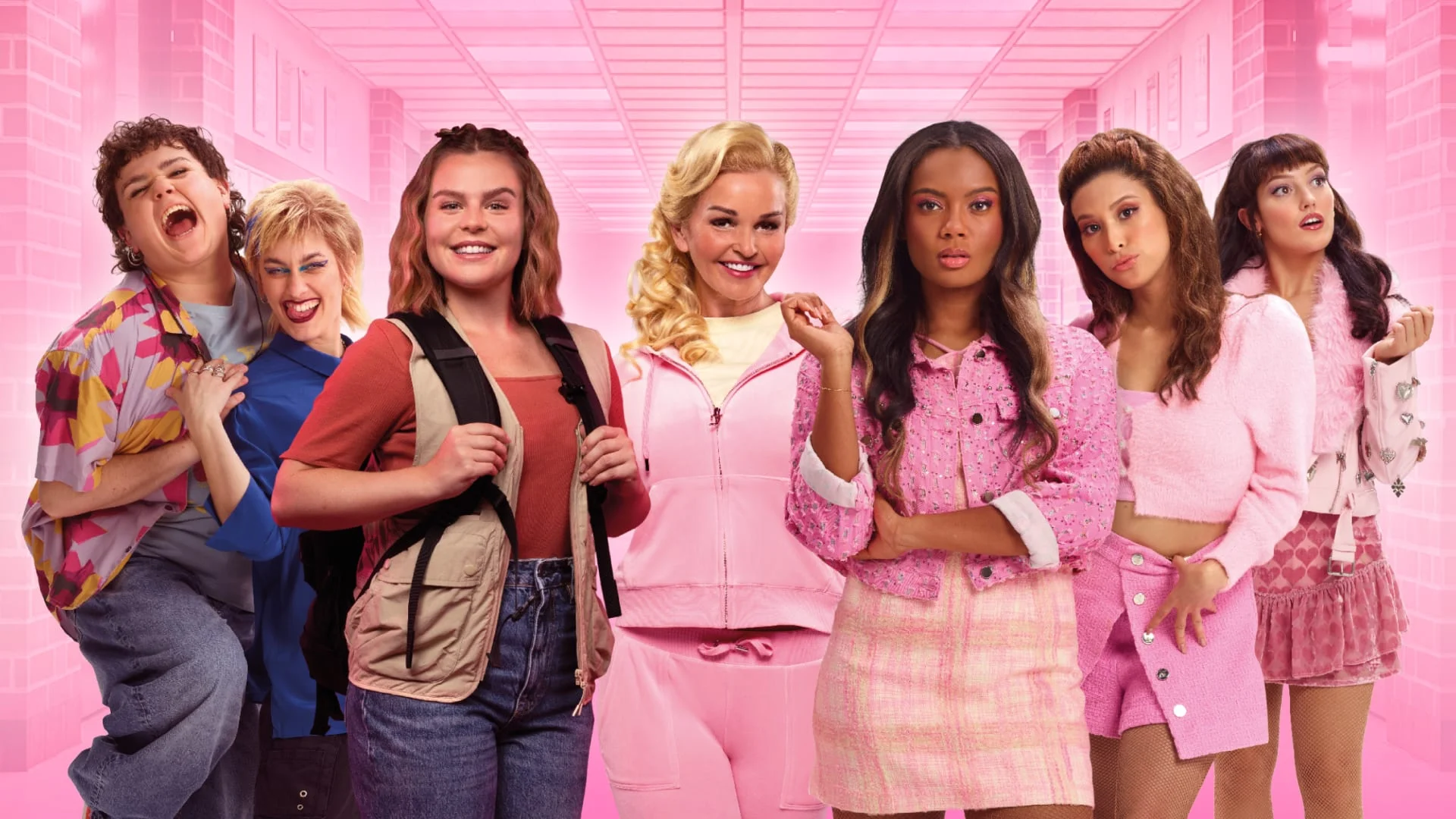
7. Mean Girls, Liverpool Empire Theatre (19–31 October)
The Plastics arrive at Liverpool Empire Theatre in the stage musical of Mean Girls. When Cady Heron starts at North Shore High, she finds that fitting in comes with its own rules. Expect familiar characters, sharp humour and plenty of songs.
8. River of Light (23 October–1 November)
Dream Herd by Amigo & Amigo
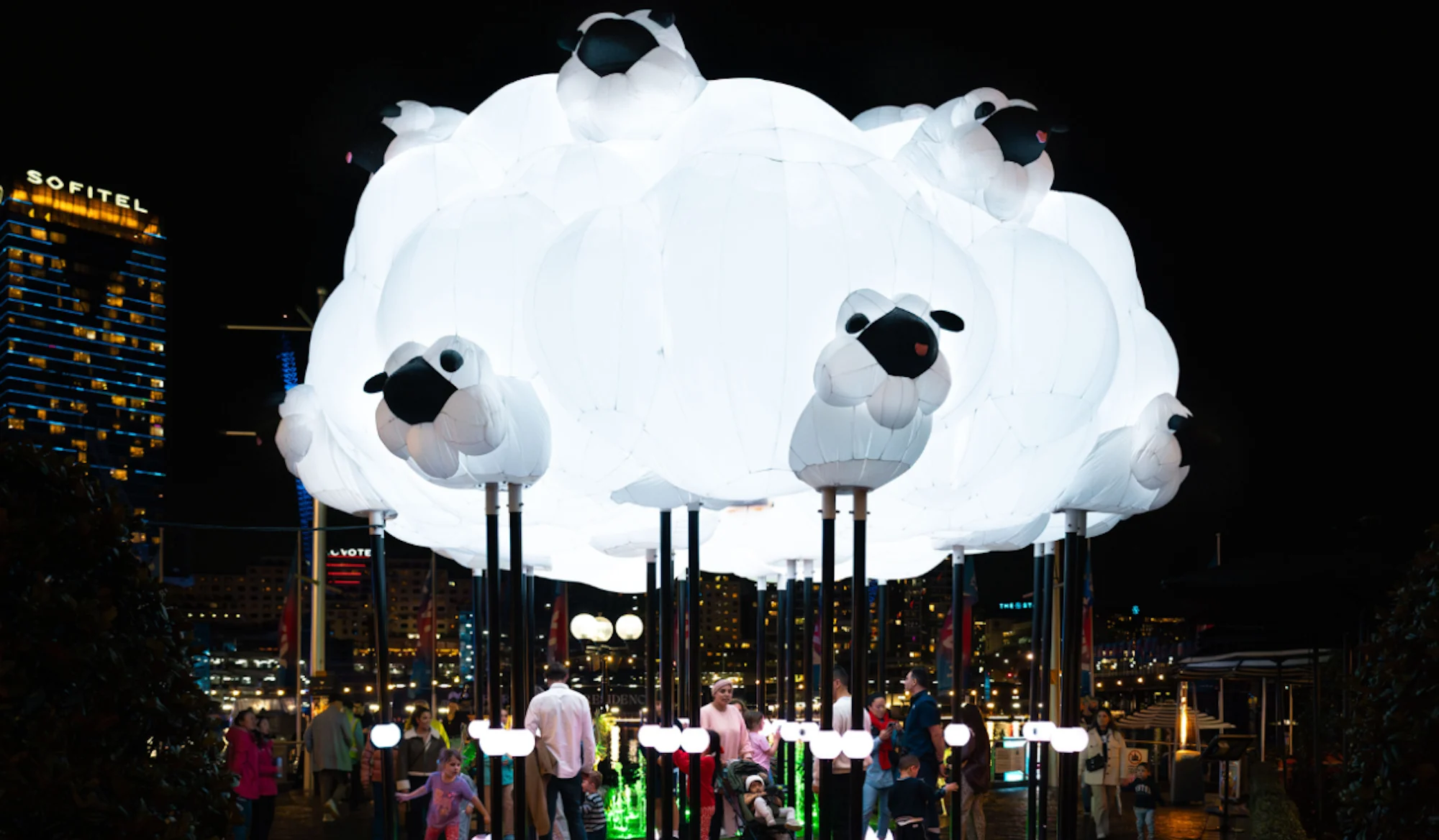
Liverpool city centre will light up after dark as River of Light returns with a free trail of 13 artworks. This year’s theme is Together, with installations exploring how light can bring people closer. Follow the trail at your own pace for an autumn evening out; the festival continues into the first weekend of November.
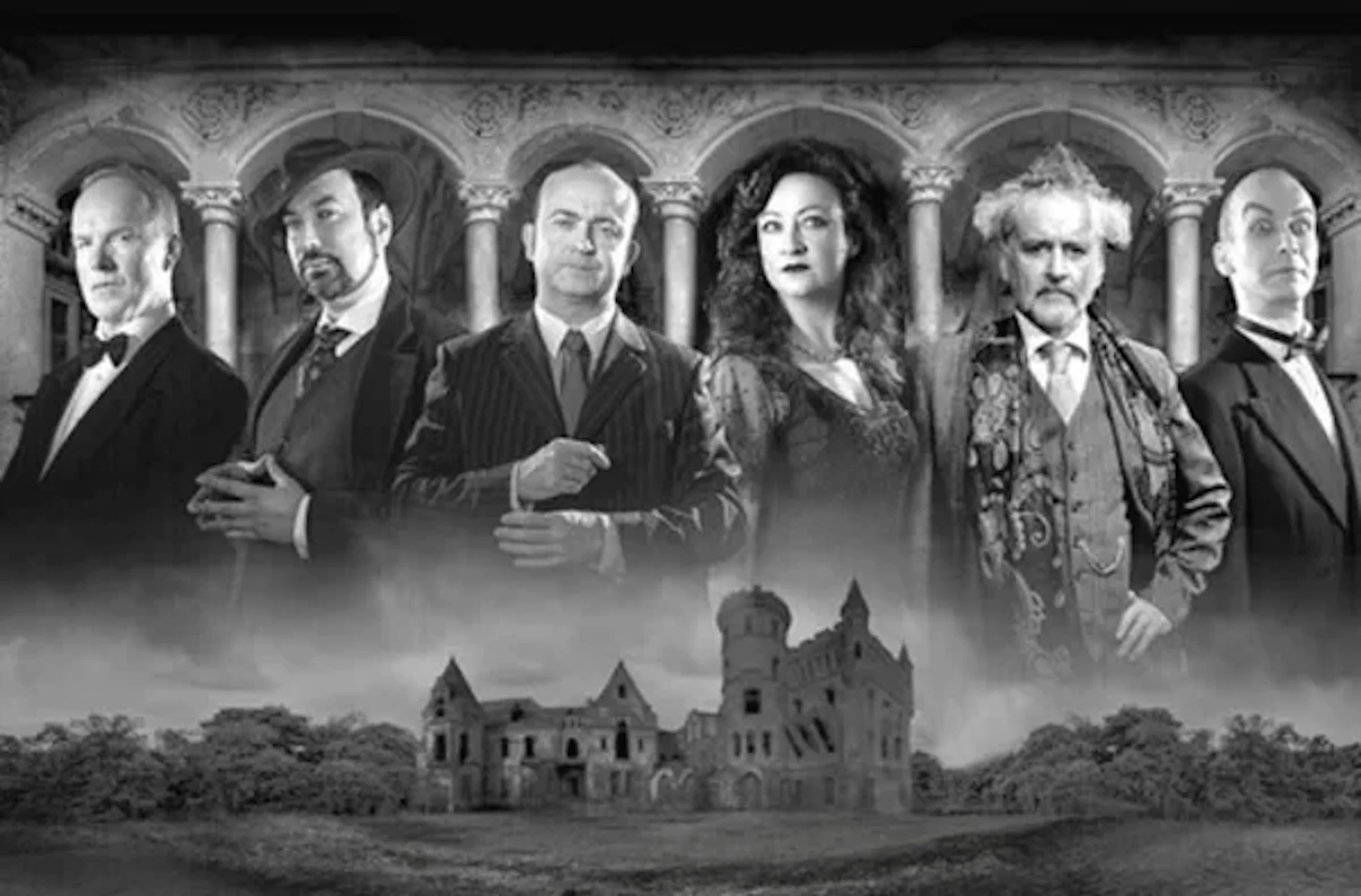
9. The Haunting of Blaine Manor, The Atkinson (24 October)
Head to The Atkinson in Southport for a classic ghost story. Set in 1953, the play follows a parapsychologist invited to investigate a supposedly haunted manor. A séance and an approaching storm soon turn his visit into something far more unsettling. There are afternoon and evening performances; the production is listed for ages 10 and over.
10. Bluecoat Family Weekend — 24–25 October
Looking for a free half-term outing? Bluecoat Family Weekend offers drop-in activities for all ages, inspired by the stories, people and moments in the arts centre’s archive. Activities run from 1–4pm on both days.
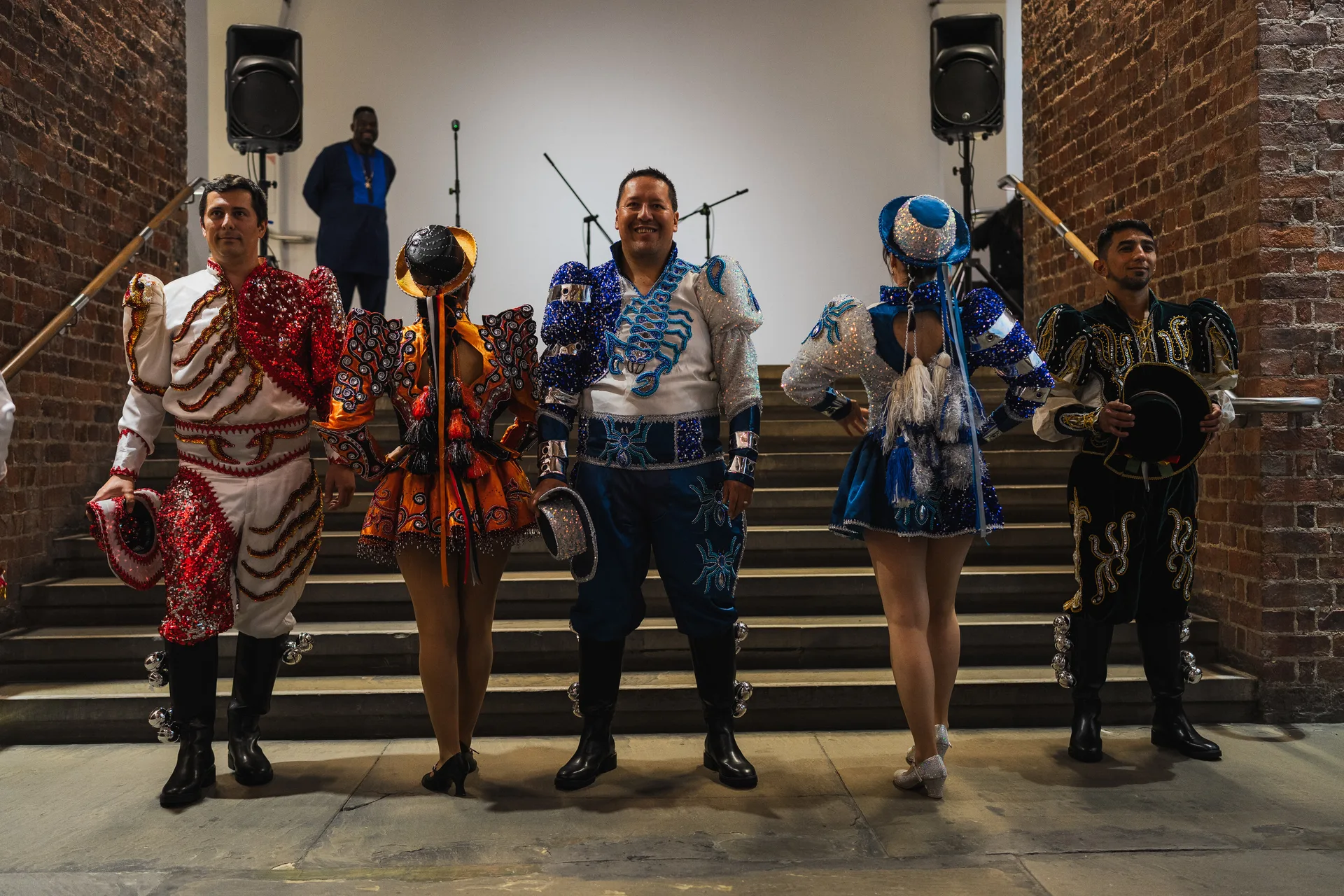
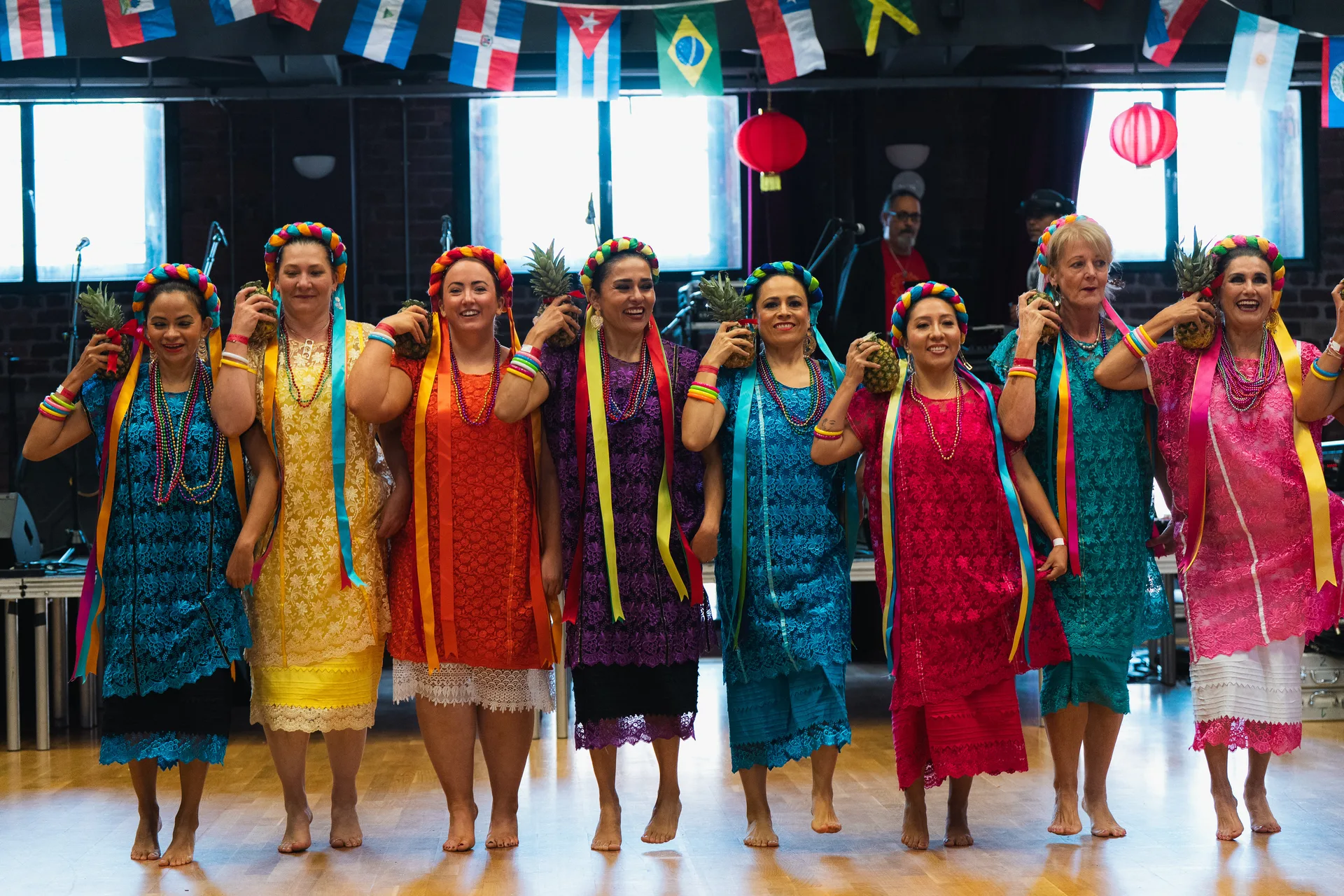
Produced by Luma Creations, La Feria brings internationally acclaimed musicians, theatre-makers, dancers, visual artists, cultural practitioners and food vendors from Latin America and the UK to Liverpool.
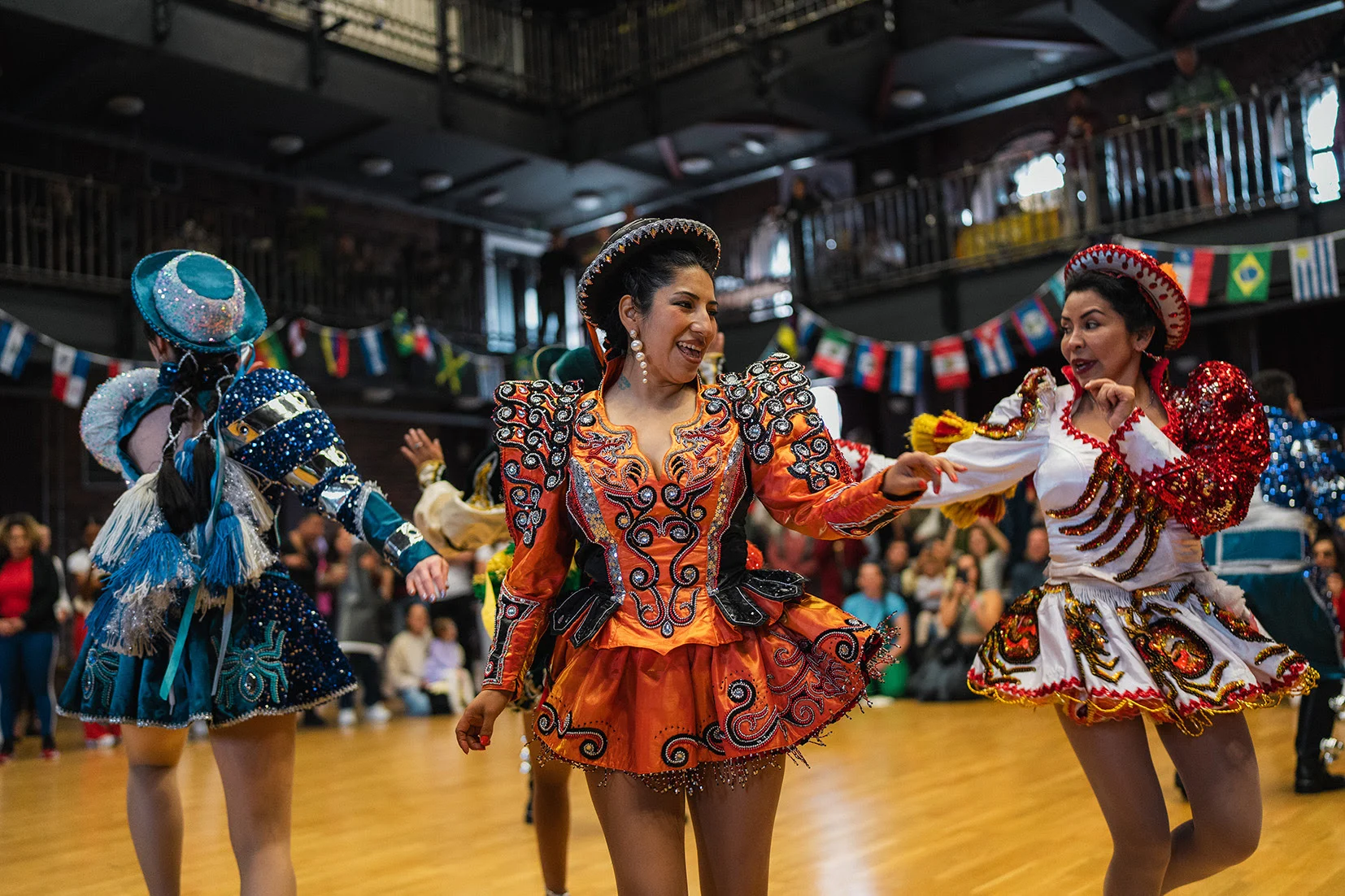
Across five days, live music, theatre, dance, performance, exhibitions, workshops, talks and participatory events create a place to discover, share and reconnect through Latin American arts and cultures.
More than a programme of performances, La Feria is a space for cultural exchange, shared understanding and meaningful connection between communities. Reflecting their commitment to community, the theme for this year’s festival is Belonging.
Here’s our full listing of events for La Feria 2026:
Camila & Silvio + Peregrinos, Liverpool Philharmonic Music Room (8 October)
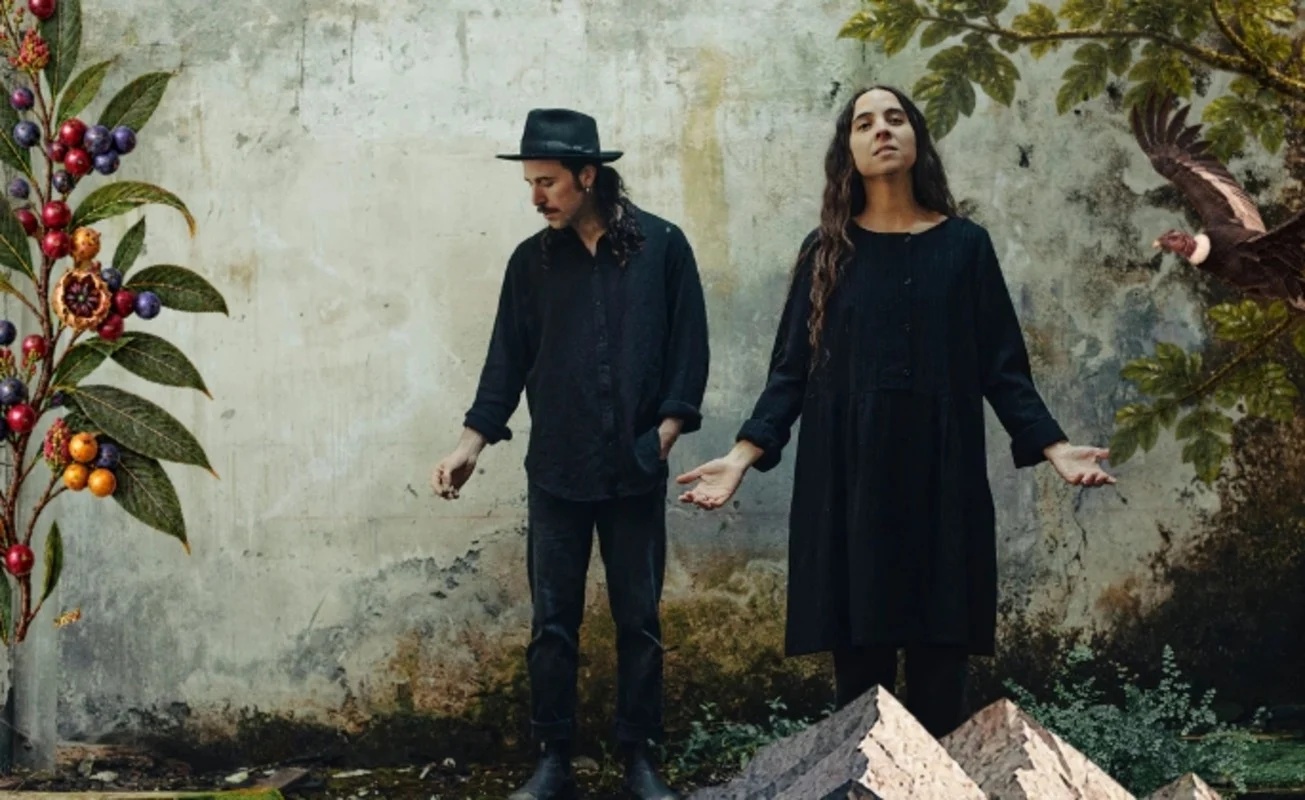
Camila y Silvio
Camila y Silvio return to La Feria with their award-winning sound, rooted in Andean and Latin American folk traditions. Blending musical heritage with a fresh, youthful perspective, the duo creates performances that move through landscapes, shared histories and the emotions that connect us.
Peregrinos open the evening, and are included in the same ticket. Peregrinos is a Chilean duo formed by Raimundo Santander and Rodrigo Recabarren, whose music brings together the traditions of Chilean folk with the freedom and spontaneity of jazz.
Belonging, Unity Theatre (7 October – 6 November)
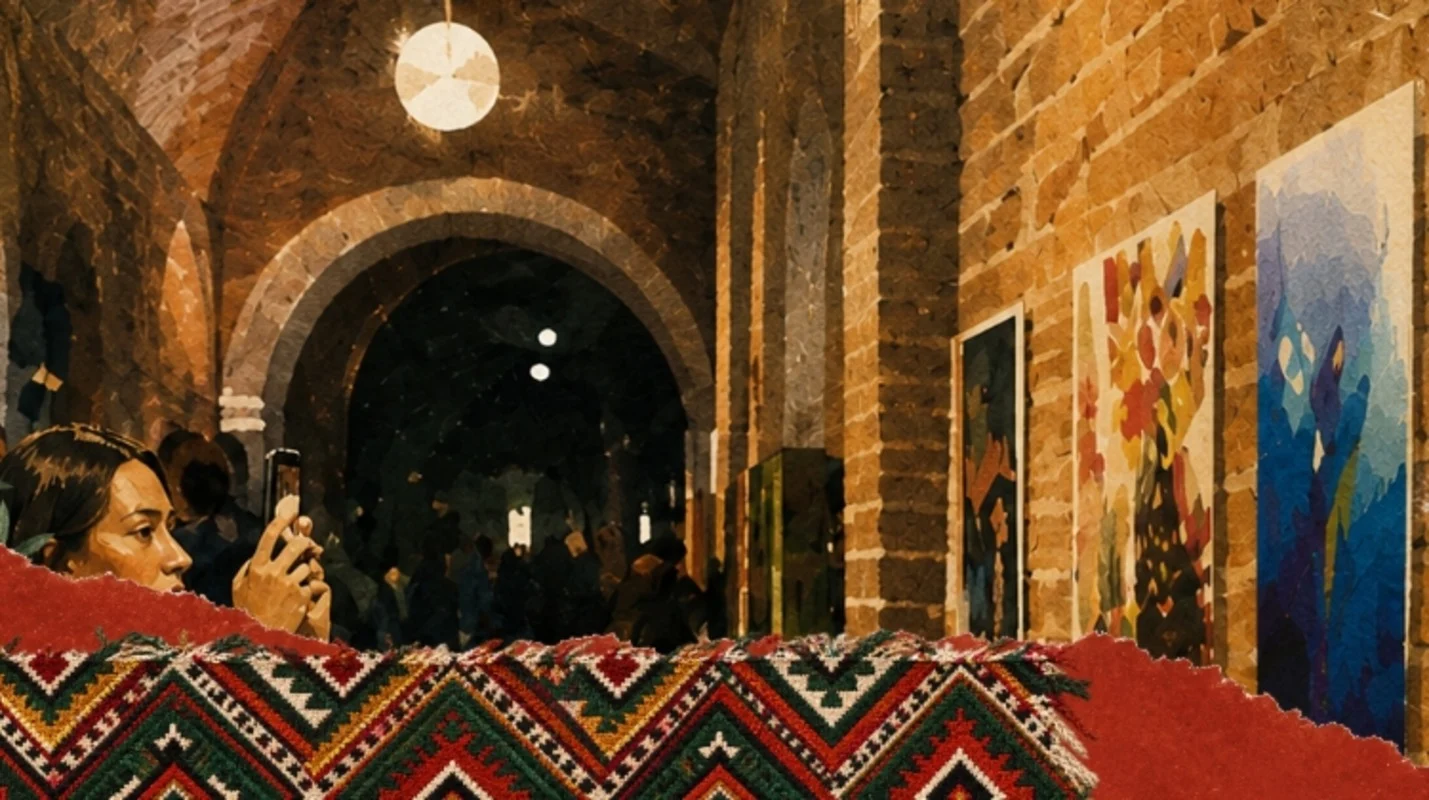
Belonging brings together contemporary work by UK-based artists of Latin American heritage. The exhibition follows identity, memory, migration, home and cultural connection, and the many ways belonging is lived and expressed.
The works draw on personal and shared histories. They show how culture is kept, reimagined and passed between generations, changing as it moves across places and borders. Through a wide range of visual languages, Belonging asks what connections shape who we are, and the communities we make. Belonging is the theme of La Feria 2026. It runs the length of the festival and beyond
Manuelita by Popelei, Unity Theatre (7 October)
Manuelita
Manuelita is a critically acclaimed one-person play that brings to life the remarkable story of Manuela Sáenz, the Ecuadorian revolutionary and trusted partner of Simón Bolívar. Through a compelling blend of theatre, movement, humour, and live music, the production brings to life the passion, courage, and resilience of a woman who played a pivotal role in Latin America’s fight for independence.
Performed by Tamsin Hurtado Clarke with live music by acclaimed Colombian guitarist Camilo Menjura, Manuelita has captivated audiences internationally and received widespread critical acclaim.
Orchestra Mambo International, Liverpool Philharmonic Music Room (9 October)
Orchestra Mambo International
Orchestra Mambo International (OMI) is a 13-piece Latin big band formed in 2022 by salsa DJ and promoter DJ Lubi Jovanovic and trombonist and composer Jonny Enright. Bringing together musicians from Venezuela, Colombia, Cuba, Spain, Brazil and the UK, OMI plays the golden age of mambo, salsa dura and Afro-Cuban jazz with a contemporary edge.
Inspired by Tito Puente, Machito, Eddie Palmieri and Tito Rodríguez, the band has established itself as one of the UK’s most exciting Latin ensembles.
World Museum Take-Over, World Museum (10 October)
World Museum Take-Over at a previous edition of La Feria
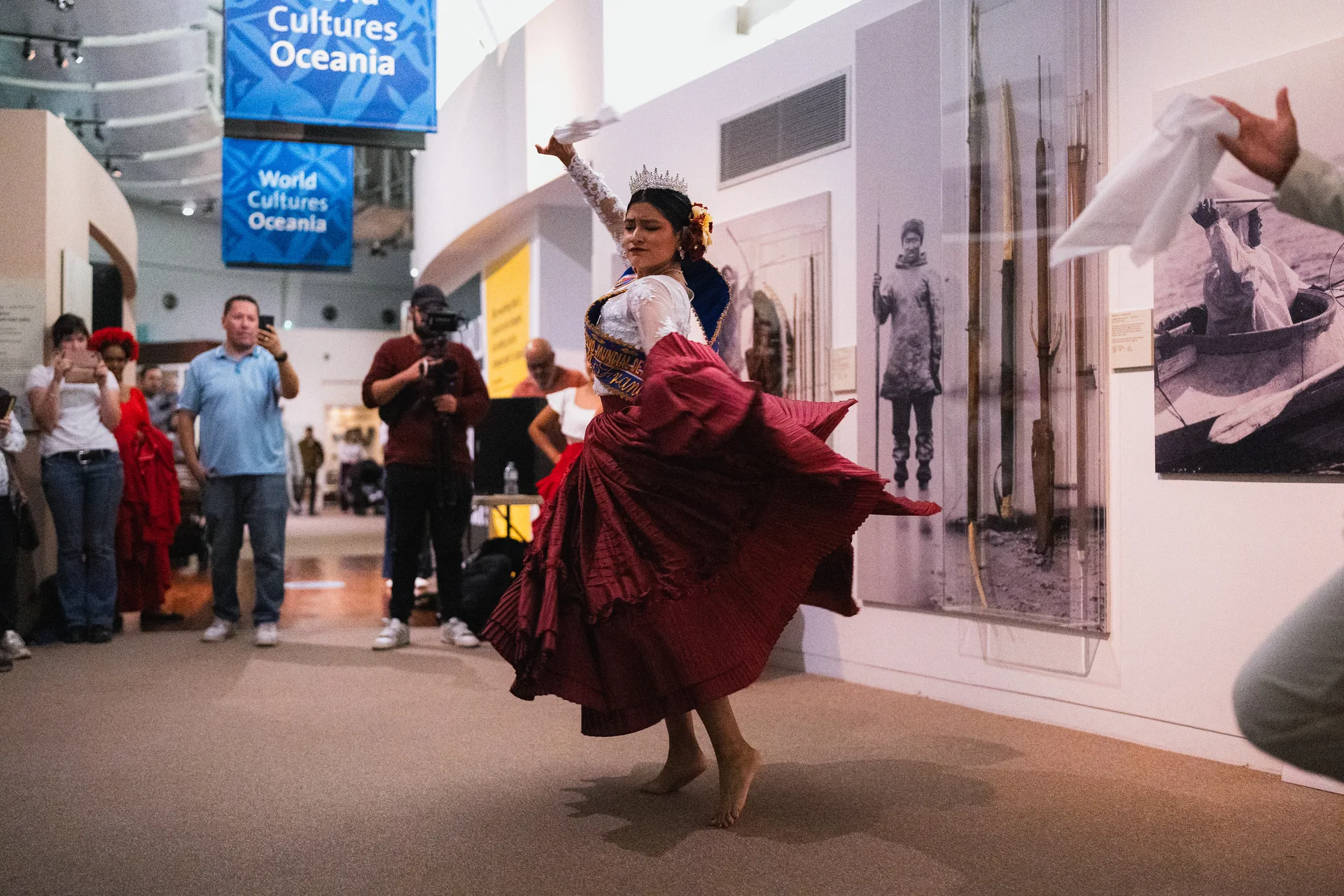
Presented in partnership with the World Museum and the Global Cultures Collections Team, as part of the Cuerpos del Tiempo project to re-imagine the Americas Gallery. Experience the World Museum Takeover as La Feria turns its galleries over to Latin American arts and culture for the day. Through the afternoon the museum fills with live music, dance, storytelling, workshops and activities you can join.
A family day: whether you are dancing to live music, trying something with your hands, or sharing stories with the people you came with, there is a way in for everyone.
Killabeatmaker & Mari Merenda, District (10 October)
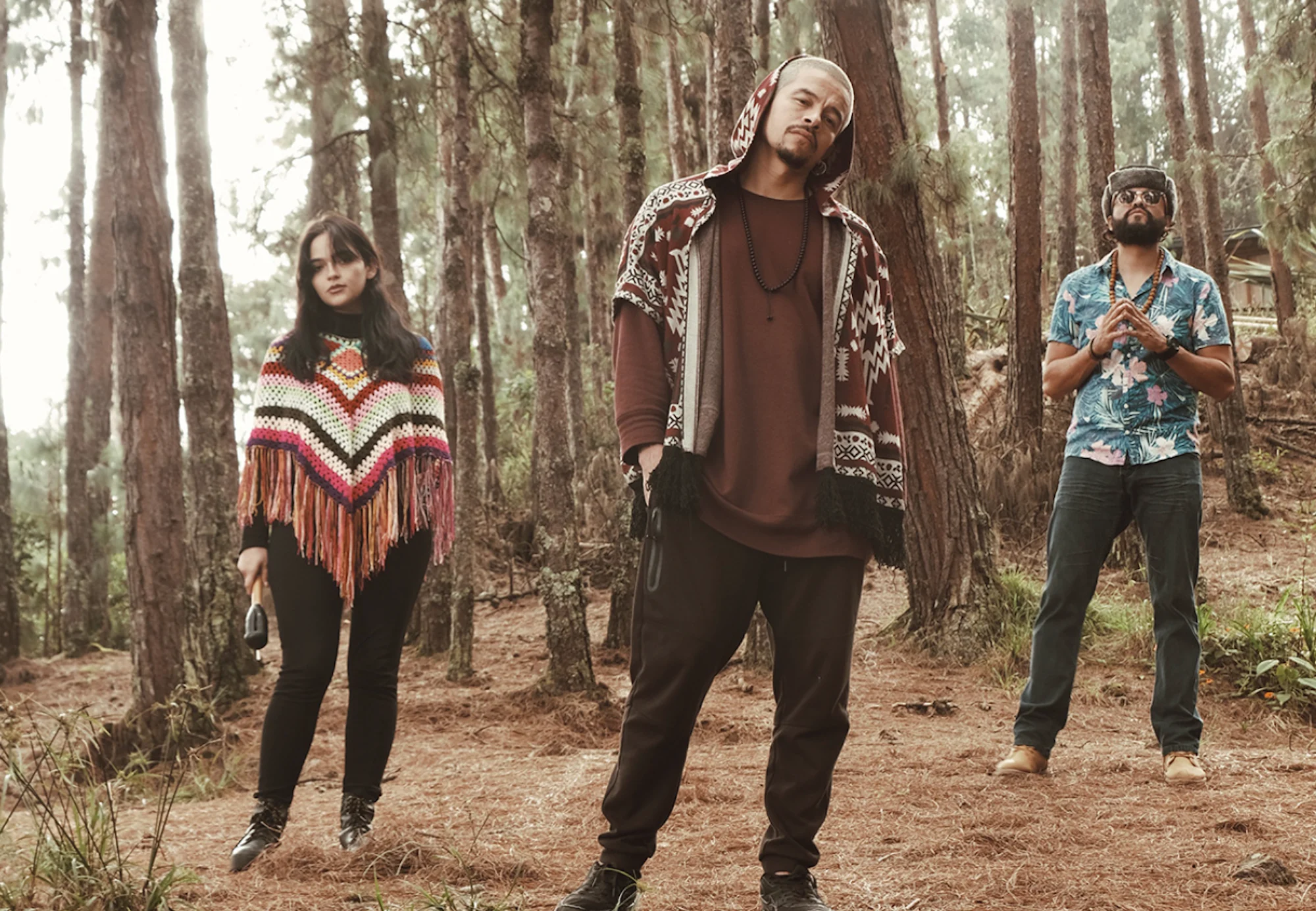
Killabeatmaker
Killabeatmaker is a music producer and performer from Medellín, Colombia, whose sound fuses traditional Colombian music with electronic production, urban grooves, deep bass and global rhythms. Known for energetic, interactive live shows, he combines beatboxing, rap, vocals and live beats.
Over the past two years, Killabeatmaker and his band have completed three European tours, performing in more than 70 cities and appearing at festivals and cultural events worldwide. They continue touring in 2026 with appearances across North America, Canada, India and Europe.
A Taste of Latin America, The Black-E (11 October)
A Taste of Latin America completes La Feria 2026 at The Black-E. Latin American communities from across Liverpool and beyond come together to share traditions, mark identity and build new connections. A day of live music, DJs, dance, hands-on workshops, Latin American food and creative activities for all ages, from traditional folk to contemporary sound.
Artists represent Argentina, Bolivia, Brazil, Chile, Colombia, Cuba, and beyond, alongside the contribution Latin American communities make to the cultural life of Liverpool.
To discover more events taking place across Liverpool and the city region, explore Uncover Liverpool’s What’s On listings.
Rae-Yen Song, •~TUA~• 大眼 •~MAK~• (2026). Installation view at Tramway, Glasgow. Courtesy of the artist. Photography by Keith Hunter.
Autumn is shaping up to be an exciting season for art lovers across the Liverpool city region. From immersive installations exploring our increasingly digital lives to exhibitions centred on community, identity, ancestry and overlooked histories, galleries across the city are welcoming a brilliant mix of established names and emerging talent.
Here are some of the standout autumn exhibitions to add to your cultural calendar.
Julia Carter Preston at the Bluecoat, Bluecoat (11 September – 8 November 2026)
Celebrating the centenary of much-loved Liverpool artist Julia Carter Preston, this fascinating archive display explores her long relationship with Bluecoat, where she maintained a studio overlooking the garden for many years.
Featuring photographs, documents and specially commissioned plaques, the exhibition offers an insight into the life and work of an artist known for her distinctive ceramics and revival of the centuries-old sgraffito technique. It forms part of a wider celebration taking place across five Liverpool venues, including Bluecoat Display Centre, Liverpool Hope University, Walker Art Gallery and Victoria Gallery & Museum.
BRB, FACT Liverpool (18 September – 6 December 2026)
Taking its name from the early internet abbreviation for “be right back”, BRB asks whether it is still possible to properly step away from our screens. Through film, animation, sculpture and interactive installations, North West-based artists Livi Wilmore, Mrs Luva-Luva and Ellie Hoskins explore how constant connectivity is reshaping our identities, relationships and sense of self. From an unsettling adult soft-play environment to a towering rollercoaster and a surreal supermarket powered by personal data, the exhibition takes a playful but thought-provoking look at life in an age of endless notifications, artificial intelligence and algorithmic feeds.
Seema Mattu: LOCAL SUPERSTAR II, FACT Liverpool (18 September 2026 – 14 February 2027)
Seema Mattu, LOCAL SUPERSTAR (2026). Installation view at Eastside Projects, Birmingham. Courtesy of the artist. Photography by Ashley Carr.
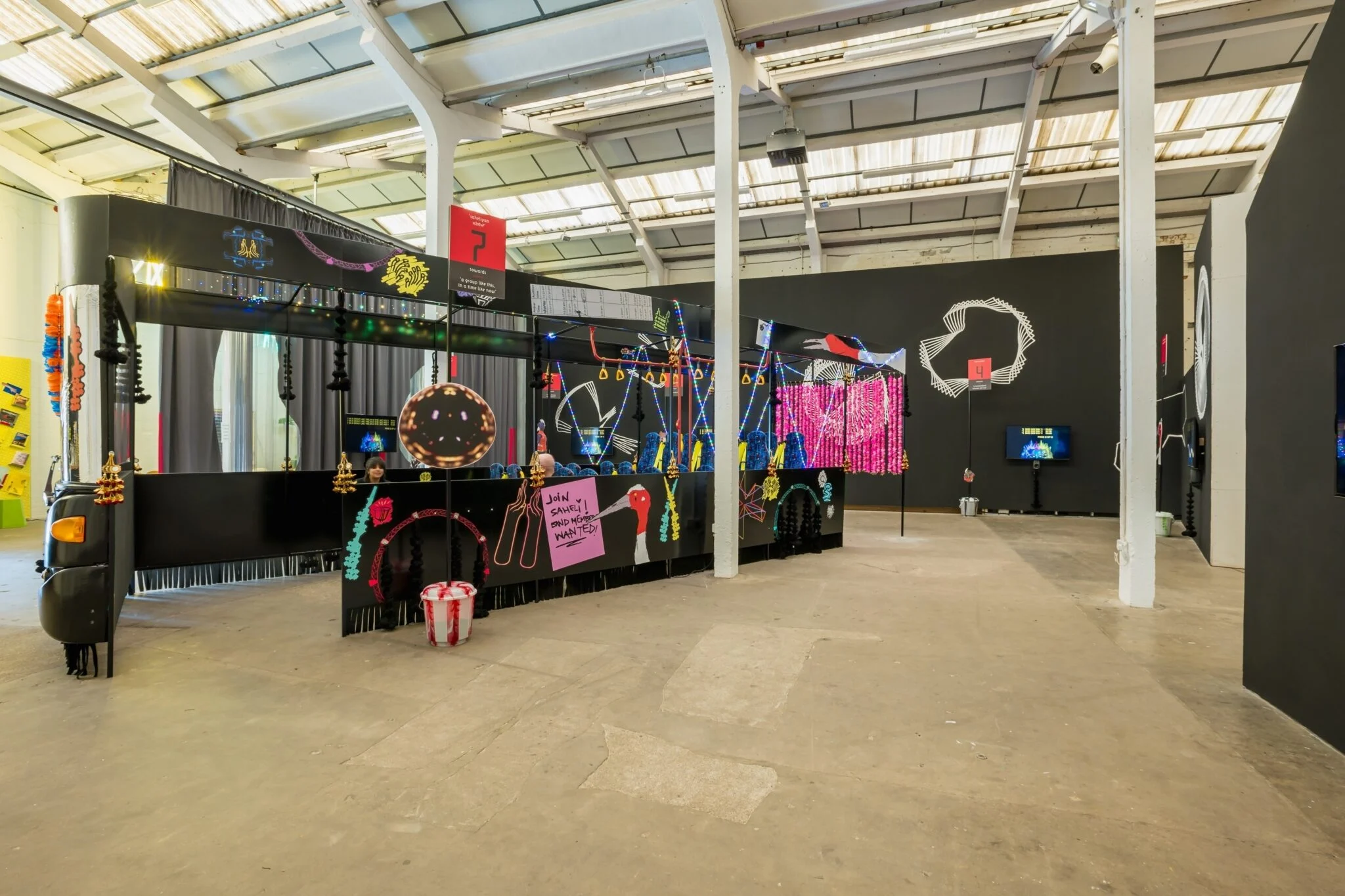
Step aboard a tour bus and enter the ever-expanding world of Saheli, a fictional band created by artist Seema Mattu.
A series of films follows the group through auditions, rehearsals, interviews and jam sessions, while interactive instruments invite visitors to make music alongside the band and contribute to an evolving sonic landscape. Exploring caste, queer desire, technology and collective creativity, LOCAL SUPERSTAR II presents music as a space where people can gather, experiment and create something together.
For Mattu, superstardom is not simply about global fame, but the excitement of ideas taking shape at a local level, supported by the people and places around them.
Rae-Yen Song 宋瑞渊: •~TUA~• 大眼 •~MAK~•, FACT Liverpool (18 September 2026 – 14 February 2027)
Rae-Yen Song, •~TUA~• 大眼 •~MAK~• (2026). Installation view at Tramway, Glasgow. Courtesy of the artist. Photography by Keith Hunter.
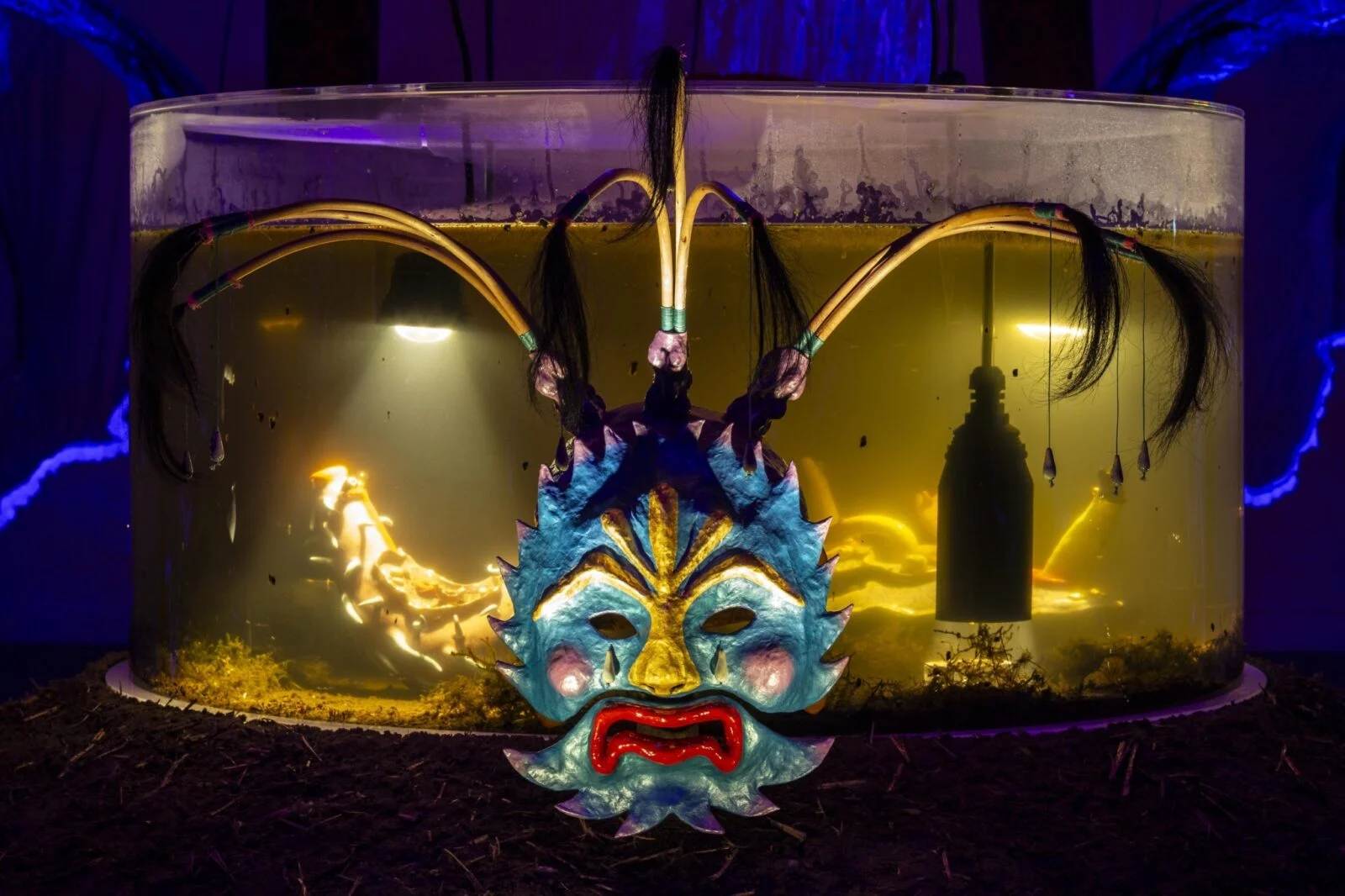
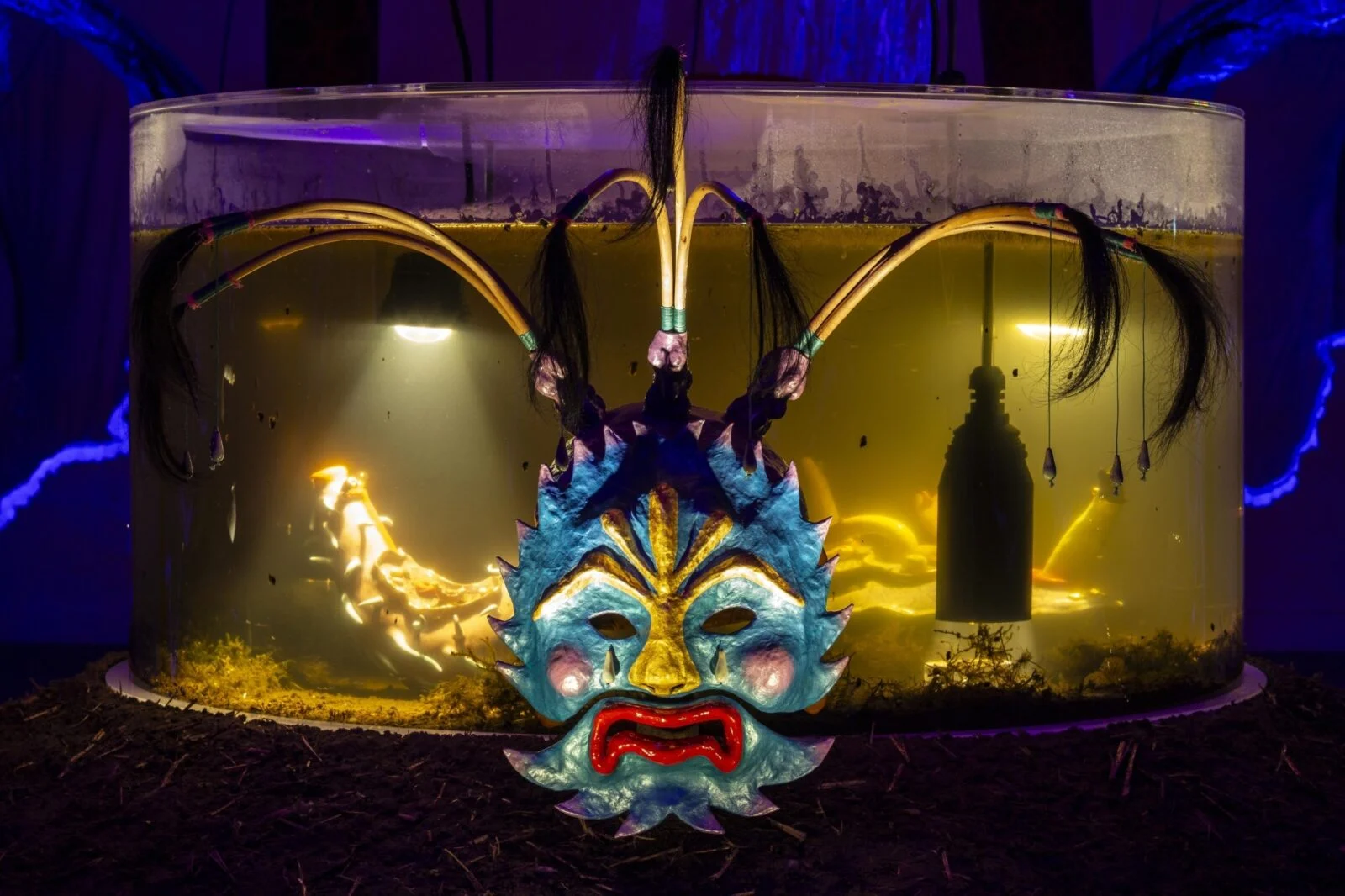
Rae-Yen Song transforms the gallery into a living, otherworldly environment inspired by family mythology, ecology and Daoist ways of understanding the world.
At its centre is a glowing pond containing organic matter, microscopic life and invertebrates, whose movements influence the shifting light and sound around the space. Handmade objects created using textiles, glass, ceramic, willow, hair and even cat fur appear throughout the installation.
Inspired by the story of an ancestor who drowned at sea in 1950s Singapore, the exhibition brings together the visible and invisible, encouraging visitors to think of heritage and ancestry as something living, changing and deeply interconnected.
Next Up-2026, Open Eye Gallery (18 September – 1 November 2026)
Credit: Ella Horniman
Open Eye Gallery’s annual graduate exhibition returns with new work from early-career photographers connected to its MA in Socially Engaged Photography, delivered in partnership with the University of Salford.
Featuring Yaqeen Amir, Ella Horniman, Jack Smith and Helen Constantinou, this year’s exhibition explores subjects including displacement, LGBTQI+ history, working-class creativity and environmental damage.
From photographs documenting the 1988 protests against Section 28 to collaborative zines created with underrepresented communities in North Manchester, Next Up-2026 highlights stories and experiences that can often be overlooked, while offering an exciting glimpse at the future of socially engaged photography.
New Faces, New Focus: Stories We Share, Open Eye Gallery (18 September – 20 December 2026)
Home Carried with Us by Nina Karetska
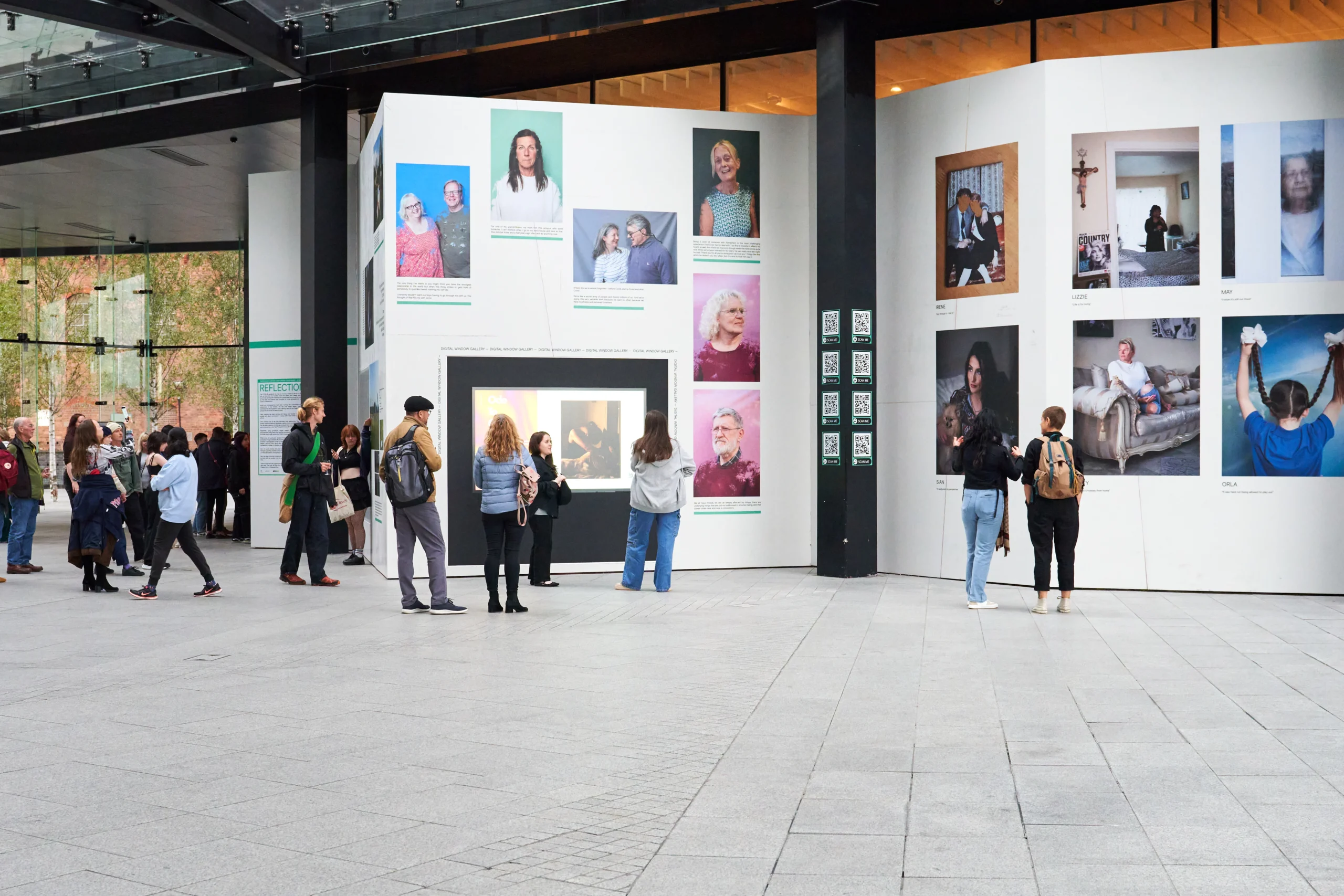
Bringing together artists, community participants and museum collections from across the UK, New Faces, New Focus: Stories We Share explores journeys, identity and the meaning of home.
Created through residencies in the Liverpool city region, Armagh and Aberdeenshire, the exhibition places the experiences of communities affected by migration and displacement at its heart. Photography, sculpture, sewing and writing sit alongside objects from museum collections, revealing how everyday items can hold powerful memories of family, heritage and belonging.
Related displays will also take place at The Atkinson, Kirkby Gallery and The World of Glass, before the exhibition continues its journey to Northern Ireland and Scotland.
Becky Beasley: A Gentle Man (Part II) (1975–2029), Bluecoat (26 September 2026 – 3 January 2027)
Photography by Nigel Green.
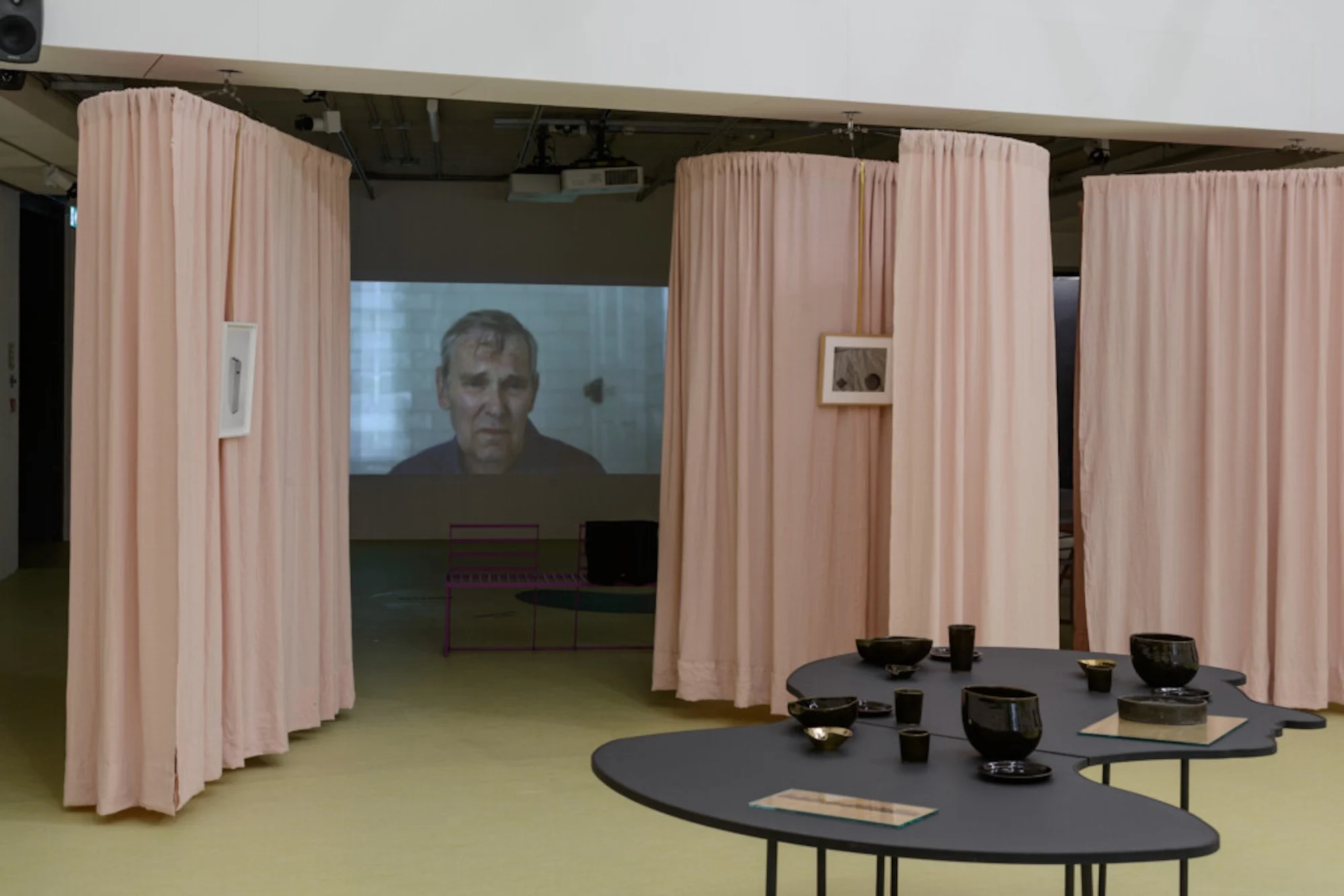
Becky Beasley’s touring exhibition completely transforms Bluecoat’s gallery, with a large green linoleum artwork stretching across the floor, hand-cut lake silhouettes and adjustable “conversation” or “kissing” benches where visitors can pause and rest.
Pastel-pink curtains shaped into the letters H, S and P — an acronym for Highly Sensitive Person — hang alongside ceramics, photographs and sculptural furniture. At the centre of the exhibition is a four-part video portrait of an imaginary figure combining elements of American writer Bernard Malamud and the artist’s father.
Narrated by actor Russell Tovey, the work moves through four major parts of life: work, family, chosen family and dying. Entry is free.
To discover more exhibitions and events taking place across Liverpool and the city region, explore Uncover Liverpool’s What’s On listings.
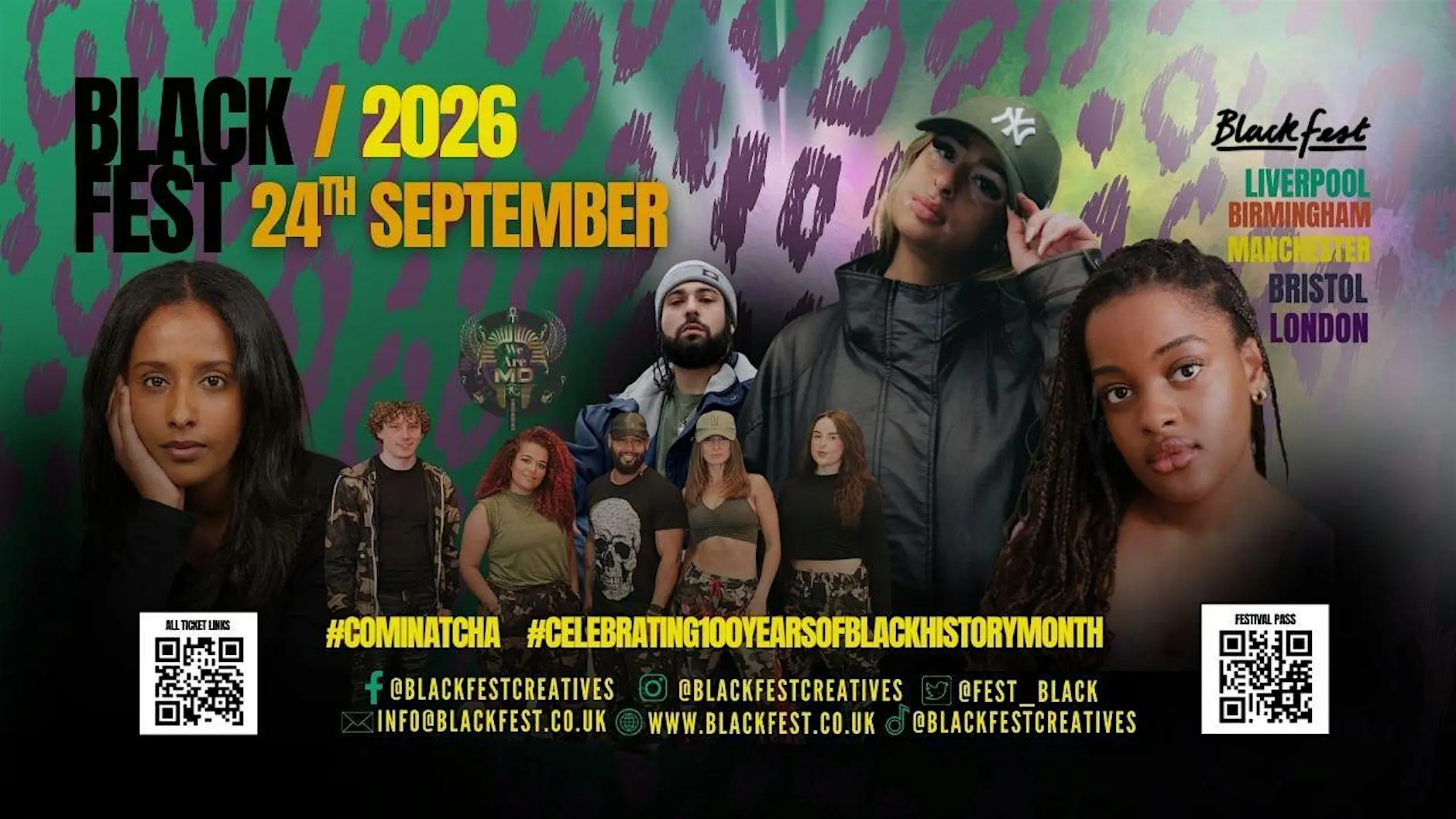
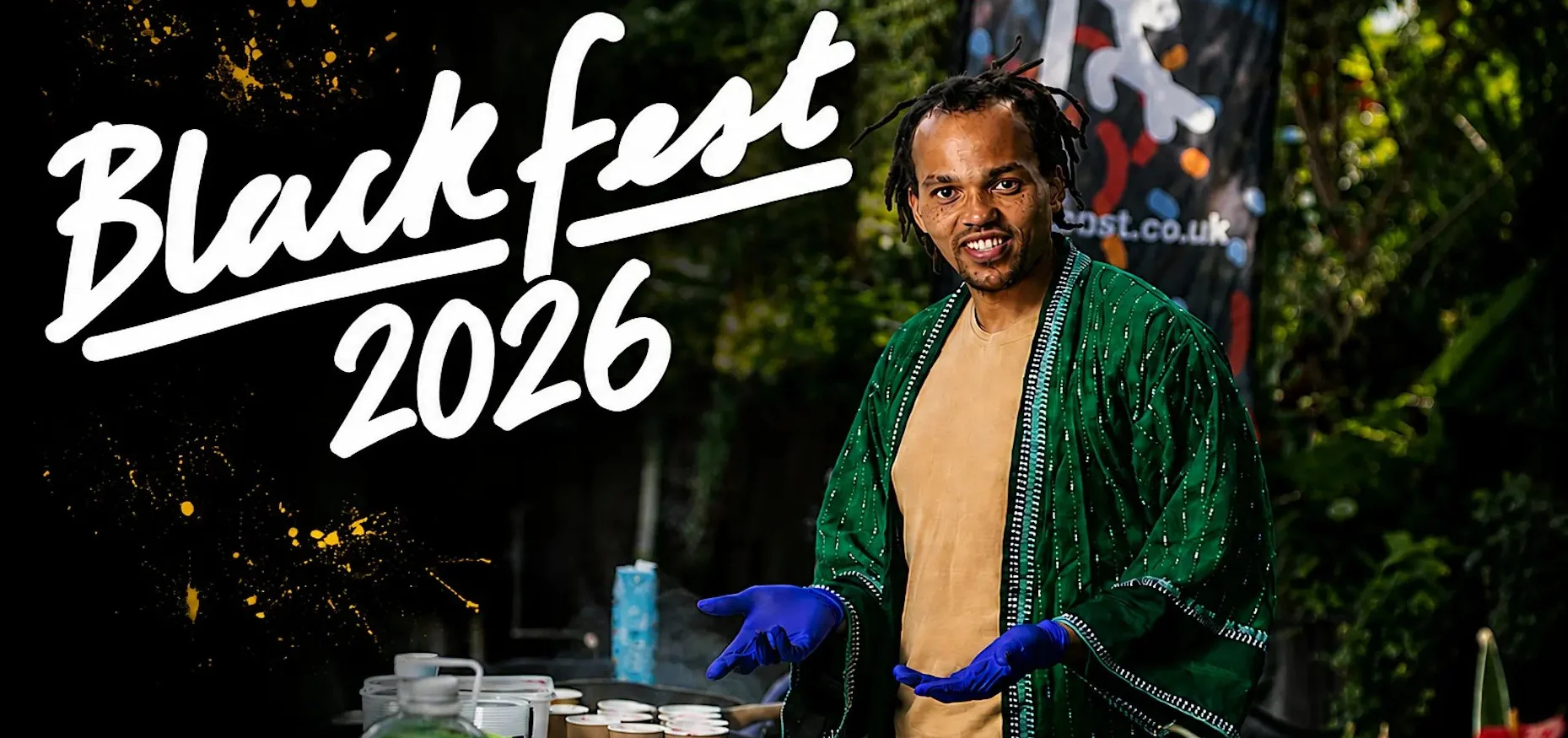
BlackFest returns to Liverpool this autumn with another packed programme of music, theatre, comedy, film, visual art, spoken word, poetry and creative workshops.
Founded in 2018, the grassroots Black Arts festival champions Black artists and brings their work to both community spaces and established cultural venues. This year’s festival marks 100 years since the beginnings of Black History Month, with events taking place across Liverpool throughout September and October.
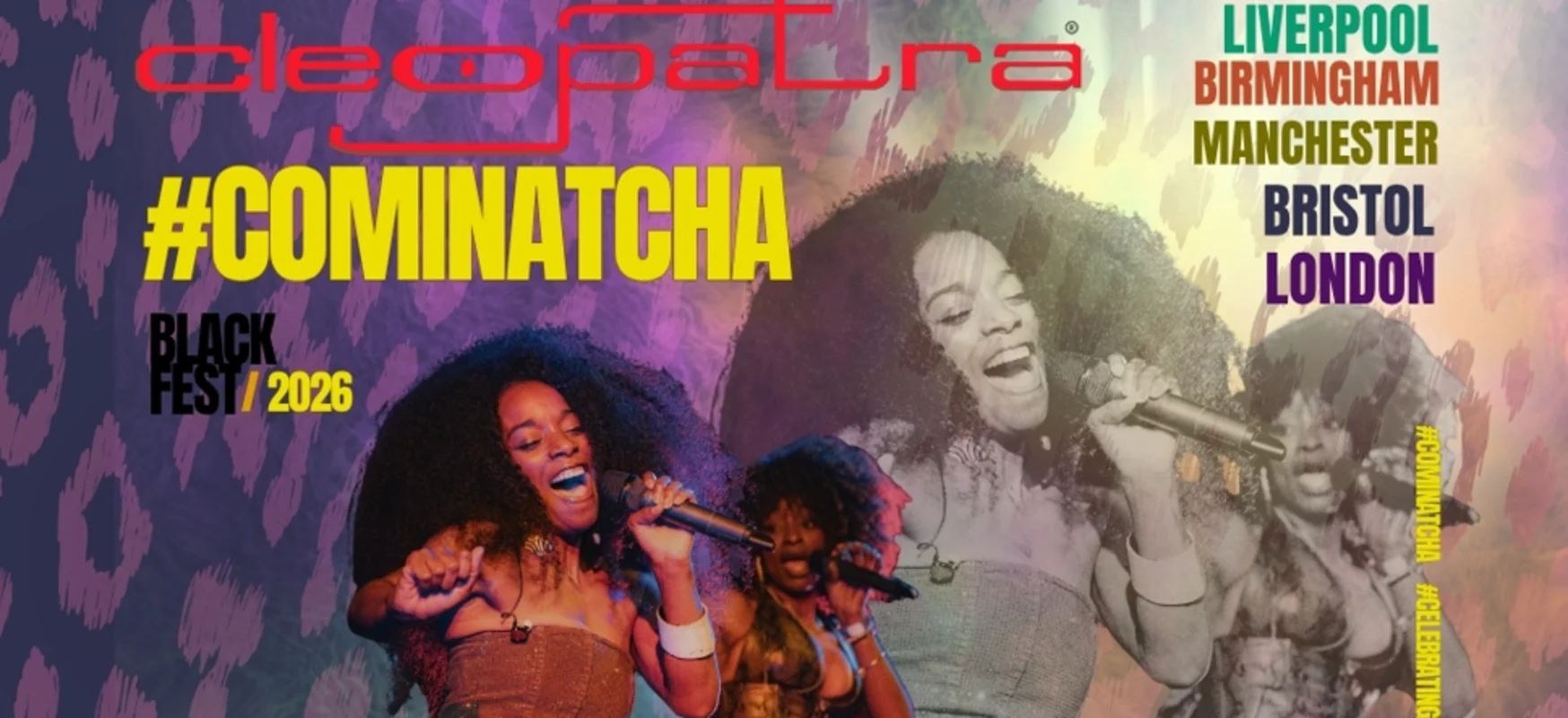
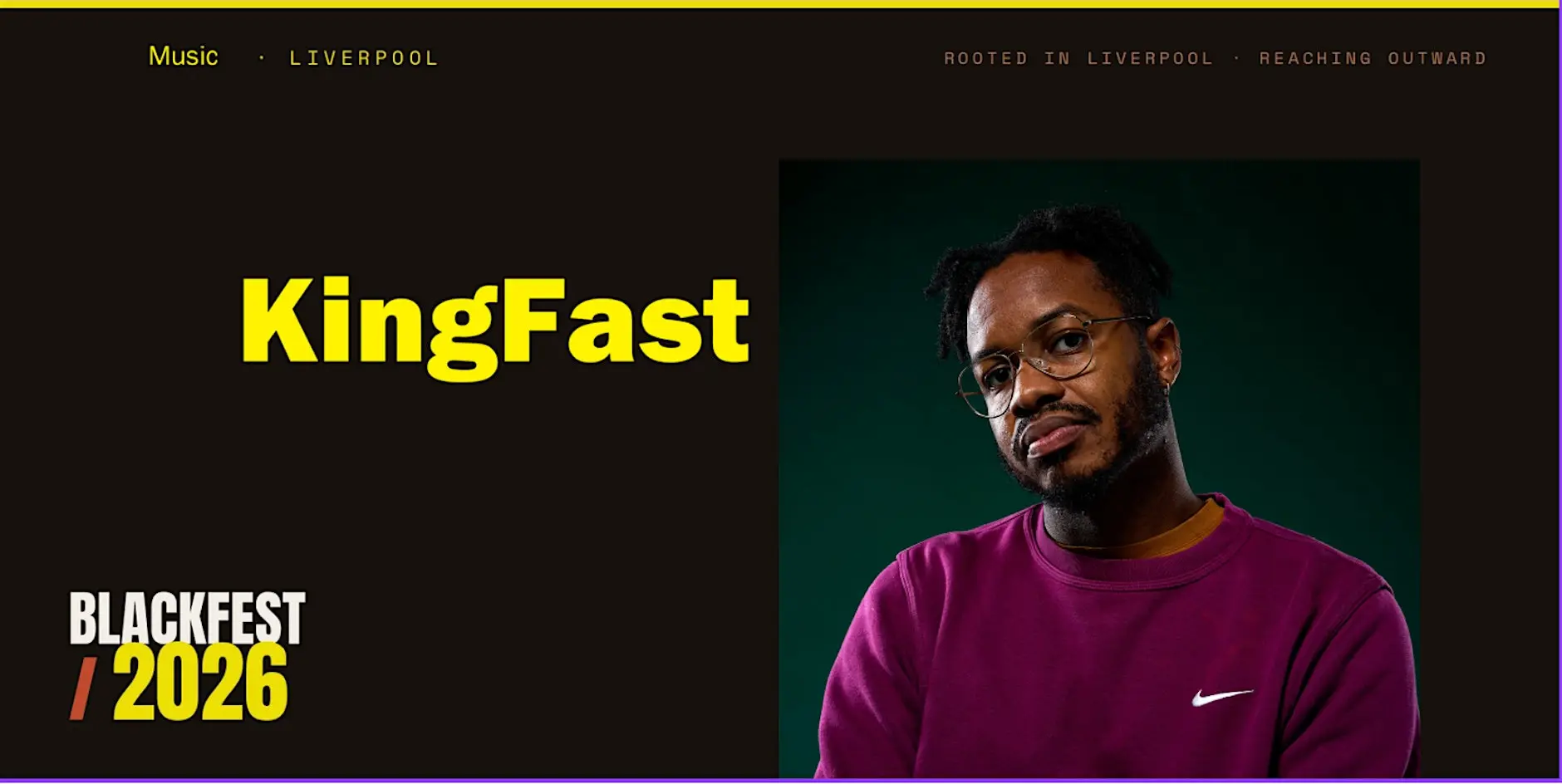
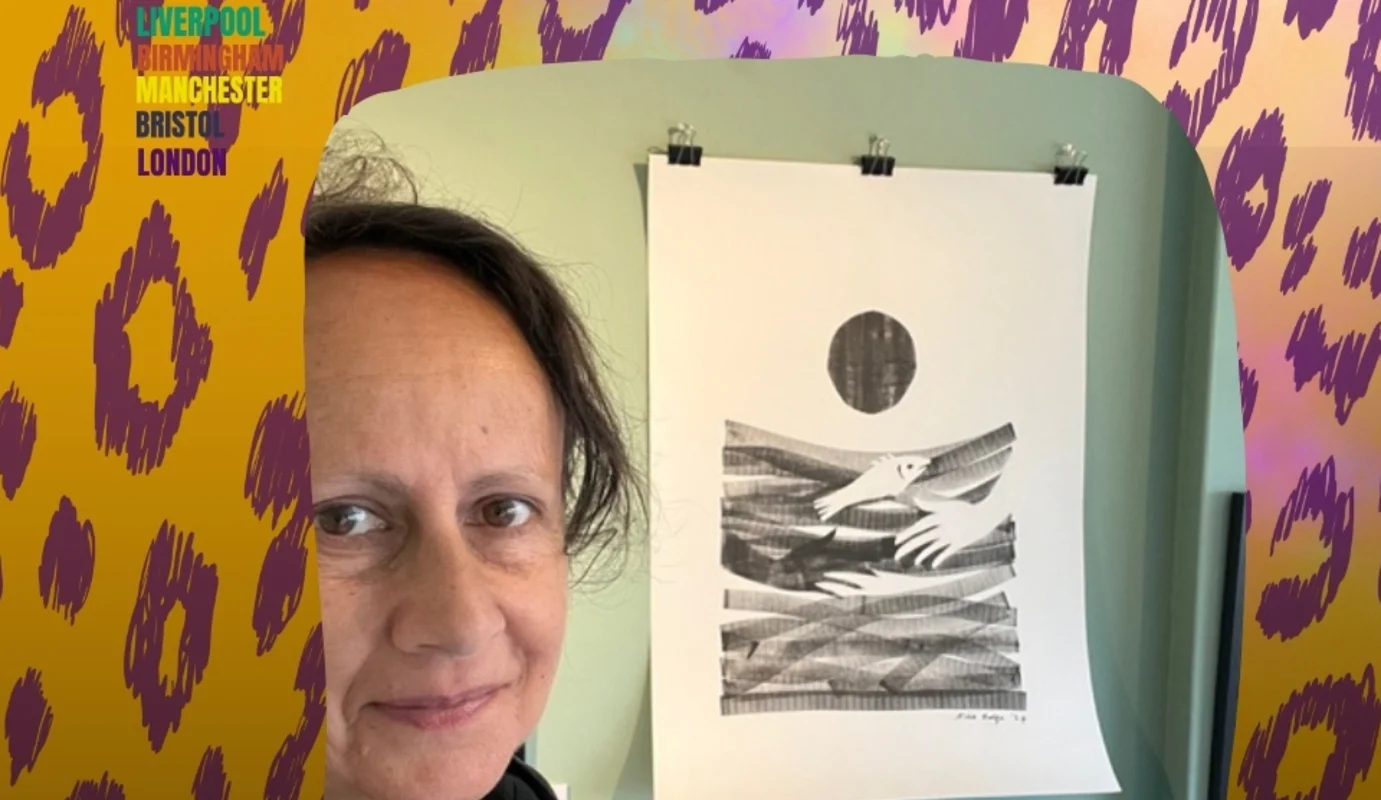
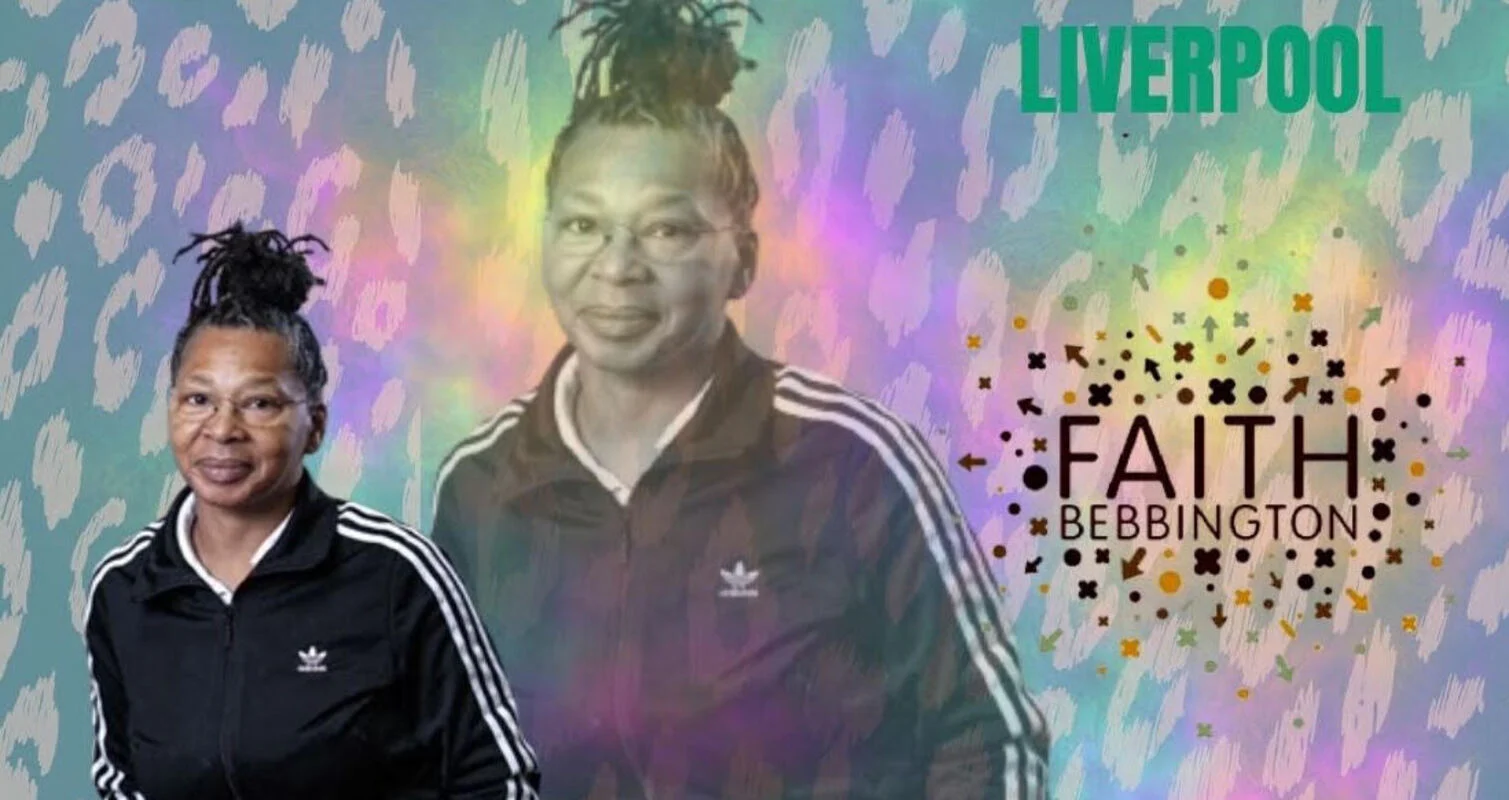
The 2026 line-up features everyone from ’90s pop favourites Cleopatra and Jamaican-born Liverpool musician KingFast to artists Alena Kudera, Nina Edge and acclaimed sculptor Faith Bebbington.
Here’s our guide to what’s happening at BlackFest 2026.
Short Experimental Performances & One Woman Plays – Shakespeare North Playhouse (24 September)
BlackFest Creatives Collective takes over Shakespeare North Playhouse for an evening of new writing, music and performance exploring identity, relationships, race, grief and what it means to be British.
Loisha performs her one-woman play Brit-tish, asking whether Britain can truly feel like home when you’re both Black and British. Mariam Abood, also known as Emmy, will also showcase her debut work, Frenemies, exploring the complicated space where friendships and rivalries collide.
Expect an evening of fresh ideas, exciting stories and experimental performances covering everything from AI and dystopian futures to identity and belonging.
Short Experimental Performances From Black Writers & Comedians – Shakespeare North Playhouse (25 September)
The following evening brings together stand-up comedy, spoken word and new experimental work from the BlackFest Creatives Collective. Hosted by Skelmersdale comedian, writer and actor Daniel Hippolyte Carmichael, Comedy and Short Experimental Performances includes spoken word sequences from Sandstone Silver and stand-up from young performer Jaqson Johnston-Lynch.
Also appearing is Sarah Levine, one of Liverpool’s fastest-rising comedy talents. A mixed-race single mum with zero filter, Sarah is sharp, fearless and more than happy to say what everyone else is thinking.
Cleopatra – The Tung Auditorium (25 September)
Sisters Cleopatra, Zainam and Yonah Higgins burst onto the British pop scene in the late ’90s with their infectious energy, soulful harmonies and unforgettable performances. The Manchester siblings became the first Black British girl group to achieve mainstream success, securing their place in pop history with hits including Cleopatra’s Theme.
Now, Cleopatra are heading to The Tung Auditorium as part of BlackFest 2026, offering the perfect chance to relive some ’90s pop nostalgia.
Short Experimental Performances & One Woman Plays – Shakespeare North Playhouse (26 September)
BlackFest Creatives Collective returns to Shakespeare North Playhouse for another evening of new and developing work. This edition of Short Experimental Performances and One-Woman Plays includes an experimental R&D performance from Chelsey Emery, Chase Johnston-Lynch and friends, celebrating Black excellence and historical figures.
Sarah Abusin presents Jailbird, a musical exploring the lives of incarcerated women in Dubai, while Nigerian spoken word artist Janoma Omena performs work exploring queerness, young adulthood, reproductive health and migration.
KingFast – The Tung Auditorium (30 September)
Born in Kingston, Jamaica, raised in Belfast and now part of Liverpool’s music scene, KingFast brings together the sounds and influences of his different homes. He has performed at Liverpool Sound City, LIMF, Deva Fest, Nantwich Jazz Festival and Elderflower Fields Festival, as well as reaching the final of Southport’s Eurovision Calling.
His music has been heard on Radio City and BBC Radio Merseyside, as well as through a national in-store jukebox playing in major chains across the country. Catch him live at The Tung Auditorium as part of this year’s festival.
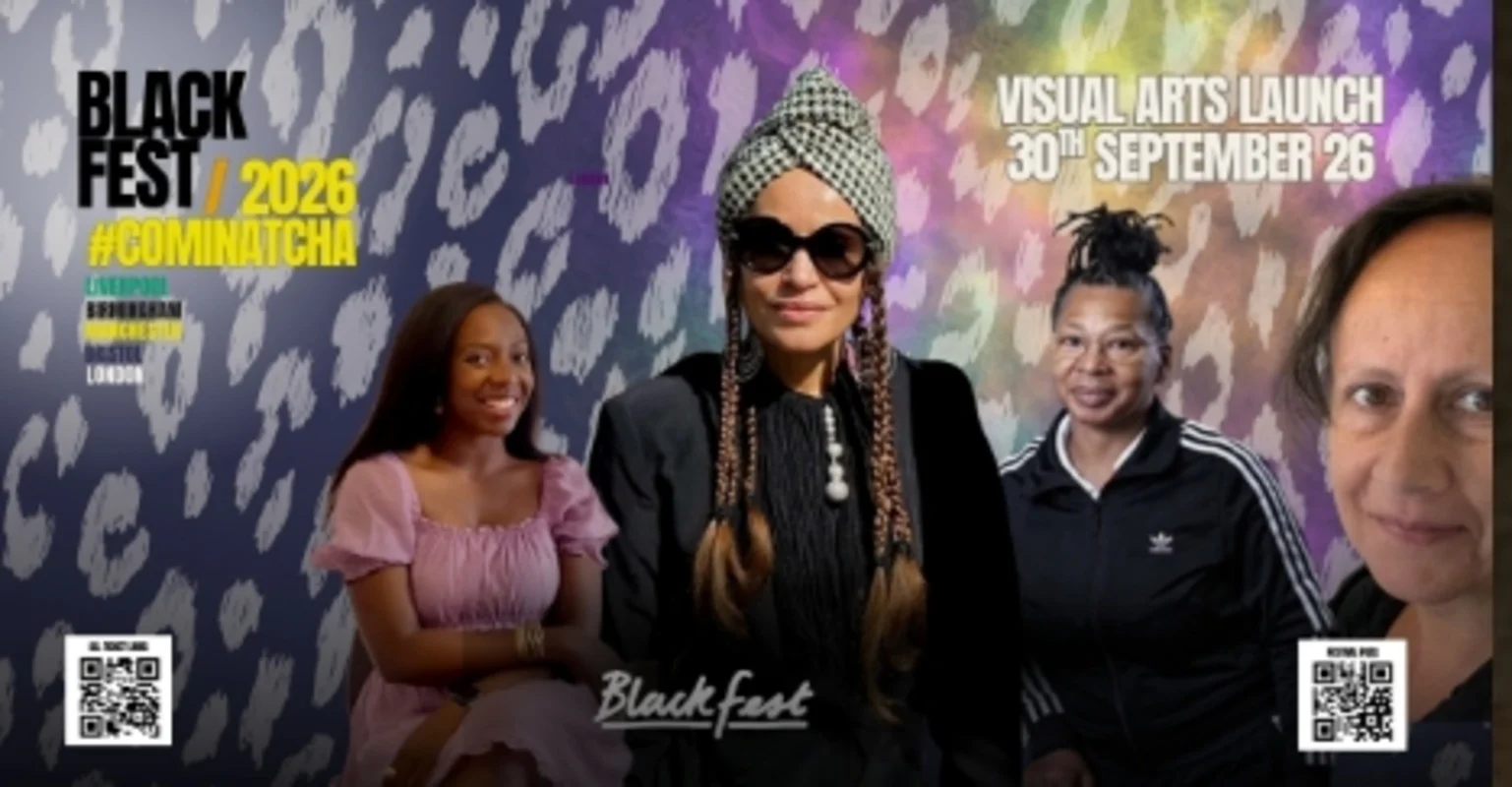
Visual Arts Launch – Granby Winter Garden (30 September)
BlackFest’s Visual Arts Launch brings artists, creatives and audiences together for an evening celebrating Black visual art and creative expression. Taking place in the beautiful surroundings of Granby Winter Garden, the event combines art, music, conversation and community, with a special live piano performance from Jazz Gittens.
There will also be a panel discussion featuring artists from the BlackFest 2026 visual arts programme, who will share more about their creative practices, inspirations, experiences and the stories behind their work.
BlackFest 2026 Presents: Visual Arts Workshop with Ayobami – Granby Winter Garden (7 October)
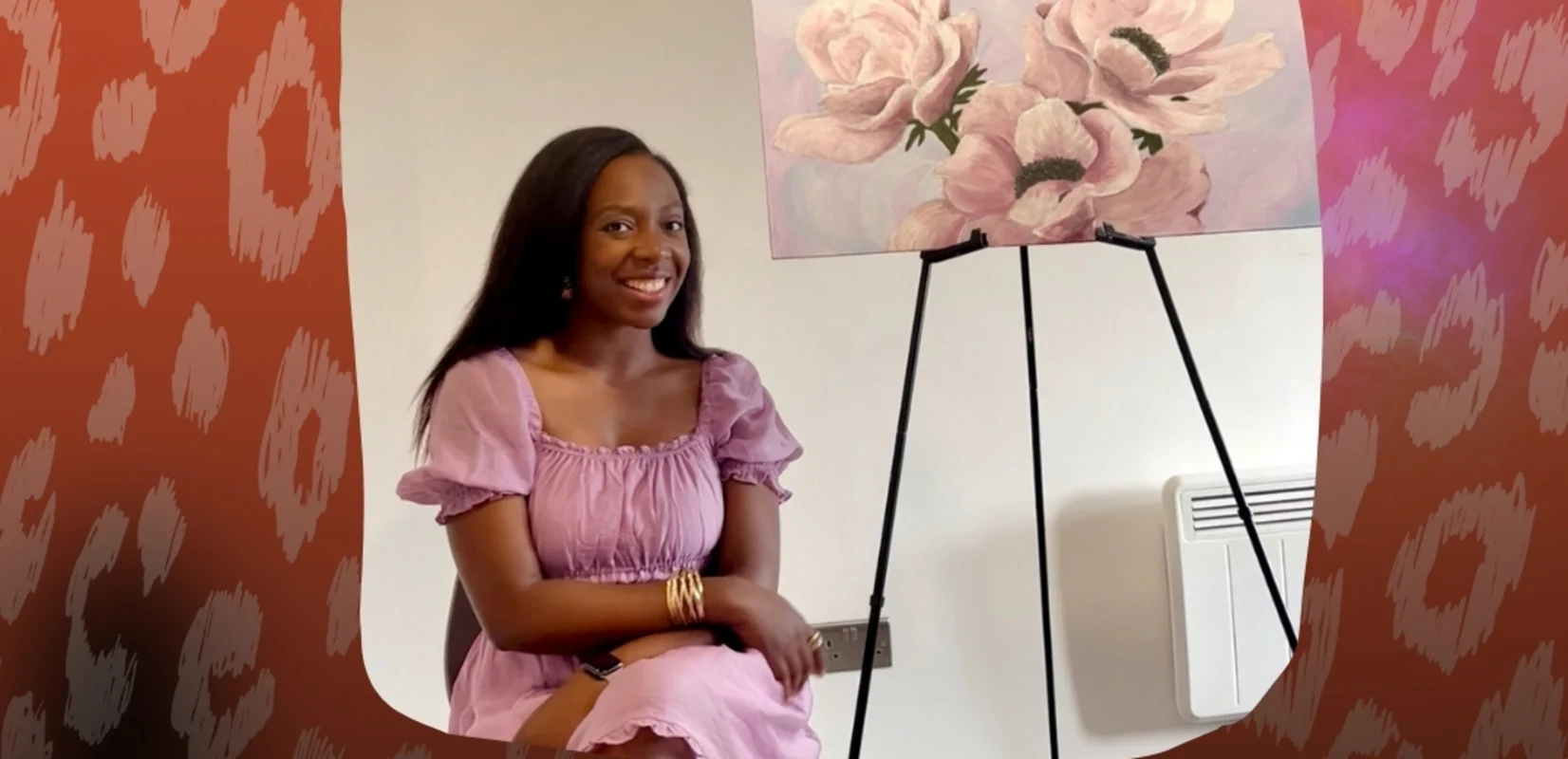
Get creative with multidisciplinary artist Ayobami during this hands-on Visual Arts Workshop at Granby Winter Garden. Specialising in floral artwork and expressive abstract pieces, Ayobami combines colourful acrylic blends with detailed ink hatching to create bold and dynamic compositions.
During the session, she’ll introduce participants to her creative practice and encourage them to experiment with colour, abstraction and expressive mark-making.
Spend an afternoon enjoying good food, creativity, music and community inside Sefton Park Palm House. Plant-Based Goodness, Arts, Crafts and Market features healthy and flavour-packed food from Yammtree, introducing visitors to indigenous ingredients that can support wellbeing and immunity.
There will also be an all-ages arts and crafts table led by visual artist Layla Gibiliru, with parents welcome to get involved, plus a market filled with handmade products and one-of-a-kind gifts. Local DJ Shanay Maxwell will provide the soundtrack to the afternoon with a selection of soulful tracks.
BlackFest 2026 Presents: Awakened ft. Kelechi Okafor – Palm House, Sefton Park (11 October, Evening)
Later that evening, the Palm House hosts Awakened featuring Kelechi Okafor, bringing together literature, culture, conversation and big ideas.
Kelechi Okafor is a British-Nigerian artist, writer, presenter, actor and political commentator. She is also the creator of the acclaimed Say Your Mind podcast, which has grown to more than 280 episodes and explores self-reclamation through an unflinching look at society.
Her work spans literature, media, performance and political commentary, often exploring Black identity, systemic injustice and the experiences of Black communities. This event offers an opportunity to hear more about her work, ideas and approach to creating meaningful change.
BlackFest 2026 Presents: Visual Arts Workshop with Alena Kudera – Granby Winter Garden (14 October)
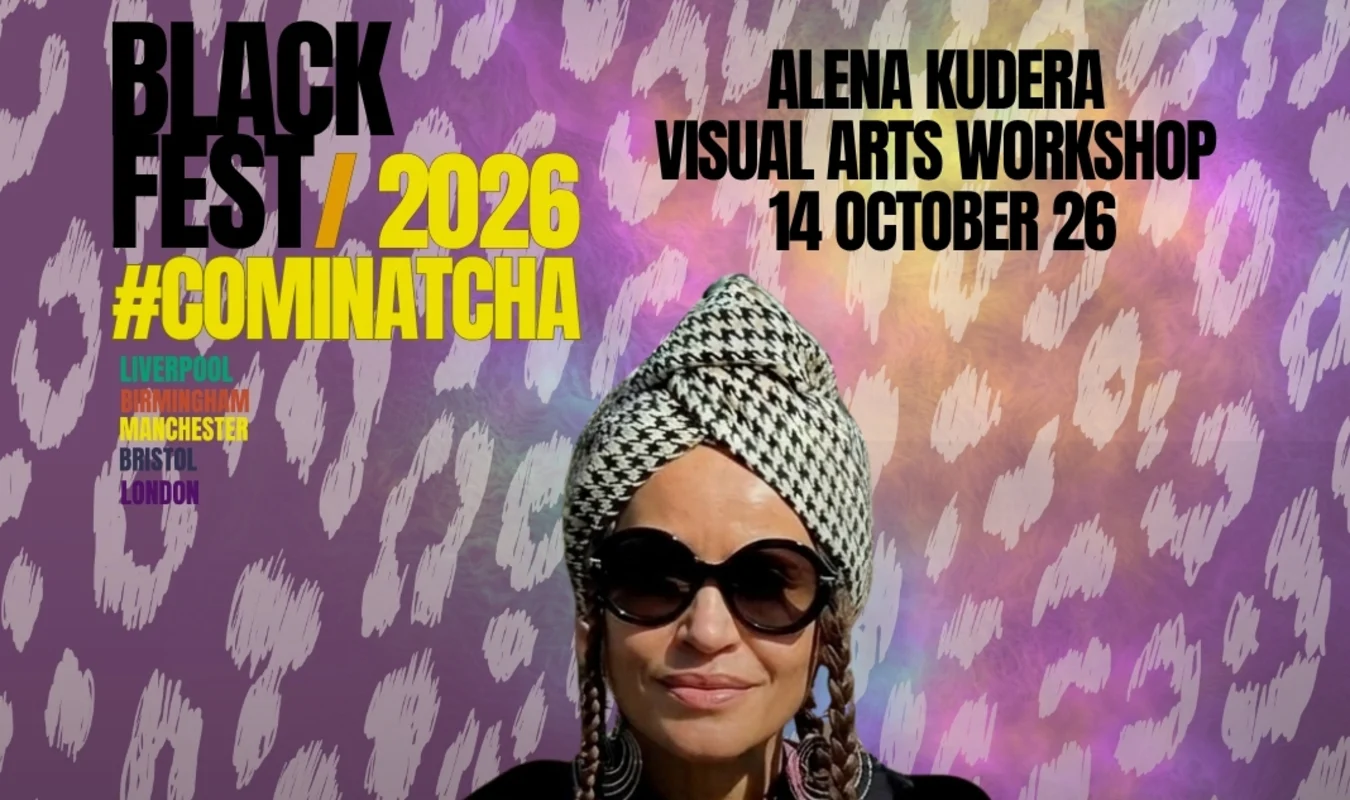
Discover the creative potential of unwanted clothing, textiles and everyday objects at this Visual Arts Workshop with Alena Kudera. Alena is a visual artist, designer and maker who transforms discarded materials through craftsmanship and creative reinvention.
Her work explores clothing as a language and the body as a canvas, taking inspiration from folk motifs, sensory patterns and sculpture. During the workshop, she’ll share her practice and invite participants to explore textiles, sustainability, deconstruction and material storytelling.
BlackFest 2026 Presents: Visual Arts Workshop with Nina Edge – Granby Winter Garden (21 October)
Artist, writer and urban design activist Nina Edge leads a special Visual Arts Workshop exploring creativity, materials, community and public art.
Nina’s multidisciplinary practice spans radical textiles, ceramics, street performance, public art and short film.
A dual-heritage British Asian woman, she originally trained as a ceramicist and became known for using materials traditionally viewed as low-status crafts to question established artistic hierarchies.
Round off the festival programme by creating something meaningful with acclaimed Liverpool sculptor Faith Bebbington. During the sustainable Celebrating Legacy Sculpture Workshop, participants will create a piece honouring their own identity or celebrating an inspiring Black historical figure.
Using recycled paper and cardboard, you’ll make a personal 3D artwork while exploring identity, heritage, Black history and legacy in a welcoming group setting.
For even more events, exhibitions and cultural happenings explore our What’s On listings.
This autumn brings an exciting season of theatre shows in Liverpool and across the wider city region. The line-up includes fresh takes on Shakespeare, Arthur Miller and Jane Austen, alongside a striking adaptation of Oscar Wilde’s The Picture of Dorian Gray.
Unity Theatre presents Woodhill, exploring the hidden history of HMP Woodhill, while Liverpool’s Empire Theatre welcomes the powerful and acclaimed The Curious Incident of the Dog in the Night-Time.
If you’re planning an autumn night out, here’s our selection of must-see theatre shows in Liverpool and across the city region.
Death of a Salesman – Liverpool Everyman (19 September – 10 October)
Death of a Salesman is contemporary as well as timeless – an unforgettable drama that speaks to our everyday dreams and the pressures of our changing working world.
Seamlessly weaving past and present into one of theatre’s most enduring stories, Death of a Salesman reveals a family at breaking point and a man in conflict with his own sense of worth. Can Willy and those around him survive? Or will their gleaming tomorrow become a tarnished and tragic today?
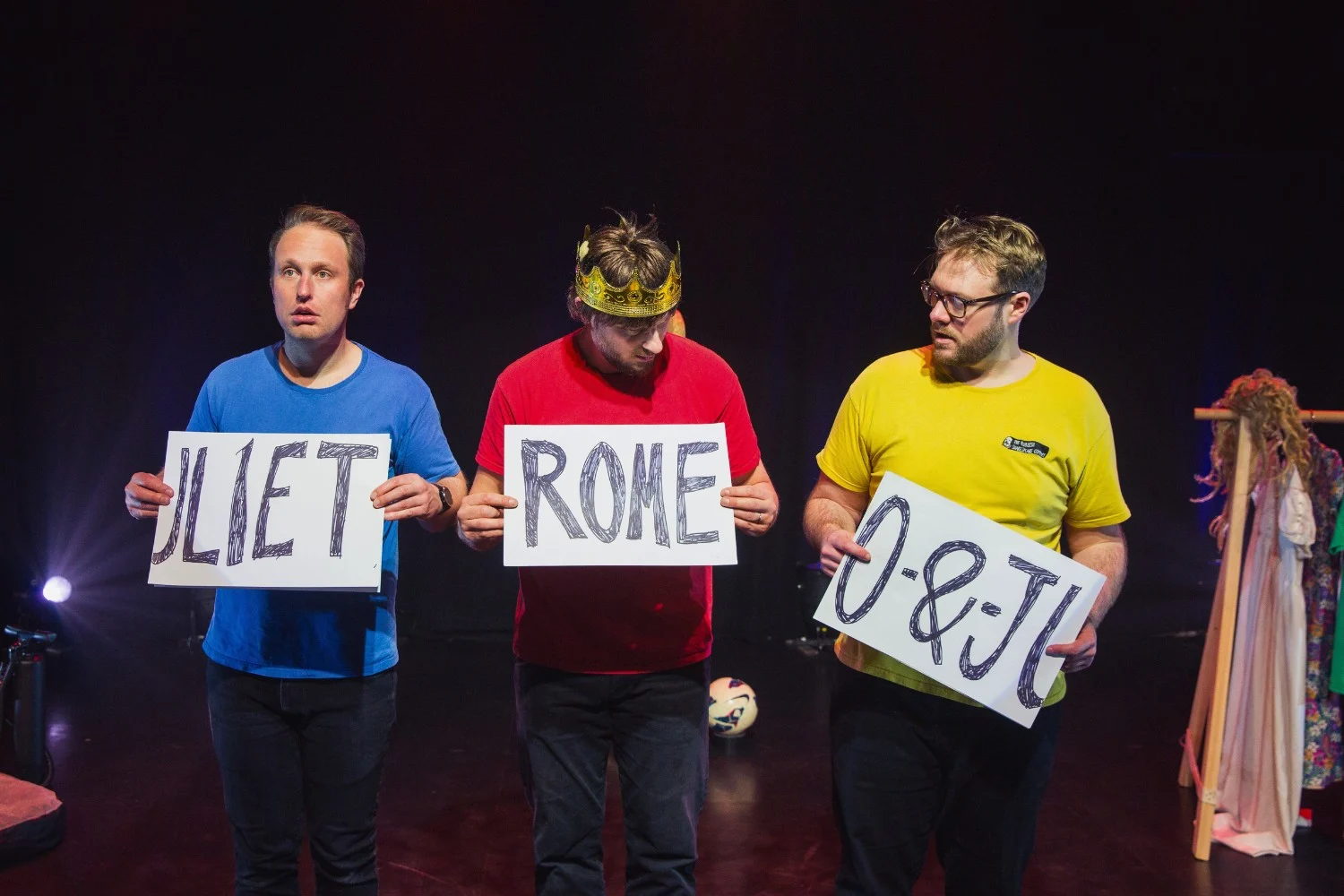
The Rubbish Shakespeare Company presents Romeo & Juliet, a tragedy like no other. Three hapless idiots attempt the Bard’s most famous love story using nothing but a box of tatty wigs, a worn floral dress, and a burst airbed found by the bins.
This acclaimed take on Romeo & Juliet is a riotous hour of frenetic slapstick, clowning and fourth-wall-breaking chaos. Taking huge liberties with the original text, the company splices Shakespeare’s classic lines with modern gags, physical comedy and gloriously silly storytelling that keeps everyone – from age 5 to 105 – completely hooked.
The Picture of Dorian Gray – Shakespeare North Playhouse (7 – 10 October)
This bold new adaptation of the classic novel celebrates Wilde’s dazzling wit and dark imagination. Stylish and unsettlingly thrilling, The Picture of Dorian Gray plunges you into a world where charm is currency and the truth always exacts its price.
In a society obsessed with youth and beauty, Dorian Gray is offered the ultimate prize: eternal perfection. But perfection comes at a price, one that must be paid in blood.
Pride & Prejudice* (*sort of) – Liverpool Playhouse (13 – 17 October)
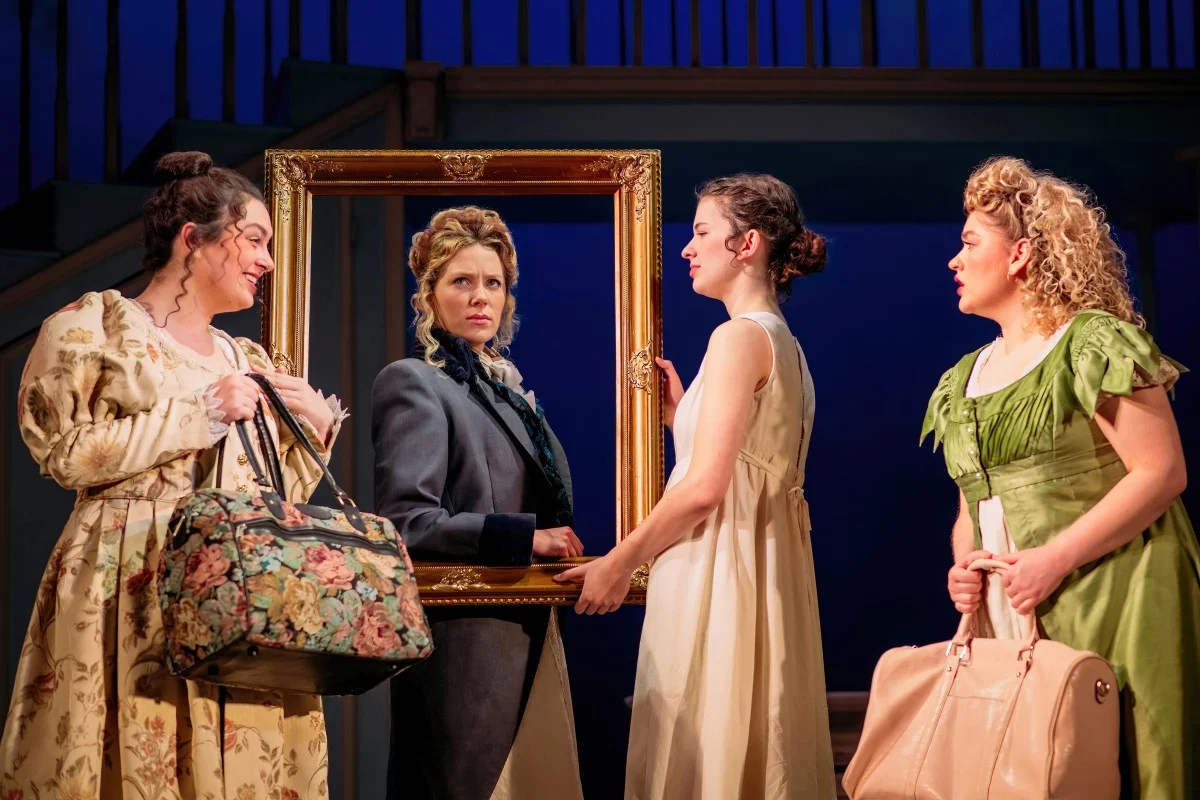
After its triumph in the West End where it won the Laurence Olivier Award for Best Comedy and the Evening Standard Award, Pride and Prejudice* (*sort of) is a unique and audacious retelling of Jane Austen’s most iconic love story.
Men, money and microphones will be fought over in this irreverent but affectionate adaptation where the stakes couldn’t be higher when it comes to romance. This multi-award-winning production features a string of pop classics including Young Hearts Run Free, Will You Love Me Tomorrow and You’re So Vain.
High Tea – Liverpool Irish Centre (19 October)
Victoria Fradgley’s one act play High Tea serves a sharp, funny and devastating reckoning between two estranged sisters. The production is part of Liverpool Irish Festival 2026.
Set against the weight of Irish family history, the play explores how love curdles into resentment, how our memory can betray us, and whether reconciliation is possible when the past refuses to stay buried.
Woodhill – Unity Theatre (21 – 22 October)
Gut punching choreography and unflinching beats shine a light on the hidden story of HMP Woodhill. Lyrically told in their own words, three families investigate what happened to their deceased boys. What they discover is so haunting, it turns their world upside down. Pushing the form of documentary theatre and dance, Woodhill is an explosive true story by multi-award-winning LUNG and originally developed with The North Wall.
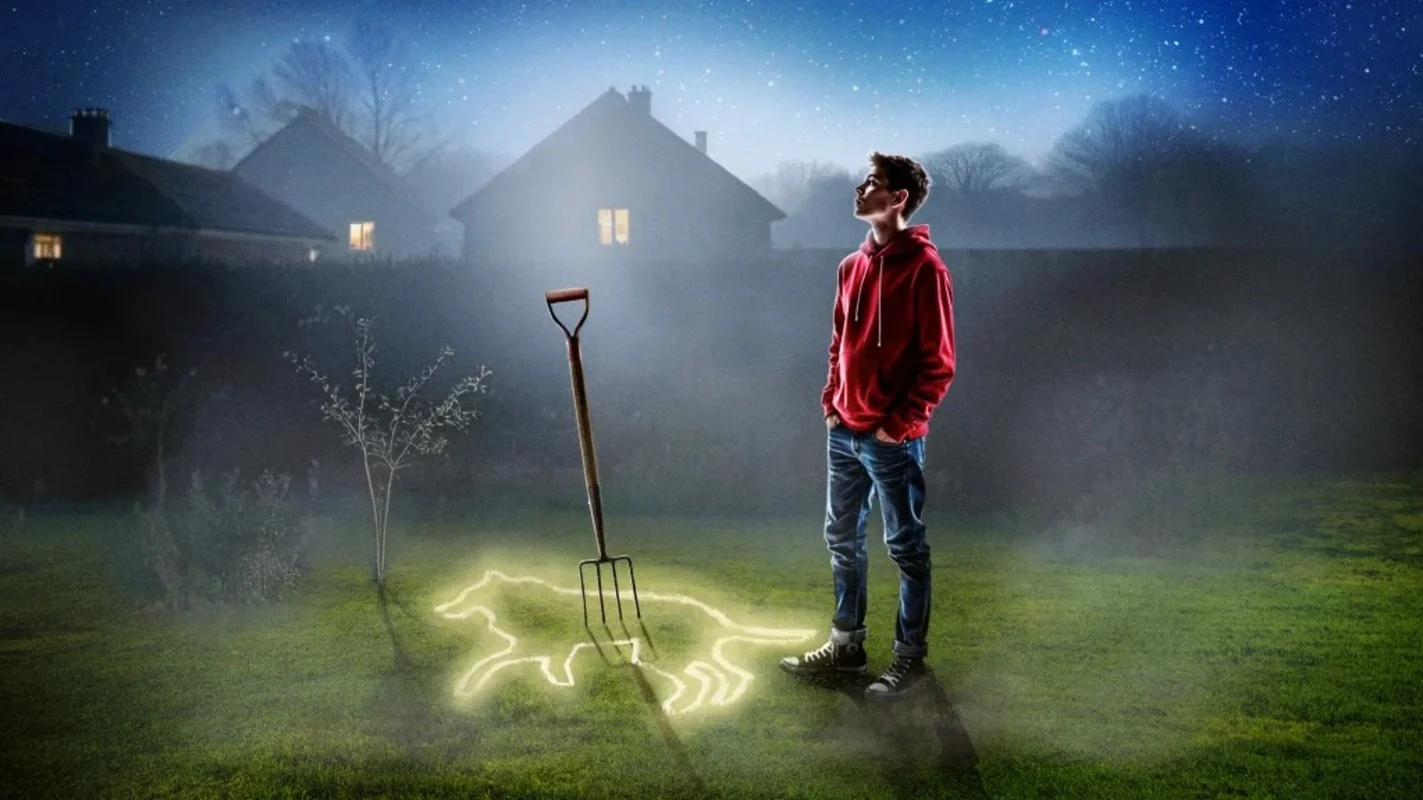
The Curious Incident of the Dog in the Night-Time – Liverpool Empire Theatre (3 – 7 November)
What begins as the search for a culprit soon reveals secrets closer to home, forcing him to confront truths that will test his courage, his family, and his understanding of trust, independence, and the wider world.
In this latest edition of Buried Treasure, John Maguire of ArtsGroupie CIC explores the creative spark within us all and reflects on how Physical Fest continues to inspire artists and audiences alike.
In this column, I often look at heritage and treasures in the Liverpool City Region from an external perspective. Today, however, I am going to focus on the buried treasure within the individual: the imagination and creativity we all possess.
Theatre and the arts can act like tinder, igniting a whole array of feelings within the spectator and serving as a powerful catalyst for inspiration.
As we head into autumn and the unpredictable weather that comes with it, September sees the return of Physical Fest at the Unity Theatre. Always, when I attend this festival, I come away with so many ideas. It is, for me, a creative M.O.T.
Physical theatre blends movement, dance, mime, and ensemble storytelling. It’s a festival that challenges what theatre usually looks like. Experiencing international masters and diverse movement styles firsthand is a unique opportunity that enhances any artists work.
As a young practitioner, my own early exposure to the world of physical theatre at the Unity pushed me to go on to study at Aberystwyth University. There, I explored all kinds of physical expression through workshops with so many practitioners like, theatre makers from The Berliner Ensemble and Etienne Decroux’s school. Plus, consistent movement work with Mike Pearson, pioneer of Brith Gof, one of the most radical, site-specific theatre companies making raw, industrial work.
This festival brings examples of top-class physical theatre into one venue. Eli Randle, the Founder, shared the origins and evolution of the festival: “Physical Fest started many moons ago, back in 2005, as a small workshop festival. At the time, my co-director Yorgos and I were travelling constantly around Europe, training with different practitioners and discovering new approaches to physical theatre. We thought, ‘Why not bring them to Liverpool?’”
Heavily inspired by Hope Street’s Physical Theatre course, the festival became a way of connecting Liverpool with the wider physical theatre world. Over the years, it has helped build a real physical theatre community and has been a constant source of inspiration for Eli and Tmesis Theatre.
‘Parker Dee’ in Ungirlfriended
“At a time when new borders and barriers can make international exchange more difficult, it feels increasingly important that we continue to connect with practitioners from around the world, to collaborate, be challenged, share ideas, and discover different ways of making art. Physical theatre has always been my preferred theatrical language. I love its ability to transcend culture and borders, and to communicate through something universal: the body.”
I asked some of the artists to tell me how the festival has affected them.
“Physical Fest is the best! It creates and warmly invites a diverse community of passionate people to celebrate and learn together. It has inspired me so much in my art, thank you.” — Jamie Wood, Artist
“Physical Fest is an amazing opportunity for emerging artists to access training with some of the best performers and practitioners in the world. Being part of Physical Fest and Tmesis Training Company opened up my professional network and allowed me to develop skills that supported me in future auditions and work… It’s an incredible chance to experience innovative work at accessible prices right here at a local theatre, saving you a trip to bigger cities like London.” — Mariana Pires, Performer & Emerging Artist
Physical Fest remains intimate and accessible. Who knows what spark it might trigger within you, or what creativity may emerge from sharing that collective space?
Physical Fest is Liverpool’s international festival of contemporary physical theatre, celebrating some of the world’s most exciting visual and movement-based performance. Produced by Tmesis Theatre, the festival brings bold new work from across the globe to the North for the first time, alongside a vibrant seven-day programme of performances, workshops and events.
Running from Monday 7th — Saturday 12th September, this year, the performance programme at Unity Theatre, features an exciting mix of clowning, physical theatre and circus from Belgium and Italy, captivating Japanese physical performance, and outstanding new work by local and national artists.
Being one of the thousands of Liverpool students means having an incredible cultural scene right on your doorstep. Alongside museums, galleries and music heritage, you’ll find independent theatres, grassroots venues, creative spaces, festivals, workshops. There’s so much to discover—and plenty of opportunities to get involved.
Lots of places are completely free to visit, while others offer affordable tickets and student discounts. Whether you want to discover local artists, catch some live music, get creative yourself or simply find a cheap day out with friends, this guide will help you make the most of what’s on offer.
Free Museums and Art Galleries
Credit: FACT Liverpool
The Liverpool City Region is home to an impressive collection of museums and galleries, many of which are free to visit. They’re ideal for an affordable day out, a little creative inspiration or an afternoon away from your studies.
National Museums Liverpool
National Museums Liverpool has several major museums and galleries across Liverpool and the wider city region.
Popular places to explore include:
Museum of Liverpool, where you can learn about the people, industries, music and social history that shaped the city.
World Museum, home to collections spanning natural history, archaeology, science and world cultures, as well as a planetarium and aquarium.
Walker Art Gallery, which displays paintings, sculpture and decorative art from the medieval period to the present day.
Lady Lever Art Gallery, situated in the historic village of Port Sunlight and particularly well known for its Pre-Raphaelite paintings.
Sudley House, a Victorian home containing paintings, period furniture and decorative art.
General admission is free, although charges may apply to selected exhibitions and activities. Check the National Museums Liverpool website for current opening information before travelling.
Tate Liverpool
Tate Liverpool brings major modern and contemporary art to the city through exhibitions, installations and events.
While its Royal Albert Dock building undergoes redevelopment, Tate Liverpool continues to present a programme in the city via Riba North at Mann Island. Check the website for exhibitions and opening times before visiting.
Bluecoat
Set inside Liverpool city centre’s oldest surviving building,Bluecoat is a contemporary arts centre presenting visual art, literature, music, dance and live performance.
Its galleries are free to enter and showcase work by both emerging and established artists. Bluecoat also runs talks, workshops and participatory events, while its courtyard and garden offer a peaceful place to escape the bustle of the city centre.
FACT
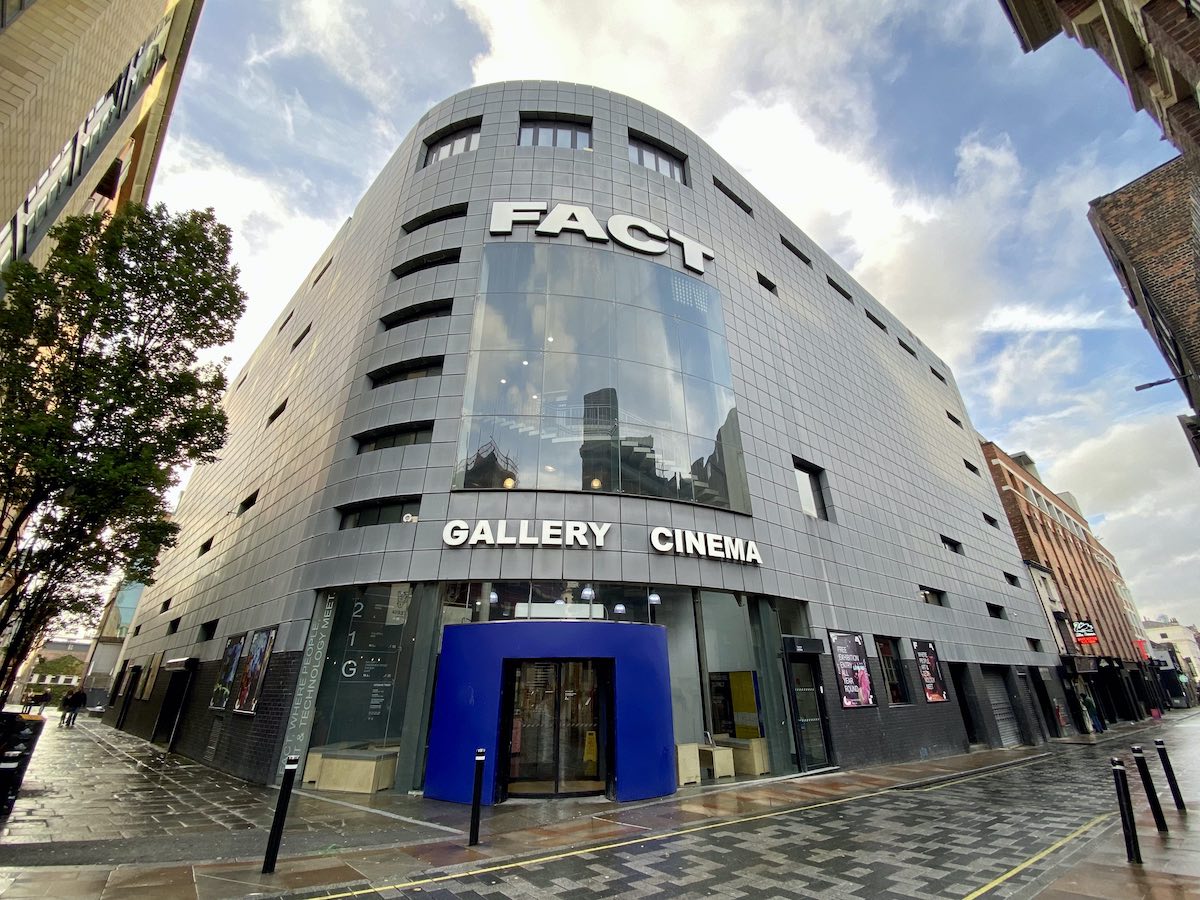
FACT explores the relationship between art, film, technology and society through free exhibitions and immersive installations.
It’s a particularly interesting venue for students studying, or simply interested in film, gaming, digital culture, media and emerging technology. The building is also home to a Picturehouse cinema, which screens new releases, independent films, documentaries, classics and special events.
Open Eye Gallery
Located on the waterfront,Open Eye Gallery is one of the UK’s leading photography galleries.
Its free exhibitions bring together work by established photographers, emerging artists and local communities. Students interested in photography, journalism, visual culture or social history should also look out for its talks, workshops and opportunities.
Victoria Gallery & Museum
The University of Liverpool’sVictoria Gallery & Museum brings art, history and science together inside a striking Gothic Revival building.
Its collections include paintings, sculpture, ceramics and scientific objects, with exhibits ranging from Victorian medical instruments to contemporary art. Entry is free, and you don’t need to be a University of Liverpool student to visit.
dot-art Gallery
dot-art Gallery is a brilliant place to discover work by artists based in Liverpool and the surrounding area. Its changing exhibitions provide an accessible introduction to the local visual arts scene, while the wider organisation supports artists through exhibitions and creative opportunities. The gallery on Queen Avenue is free to visit.
Explore Culture Beyond Liverpool City Centre
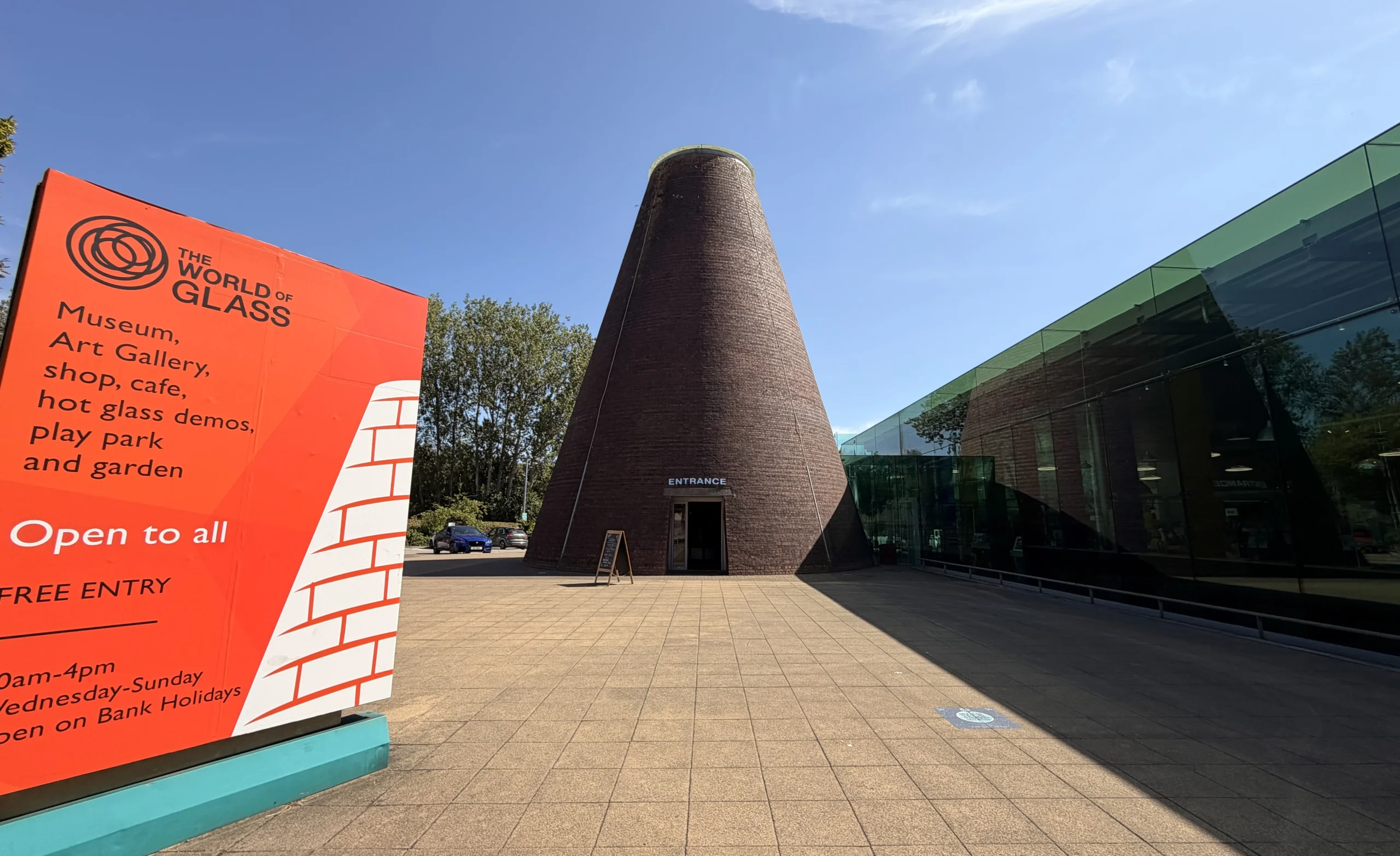
The World of Glass
There is much more to the city region’s cultural life than Liverpool city centre. Students can use local rail and bus services to discover museums, galleries, heritage attractions and creative organisations across Wirral, St Helens, Sefton, Knowsley and Halton.
Heart of Glass, St Helens
Heart of Glass works with artists and communities to produce exhibitions, performances, conversations and ambitious public art projects.
Rather than operating as a traditional gallery, its work often appears in public spaces and community settings across St Helens and the city region.
The World of Glass, St Helens
The World of Glass explores the history of St Helens and the borough’s internationally significant glassmaking industry.
Alongside its museum collections, visitors can see live glassblowing demonstrations and explore exhibitions examining local history, creativity and industry. Check current admission prices and concessions when planning your visit.
The Atkinson, Southport
The Atkinson is Southport’s home for art, entertainment, heritage and literature. Inside you’ll find a museum, art galleries, theatre, studio, library and café. Its galleries and museum are free to explore, while its programme includes comedy, music, theatre, talks, film screenings and family activities.
The site has a history stretching back around 900 years and makes a great destination for students looking for a day outside the city. Admission charges apply, so check for current prices and student concessions before visiting.
Live Music Venues
Future Yard
The region has a thriving live scene encompassing classical music, jazz, folk, electronic music, hip-hop, experimental work and emerging local artists. Supporting smaller venues and new performers is also one of the best ways to discover the next generation of Liverpool music.
The Tung Auditorium
Situated inside the Yoko Ono Lennon Centre at the University of Liverpool,The Tung Auditorium is a modern concert venue with a programme spanning classical music, jazz, contemporary music, electronica and spoken word.
University of Liverpool students can access special ticket offers for many events through the venue’s student membership scheme. Students from other institutions should check individual event listings for available concessions.
Future Yard
Future Yard is a grassroots music venue and creative community based in Birkenhead. Its programme includes alternative, independent and emerging artists alongside club nights, festivals and special events. Future Yard also supports musicians through rehearsal rooms, artist development and training programmes, making it worth following if you’re trying to build a career in music.
The Capstone Theatre
Based at Liverpool Hope University’s Creative Campus,The Capstone Theatre presents music, theatre, dance, spoken word and film.
It is especially well known for jazz and hosts the annual Liverpool International Jazz Festival. Check individual listings for student and concessionary ticket options.
M&S Bank Arena
TheM&S Bank Arena welcomes some of the biggest names in music, comedy and entertainment to the city. Alongside major international tours, its programme includes live shows, special events and performances spanning a wide range of genres.
Theatre and Performance
Liverpool has an excellent theatre scene, ranging from large touring productions to intimate new writing, experimental work and performances created with local communities.
Student offers vary between productions, so always check the venue’s website before booking and take valid student identification with you.
Liverpool Everyman & Playhouse
Liverpool Everyman & Playhouse presents locally produced theatre, new writing, touring productions and creative events across its two venues.
Young people should also look at the theatres’ current membership, participation and development opportunities. These can include discounted tickets, workshops, events and ways to become involved in theatre-making.
Liverpool’s Royal Court
Liverpool’s Royal Court is known for producing accessible, entertaining theatre with a distinct Liverpool voice. It’s a great place to immerse yourself in Liverpool life and get to know the city’s sense of humour.
Unity Theatre
Unity Theatre champions new work, emerging artists and performances that explore contemporary issues. Its programme includes theatre, comedy, dance, family work, festivals and artist development opportunities. Student discounts are available for many performances.
The Hope Street Theatre
The Hope Street Theatre hosts independent theatre companies, emerging performers, comedy, musicals, festivals and new writing.
Liverpool Empire Theatre
Liverpool Empire Theatre hosts major touring musicals, drama, dance, comedy and family productions. Student offers and reduced-price tickets are available on selected performances.
20 Stories High
20 Stories High creates bold theatre and music with young people and communities that are often underrepresented on stage. Its work can combine hip-hop, spoken word, live music, puppetry and multimedia performance. Students interested in socially engaged theatre, performance and activism should look out for productions, workshops and participation opportunities.
The Black-E
The Black-E is a pioneering community arts organisation based in a distinctive historic building close to Liverpool’s Chinatown. It has a long history of bringing people together through performance, visual art, workshops, festivals and community events.
Film, Photography and Digital Culture
A Place Of Our Own exhibition at Open Eye Gallery. Credit: Rob Battersby
Film and media students will find plenty to explore across the city region, but you don’t need to be studying a creative subject to get involved.
Alongside FACT and Open Eye Gallery, look out for independent screenings, short-film nights, filmmaker Q&As, community cinema projects and opportunities to have your own work screened.
First Take
First Take works with people and communities to tell stories through film, animation and digital media. Its projects have supported emerging creatives and people whose experiences are not always represented on screen. Aspiring filmmakers should follow First Take for screenings, workshops, training and project opportunities.
Books, Writing and Spoken Word
The Reader Bookshop
Liverpool’s literary culture includes festivals, shared reading groups, spoken-word events, workshops, independent bookshops and opportunities for new writers.
Writing on the Wall
Writing on the Wall runs writing projects, workshops, performances, discussions and events throughout the year. They also run the annual WoWFEST, Liverpool’s longest-running writing and literary festival. Its programme brings together acclaimed authors, activists, poets, performers and emerging writers.
Students who want to develop their writing should follow Writing on the Wall for workshops, commissions, competitions and participation opportunities.
The Reader at Calderstones
The Reader uses literature and Shared Reading to bring people together. Its home in Calderstones Park includes the Mansion House, an independent bookshop, café, reading spaces and a programme of groups, workshops and cultural activities.
Festivals and Cultural Events
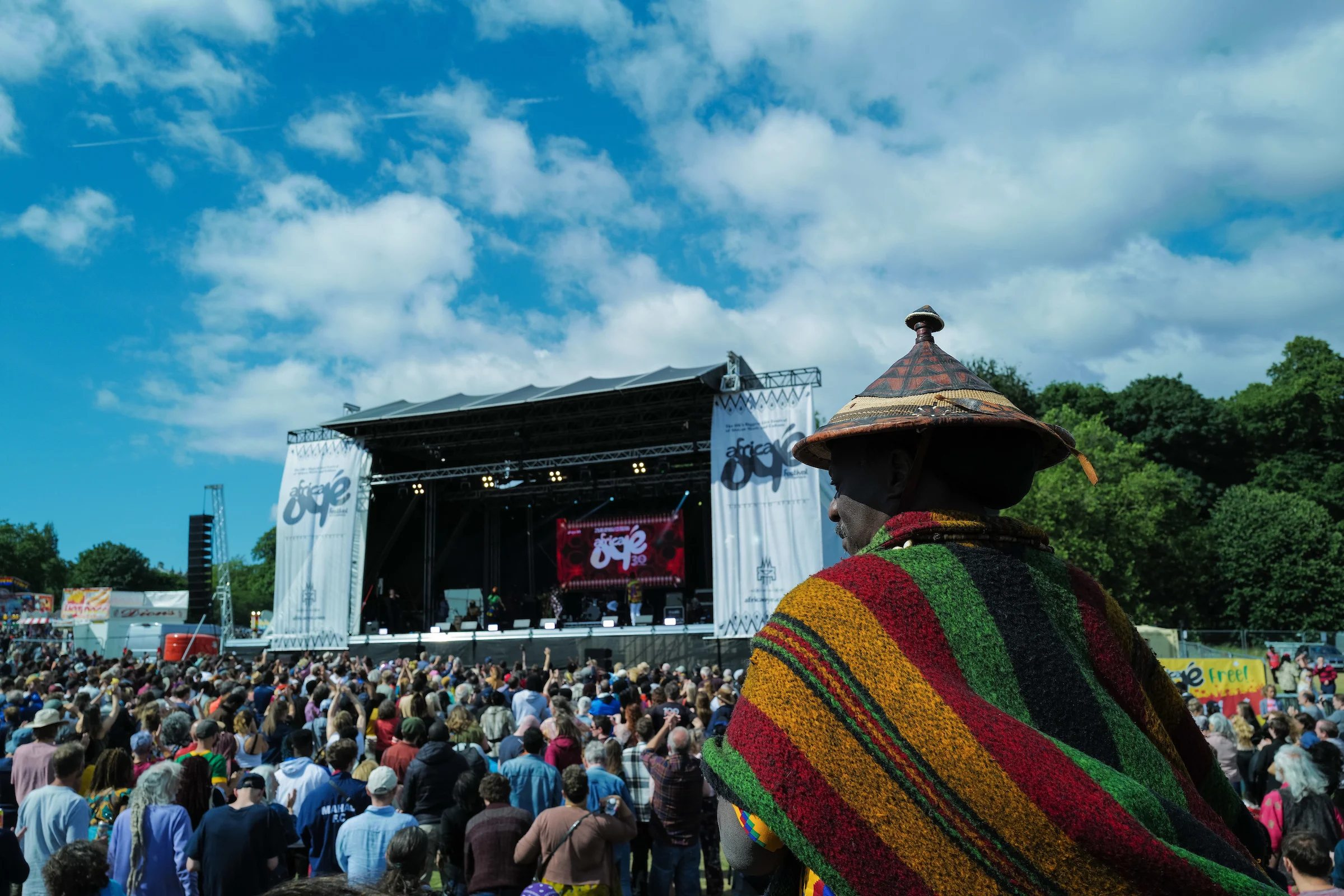
Africa Oyé. Credit: Mark McNulty
Some of the city region’s best cultural experiences happen through annual festivals and one-off events rather than permanent venues.
Liverpool Irish Festival
Liverpool Irish Festival celebrates Liverpool’s Irish culture, heritage and contemporary creative connections. Their annual programme includes music, theatre, film, talks, exhibitions, walks and participatory events at venues across the city. The festival normally includes a mixture of free and ticketed activities.
Africa Oyé
Africa Oyé is the UK’s largest free celebration of African music and culture. Held each summer in Liverpool’s Sefton Park, the festival brings together international artists, DJs, food stalls and independent traders for a vibrant weekend of live music and entertainment.
Student Discounts and Affordable Tickets
Student and concessionary offers can change, but there are several ways to make cultural trips more affordable.
Student Art Pass
AStudent Art Pass provides free or reduced-price entry to participating museums, galleries, historic houses and major exhibitions across the UK. It may also include shop and café discounts.
Check the current membership price and participating attractions before joining.
Ask Your University
Universities and students’ unions sometimes arrange free tickets, cultural trips, society visits and discounted transport. Joining a student society connected to music, theatre, filmmaking, photography, literature or visual art can also help you find events and meet people with similar interests.
Find Arts Jobs, Callouts and Opportunities
If you’re hoping to work in the creative industries, don’t wait until graduation to start making connections.
Liverpool City Region’s cultural organisations regularly advertise:
Part-time and entry-level jobs
Internships and placements
Freelance commissions
Artist development programmes
Volunteer positions
Funding opportunities
Auditions and performance callouts
Opportunities for writers, filmmakers and photographers
This guide is only a starting point. Liverpool City Region’s cultural calendar changes every week, with new exhibitions, gigs, performances, workshops, festivals and creative opportunities appearing all the time.
UseUncover Liverpool to find events across the city region. You can filter listings by date and discover free and low-cost things to do.
You can also join the free weekly Arts Bulletin for a curated selection of events, jobs, commissions, callouts, volunteering roles and other creative opportunities.
Liverpool’s cultural scene belongs to everyone. Explore beyond the familiar places, support independent organisations and local artists, and don’t be afraid to get involved rather than simply watching from the sidelines.
Keep in touch
Newsletter
Sign up to keep up to date with what's on in the city and the region!