

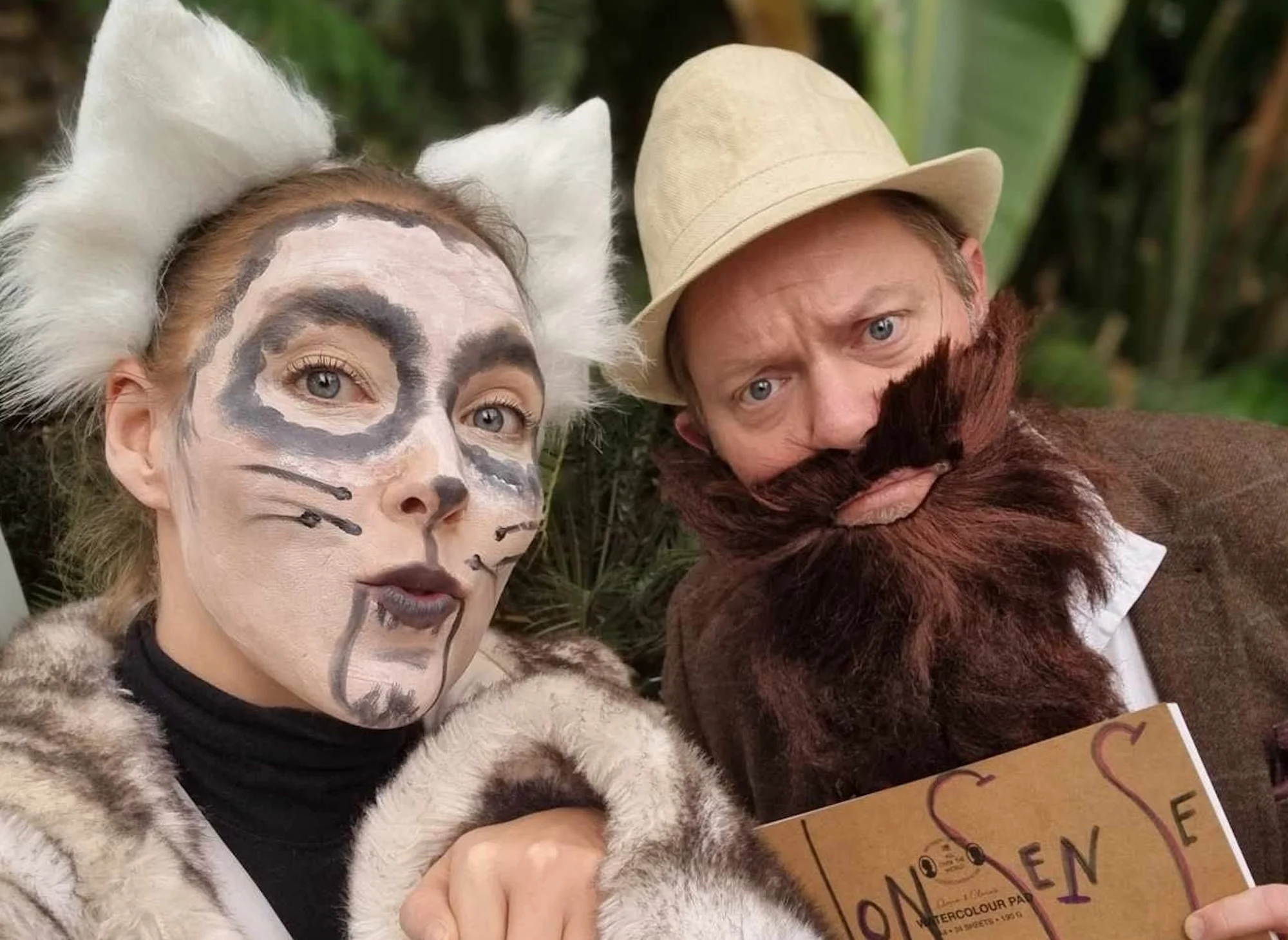
In the latest instalment of Buried Treasure, John Maguire explores Edward Lear’s remarkable connection to Knowsley Hall, where frustration, imagination and a fondness for parrots helped inspire some of the world’s best-loved nonsense verse. From The Owl and the Pussycat to his fantastical “nonsense botany”, he uncovers the local roots of Lear’s wonderfully absurd legacy.
Did you know that some of the world’s most famous nonsense poems were written right here in Prescot at Knowsley Hall?
Who by? Edward Lear.
Edward Lear was born in The Old Smoke, London, on 12th May 1812, the twentieth of twenty-one children. His father, Jeremiah, fell into financial difficulties, losing a fortune on the stock exchange in 1816. He was sent to live with his eldest sister Ann, an accomplished artist, who encouraged his artistic talents. She was the tinder to his creativity. Educated mostly at home due to childhood health struggles, including asthma, bronchitis, and epilepsy. Does ill health make the sufferer super focused on the work when well? Doing so with the fear that sickness could return. This is then the catalyst to create in the now, while they physically and mentally can? Mr Lear had a vivacious appetite for knowledge and viewed life as an endless voyage of discovery, evidenced by the portfolio of mixed media and legacy he leaves behind.
Famous for his nonsense poetry and particularly the poem The Owl and the Pussycat, he was also famed back in the day for his pioneering zoological drawings and illustrations. In June 1830, Mr Lear applied to draw the parrots at the Zoological Society of London in a meeting chaired by Lord Stanley. He went on to publish Illustrations of the Family of Psittacidae, or Parrots (1830–1832), the very first book to focus on a single family of birds, created by working directly from living creatures rather than taxidermy specimens. The artist loved parrots with their fine feathers, finding their colours absolutely mesmerising, alongside landscape art and botanical plants.
Mr Lear spent a great deal of time in the early 1830s (specifically 1831–1837) staying at Knowsley Hall. The 13th Earl of Derby (who Lear had first met as Lord Stanley), who became his good friend, also loved plants and parrots; in fact, Derby’s private collection of animals was the start of what we now know as Knowsley Safari Park. Regular readers of this column will be aware that I often wax lyrical about the Liverpool City centre architecture and the treasures it holds; I had the privilege of seeing first-hand the origins of the Knowsley Safari Park, in the sketches of the artist drawn to illustrate the Earl of Derby’s growing collection of exotic animals.
He produced over 100 detailed life portraits of the estate’s rare mammals, reptiles, and birds. Mr Lear liked the Earl, but some of the people who hung around him, his guests, were like fleas on a pedigree dog’s back. Always moaning and groaning, talking about other people. Sartre has it right: hell is other people. Their inane conversations drove Mr Lear quite mad, with the bourgeoisie saying they were bored, yet only boring people get bored. This distaste in the company kept would eventually transform his negative inner bitchy commentary, the shade, into little pieces of rhyme satire.
At Knowsley Hall he’d visit for a planned few days and then stay for months, years, a guest from hell in my opinion. I love visitors, but I also love when they leave. However, to be fair, Lear was a working guest, tutoring the family and drawing commissions on site, plus it’s not like the Hall is a two-bedroomed council flat.
Finding himself in a country house, he’d pen his frustrations down in funny poems and little ditties to amuse the Earl’s children. He wrote under the pseudonym Derry Down Derry.
Such nonsense poems like:
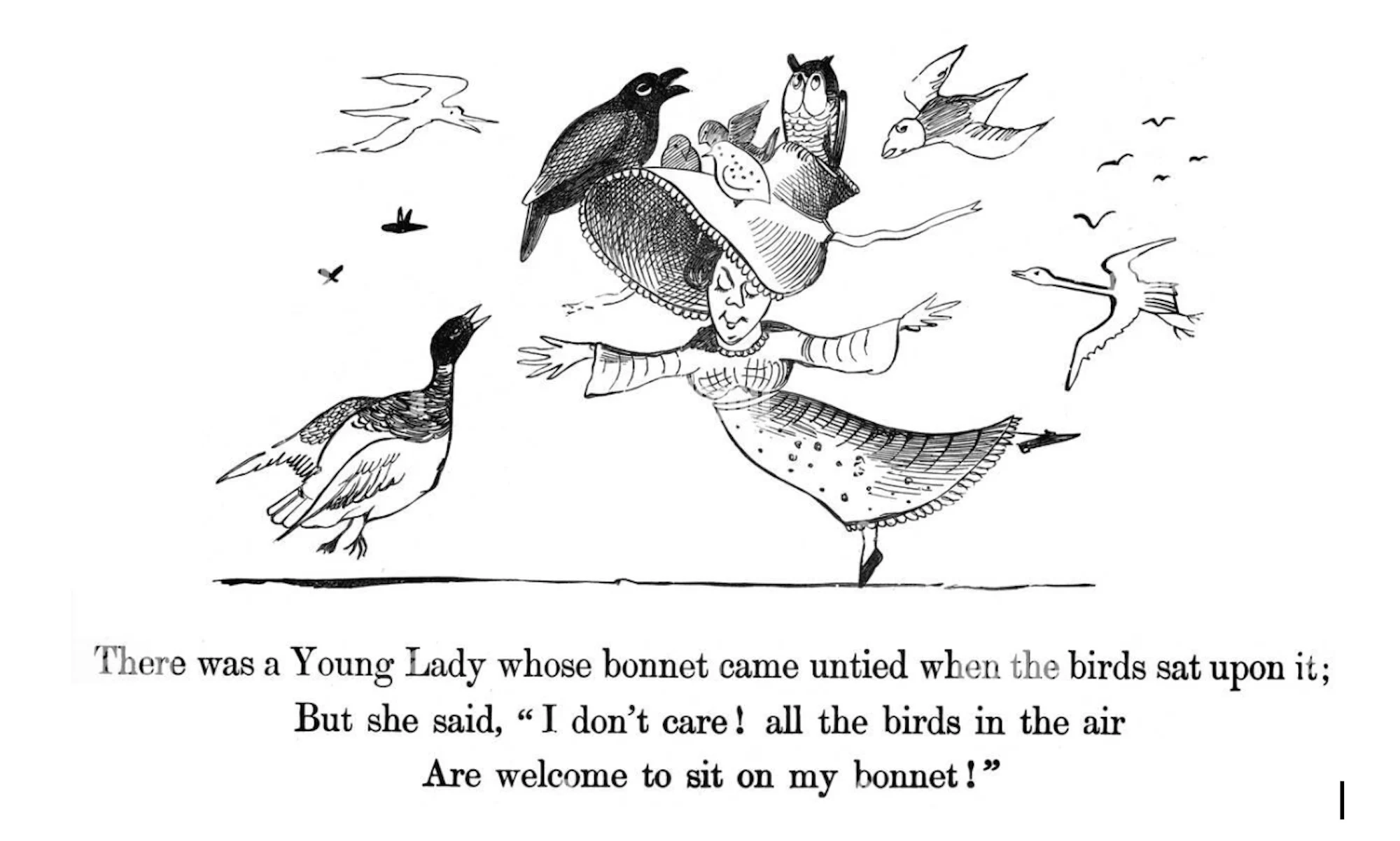
There was a young lady whose bonnet came untied, when the birds sate upon it, but she said, “I don’t care, all the birds in the air are welcome to sit on my bonnet.”
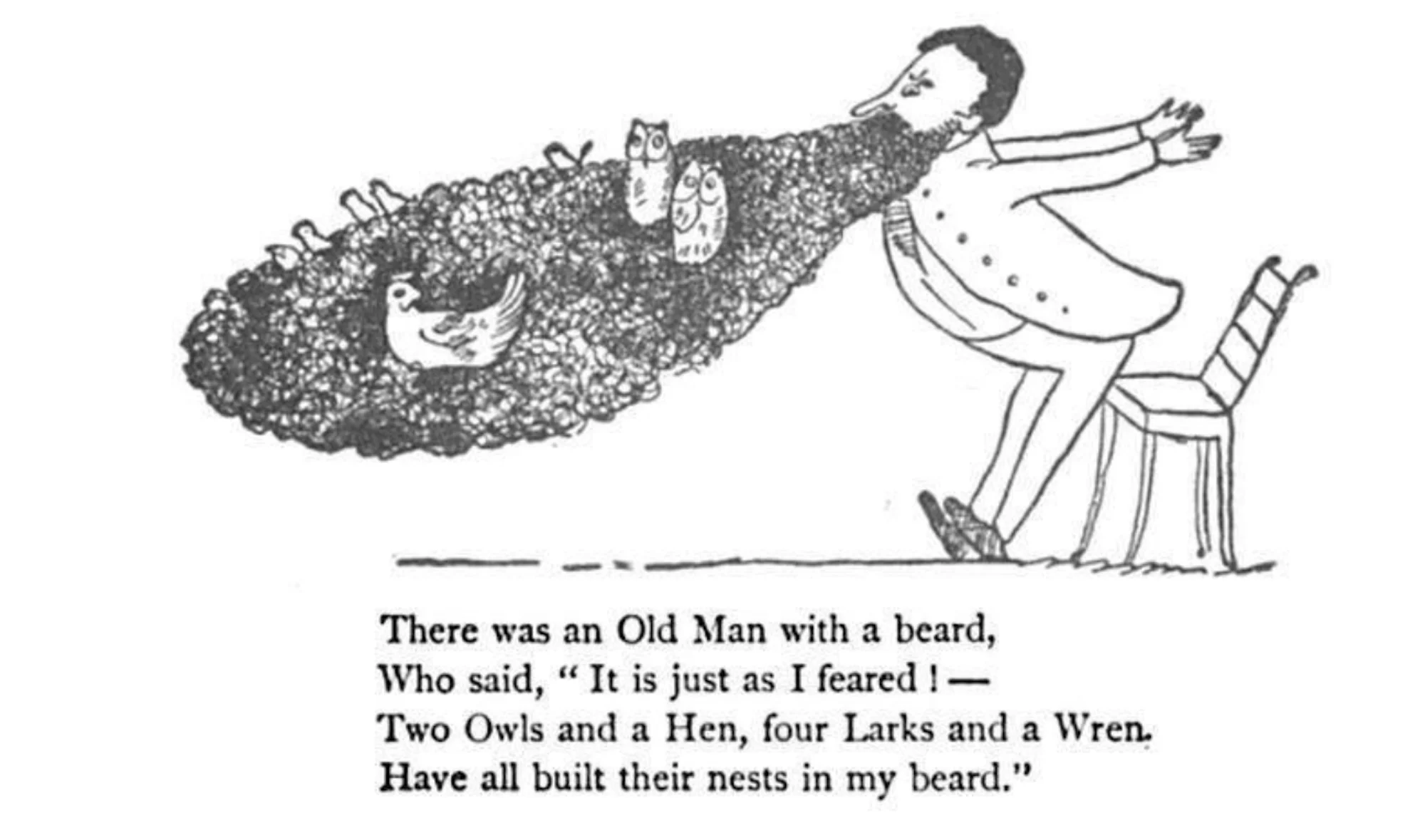
There was an old man with a beard, who said, “It is just as I feared! Two owls and a hen, four larks and a wren, have all made a nest in my beard.”
First published in 1846, in A Book of Nonsense, which became a massive success. He also endured the universal trait for most artists: commission chasing and the impending doom of running out of money, with poverty always on the horizon.
He saw lots of real plants on his many adventures travelling, keeping detailed records and sketches in his journals as he visited Greece, Italy, and Corsica, to name a few.
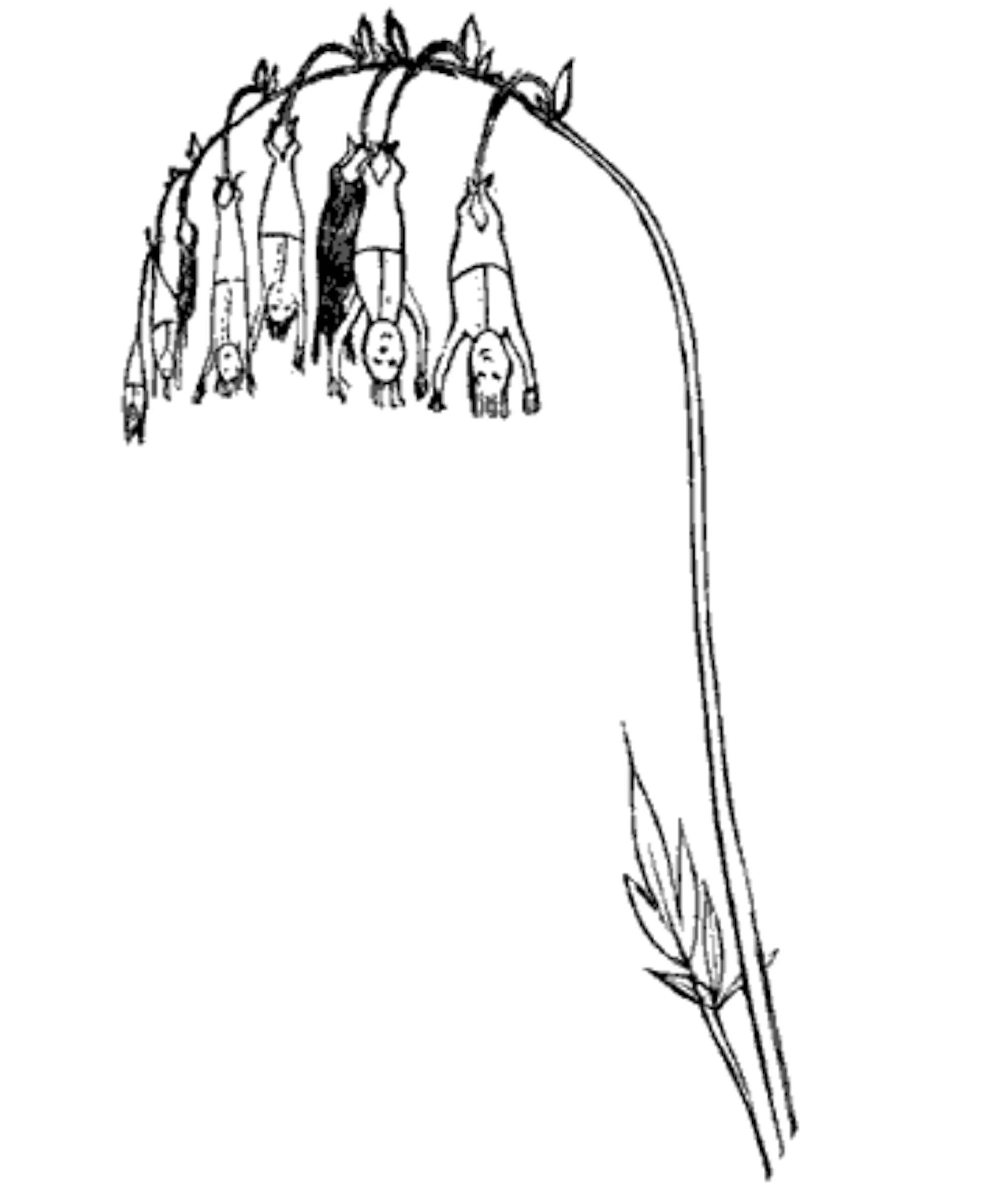
He later combined these lifelong passions, NONSENSE POETRY, painting, and plants, to create NONSENSE BOTANY. Lear was poking fun at a botanist from Sweden called LINNAEUS, who made a classification system giving complex names to plants.
Enter FLORA NONSENSICA: a cluster of everyday objects, books, brushes, tea kettles, guitars, watches, magically transformed into flowers, given much more serious names.
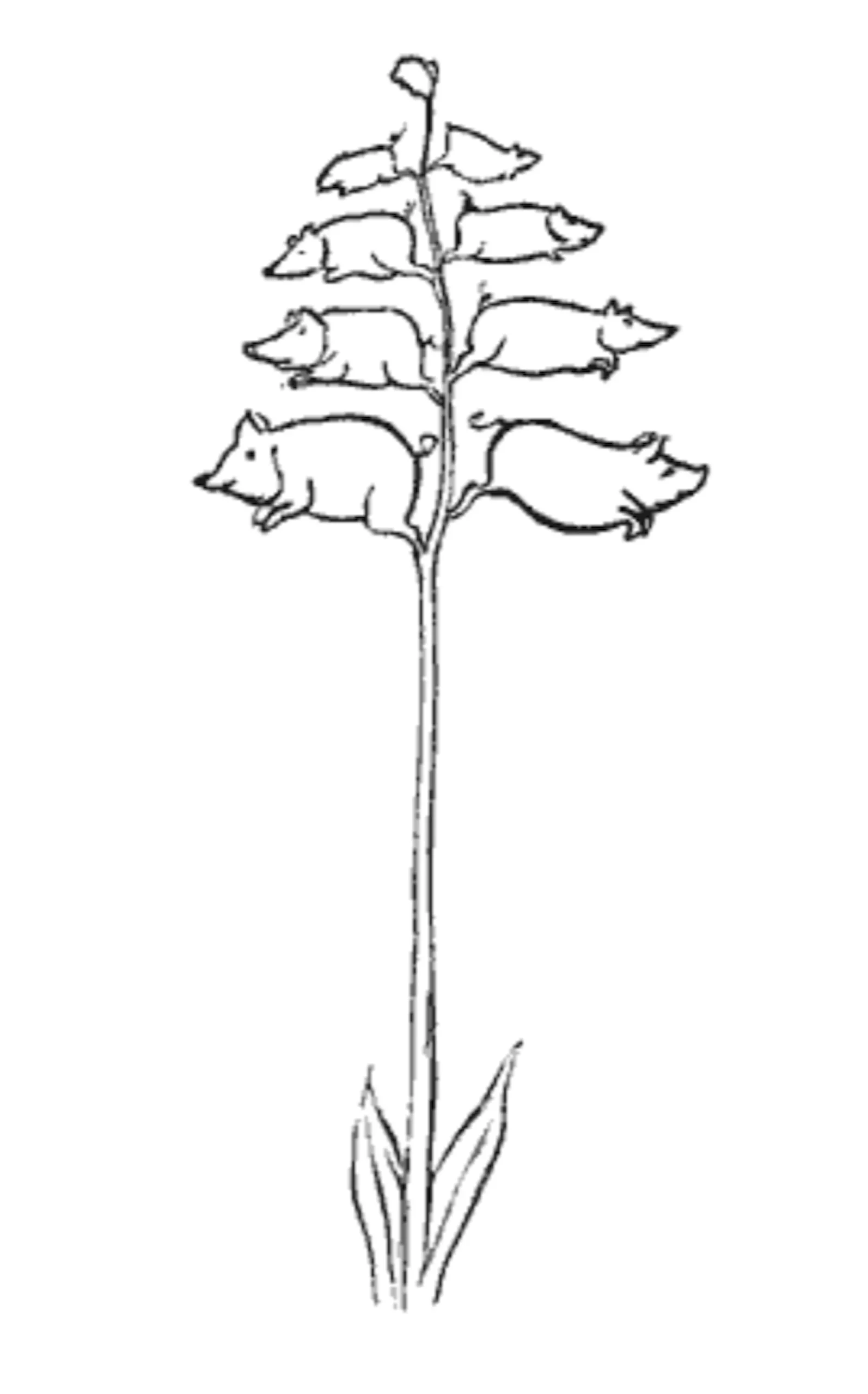
A pioneer perspective is hard to imagine in the modern world. An influence that is far-reaching: absurdism and satire in theatre; Lear influenced comedians like Spike Milligan, The Goons, Monty Python, and we can see his touch in the likes of Roald Dahl’s characters and stories, like Revolting Rhymes and Tim Burton’s The Death of Oyster Boy.
If you want to experience a bit of that nonsense magic yourself, Mr Lear will be at Shakespeare North Playhouse on Saturday 22 August as Part of the Serious Nonsense Festival 2026.
Step into the absurd world of Edward Lear, the master of nonsense verse and author of The Owl and the Pussycat. His faithful, grumpy, and beloved cat, Foss, needs your help to grow a brand-new, nonsense plant in their garden!
In this interactive workshop, we’ll explore local history and the playful rhythms and hilarious rhymes of Mr Lear’s classic work. Then, it’s your turn: let your imagination run wild as you help us invent a new botanical marvel.
Purrrfect for creative minds of all ages.
Potty Plants with Edward Lear and Foss, His Curious Cat
Saturday 22 August 2026 (11:30 am and 1:15 pm , 45-minute sessions)
Tickets