
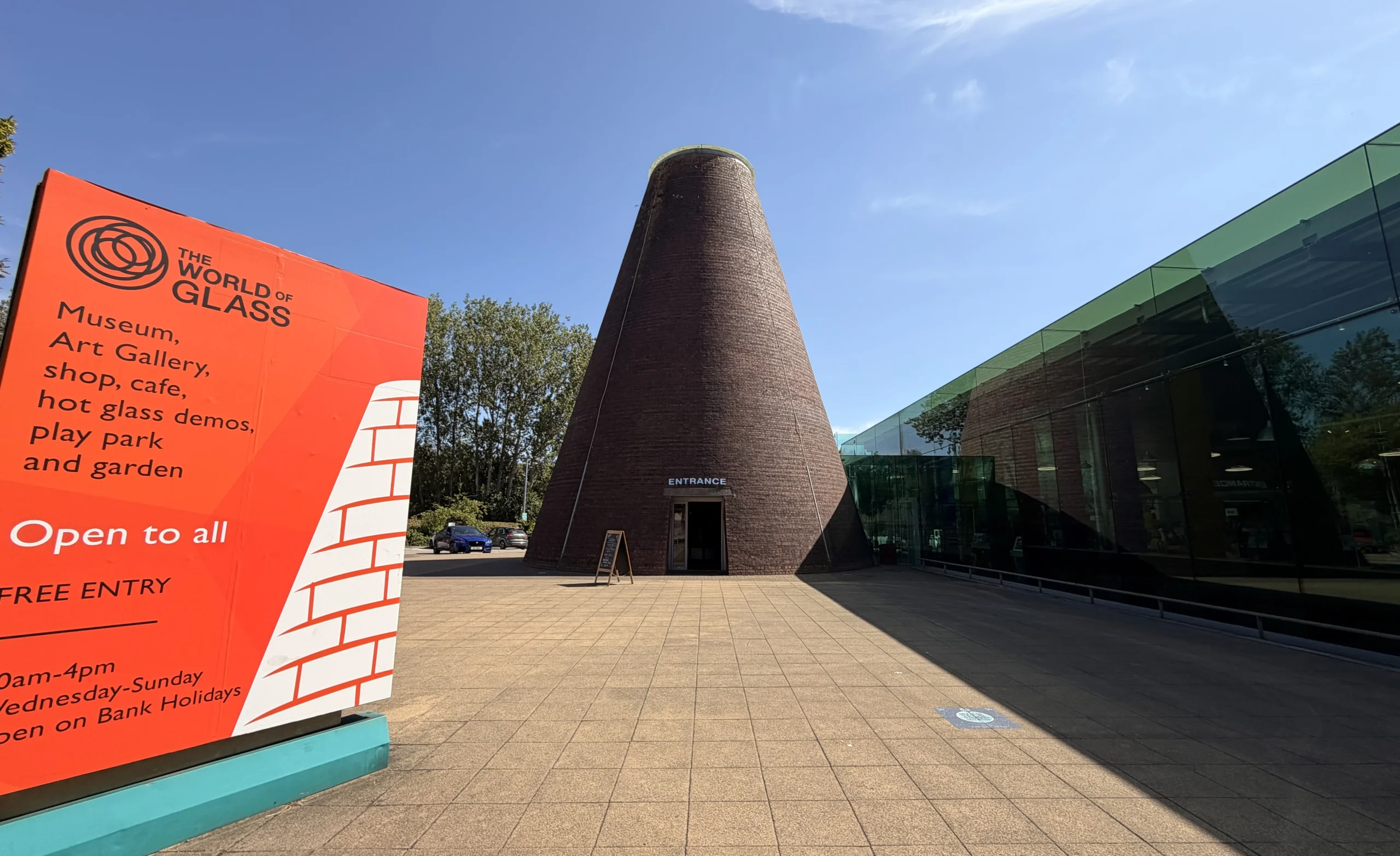
Part museum, part historic industrial site and part working studio, The World of Glass explores the material that shaped St Helens.
Bringing together industry, science, social history and art, the museum tells the story of glass through the people who made it, the objects they produced and the town that grew around it.
For visitors from across the Liverpool City Region, it is an easy cultural day out, with the museum just a five-to-ten-minute walk from St Helens Central station. More importantly, it offers a deeper understanding of St Helens and the industries and communities that shaped it.
The town’s identity was shaped by making, innovation and labour, and The World of Glass brings those strands together on a site where much of that history actually happened.
Victorian St Helens
The Past Gallery takes visitors into a recreated Victorian street, complete with a kitchen, shop and pub. Voices, household objects and small details of everyday life offer a feel for St Helens during the Industrial Revolution — not just as a place of factories and furnaces, but as somewhere people lived, worked and raised families.
In the Bluebell pub, the conversation centres around the Haydock mining disaster. It is a reminder that the town’s past cannot be reduced to one industry. Coal, chemicals, glass and transport were closely connected, as were the lives of the people who worked in them.
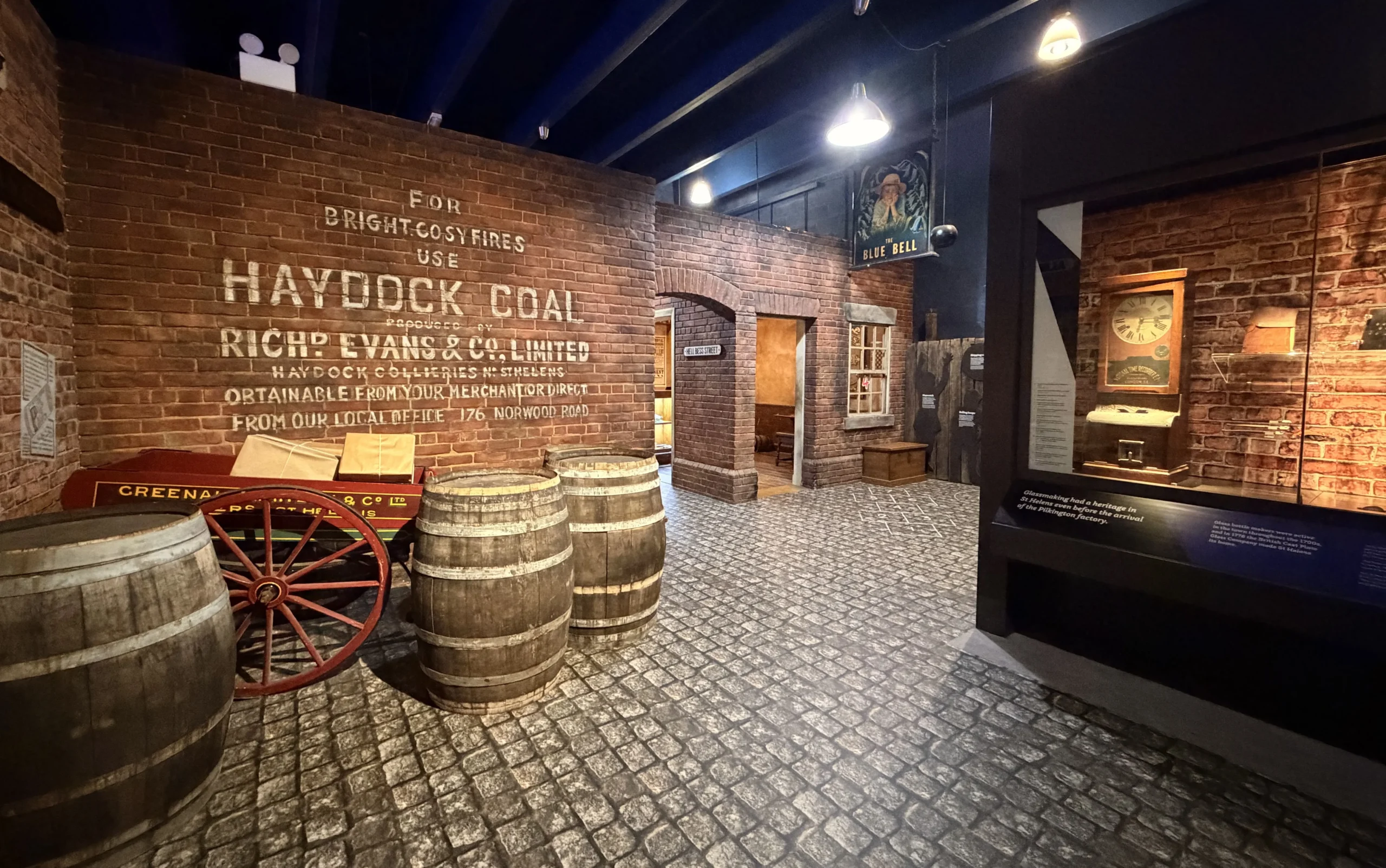
As Sarah Taylor, Executive Director of The World of Glass, explains: “Community and people are at our core, and I think understanding our past makes much more sense when you can hear the real stories through real voices. It allows people to connect with what life would actually have been like in these communities, and we want to represent that true voice and help people understand some of the challenges people faced back then. We also have visitors who remember their grandparents’ houses being very similar, so we have to keep things authentic — otherwise we’d get caught out!”
Starting with everyday life gives the rest of the museum useful context. Before visitors get to the machinery and major developments in glassmaking, they get to know the town that grew around it all.
Glass In Everyday Life
From Victorian St Helens, the museum moves into the Now Gallery and the many ways we still rely on glass. Interactive stations explore natural glass, lenses, mirrors and fibre optics, giving children (and grown-ups!) the chance to experiment rather than simply read display panels.
The gallery also looks at current developments in St Helens, linking the town’s industrial heritage with the research and technology shaping glassmaking today.
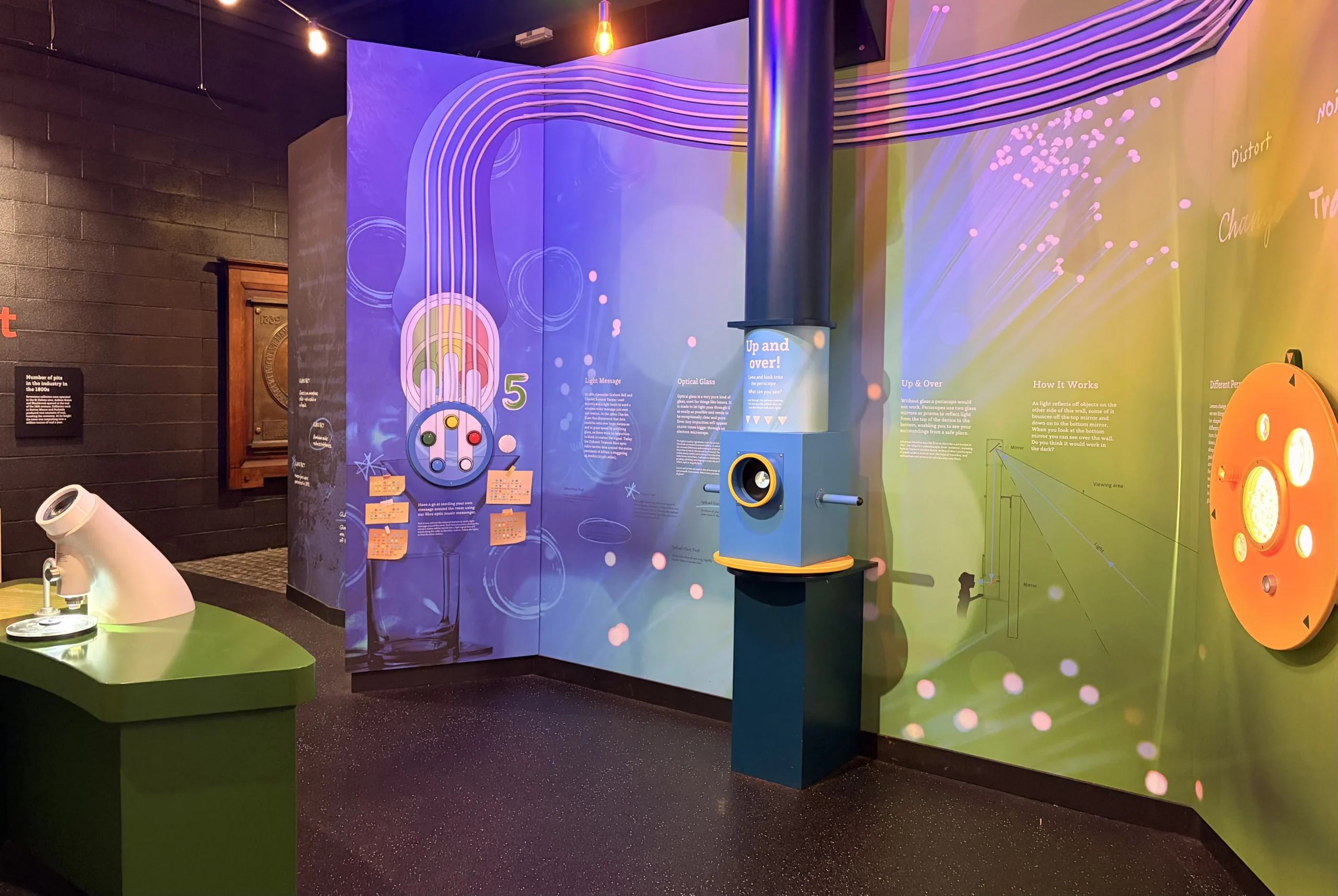
For Sarah, part of the gallery’s appeal is showing visitors just how varied the uses of glass can be:
“I think we all love learning something new, and glass is one of those materials that’s a bit magical. Its capabilities are much more diverse than you might first assume — fibre optics, for example. Glass starts out as a mixture of sand, soda ash and limestone, but that simple material can become something that helps us connect to the world. I think that’s pretty amazing. We now have Glass Futures here in St Helens, who are looking at how we can make glass production more sustainable, and you can learn a bit more about that work in the museum too.”
The Glass Collections
The Glass Gallery brings together objects spanning around 3,000 years, tracing the material from the ancient world through to the present day. The displays show how its uses, styles and methods have kept changing.
Seen up close, the objects also make it clear that glass has never been purely practical. Makers have long used colour, decoration and form to create things people wanted to keep and admire.
The Holford Collection adds a contemporary perspective. Displayed on the mezzanine, it features work by leading glass artists and shows how makers are still testing what the material can do. The Godfrey Pilkington Gallery hosts a changing programme of exhibitions, so there is usually something different to see on a return visit.
Tank House No. 9
A glass bridge connects the main museum with Tank House No. 9, a Grade II* listed building and archaeological site dating from 1887. It is one of the places where the scale of St Helens’ glassmaking history becomes much easier to understand.
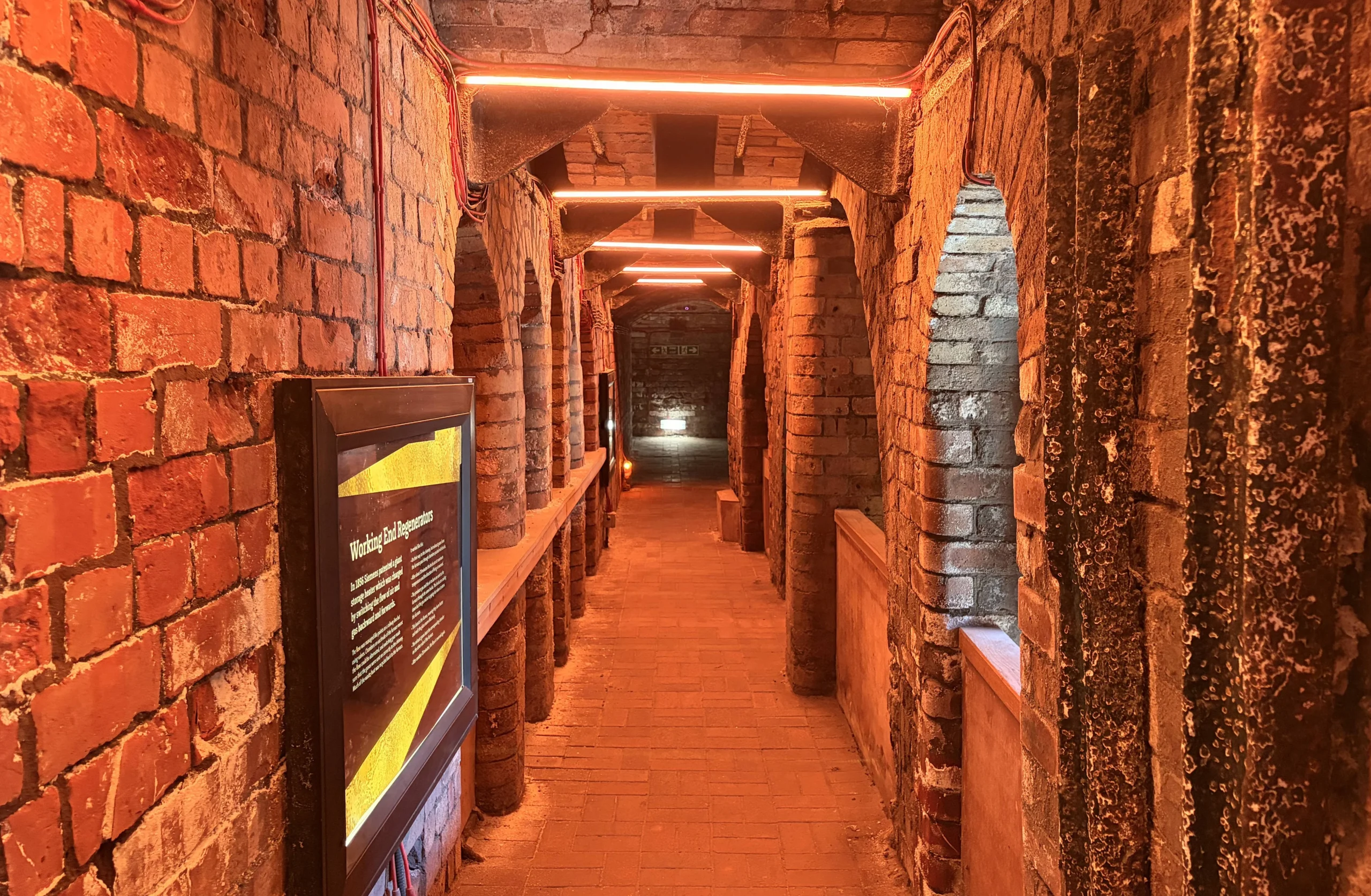
William Windle Pilkington used the Tank House while developing a regenerative process connected with continuous glass production. Beneath the building, tunnels carried gas and air to help the furnaces burn hotter and more efficiently. That engineering can sound fairly abstract on paper, but it makes more sense when visitors are standing in the place where it was put to work.
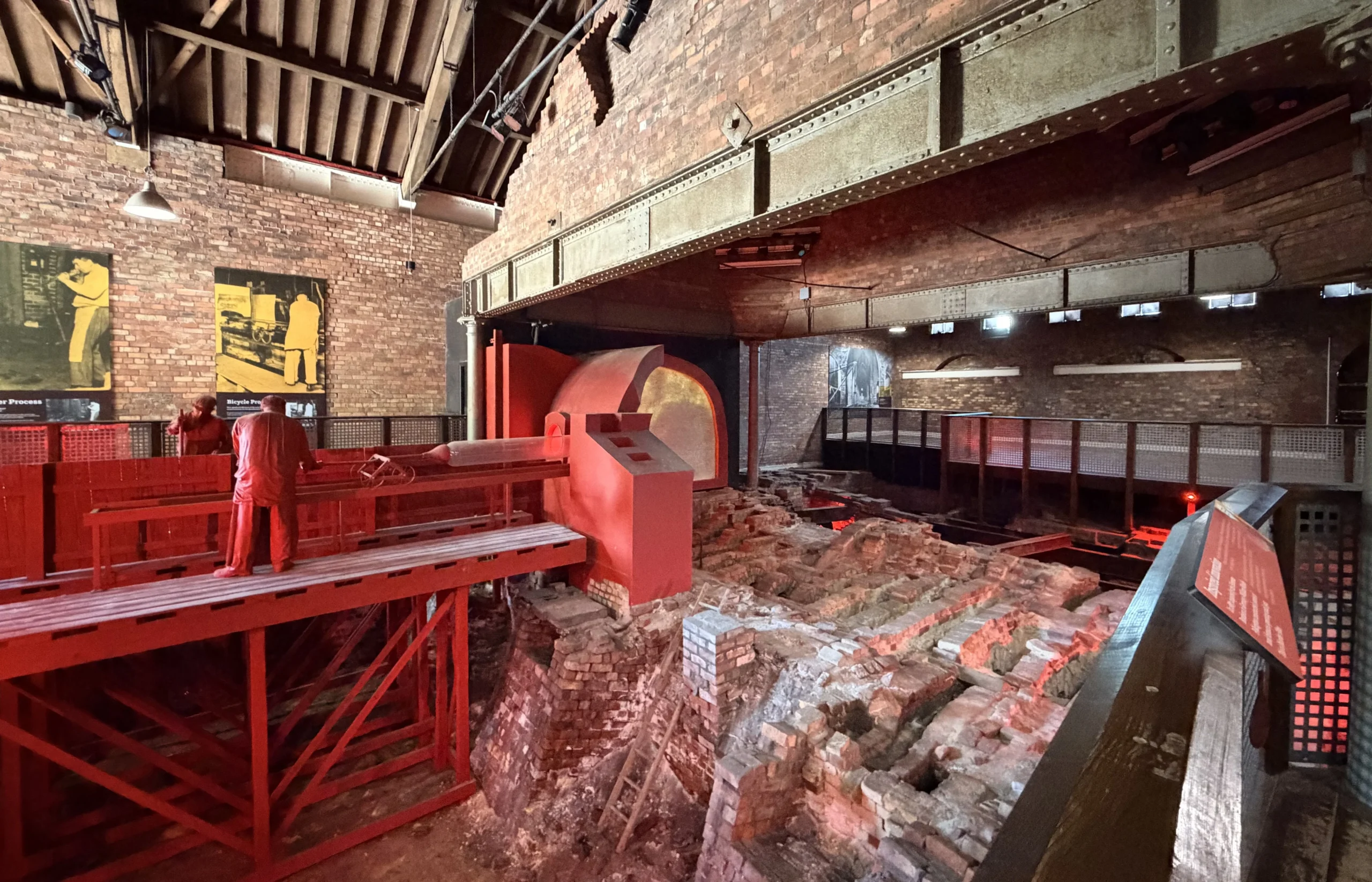
Unlike the Victorian street, the Tank House is not a reconstruction. Its brickwork and tunnels are part of the industrial site itself, offering physical evidence of the experimentation that helped make St Helens known around the world for glass.
Sarah explains the site’s wider significance:
“Our heritage site is really significant because Tank House No. 9 is one of the earliest surviving examples of a continuous glassmaking furnace. William Windle Pilkington played an important part in developing the Siemens technology that allowed glass to be produced continuously, transforming the industry. St Helens went on to make another huge contribution when Sir Alastair Pilkington developed the float glass process here in the 1950s. It’s a process that is still used to produce flat glass all over the world today. I think that’s what makes St Helens so special — our glassmaking story has had a global impact, and it’s still continuing here.”
The Hot Glass Studio
For many visitors, the live glassblowing demonstration will be the highlight of the day. It’s one thing to look at a finished bowl or vase in a display case, but it’s another to watch somebody make one from glowing hot glass right in front of you.
The expert glassmaker has to keep the material moving, judge its temperature and respond quickly as its shape changes. Watching the process also changes how the finished pieces elsewhere in the museum appear. You really appreciate the craftsmanship that goes into every piece.
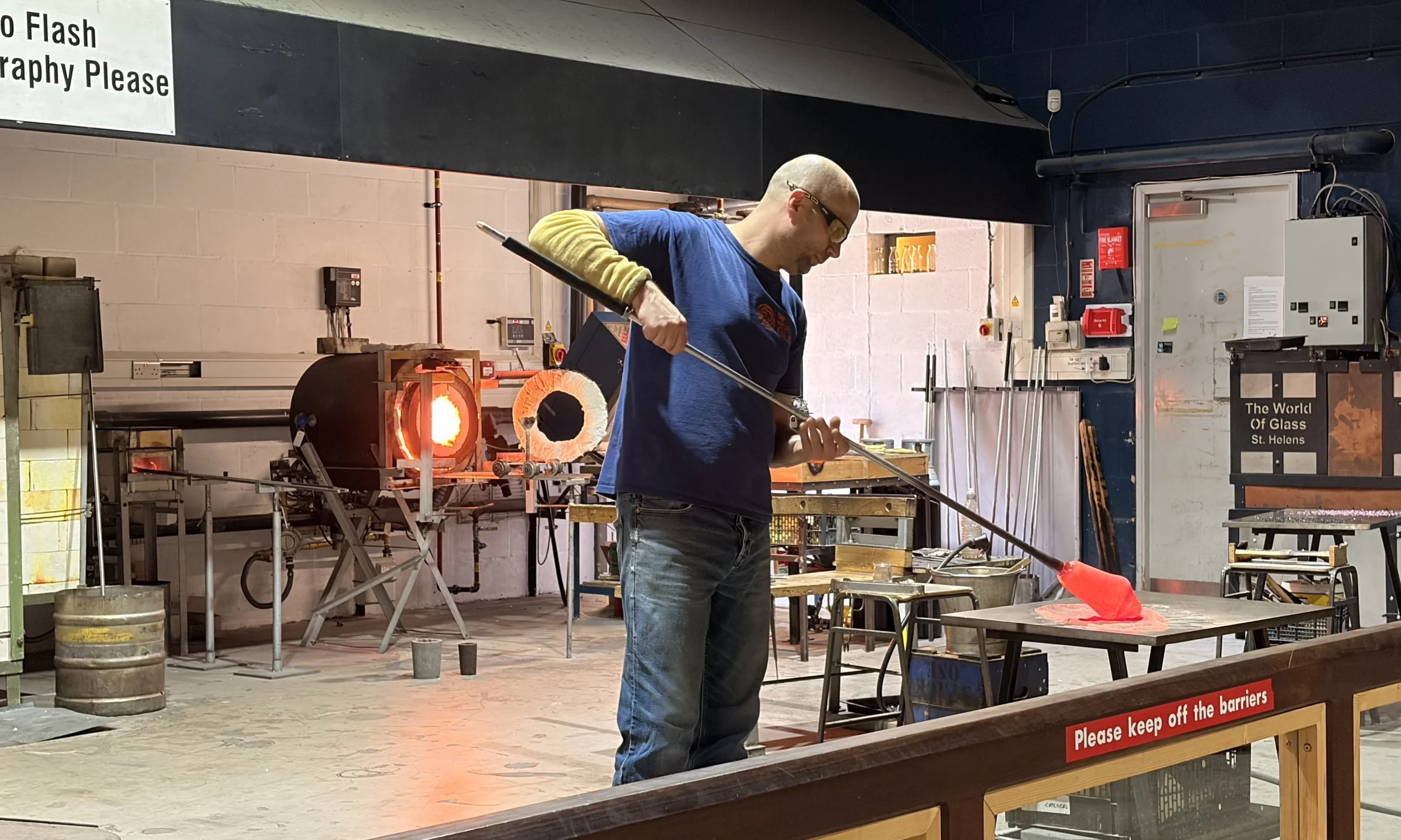
Sarah believes seeing the process first-hand is what makes the demonstration so memorable:
“I think with any creative process, it’s always fascinating to see how it works. Glass is particularly exciting because of the incredible temperatures it has to reach before it becomes workable. During the demonstration, you’ll get to see the process up close and hear how it all works, with a presenter there to explain what’s happening along the way. And you’ll even have the chance to ask questions, you leave with a real sense of how amazing glassblowing is. You don’t ever really look at glass the same after that”
The studio also brings the story into the present: glass is still being shaped in St Helens today.
A Museum Rooted In The Town
The World of Glass could easily feel like several separate attractions: a family day out, an art collection, a science museum, a social-history experience and an industrial heritage site. Those different sides of the museum fit together because they all lead back to St Helens.
The galleries show how industry shaped the town’s streets, communities and international reputation, while the contemporary collections and interactive displays demonstrate that glass remains an important part of the town’s identity today.
For Sarah, the museum is both a place for local people to connect with their heritage and an introduction to St Helens for those visiting for the first time:
“I think for local people, it’s an opportunity to share St Helens’ rich industrial heritage, when innovation was such an important part of the town’s success. Most people here have either been part of that journey themselves or have heard stories from family members from generations before. For our visitors, we’re not just a place to learn about our industrial heritage. For first-time visitors it gives you the chance to immerse yourself in beautiful art and gain an understanding of how this magical art form is brought to life. I think you leave with a completely different appreciation of glass and you can even buy a piece to take home!”
The World of Glass shows how the Liverpool City Region’s cultural and industrial history stretches beyond Liverpool’s waterfront. St Helens tells another part of that story.
Plan your visit
The World of Glass is on Chalon Way East, St Helens, around a five-to-ten-minute walk from St Helens Central station. The museum, galleries and Tank House are currently free to enter, while tickets are charged for live glassblowing demonstrations. There is also a café, shop and garden.
Opening days, demonstration times, ticket prices, parking details and temporary exhibitions can change. Check worldofglass.com before travelling, particularly if the glassblowing demonstration is central to your visit.
From 27–31 August, the International Festival of Glass brings even more creativity to the venue, with inspiring exhibitions, live demonstrations, workshops and special events.