FACT’s latest exhibitions explore big questions about existence, identity and creativity — but in ways that feel playful, visually striking and genuinely fun to experience. From an interactive journey through the afterlife to an AI-generated film that blurs the line between artist and machine, both shows pull you into immersive worlds that stay with you long after you leave the gallery.
AFTERLIFE by ONLY SLIME
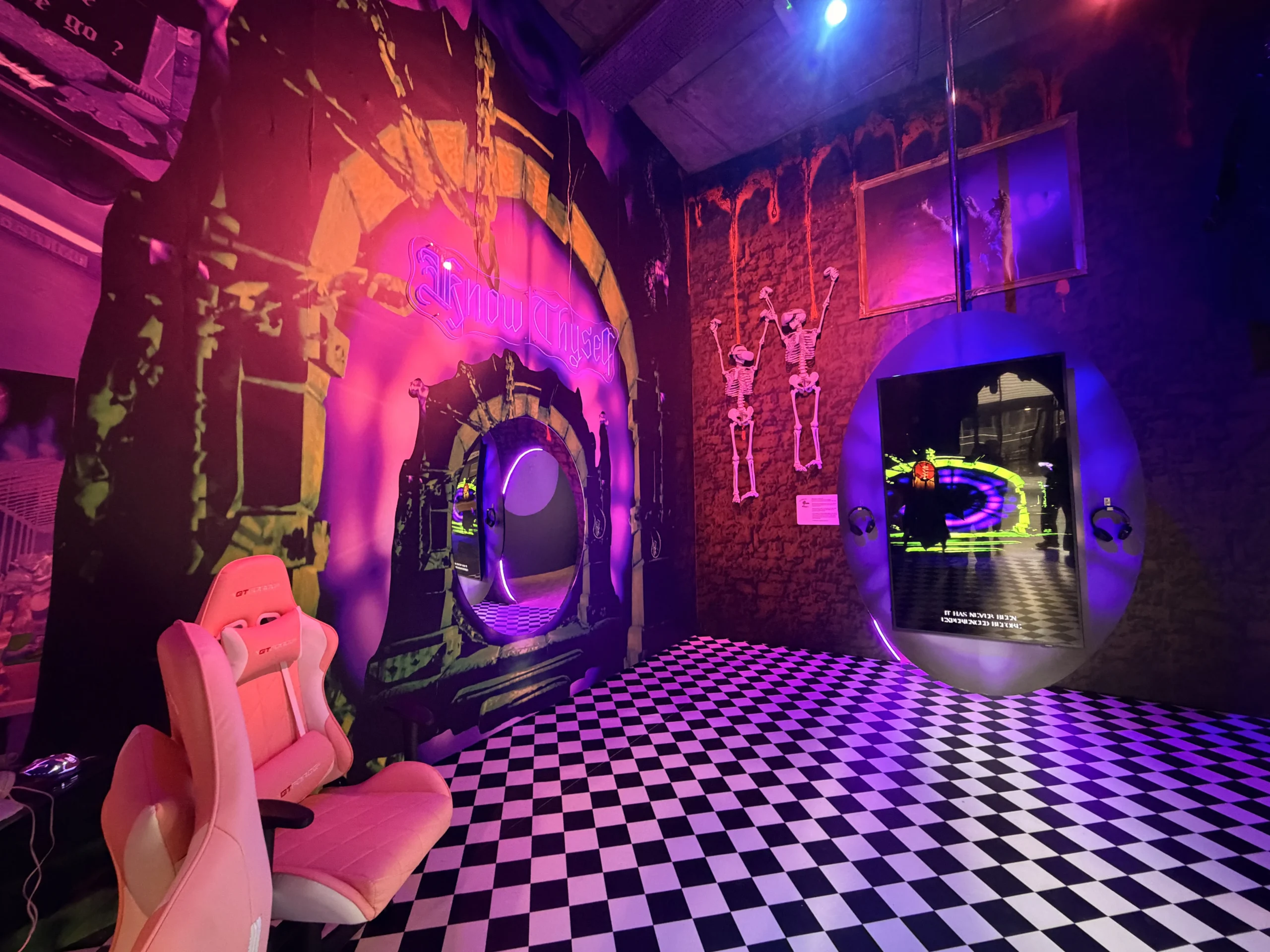
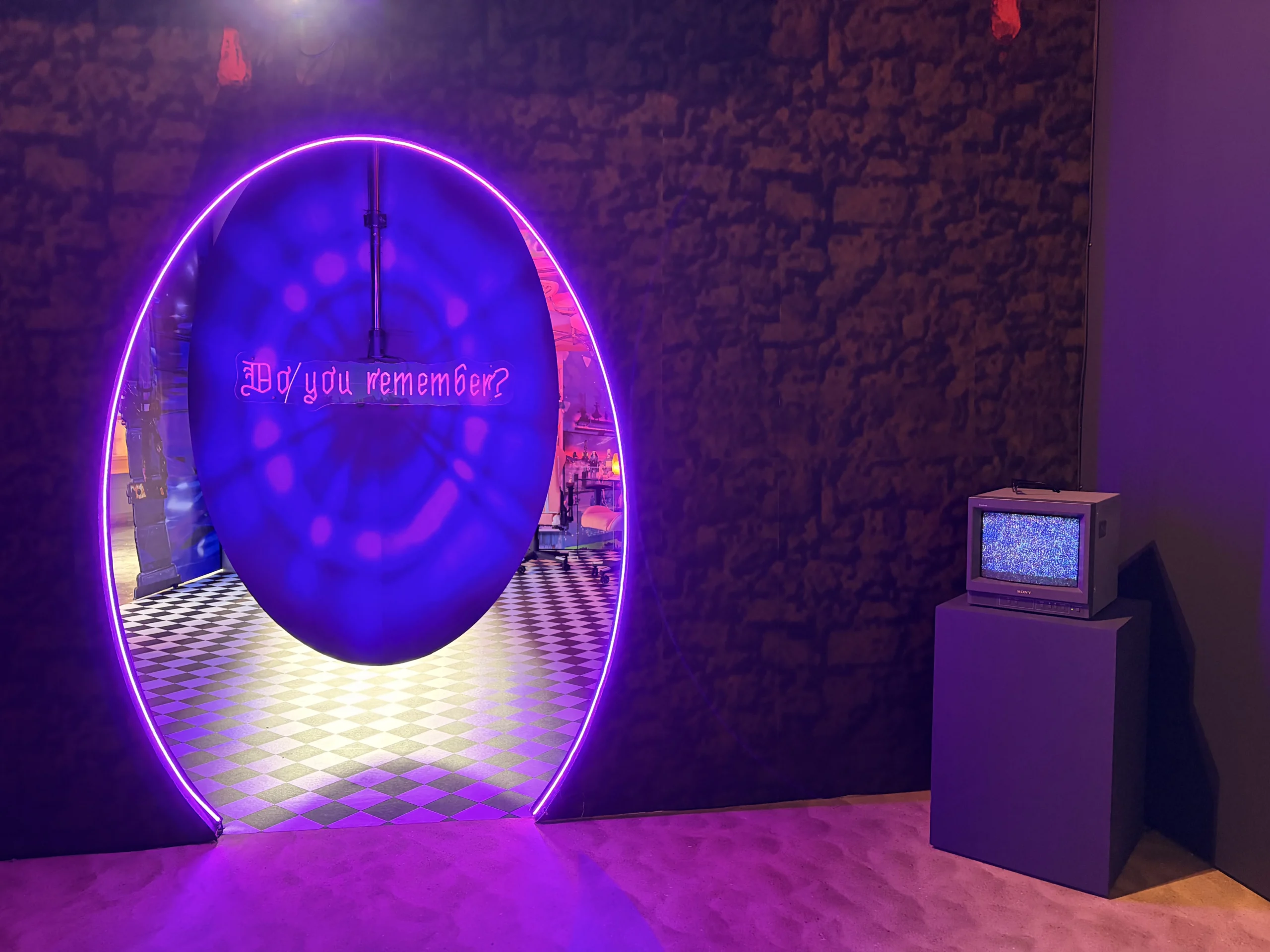
You can’t miss this one as you walk into FACT. The glowing neon purple AFTERLIFE sign hanging above the Foyer Gallery immediately draws you in, setting the tone for what feels like stepping inside a surreal video game world. The mix of deep blacks, vivid pinks and the bold checkered floor makes the whole space feel playful but slightly eerie — like you’ve entered somewhere between reality and simulation.
Created by ONLY SLIME (artists Toby Pfeil and Claudia Cox), AFTERLIFE transforms their 2023 computer-game opera into an interactive installation where visitors actively shape the experience. Using motion tracking and mini-games, you follow characters Axi and Zi as they travel through spiritual and mortal realms searching for meaning and purpose.
What I really enjoyed is how the work quietly questions control. Are we directing the story, or just responding to choices already built into the system? The piece plays with the shifting dynamic between creator, player and avatar, highlighting how digital worlds influence the narratives we build about ourselves.
It’s immersive without feeling overwhelming, thoughtful without being heavy, and visually it’s just a lot of fun to spend time in.
There’s a real sense of anticipation before you even step into Rachel Maclean’s exhibition. Outside the gallery, a countdown clock lets you know when the film will begin, displaying the message “We will be re-entering the film in…”. It creates a small shared moment with the rest of the audience as everyone waits for the timer to hit zero.
During the two-minute countdown, I found myself reading about the exhibition’s parallels between today’s boom in AI technology and the Victorian era’s obsession with invention and progress. That comparison instantly sparked my curiosity and made me want to see how the ideas would play out visually.
Inside, the exhibition unfolds across multiple screens, gradually drawing you further into the space as the narrative develops. The film itself is created using AI models trained on Maclean’s own image and archive, creating a strange and fascinating loop where the artist is both author and subject.
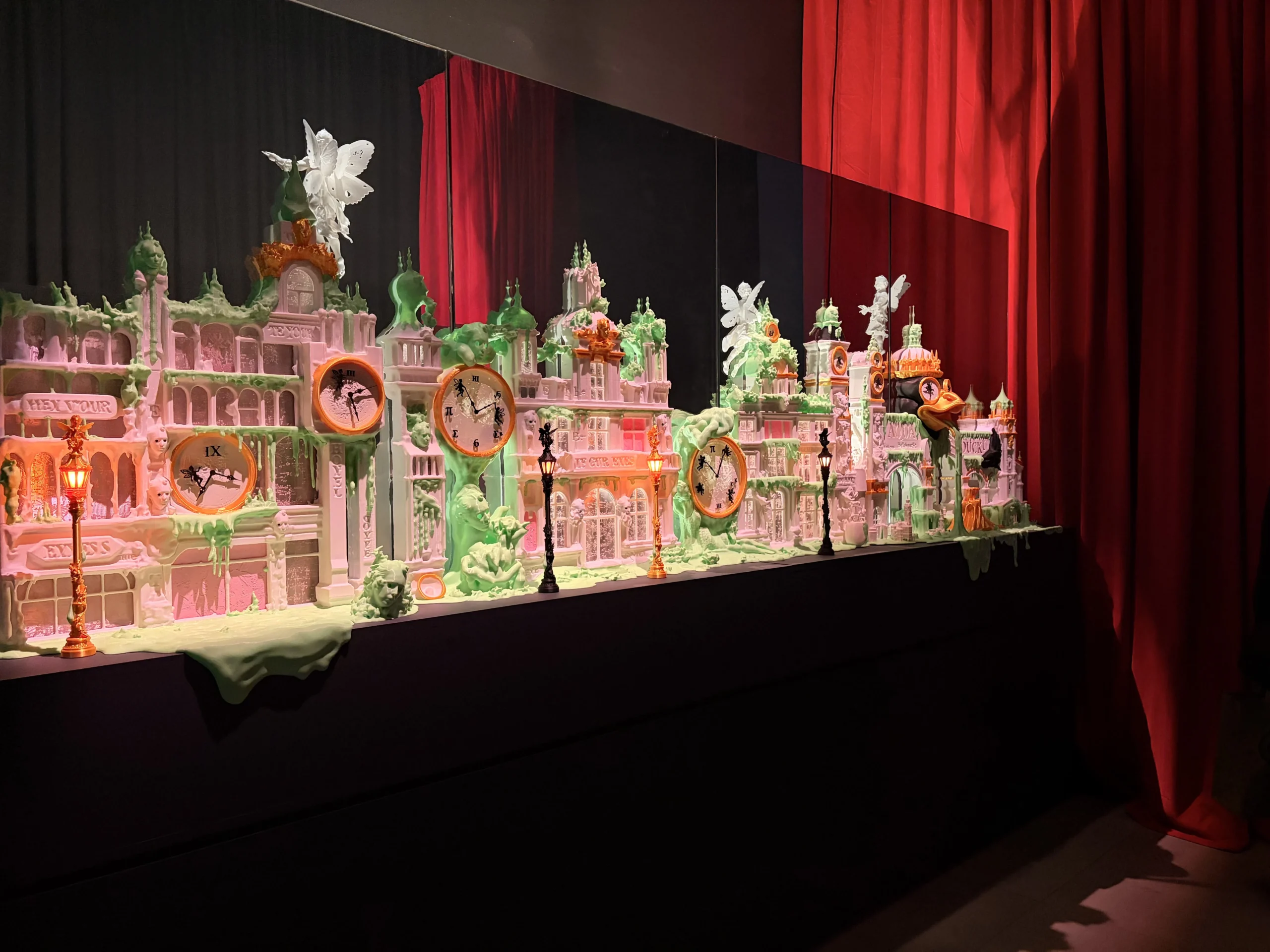
Glowing sculptures dripping with slime sit somewhere between scientific experimentation and Celtic folklore, adding to the exhibition’s dreamlike quality. It feels playful on the surface, but there’s an unsettling undertone as it questions who is really shaping creativity in an age increasingly influenced by machines.
As the film progresses, the layout of the gallery naturally encourages you to move further inside the space, almost as if you’re being guided deeper into the story. The pacing works really well, building curiosity before delivering an ending that feels entertaining, slightly surreal and very fitting for the themes explored throughout.
Both exhibitions feel very “FACT” in the best possible way — visually engaging, conceptually interesting and accessible even if you’re not deeply immersed in digital art.
AFTERLIFE invites you to play inside a constructed world, while They’ve Got Your Eyes asks who is actually in control when technology becomes part of the creative process. Together, they create a really compelling conversation about the future of storytelling and identity.
If you’re interested in digital culture, immersive experiences, or just want to see something a bit different in the city right now, these are definitely worth adding to your list.
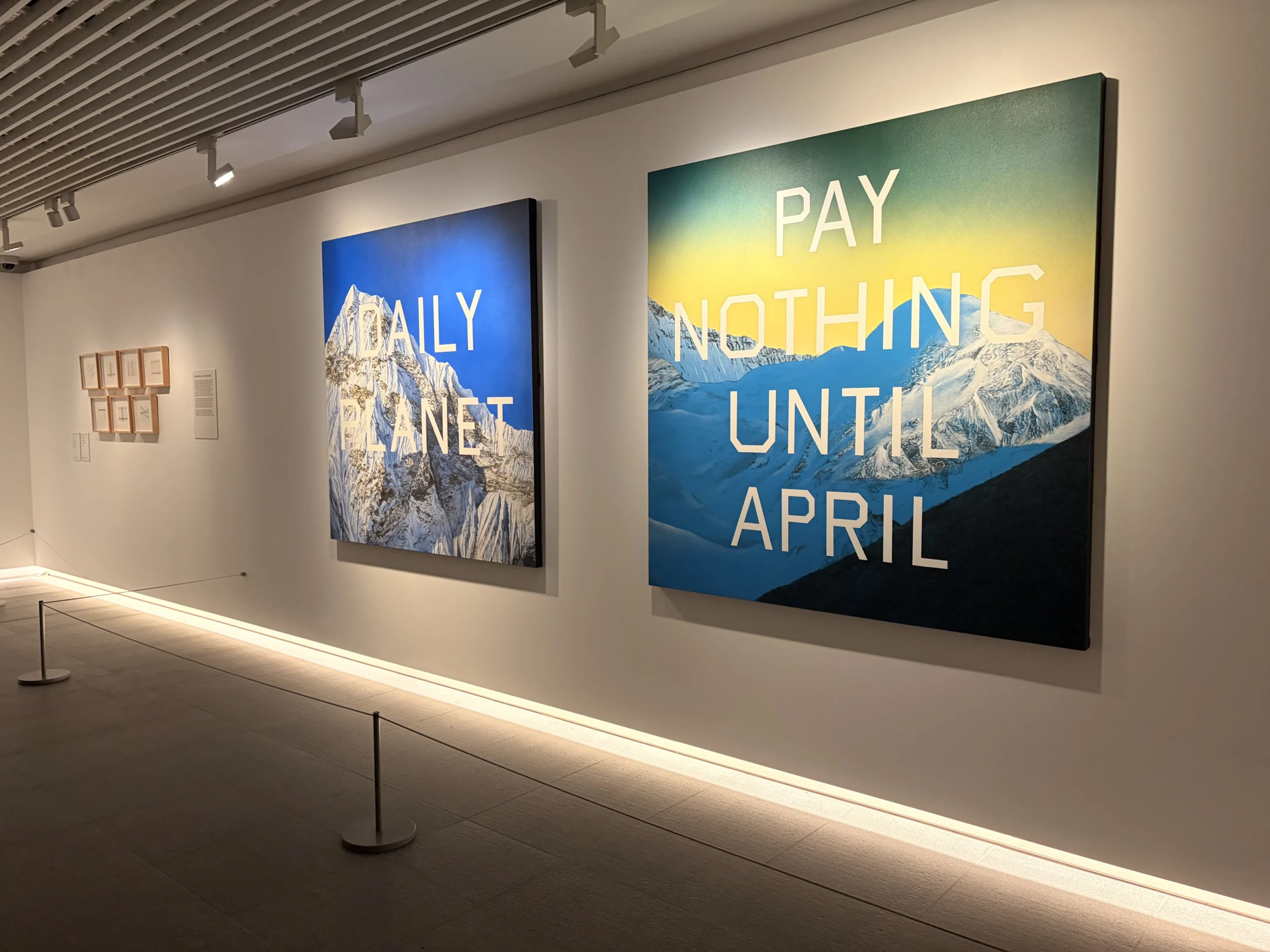
Now on display at Tate Liverpool + RIBA North, ARTIST ROOMS: Ed Ruscha offers a compelling journey through the architecture, typography and mythology of mid-century America. Running until 14 June 2026, the exhibition brings together books, photographs, paintings, drawings and lithographs by influential American artist Ed Ruscha.
Ruscha was born in Oklahoma and relocated to Los Angeles in 1956 — and that 200-mile move west shaped everything. You can feel the sense of motion and distance throughout the display: the open road, the creeping sprawl, the sense that America is always just a little further down the highway.
The exhibition takes Ruscha’s fascination with petrol stations as its starting point, inviting visitors to see the urban environment as he does. Car parks, swimming pools, delis, diners and nightclubs come into focus — fragments of the built landscape that collectively reflect the so-called ‘American way of life’. Rather than romanticising these places, Ruscha isolates and monumentalises them. The effect is quietly disorienting. You start to notice the visual power in things you’d normally drive straight past.
A standout moment is his seminal 1963 artist’s book Twentysix Gasoline Stations, documenting 26 petrol stations along Route 66. Presented digitally within the exhibition, it feels both matter-of-fact and quietly radical — a reminder that sometimes the most interesting artistic gesture is simply deciding to look. Nearby, preparatory sketches for Standard Station reveal how Ruscha transformed a simple roadside photograph into an iconic painting, stripping away unnecessary detail, sharpening perspective and amplifying its graphic punch.
Seriality runs throughout his work. In Every Building on the Sunset Strip, Ruscha methodically photographed every façade along the 1.5-mile stretch, creating a continuous visual record of storefronts, diners and dwellings. Seeing it in person, the piece feels both documentary and conceptual — preserving a specific version of Los Angeles while subtly questioning its repetition and uniformity. There’s something almost meditative about it; the longer you look, the stranger it gets.
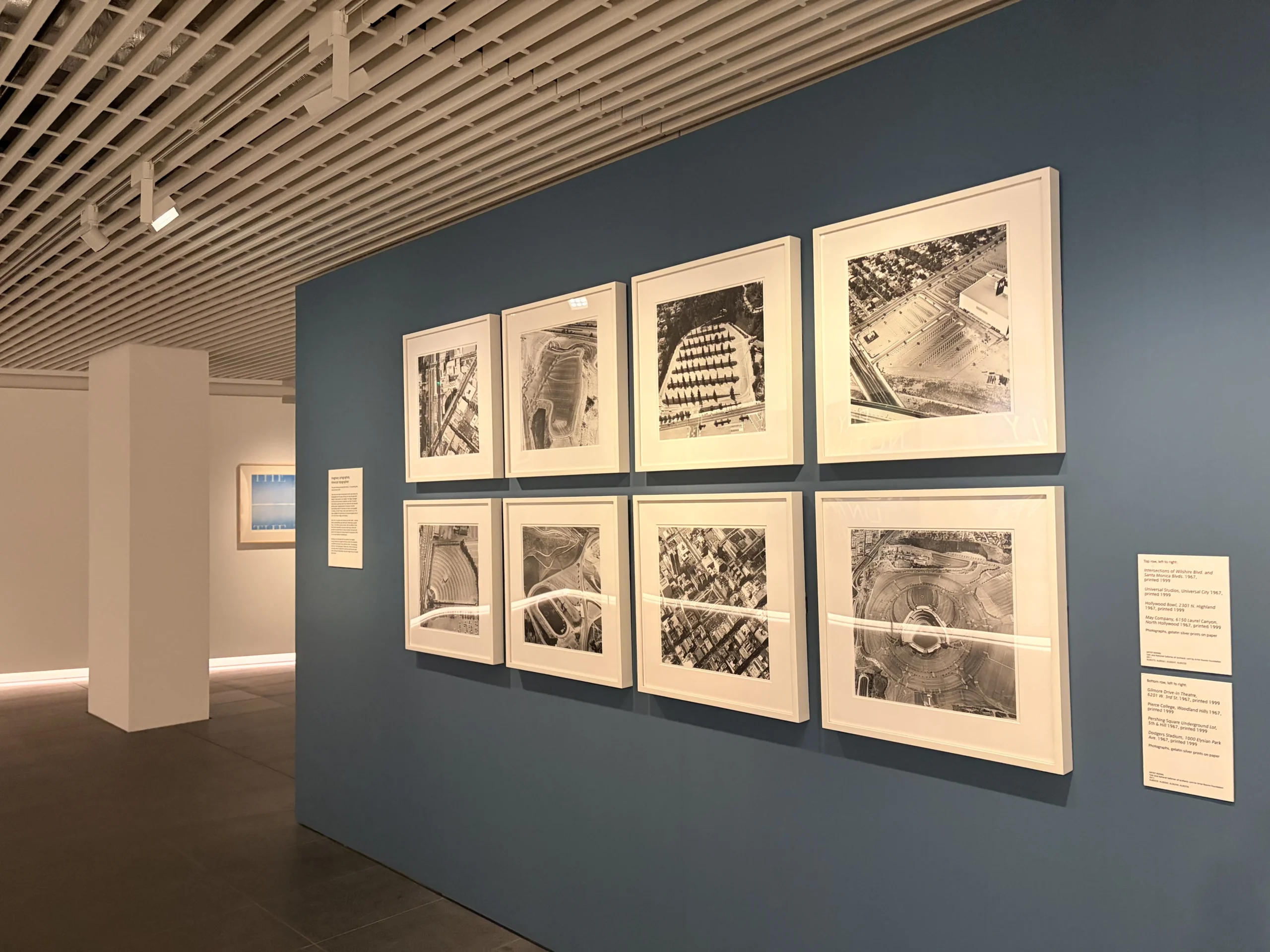
Cars and city planning continue to shape the narrative in the Parking Lot Portfolio, where aerial views flatten asphalt and vehicles into abstract compositions. It shouldn’t be beautiful, but it is. Later works such as the Los Francisco San Angeles Portfolio merge the street grids of Los Angeles and San Francisco into fictional hybrid maps — part geography, part imagination, wholly Ruscha.
His text-based works add another layer. Made in America (1974) reflects on consumer culture and national identity, while Dance? (1973) — created using coffee and mustard — subtly references the edible iconography of American diners (and raises the very reasonable question: why not both?). In OK (State I) (1990), the word “OK” hovers between affirmation and a nod to Oklahoma, folding biography into bold graphic simplicity.
Having visited Los Angeles numerous times, I’ve long been fascinated by its sprawl, its car-dominated infrastructure and its strange mix of cinematic glamour and everyday banality. Seeing Ruscha’s work in Liverpool heightened that fascination. His depictions of petrol stations and boulevards aren’t just conceptual exercises — they capture something deeply recognisable about the city: the endless grids, the glowing signage at dusk, the quiet poetry hidden in plain sight.
ARTIST ROOMS: Ed Ruscha feels particularly resonant right now — an invitation to slow down, look closely and reconsider the ordinary spaces that shape our lives. For Liverpool audiences, it’s a striking glimpse into the visual language of Los Angeles and the enduring myth of the American Dream.
ARTIST ROOMS: Ed Ruscha
Tate Liverpool
Until 14 June
Free Entry More info
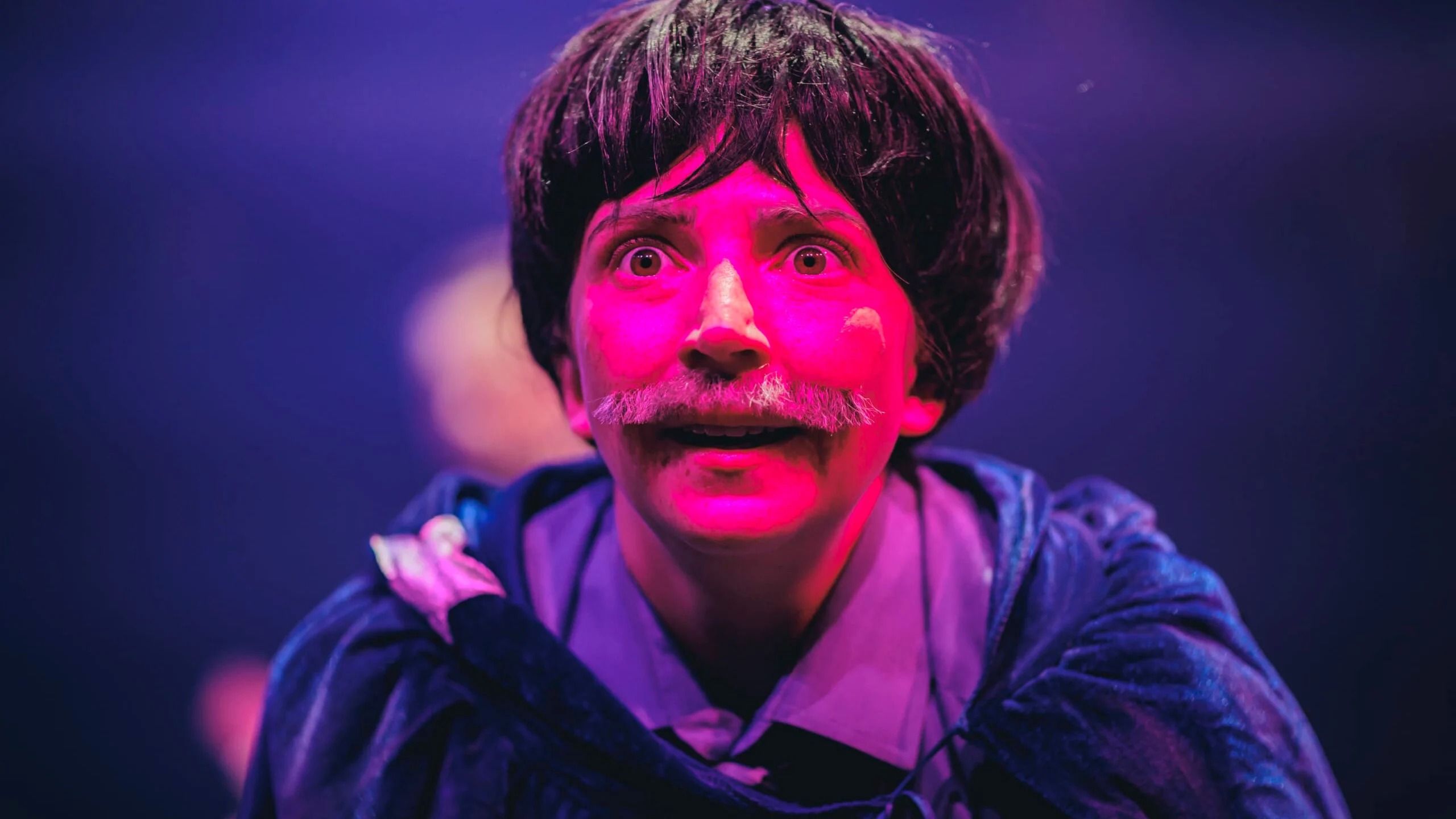
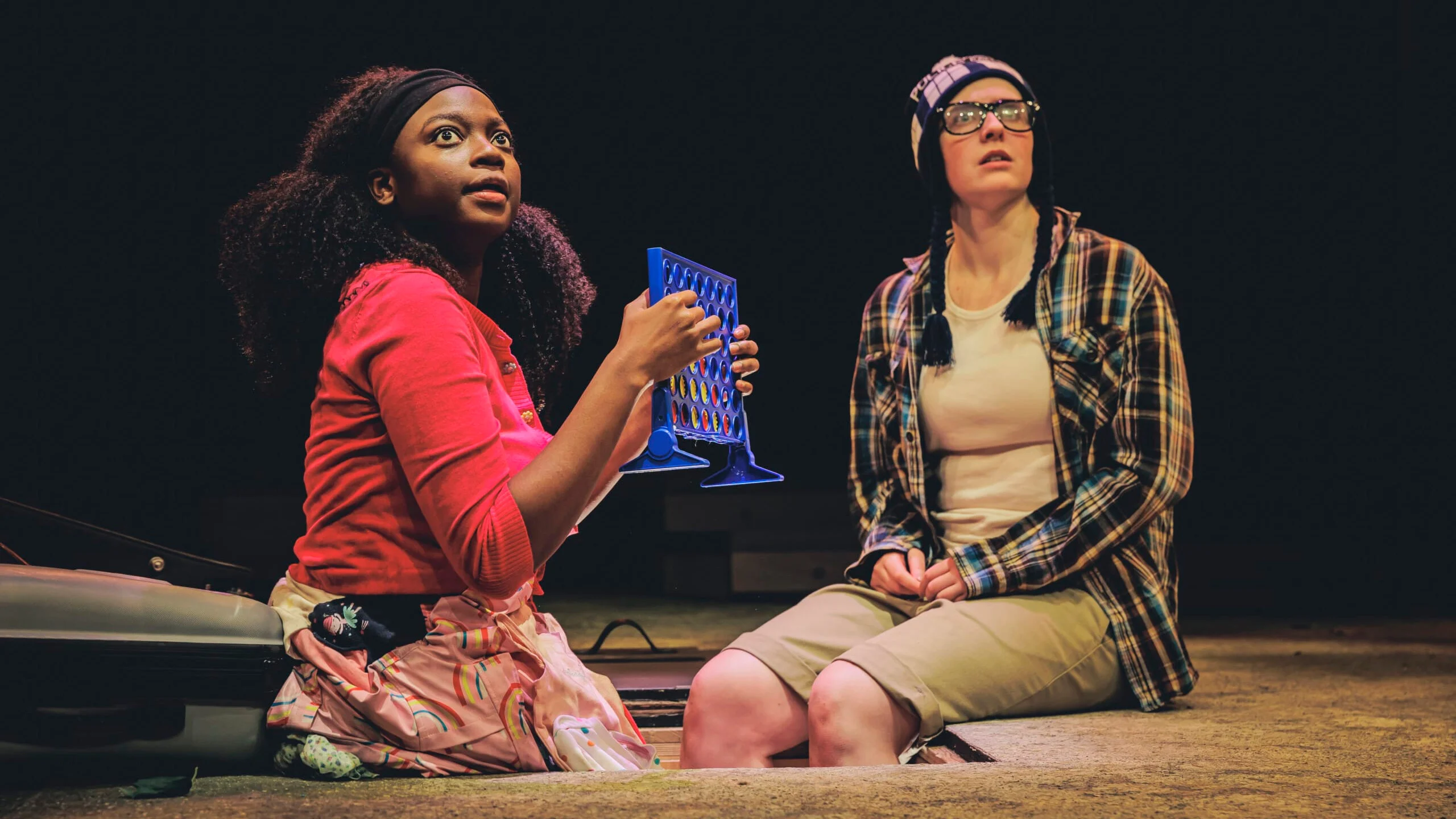
Since 2013, The HandleBards have charmed audiences across the UK and beyond with their unique brand of fast-paced, eco-conscious Shakespeare — cycling from venue to venue with props and costumes in tow. Now, the acclaimed troupe have joining forces with Shakespeare North Playhouse for the very first time to bring their signature energy indoors with The Tempest.
We caught up with the team to find out how this exciting collaboration came about, how sustainability is woven into every branch (quite literally) of the production, and what audiences can expect from this “joyfully silly” take on Shakespeare’s stormy classic.
This is the first collaboration between the HandleBards and Shakespeare North Playhouse – how did it come about, and what excites you most about it?
The relationship with Shakespeare North started with us bringing Romeo and Juliet to the Sir Ken Performance Garden back in 2021, since then we’ve returned each year as a visiting company performing inside and out, including Much Ado About Nothing (2023) and A Midsummer Night’s Dream (2024) in the Cockpit Theatre. In 2024 Shakespeare North approached us about working together on a new co-production, and we settled on The Tempest!
Every time we’ve visited Shakespeare North they’ve always been hugely welcoming and supportive, and it’s a gorgeous theatre to boot. So – the most exciting aspect of the collaboration is the opportunity to make our first mid-scale production with the support of everyone at Shakespeare North, working with HandleBards stalwarts and some brilliant new collaborators, and working with a team who are all as excited as we are about making a joyful and glorious sustainable indoor production.
You’re renowned for your eco-friendly ethos, cycling to your productions across the UK. How does sustainability play a role in this staging of The Tempest?
We’ve been using the Theatre Green Book from the ground-up to design the show to be as sustainable as possible, and to track the environmental impact of the production. We’ve focused on hiring and re-using costume and set, and our brilliant creative and production team have created a forest canopy using real branches from a local tree-surgeon. We’ll be storing and re-using everything we can from the production, and plan to tour The Tempest in the future using electric vehicles.
Credit: Patch Dolan
You’ve been praised for being “chaotic, clever and charming.” What can audiences expect when they walk into the Cockpit Theatre for this show?
Without spoiling too much, they can expect the usual chaos and fun of a HandleBards show, but with a few extras that you can’t find outdoors…
Since your beginnings in 2013, the HandleBards have toured internationally. How has the company evolved over the years, and what’s stayed the same?
The core of The HandleBards has always been touring sustainable, joyful and accessible Shakespeare. Each year we’ve grown a little bigger, and have gone on to tour around the world, have become a registered charity and are now creating our first mid-scale show. Who knows where we’ll be in the next 10 years, but we’ll almost certainly still be taking things not too seriously.
If you had to describe this production of The Tempest in just three words, what would they be?
This October, the University of Liverpool’s Liverpool Literary Festival marks a huge milestone – its 10th anniversary. Over one unforgettable weekend (Friday 17 to Sunday 19 October), the city will once again play host to bestselling authors, cultural commentators, and passionate readers, all gathered to share in the joy of storytelling.
A Headline Conversation with Mark Kermode & Jenny Nelson
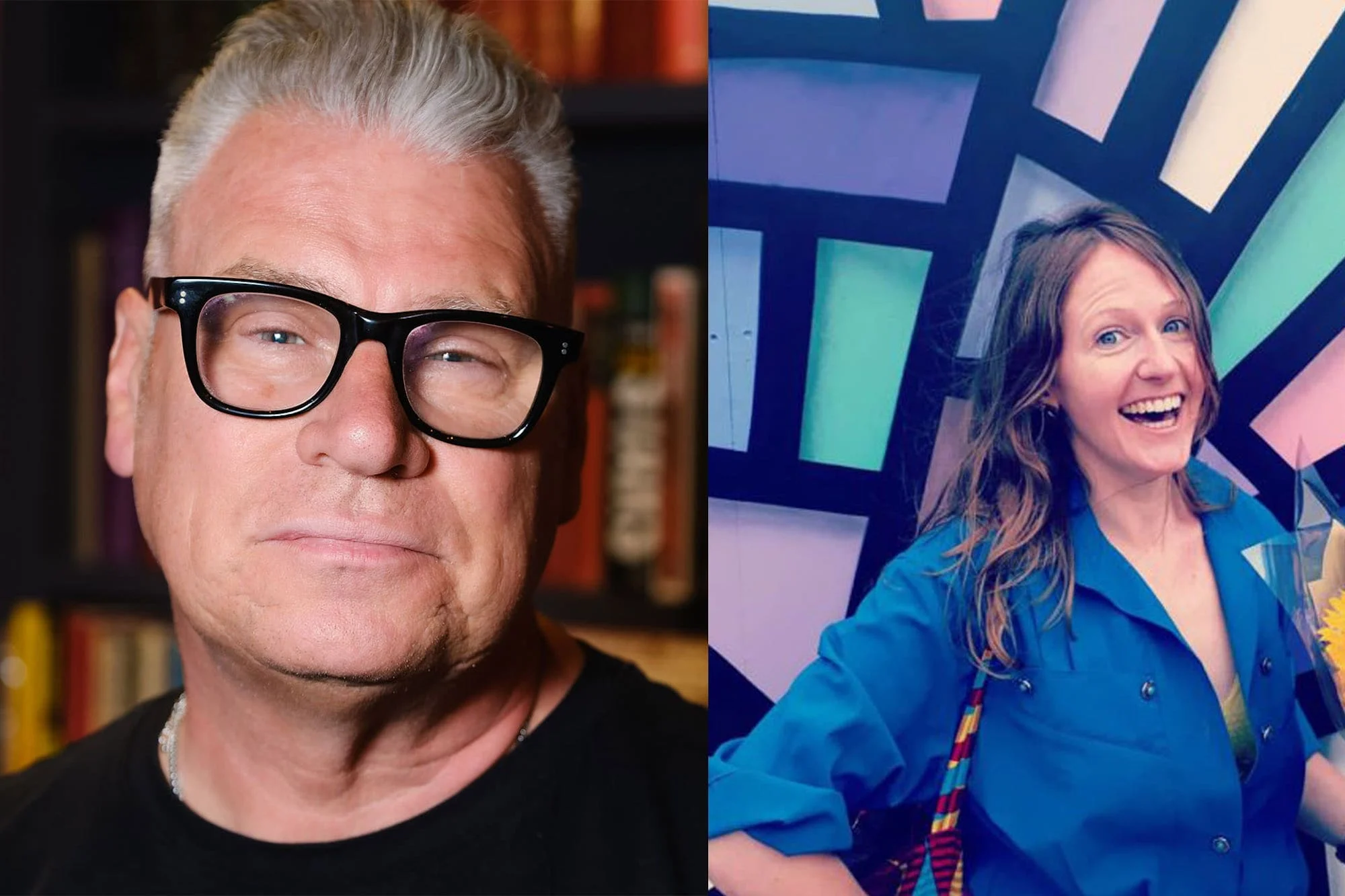
Film critic, writer, musician, and broadcaster Mark Kermode takes centre stage on Saturday evening with long-time collaborator Jenny Nelson. Together they’ll discuss their forthcoming book Surround Sound: The Stories of Movie Music — a deep dive into the emotional resonance of film scores. Expect anecdotes from Hollywood soundstages, explorations of iconic soundtracks, and a look at why music is often the secret ingredient in cinema’s most powerful moments.
Opening Night: Emma Jane Unsworth
The Festival kicks off in style with Emma Jane Unsworth, the award-winning screenwriter and novelist, as she introduces her acclaimed new book Slags. Named a Vogue ‘Book of the Summer’, the novel is already generating serious buzz — and with a TV adaptation in the works, audiences will get a sneak peek into a story set to dominate both page and screen. Unsworth, a University of Liverpool alumna, will be in conversation with Dr Danny O’Connor.
Fiction Meets the Climate Crisis: John Ironmonger
On Saturday morning, novelist and zoologist John Ironmonger returns to his alma mater with The Wager and the Bear, a novel that blends gripping storytelling with urgent environmental themes. Building on the success of his international bestseller Not Forgetting the Whale, Ironmonger explores what happens when human ambition collides with the realities of climate collapse.
A New Look at Doctor Who: John Higgs
Whovians, take note. Cultural historian John Higgs promises to upend everything you thought you knew about the Time Lord in Exterminate/Regenerate: The Story of Doctor Who. As the first true biography of the Doctor, this event (Saturday afternoon) will chart the hidden history of one of Britain’s most beloved TV shows, from its eccentric origins to its enduring cultural legacy.
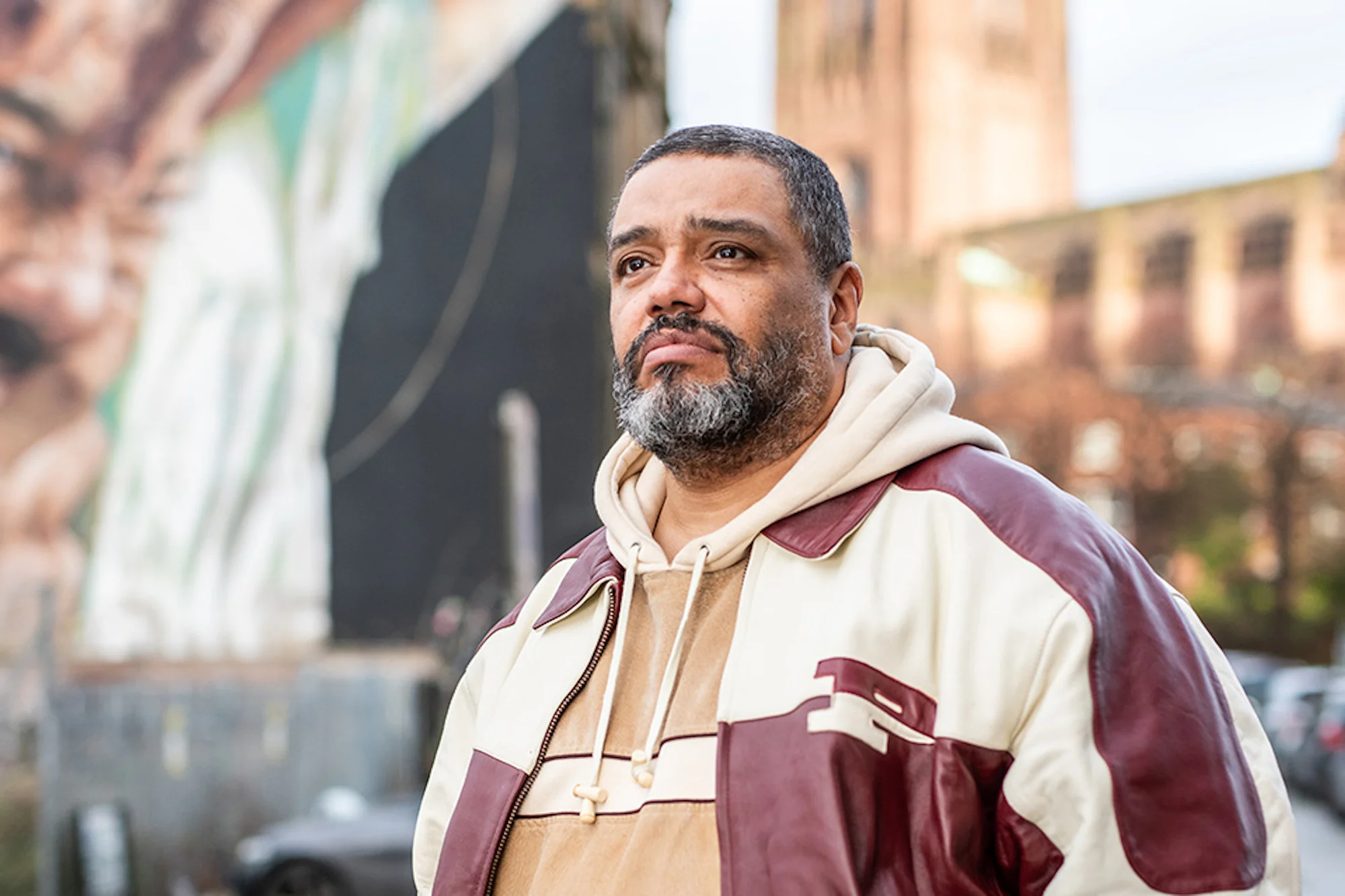
Malik Al Nasir
Bold, Topical, and Thought-Provoking Voices
This year’s line-up isn’t afraid to take on weighty subjects. On Saturday, Dr Nussaibah Younis brings her Women’s Prize-shortlisted novel Fundamentally to the festival, tackling themes of radicalism, love, and identity with satirical bite. Later that day, Malik Al Nasir presents Slave Roots, a powerful exploration of family history that connects Liverpool to the legacies of Caribbean slavery.
The evening closes with a treat for fantasy fans: Juno Dawson, bestselling author and TV screenwriter, discusses Human Rites, the much-anticipated finale to her beloved Her Majesty’s Royal Coven series.
Fresh Talent and New Perspectives
Sunday’s programme begins with a celebration of new voices, as the winners of the Festival’s annual Short Story Competition are announced, with readings from both students and staff. Later, Adele Zeynep Walton offers a personal and moving account of the dangers of our digital age in Logging Off, while debut novelist Hattie Williams reflects on the silences and power struggles of relationships in Bitter Sweet.
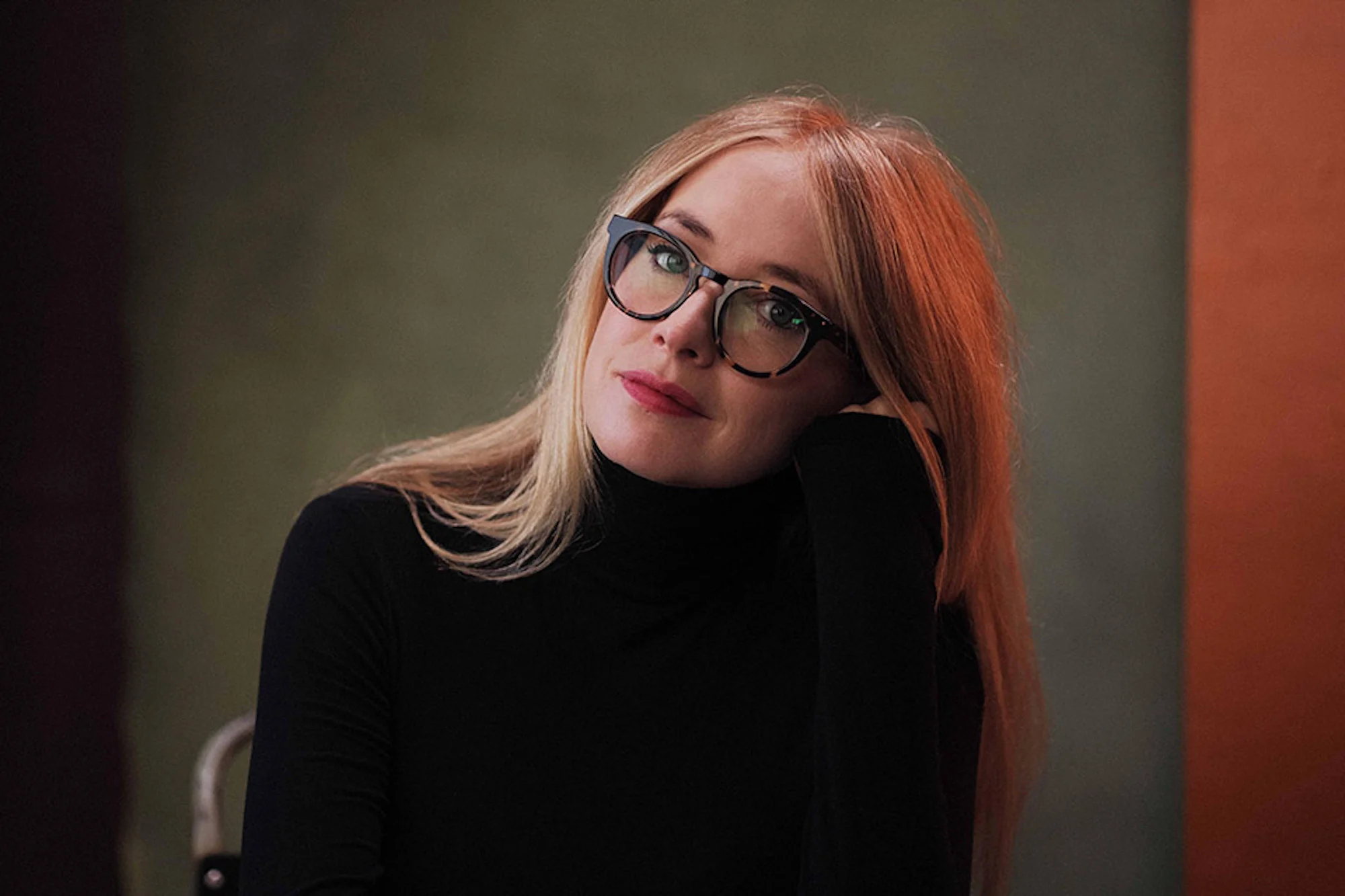
Hattie Williams
Closing with Big Names and Local Stories
The weekend finishes with a series of show-stopping events:
Dorothy Koomson, one of Britain’s most-read Black novelists, shares her latest thriller Give Him To Me while unpacking the impact of abuse and trauma on families.
Filmmaker and artist Chris Shepherd takes audiences back to 1980s Liverpool in Anfield Road, his acclaimed debut graphic novel and Observer Graphic Novel of the Month.
Finally, football fans can enjoy Simon Hughes discussing Chasing Salah, the definitive biography of Liverpool FC’s Egyptian king, Mohamed Salah.
Festival Weekend Pass & Tickets
Guests can register to attend or each event via Eventbrite, or you can purchase a Weekend Festival Pass offering guests the chance to purchase full-day or weekend passes which will include reserved seating in the lecture theatre plus a host of other exclusive VIP benefits.
La Feria International Festival of Latin American Arts & Culture returns to Liverpool this year, once again filling the city with music, dance, theatre, food, and visual arts.
Created by Francisco Carrasco, CEO and Creative Director of Luma Creations, the festival has grown into a highlight of the cultural calendar, offering audiences the chance to experience the richness and variety of Latin American cultures.
With the 2025 theme “Experience, Belong, Celebrate,” La Feria invites everyone to immerse themselves in the programme, connect with community, and enjoy the joy of cultural exchange. We spoke with Francisco about the festival’s spirit, what’s in store this year, and its impact on both artists and audiences.
For those who may not have experienced La Feria before, how would you describe the spirit of the festival in your own words?
La Feria International Festival of Latin American Arts & Culture is LUMA Creations’ flagship event and a celebration of the richness of Latin America, its cultures and its people. La Feria aims to share the depth of quality and diversity of the continent and create platforms for Latin American artists to present their work.
This year’s theme is Experience, Belong, Celebrate. What inspired this theme, and how does it run through the 2025 programme?
The Latin American community is spread throughout the Liverpool city region – we don’t have a geographical hub so the Festival is a way to bring our community together to raise our voices and celebrate our culture. Create a sense of belonging and share our wonderfully rich culture with the local communities.
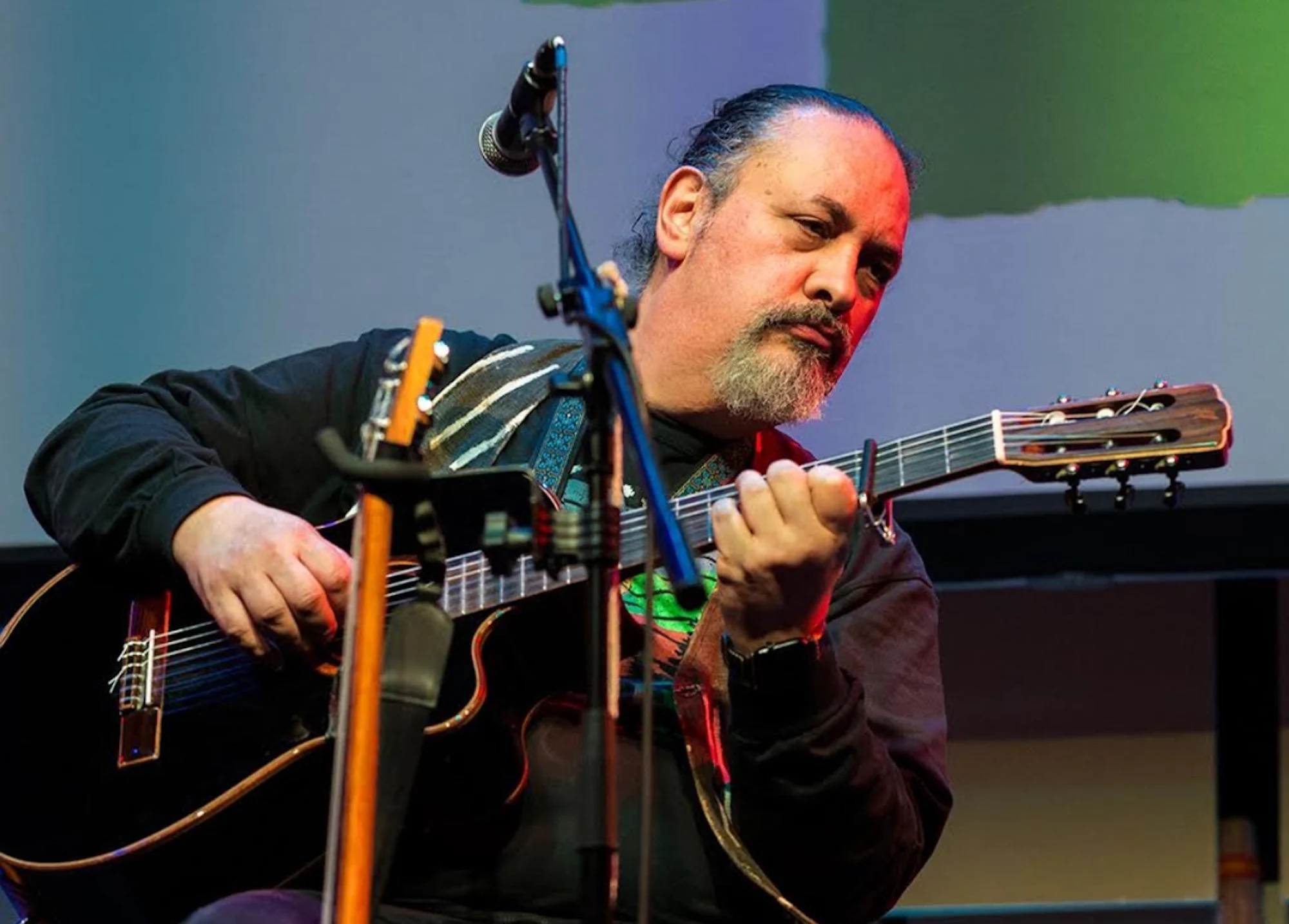
Kumbia Boruka play Future Yard on 4 October
The programme is incredibly diverse—music, theatre, visual arts, food, dance. Which events do you think will surprise audiences the most?
We hope all the events surprise audiences, I do think Wednesday 1st of October at Unity Theatre will be a powerful moment that presents inspirational women artists and delves into issues that are universal from a Latin American perspective. Both, the Thursday at the Music Room, RLPH and the Friday evening at The British Music Experience will present a diverse range of first class music artists that show that Latin American music is so much more than you expect.
The breadth of work this year is remarkable and of such high quality. Our “Entrada” (procession) and take over of the World Museum is going to be spectacular. And the Music groups we have this year are breathtaking.
Can you tell us more about the month-long Visual Arts Exhibition at Stable Gallery and why it’s such an important starting point for this year’s festival?
THis year we did a call out to Latin American artists and were amazed by the range of work we received – All the artists are based in the UK and are from Cuba, Chile, Peru, Colombia, Mexico, and Venezuela. The Exhibition is in two parts. One part is composed of the work of the chosen Latin American artists and the second part is made up of photographs from past La Feria festivals.
The exhibition promises to be a wonderful presentation of Latin American arts, artists and cultures as well as showing a little of the history of the festival.
We are always looking for ways in which to show our culture on different platforms as well as giving Latin American artists those platforms to present their work. We have found that the exhibition is a perfect way to launch the festival.
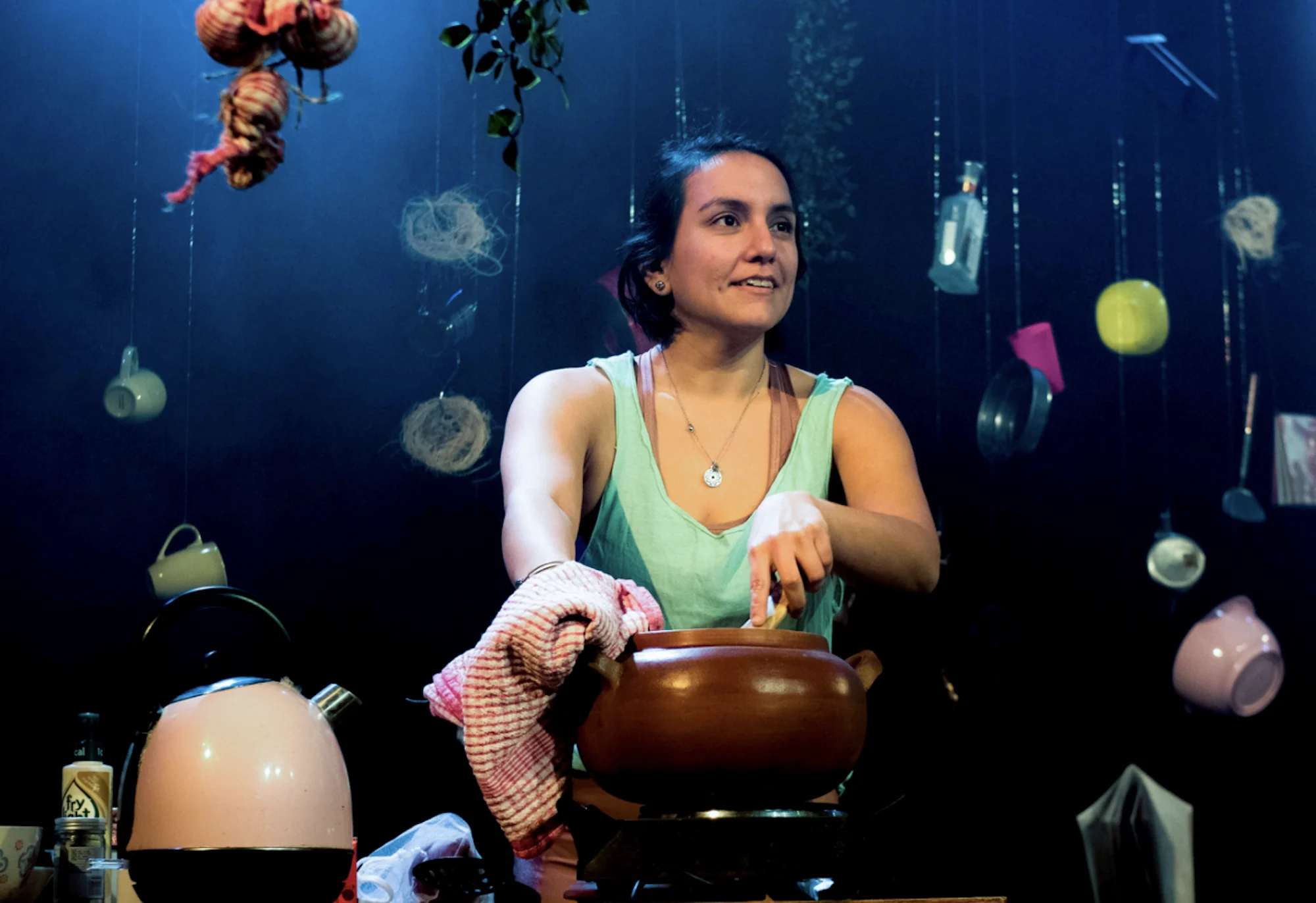
Peruvian theatre-makerPepa Duarte performs Eating Myself — A Bold, Sensory Celebration of Identity, Food, and Culture on 1 October at Unity Theatre
The finale, A Taste of Latin America at The Black-E, promises to be a vibrant, family-friendly day. What’s new for 2025’s edition?
This year we have partnered with the Black-e and will be providing a packed day of culture, with some incredible artists. We have a number of new performers from Ecuador, Peru and Colombia on the finale. We will also have more young people participating and as our engagement continues to grow, we hope to increase the range of work and number of artist and community groups we feature.
What impact have you seen the festival have on audiences, artists, and communities over the years?
The response from audiences and communities throughout the years has been phenomenal. We have many returning audiences and a lot of our new audiences come from word of mouth. We consistently receive positive feedback and artists continue to want to come back to our events in general and specifically La Feria. We pride ourselves in the quality of work we present and in the way we look after our artists and communities. The value we place on them is immeasurable.
Saranne & McDowall play the Liverpool Philharmonic Music Room on 2 October
Which moment are you personally most looking forward to in the 2025 programme?
This is such a hard question to answer. This year is tainted with sadness as my wife passed away in April and she was my most ardent supporter. I hope that as we engage the communities, artists, partners and audiences her incredible spirit soars as it has done throughout all the festivals we have delivered. I think there will be many moments I will treasure and it would be wrong of me to highlight one.
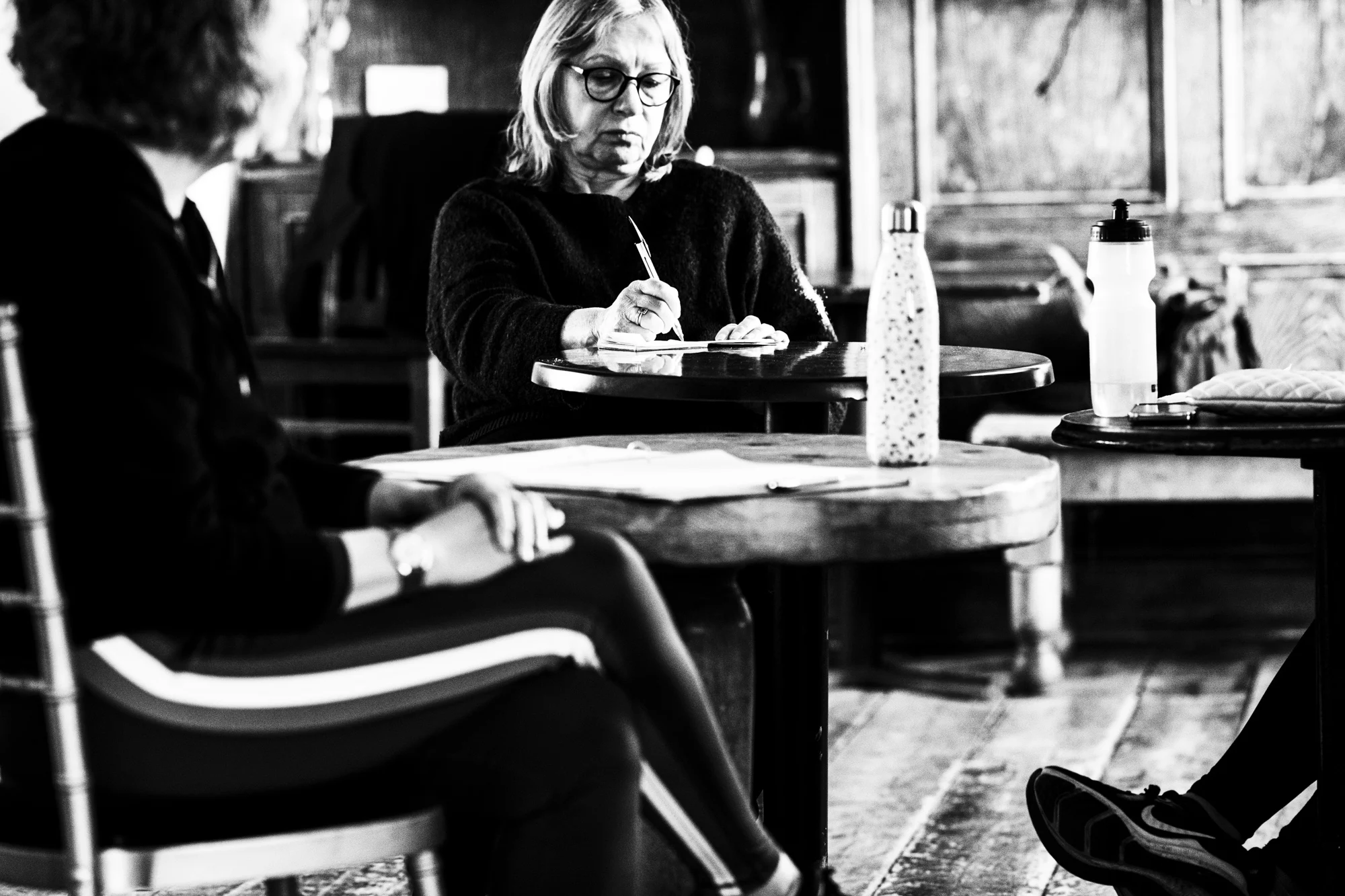
Mari Lloyd at a rehearsal for STILL HERE. Credit: Grey Swan / Tim Stubbs Hughes
After captivating audiences in London and South Wales, Mari Lloyd’s coming-of-age play STILL HERE is making its local debut at Hope Street Theatre on 11–12 September 2025. Developed through research and readings in Merseyside, the play explores the complexities of family, communication, and generational anger against the backdrop of a post-industrial Welsh town. Blending humour with emotional depth, Lloyd’s work reflects her own roots in the Rhondda Valley while remaining universally relatable—and now, it comes full circle, returning to the community that helped shape it.
STILL HERE is returning to Liverpool for its local debut at Hope Street Theatre. What does it mean to you to bring the play “full circle” to the place where it was developed?
I’m absolutely thrilled to present my coming-of-age play STILL HERE in Liverpool. After doing the research and development on Merseyside, it was always my intention to bring it back.
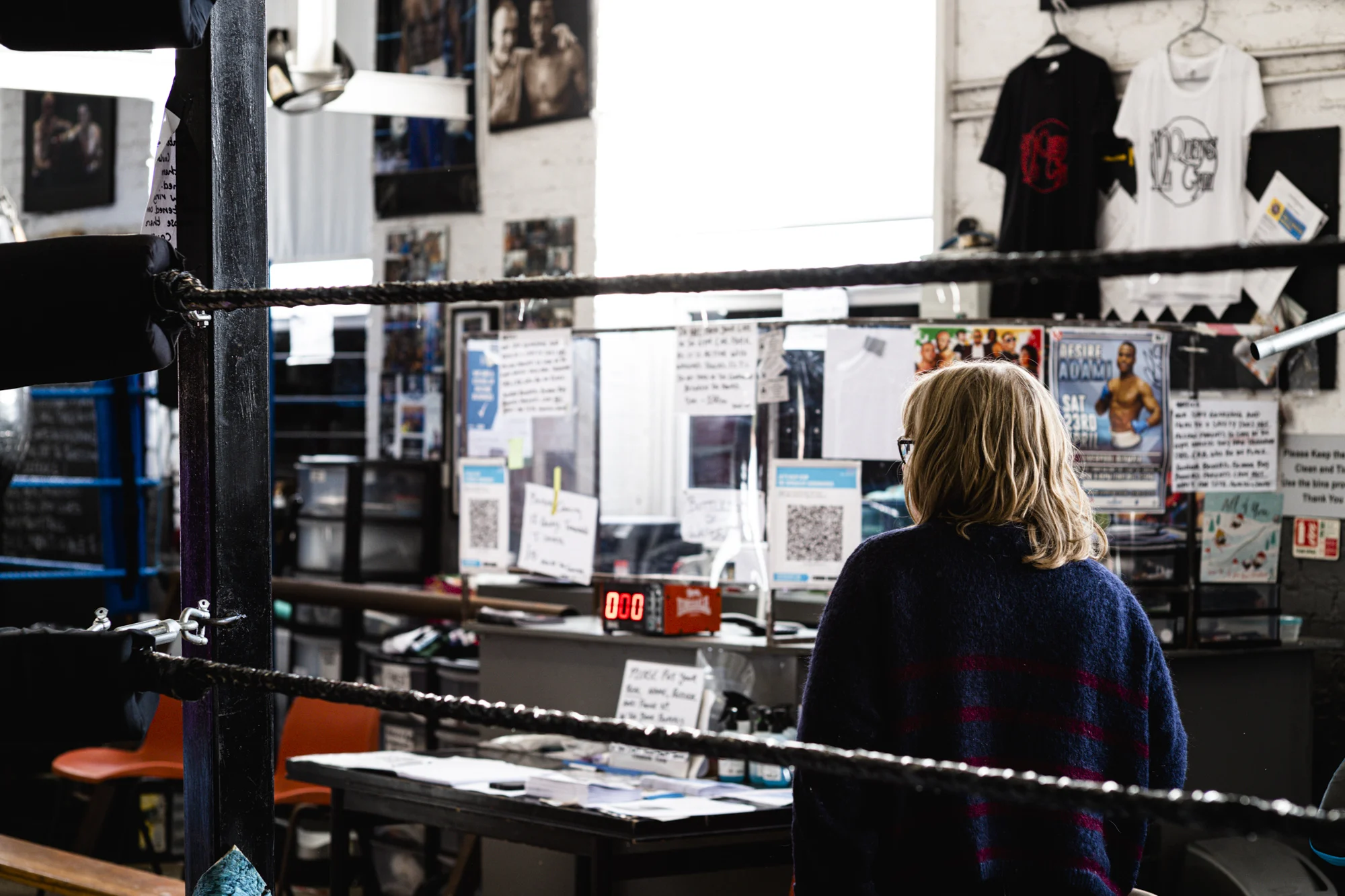
The two protagonists in the play clash in their local boxing gym, so as part of my research, I joined 12 Quays boxing gym in Wallasey. After a week of development, in Liverpool, we did one of our readings at the boxing gym for the boxers, and for staff from the Birkenhead branch of the mental health charity MIND. I felt it was important to reach the people that I was writing about and to get their feedback.
After performing in London and South Wales, people have been asking me when they can see it in Liverpool.
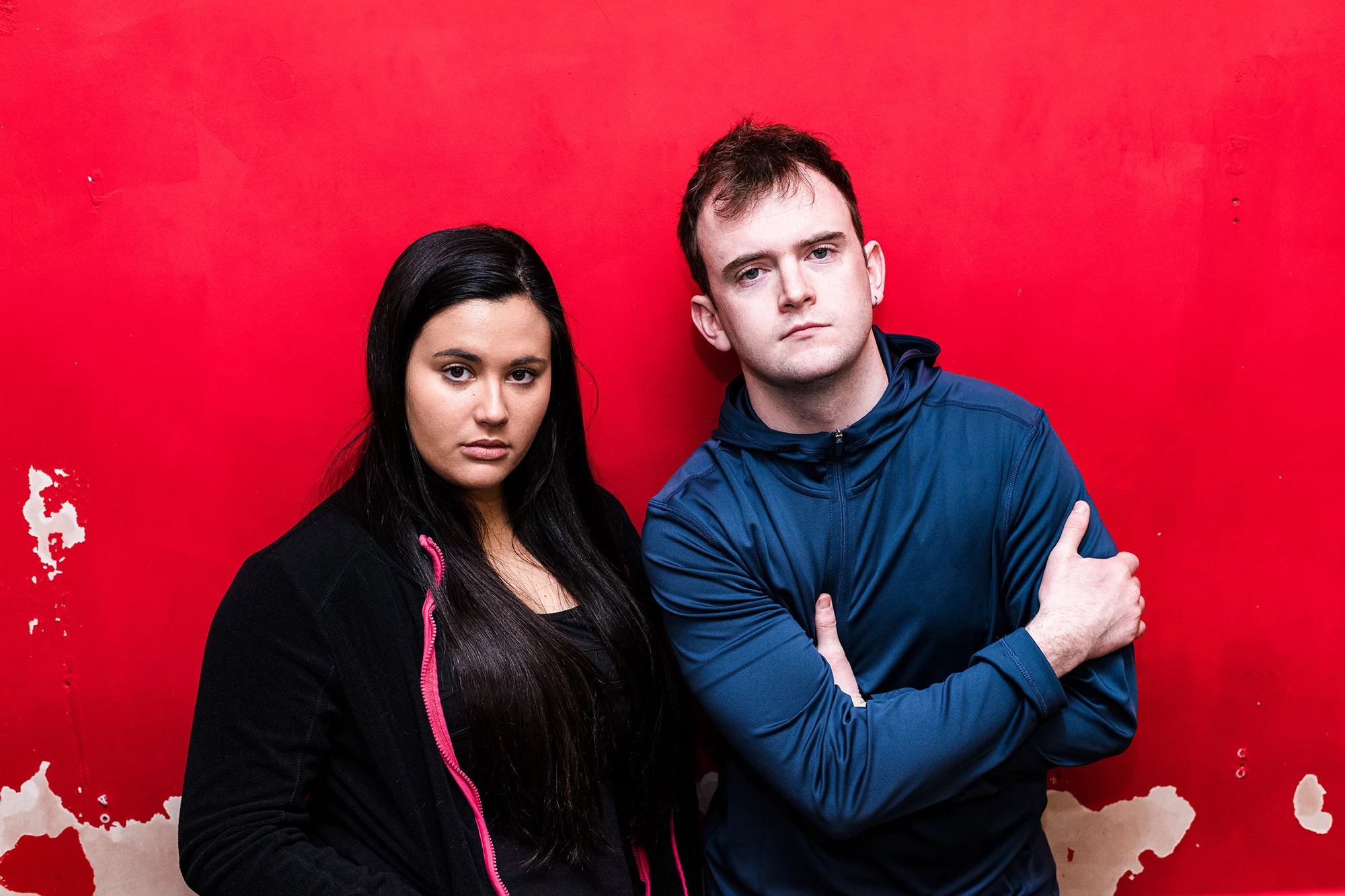
Credit: Grey Swan / Tim Stubbs Hughes
The story is set in a small Welsh ex-mining town, which echoes your own upbringing in the Rhondda Valley. How much of your own life and community experiences have filtered into the characters and setting?
I still have family living in Wales and the play was born out of a frustration about people and places that have been ‘disappeared’. It’s the legacy of de industrialisation.
There are individuals in society that are often disappeared, for example people in care homes or people with a mental illness; but in a post-industrial landscape whole communities feel they are not seen and have lost their voice. This has happened all over Britain, not just the Rhondda. The anger left behind can create a void and a people looking for someone to blame.
The play explores the gap between parents and children—the things left unsaid and misunderstood. Why did you want to put that generational disconnect at the heart of the story?
Communication and anger are major themes in the play. And let’s face it, the younger generation have a lot to be angry about in the world today. The two characters in the play cope with their anger in different ways. But unfocused anger is destructive and blights a meaningful conversation, which is what they both need to have with their parents.
I am fascinated by communication. It’s often not through words. There’s often subtext, hidden meanings and metaphors. We do this all the time in storytelling.
True communication requires understanding and empathy which are more important than words or information which can be weaponized. I believe that all plays are about empathy at the end of the day.
Credit: Grey Swan / Tim Stubbs Hughes
STILL HERE blends humour and emotional depth in a very human way. Was it important to you to balance the heavy themes with moments of levity?
Heavy themes and levity are important to balance. I believe that all stories, however sad, will have some humour. It’s how we, as human beings, deal with situations and make sense of the world. And it’s universal. It was funny because in South Wales they thought that the humour was very ‘valleys’ and they asked me if the people in London understood it!
The staging is described as minimalistic but immersive—how did you and director Julia Stubbs approach creating an atmosphere that keeps the audience emotionally close to the story?
I love minimalistic staging. It’s cheaper for a start. But seriously I think that a minimalistic set can keep things focused and can be quite intense. Everything has a meaning and a purpose. We had brilliant lighting, sound and set designers working with us and, because the play is in multiple locations, everything was designed to follow and amplify the emotion of the play rather than reflecting place or time.
Rehearsals in London. Credit: Grey Swan / Tim Stubbs Hughes
You’ve spoken about theatre being rooted in community—what role do you think locally made, socially engaged theatre plays in Liverpool’s cultural life?
I believe locally made, socially engaged theatre is immensely important, and I wish we had more of it. It’s what Liverpool theatres were famous for. Some of the historically famous groups no longer exist, such as The Theatre of the Left, Network Theatre, Burjesta Theatre; others have changed for commercial viability. We need to protect and support our small local theatres. I have huge respect for the community theatres such as The Valley Theatre that do such good work.
Community, at the end of the day, is vital to wellbeing. Which is why, after researching in a boxing gym, I never left. Huge thanks to Mickey Allen at 12 Quays. I’m trying to persuade the boxers that a play is very similar in dramatic content to a boxing match. I hope some of them come along. I’m working on it.
Don’t miss STILL HERE at The Hope Street Theatre from 11 – 12 September. Tickets are available now.
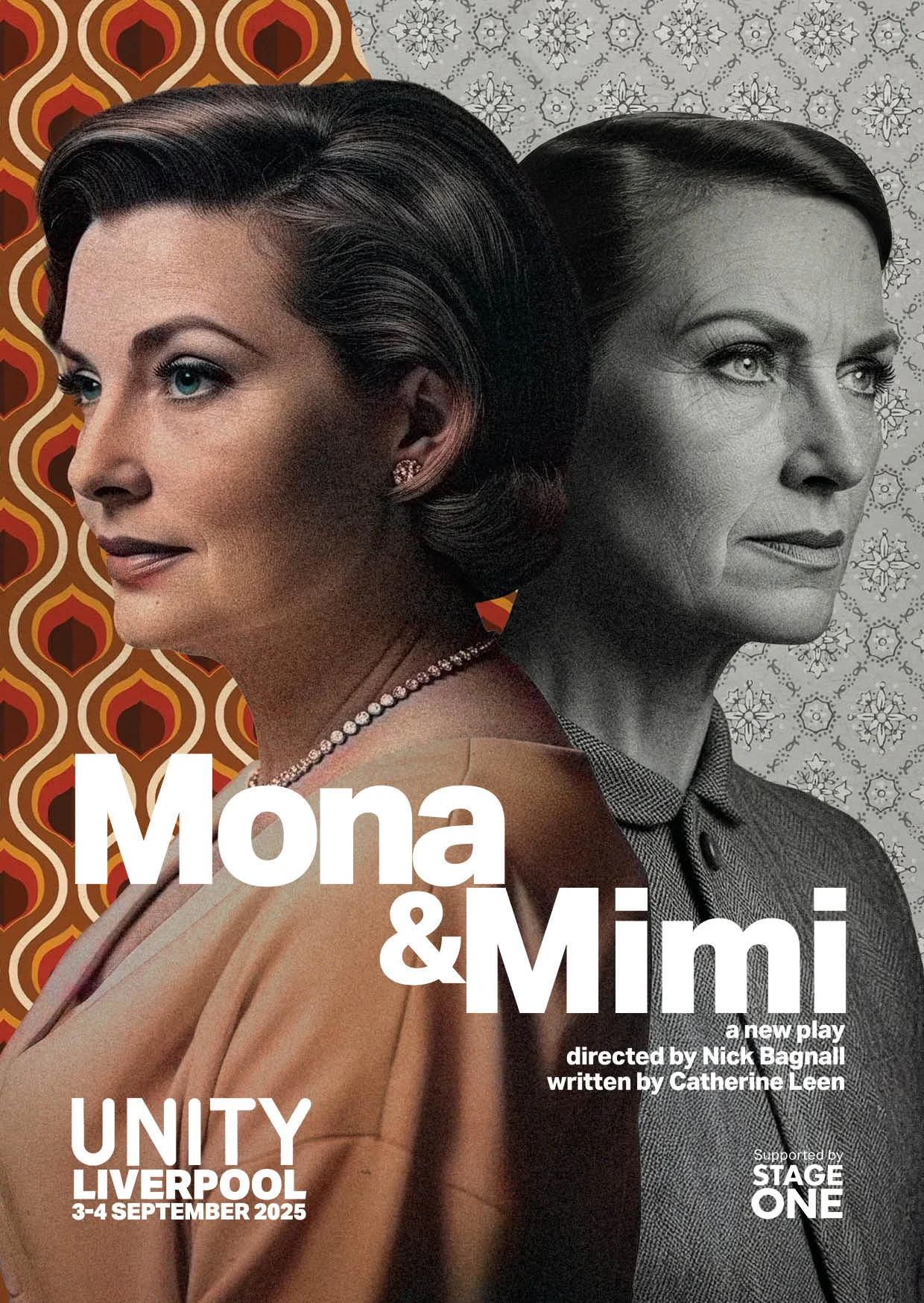
This September, Unity Theatre stages Mona & Mimi, the debut full-length play by Catherine Leen. Set in December 1961—“between the end of the Chatterley ban and the Beatles’ first LP”—it imagines a meeting between two real Liverpool women: Mona Best, mother of drummer Pete Best, and Mimi Smith, aunt and guardian of John Lennon. One embraces the future, the other clings to the past, but as the evening unfolds, surprising parallels emerge.
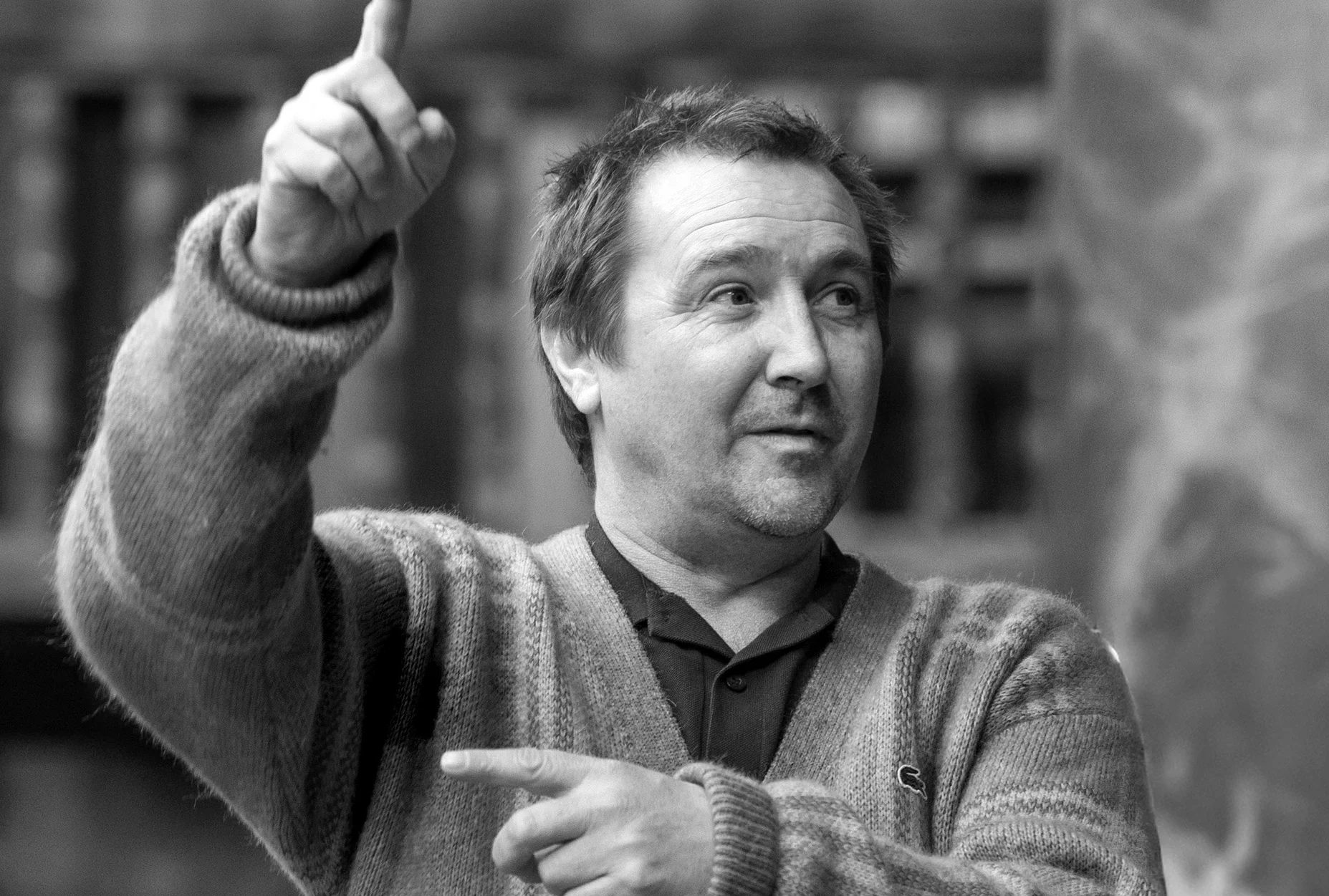
Directed by acclaimed theatre-maker Nick Bagnall and starring Fiona Boylan as Mona, Meriel Scholfield as Mimi, and Noah Fox as Neil, the play shines a light on two often-overlooked women at the heart of the Beatles’ story. We spoke to Nick about the play’s period setting, balancing fact and fiction, and the creative process behind bringing these characters to life.
Mona & Mimi is set on one evening in December 1961 — between the end of the Chatterley ban and the Beatles’ first LP. How did this moment in time inspire the storytelling and tone of the piece?
The tone is set by these two brilliant women – one who recognises the present and the future and is progressive and a visionary, the other who at first seems to be stuck in a rather cold damp past. The world is on the cusp of a huge cultural shift – one embraces and one fears for it. The storytelling is inspired by the two extreme spaces they exist in. To look at this period of time through the lens of these two remarkable women is unique, I think. We seem to always want to view the story through the male lens so it is refreshing vital, necessary and an unusual place to visit. Mona can sense what is around the corner, not just for the band, but culturally and she wants to be right in the centre of it. Mimi navigates herself through these times and the need to protect her John is at the heart of all she does.
The play stages a fictionalised meeting between Mona Best and Mimi Smith—women who embody contrasting values and eras. How did you approach balancing historical context with creative fiction?
It is the writer’s job to stretch the historical truth in order to find the centre and muscle of the story, and allow the drama to explode theatrically. The most important thing for me in theatre is impact on an audience. We have to manipulate some truths in order to get the most from the moment. I am not interested in watching/directing or engaging in a history lesson – I am so much more interested in those two creatures and how they respond to each other in the moment.
Catherine Leen, the writer, has thoroughly researched and has a total love, admiration and respect for Mona and Mimi. She recognises their place in the story which is about to unfold in front of them. The history is there for all to see and manipulate accordingly, but I think with this Catherine has allowed us to be right in the moment with these characters.
Catherine takes us through this play with great respect and understanding of the time we are in and the recognition of the future but does it with great aplomb and joy and wit. She looks at both these women and gives equal weight to their huge part in the next episode of the story of the Beatles.
You’ve directed a diverse mix of productions—from Hansel and Gretel, Edward II at Shakespeare’s Globe to Our Lady of Blundellsands, Sweeney Todd, A Clockwork Orange in Liverpool. How has your experience in both classic and contemporary theatre shaped your approach to a new, character-driven work like Mona & Mimi?
I come at everything with the same amount of rigour and playfulness. My work is shaped by the team around me. I wanted to do this play due to my deep, slightly, obsessive fondness of the Beatles and this particular time. More importantly I was intrigued by these largely forgotten major players in the Beatles’ story. I also know that Catherine has unearthed a fabulous story and am happy to give it its first outing. There will no doubt be a future for this play.
I was intrigued, fascinated and slightly pissed off that these women, especially Mona, tend to be a side note. This is wrong. Their deep love of those boys as mothers/guardians is utterly absorbing. I suppose I am always after the human turbulence in characters and in all I do I tend to reach for the truthful and the turbulence. I am thrilled and excited by looking at the world through these women’s eyes. It has been a long time since I have done something where an audience gets to see the whites of the actors eyes. I adore my job and I am very lucky that I get to play in such varied Playhouses and tell such vital, rich stories. The inner turmoil in both these creatures will be wonderful to unravel in front of an audience.
“Without Mona and Mimi I am not sure what the Beatles story would look like – very different I am sure. I want an audience to leave with a fondness and deep respect for the incredible part they played.”
Can you describe your collaborative process with Fiona Boylan (Mona), Meriel Scholfield (Mimi), and Noah Fox (Neil)? How did you work together to shape their dynamics, particularly between Mona and Mimi?
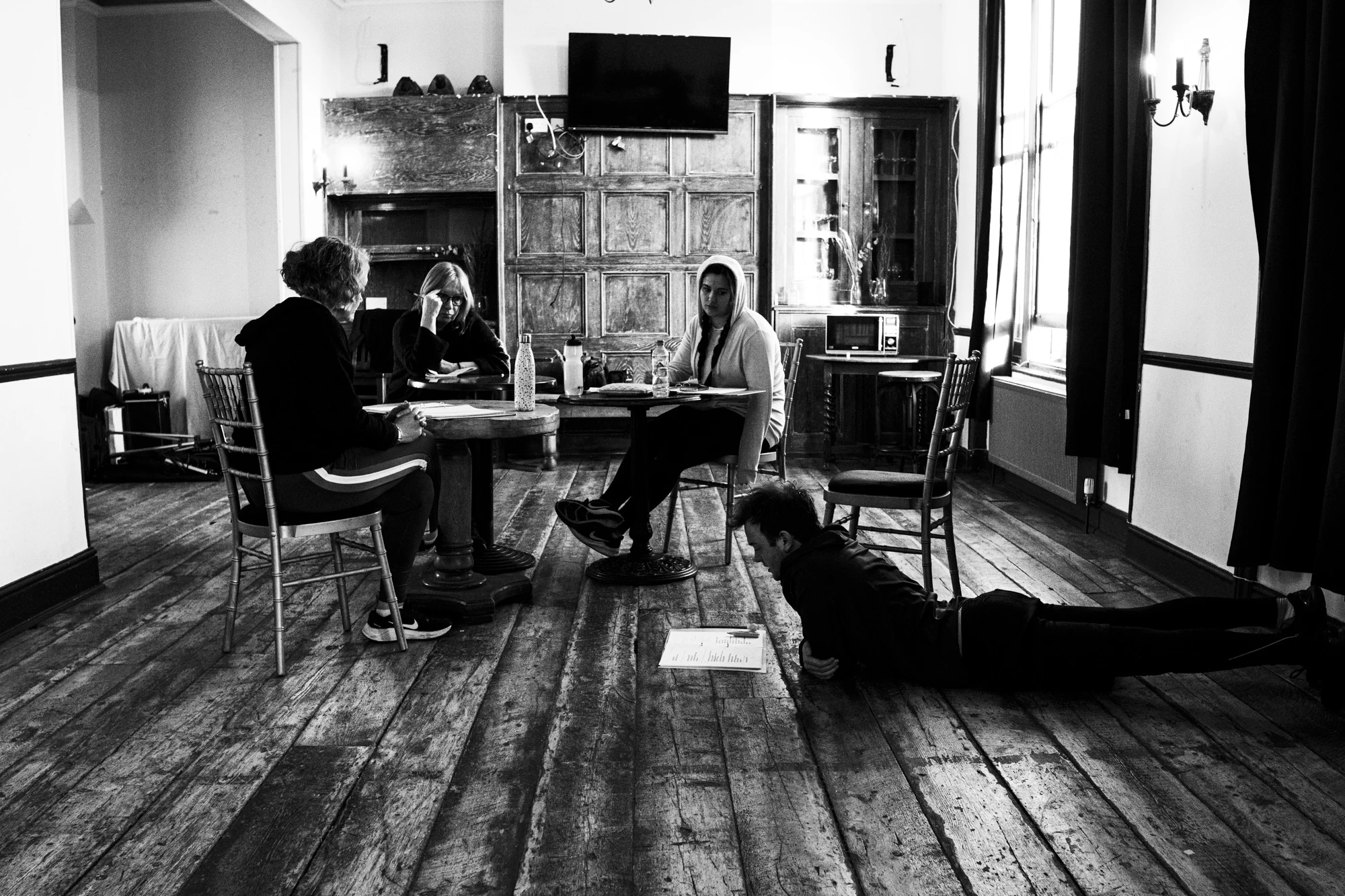
I work from a place of ‘firm fun’, an open hearted and playful room. They are all incredibly agile actors so they dictate how I play things not the other way round. The actors are the front line and I would be stupid to not listen and respond to what they instinctively bring. When you are put in a room with highly intelligent theatre makers it is nothing but learning and listening. The play will develop through all of rehearsals as all new plays do. Then an audience will arrive and we learn again. I hope my rehearsal process provokes an open heartedness and rigour in our story telling. And if it doesn’t then I will tell them where to stand and how to say the lines!!
Fi and Meriel are two wonderful human beings that bring a total understanding of these women to the room. They are transformative and always challenging and questioning. They work in tandem and the trust between them will be palpable and shared on stage. They are a hoot to work with and I admire their bravery each day.
The Liverpool setting and local music history are woven through the story. How has working locally—especially at the Unity Theatre—shaped your engagement with the city’s identity in this piece?
I have never worked at The Unity and always wanted to, so am delighted. I remember seeing the BIG WOW there many years ago and was struck by the intimacy and warmth the space provided, I take my little girl to their Christmas shows so to be putting something into that space is a treat. I am very aware of the Liverpool audience and that is always the first character on my cast list – ‘audience’. The Liverpool audience from what I have learnt tell you loud and clear when the work is good and by god they tell you just as loudly when it ain’t.
Music pretty much runs through all of the work I do and it is no different with this piece. The streets are lined with music and memory in Liverpool and I hope and hope we can allow that to seep through the doors into our hearts. Music hits you in the stomach far quicker than dialogue so I will be allowing myself to indulge in that as a story telling device.
What would you personally hope audiences take away from Mona & Mimi?
I want them to recognise these two brilliant women and the part they played in what is probably the greatest musical phenomenon that has ever been and very likely we will never see the like of again. Set at a time when the Beatles are about to explode, for me to sit and recognise what impact these women have had is everything. Without Mona and Mimi I am not sure what the Beatles story would look like – very different I am sure. I want an audience to leave with a fondness and deep respect for the incredible part they played – but not only that but also the sheer love that seeps from these women towards the boys is nothing short of life affirming.
Mona & Mimi is on at Unity Theatre from Wednesday 3rd to Thursday 4th September. Tickets are available via Unity Theatre’s website.
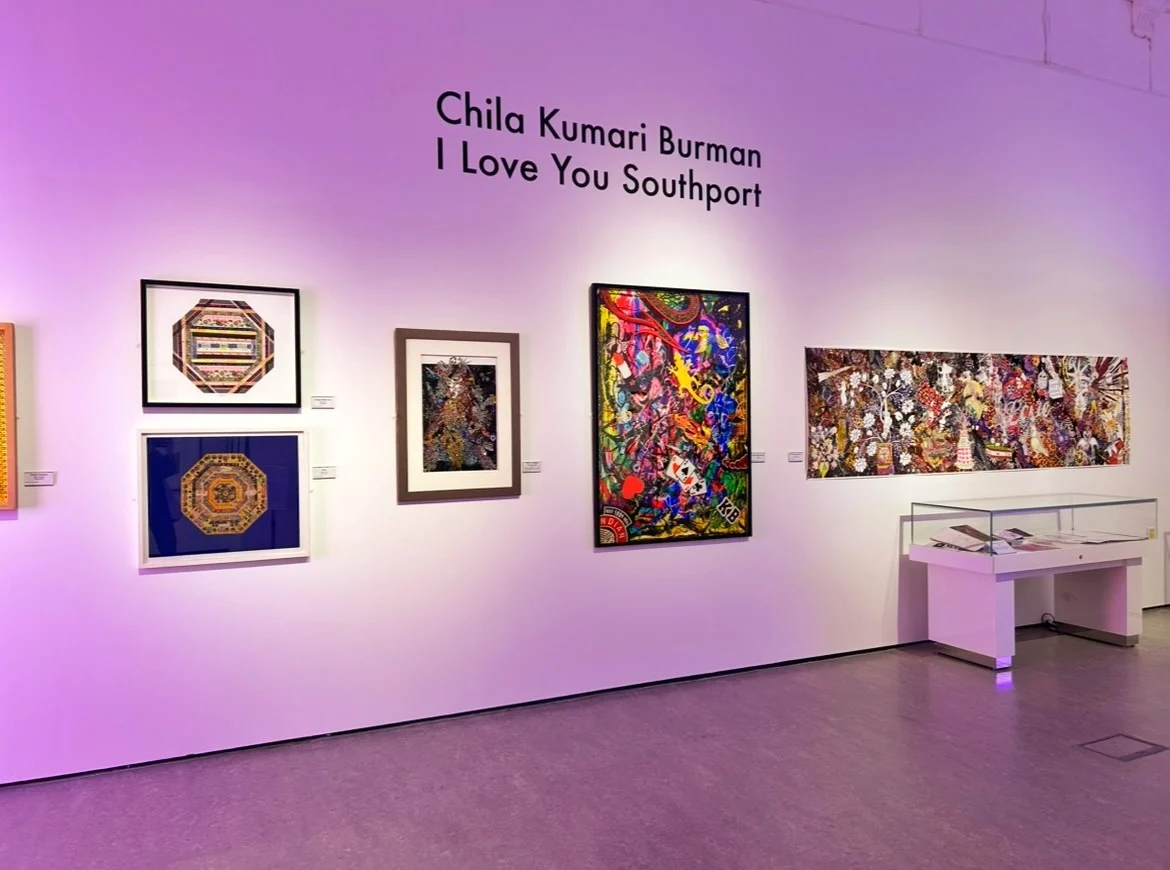
Born in Bootle, Chila Kumari Burman MBE has become one of the UK’s most distinctive and celebrated contemporary artists. Her bold and joyful work returns to her home turf with her I Love Southport exhibition at The Atkinson.
Chila’s upbringing in a Punjabi Hindu household, set against the working-class backdrop of Sefton, has always been a central influence on her art. Her father, Bachan Singh Burman, worked as a tailor and magician in Calcutta before arriving in Britain in 1954, later running an ice cream van on Freshfield Beach — complete with a life-size Bengal Tiger model on the roof. In a recent interview with The Fourdrinier, Burman recalled “I used to clean the van every night and eat all the chocolate flakes!”
Her mother ran a clothes shop in Waterloo, further rooting the family in the local community. These experiences — and especially the ice cream van — have become recurring motifs in Chila’s work, appearing in playful and vibrant ways throughout this exhibition.
Chila began her studies at Southport School of Arts and Crafts, went on to earn a degree from Leeds Polytechnic, and completed a Master’s in Fine Art at London’s Slade School. As a leading figure in the Black British Art Movement, she has consistently challenged stereotypes, redefined British identity, and confronted institutional racism through her work. Her contributions to visual art were recognised with an MBE in 2022, and her pieces are collected and exhibited worldwide.
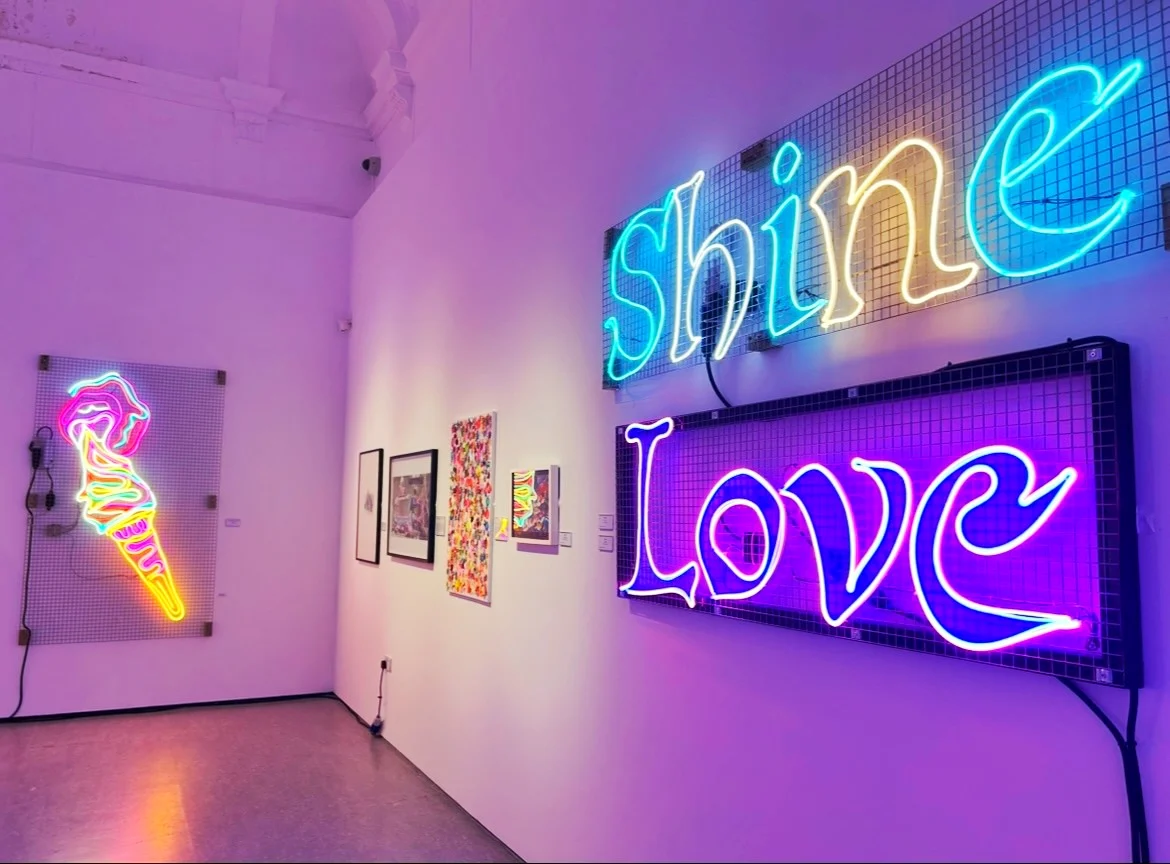
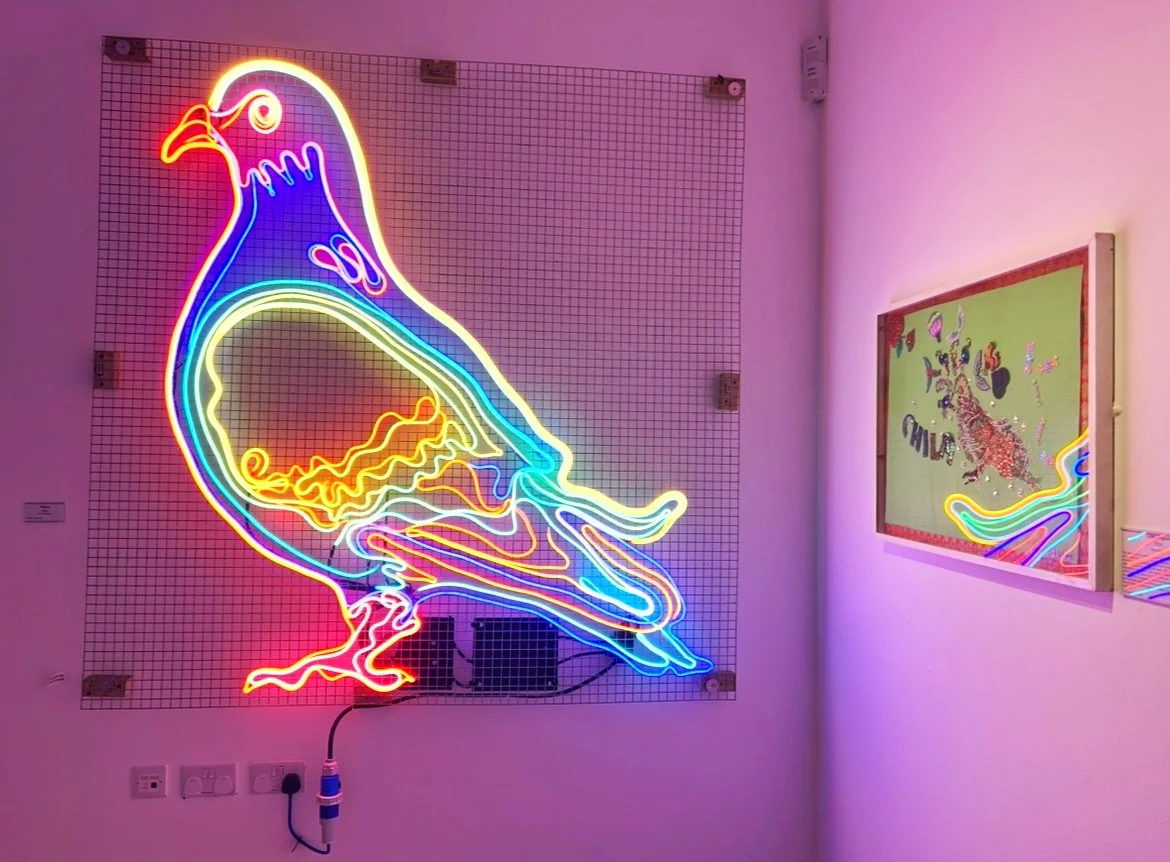
Walking into I Love Southport feels like being immersed in a carnival of colour and memory. The Atkinson’s gallery glows with Chila’s signature neon artworks, set alongside kaleidoscopic prints, bold mixed-media collages, and playful ice cream-inspired sculptures. Spanning more than forty years of her career, the exhibition captures the energy, experimentation, and cultural depth that have made Chila a trailblazer in contemporary British art.
Particularly captivating are the neon pieces, the ice cream that is ready to be licked, and a striking pigeon that commands attention with its bold presence. But, every piece on display draws the eye, including the print Cornets and Screwballs (2023) where Burman’s stacked glass creations of ice cream cones mirror the iconic displays seen at Southport’s ice cream vendors.
Using printmaking, painting, photography, drawing, collage and sculpture, Chila blurs the boundaries between popular culture and fine art. I Love Southport is both a homecoming and a celebration — a reminder that the personal stories and local memories we carry can become powerful, world-reaching art.
Looking ahead, it was announced earlier this year that the first major retrospective by Chila Kumari Burman will reopen Tate Liverpool in 2027 following the gallery’s transformation. But, in the meantime, don’t miss this nostalgia-filled celebration of heritage and creativity at The Atkinson.
Chila Kumari Burman: I Love Southport
Running until Saturday 15 November 2025
The Atkinson, Southport.
Admission is free More info
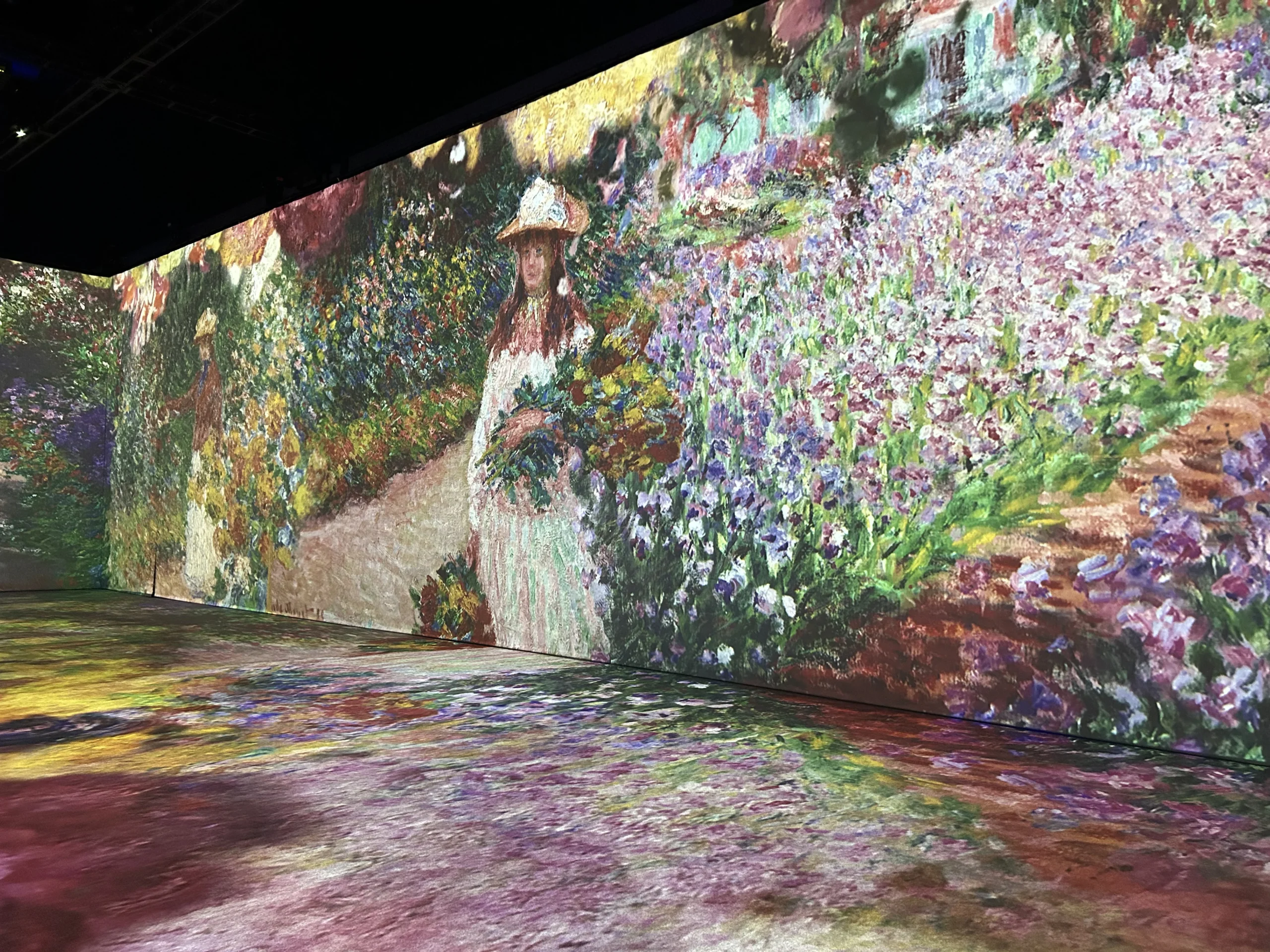
Beyond Monet invites visitors to experience the French impressionist’s work through immersive projection, sound, and storytelling.
This new immersive experience comes off the back of the hugely popular Beyond Van Gogh, which came to Liverpool for the first time last summer, attracting 60,000 visitors.
This year Beyond Van Gogh returns alongside Beyond Monet (running on different days), which is getting it’s European debut right here in Liverpool. If you visited Beyond Van Gogh, then you’ll pretty much know what to expect from the Monet experience too, although both attractions feature a special ‘exit room’ this year. More on that later.
Much like Beyond Van Gogh, before you’re swept away by the art itself, the introductory room offers a grounding sense of context — who Monet was, how he saw the world, and why he changed the course of art history. You come to understand Monet’s philosophy: his obsession with capturing light, fleeting moments, and emotion through colour. That understanding deepens everything that follows.
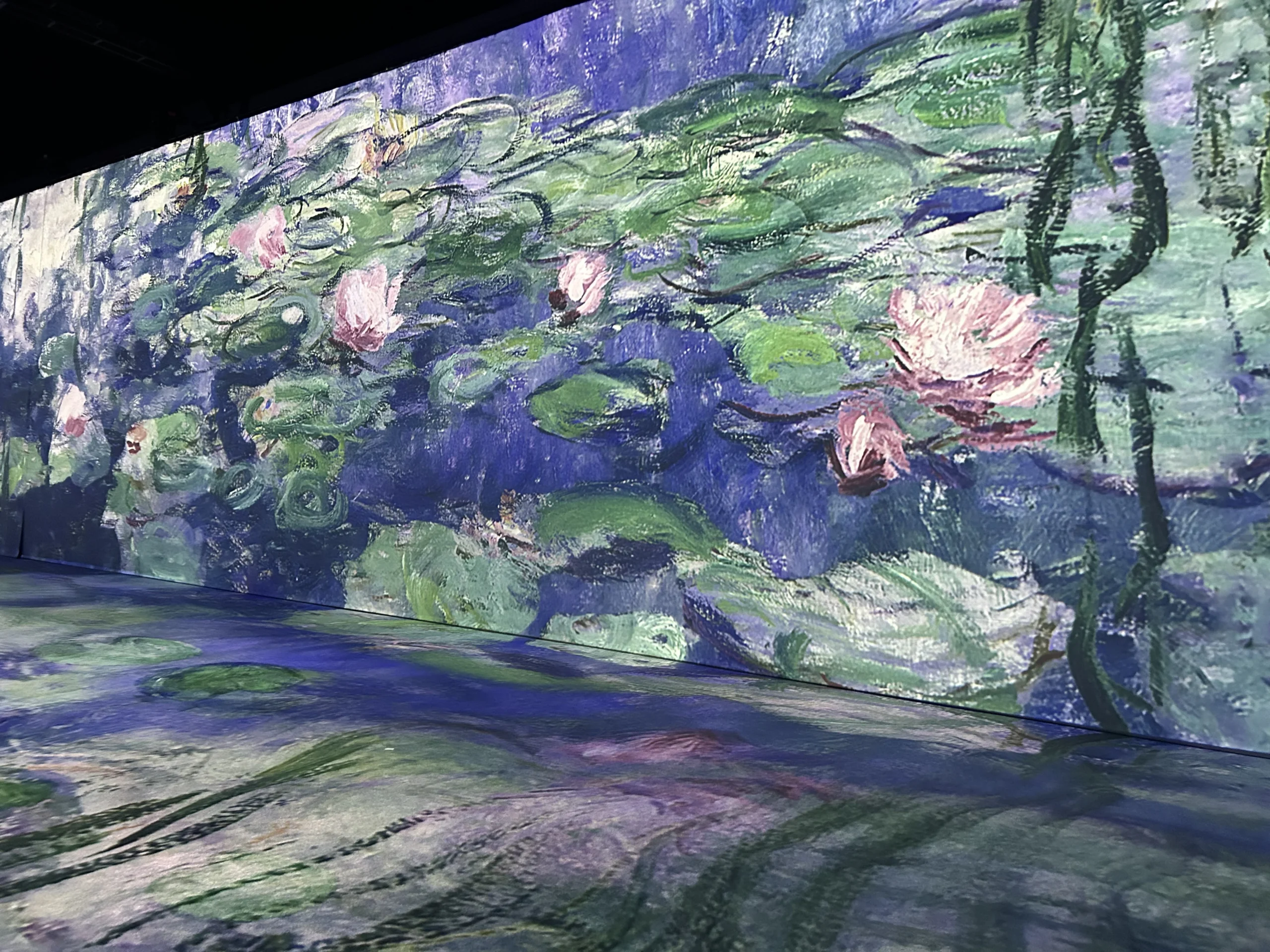
From there, you wander into the Infinity Room – the heart of the exhibition – where iconic paintings like Poppies, Impression: Sunrise, and his mesmerising Water Lilies swirl across the walls and floor in an immersive 360° display. But what Beyond Monet does so well is go beyond the greatest hits. It curates a vast collection — over 400 artworks — and weaves them together thematically, not chronologically, to tell a richer story. You begin to see how his style developed, how light and movement became his language, and how radical he truly was.
A gentle, cinematic score accompanies the visuals, alongside the chirping of birds and subtle scents that further transport you to the gardens of Giverny. Visitors are free to roam, sit, and absorb — there’s no prescribed path or pace. It’s meditative, moving, and refreshingly unhurried.
After the Infinity Room there’s one final immersive element to Beyond Monet: the Exit Room. The bright and beautiful Waterlily Alley takes visitors into Monet’s beloved gardens at Giverny, where they can stroll across a recreated version of the iconic green bridge, surrounded by shimmering lily ponds and arches of cascading flowers.
There are understandable criticisms of immersive art exhibitions — they can risk oversimplifying complex works or veer into the territory of Instagram-friendly spectacle. But there’s also no denying their unique value. No museum in the world could ever bring together this many Monet works in one place. That’s where the immersive format shines: offering a rare, panoramic dive into a life’s work.
One of the real strengths of an exhibition like this is how fun and accessible it is. It’s a great way to engage people who might not usually be into art — whether they’re visiting with kids or just curious to try something different. And for those who take a few minutes to read the information in the introductory room, there’s a real chance it could spark a deeper interest in Monet, or even the wider world of art.
You’ll probably know pretty quickly whether this kind of immersive art event is your cup of tea or not. But there’s no denying its appeal. These exhibitions offer a chance to connect with art in a way that feels open and approachable.
Beyond Monet and Beyond Van Gogh Running until 15 August 2025
Exhibition Centre Liverpool More Info & Tickets
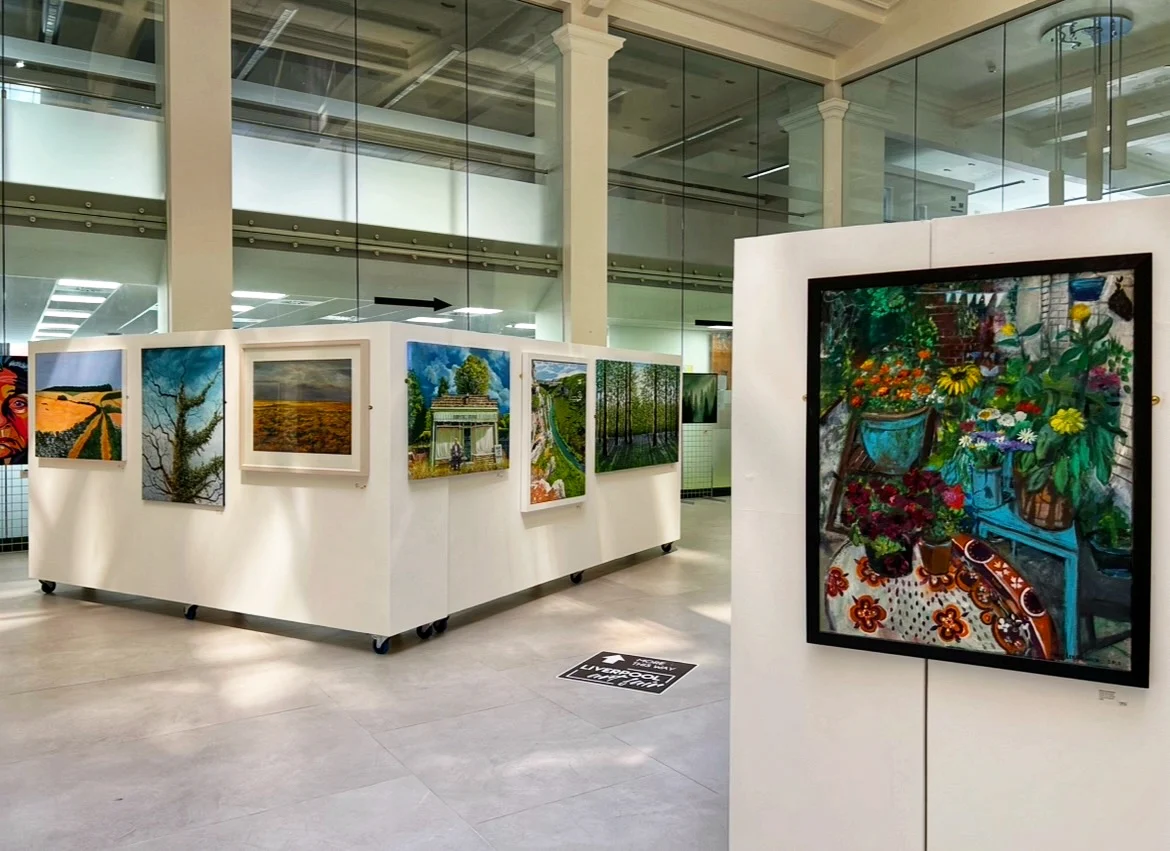
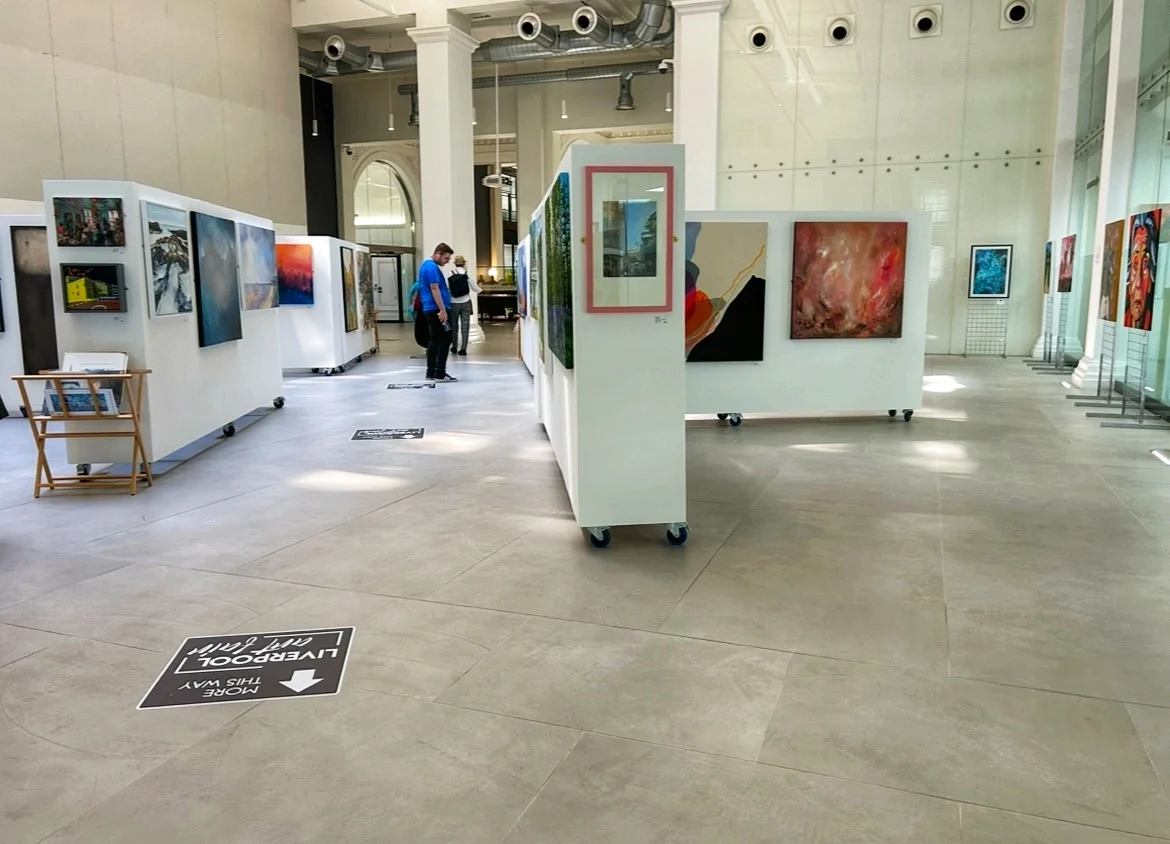
Liverpool Art Fair has just opened its doors for 2025, and I popped in on the first day (Friday 11 July) to check it out. Held in the iconic Royal Liver Building, it’s packed full of affordable, original art by local creatives — and once again proves that art isn’t just for galleries or collectors. It’s for all of us.
Now in its 11th year, the fair runs from 11 July to 25 August, and features work from almost 200 artists based within a 35-mile radius of the city. What I love most is how relaxed and welcoming the whole thing feels. Whether you’re a regular art buyer or just fancy a browse, it’s a really inviting space — no pressure, just loads of amazing work to explore.
Since it launched in 2012, Liverpool Art Fair has become a real highlight of the city’s cultural calendar. It’s organised by local arts champions dot-art, and they’ve done a great job of keeping things accessible — not just in terms of location and vibe, but price too. Every piece is priced between £20 and £2,000, with a whole section dedicated to work under £200.
Curated with Care
The artists were chosen by a great panel of judges this year, including Joe Brooks from National Museums Liverpool, artist Claire Weetman, and returning panelists Sarah Lovell and Faith Bebbington. The result is a brilliant mix — from bold paintings and sculpture to delicate prints and more experimental stuff too. There really is something for everyone.
Inside Liverpool Art Fair 2025 – Uncover Liverpool Instagram Reel
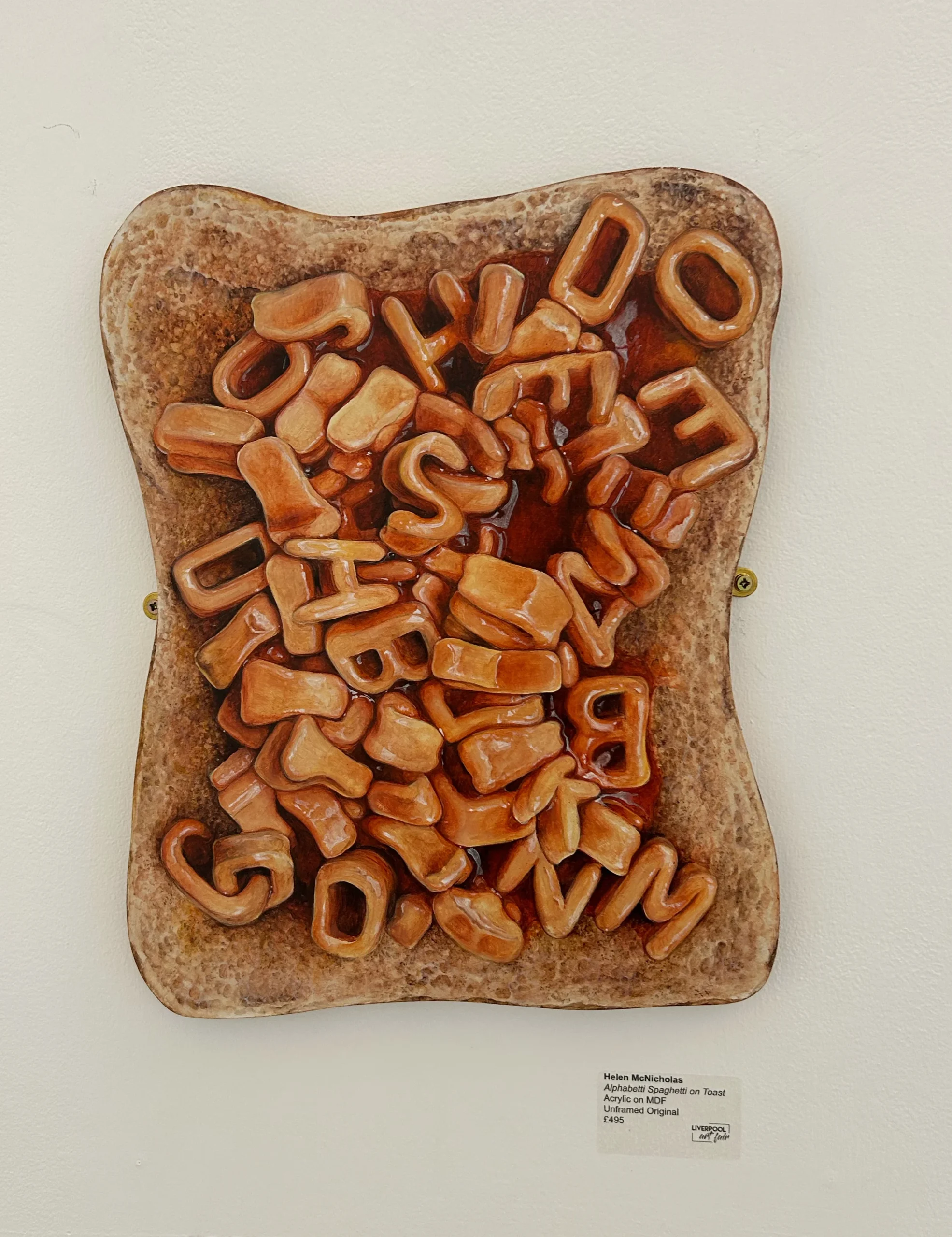
One of my absolute favourite pieces was Helen McNicholas’ ‘Alphabetti Spaghetti on Toast’. It instantly made me smile. There’s something so playful and nostalgic about it, but the detail is incredible too — it really looks good enough to eat. It’s such a brilliant example of how art can be both skilful and lighthearted at the same time.
Another highlight for me was Alan Murray’s ‘War Ain’t Over’, a surreal, colourful take on Renshaw Street. It features The Beatles gliding along on Voi scooters, a floating pig, Yoko Ono and all kinds of Liverpool references tucked into the scene.
I also really loved Victoria Small’s ‘Room for One More’ — a beautifully observed painting of people browsing an art gallery wall, completely absorbed in the moment. There’s something warm and familiar about it. I liked the way it captures that quiet joy of looking at art — of being lost in thought, taking your time, noticing the little details. It almost felt like a painting within a painting, and I found myself doing the same thing as the people in the artwork: slowly taking it all in.
Helen McNicholas – Alphabetti Spaghetti on Toast Acrylic on MDF
Open Every Day, With Creative Workshops Too
For the first time, the fair is now open seven days a week, from 11am to 5pm, which makes it super easy to drop in whenever suits. And if you fancy getting hands-on, there’ll be a series of creative workshops happening over the summer, delivered by Cass Art. I’ll definitely be keeping an eye out for those — always fun to have a go yourself.
More Than Just an Art Fair
One of the best things about Liverpool Art Fair is the way it supports local artists. It’s not just about selling work (though of course that’s important) — it’s about building careers, creating community, and celebrating the creative energy that makes this city so special.
The setting couldn’t be better either. The Royal Liver Building is such a landmark, and it adds a bit of magic to the experience. There’s something about seeing contemporary art in a space with so much history — it just works.
I left feeling inspired. If you’ve never been before, I’d really recommend it. And if you have? You’ll already know it’s well worth a return visit.
Liverpool Art Fair 2025 Royal Liver Building, Pier Head, Liverpool Until 25 August 2025 Open daily, 11am – 5pm Free Entry liverpoolartfair.com
Keep in touch
Newsletter
Sign up to keep up to date with what's on in the city and the region!