Edinburgh Fringe Festival at Home: A Look at Liverpool’s Theatre Scene This Summer

By Abbie Billington

Edinburgh Fringe Festival at Home - A Look at Liverpool’s Theatre Scene This Summer

Edinburgh Fringe Festival is widely regarded as the largest arts festival in the world. It takes place across three weeks in August, spanning the whole of the city and welcoming millions of people from all corners of the globe. With over 3,000 shows to choose from, the Fringe Festival has something to offer everyone who comes to join in the festivities. 

While the Fringe Festival is an incredible annual event, for those of us not making the journey up north, there’s plenty of shows across Liverpool this summer to give you that fringe feeling! Liverpool has a fantastic grassroots theatre scene, and in this feature, we’ll look at just some of the shows making their way to the city this season.

YEP: The Snow Dragons – Everyman Theatre (11 – 12 July)

The Snow Dragons

Deep in the woods, the trees are whispering. Beneath their branches, thrilling stories are being told.

Playing make believe with your friends was one of the best parts of being a kid, and in The Snow Dragons, the young people of the Young Everyman Playhouse programme bring that imagination and excitement to the stage. Eight young friends spend their days in the woods, inventing stories about giants and dragons, sword fights and vengeance. But when childhood games and the grown-up world collide, can they become the heroes they always imagined themselves to be? 

The Snow Dragons is jam-packed with stunning songs and live music, immersing you in this dark fairy tale that will take you on a wild, magical ride.

Ghost Town – Unity Theatre (24 – 26 July)

Ghost Town at Unity Theatre

Written in collaboration with 20 Stories High Youth Theatre, Ghost Town is a spooky, comedy thriller that takes place across Liverpool. After Darren disappears into the infamously haunted Newsham Park Hospital, his mates band together to uncover the truth of what really happened. Their journey is fraught with difficulties, with everything from tourists, buskers and scallies disrupting their search for the truth. Ghost Town will have you shaking from laughter and fear and will leave you with the question: do ghosts really exist? 

Unity Scratch Night – Unity Theatre (30 July)

Unity Scratch Night

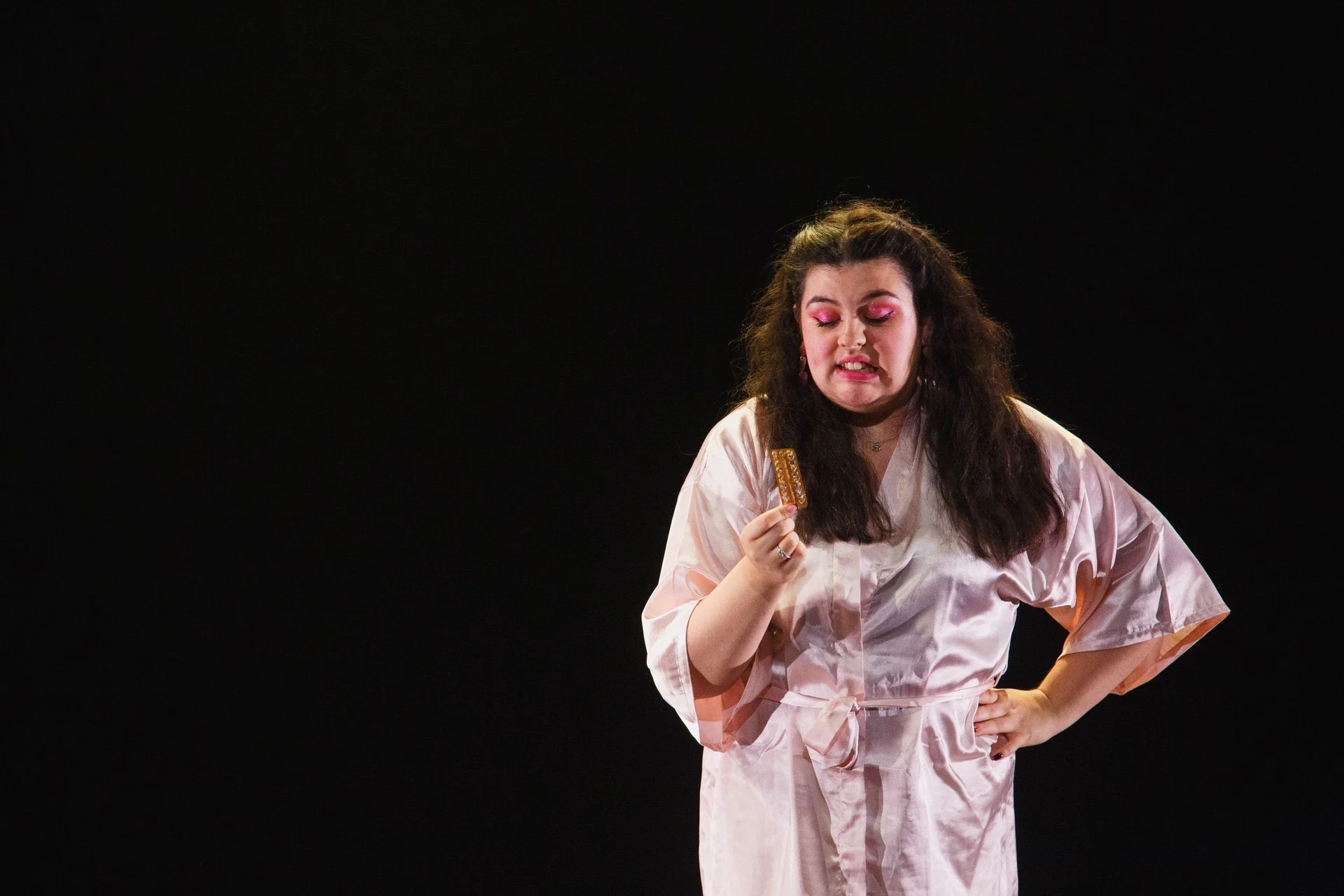
One of the best parts about the Edinburgh Fringe Festival is the chance to see brand new works of theatre, fresh off the press. But each one of those pieces had to start somewhere! At Unity’s Theatre’s Scratch Night, five ‘work in progress’ pieces of writing will be given the limelight to showcase what they’ve got so far. These nights are always stacked full of fantastic new talent, and this month’s instalment is sure to be no different! On the line-up this month is Flinger by Steve Wallis, Feed The Scousers by Jakob Taylor, Casu Martzu by Simone Tani, The Fanny Diaries by Erin McDaid, and Seafloor by Jake Angerer.  

Sauce and Sorcery – Royal Court Studio (1 – 23 August)

Sauce and Sorcery – Royal Court Studio

Have you ever wondered what it would be like if two wizards had their own chippy in Old Swan? Well, the Royal Court Studio has got your answer in Sauce and Sorcery.

Abrakebabra is your average chippy run by Finn and his grandad Grant. Alongside the chips, fish, scallops and donner meat, they also serve up a healthy portion of spells and hexes. After already receiving a warning for using his magic in a built-up area, Grant lands himself in even deeper trouble after a transmogrification mistake involving the local drug dealing entrepreneur. With Finn, Grant and the chippy in danger, will their wizarding skills be enough to save them?

Picnic at Hanging Rock – Hope Street Theatre (9 – 10 August)

Picnic at Hanging Rock – Hope Street Theatre

Based on the hit historical fiction novel by Australian author Joan Lindsay, Picnic at Hanging Rock follows the story of a group of female boarding school students who vanish at Hanging Rock while on a Valentine’s Day picnic in 1900. To this day, it has never been confirmed if the events in the novel were fact or fiction, but in the stage adaptation of Picnic at Hanging Rock, five actors will try to unravel the truth of what really happened that fateful day.

Fakebook – Hope Street Theatre (13 – 16 August)

Fakebook – Hope Street Theatre

Our current world is a digital one – we spend most of our lives online, glued to our screens and the topsy-turvy world of social media. Going Nowhere productions explore truth, lies and the masks we wear online in this bold and biting new comedy. Soundtracked by some fantastic music, Fakebook dives deep into what happens when real lives collide with digital personas. With plenty of surprises and full of wit, Fakebook is sure to be one you’ll want to catch this season.

To discover even more theatre shows happening across the Liverpool city region this summer and beyond check out our What’s On listings.

Desperate Times, Radical Measures – RAWD and Ugly Bucket Bring Protest to the Stage This Disability Pride Month

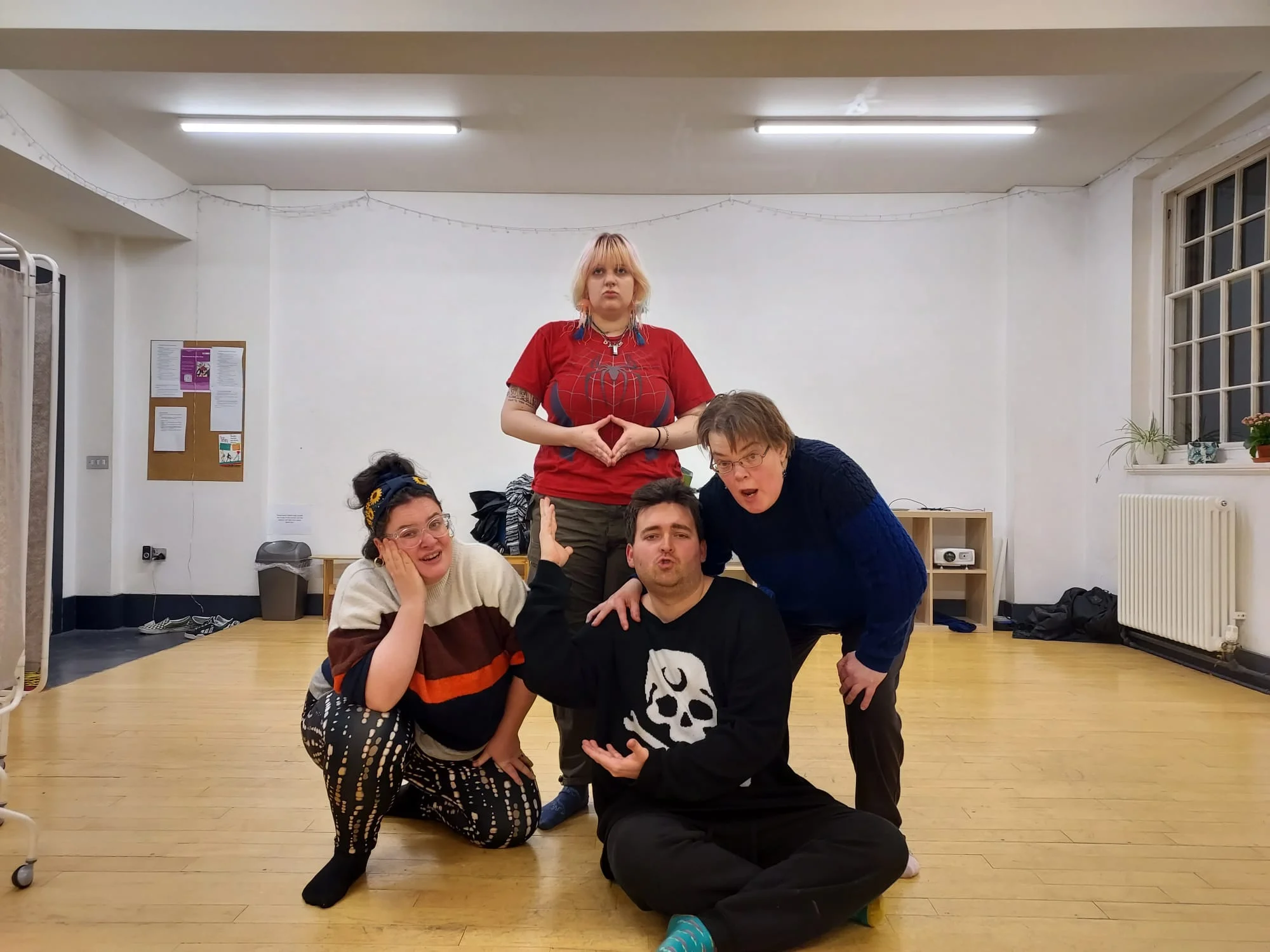
Don't Call Us We'll Call You - RAWD and Ugly Bucket Theatre

As July is Disability Pride Month and news turns to more damaging cuts to the support of disabled people, Ugly Bucket’s Grace Gallagher talks protest.

In a climate of relentless benefit cuts, disabled people are facing mounting pressure—targeted by policies that chip away at their independence, dignity, and support. When times are desperate, we turn to desperate measures. In the case of Don’t Call Us, We’ll Call You, those measures come in the form of clowning.

This new show sees 35 disabled performers take to the stage in a dynamic and outrageous spectacle rooted in the spirit of the Block Telethon protests of the early 1990s, but retold through modern perspectives and abstract form.

This year marks a major milestone for disabled arts organisation RAWD as they officially launch as a charity. From humble beginnings in a church hall drama group, RAWD has grown into a vital creative force for learning disabled & neurodivergent people in Merseyside. To celebrate—and respond to the escalating challenges their members face—RAWD teamed up with Liverpool-based clown company Ugly Bucket to explore themes of protest and disabled activism.

The Challenge Isn’t Learning—It’s How We Teach

History is filled with moments where disabled people have fought back—often in bold, creative, and unexpected ways. Our process began in January 2025, as many creative journeys do, with research.

When we began, even the question “what is protest?” felt huge for some members of RAWD. It was unfamiliar ground—intimidating and distant. After all, society often assumes what learning disabled and neurodivergent people can and can’t ‘handle’. This collaboration demonstrates that the issue has never been ability—it’s access.

We learnt about protest not through textbooks, but through clowning. We’ve discovered ways to make big ideas feel accessible, playful and personal. We explored decades of disabled activism—The Blind March, the 504 Sit-In, The Direct Action Network’s London Bus Protests to name a few. However, as clowns, we were drawn—irresistibly—to the garish world of 90s Telethon. The Block Telethon movement, where disabled activists rejected pity-led fundraising campaigns, became a powerful touchpoint for us.

While we play within this world, the show echoes all our learning as RAWD members have stamped this story with their own perspectives and flair. This show is a reflection of the journey they have taken: finding their voice, breaking their own moulds, standing up for what’s right and building confidence to call upon their audience for allyship.  

Clowning – More Than Just Laughs

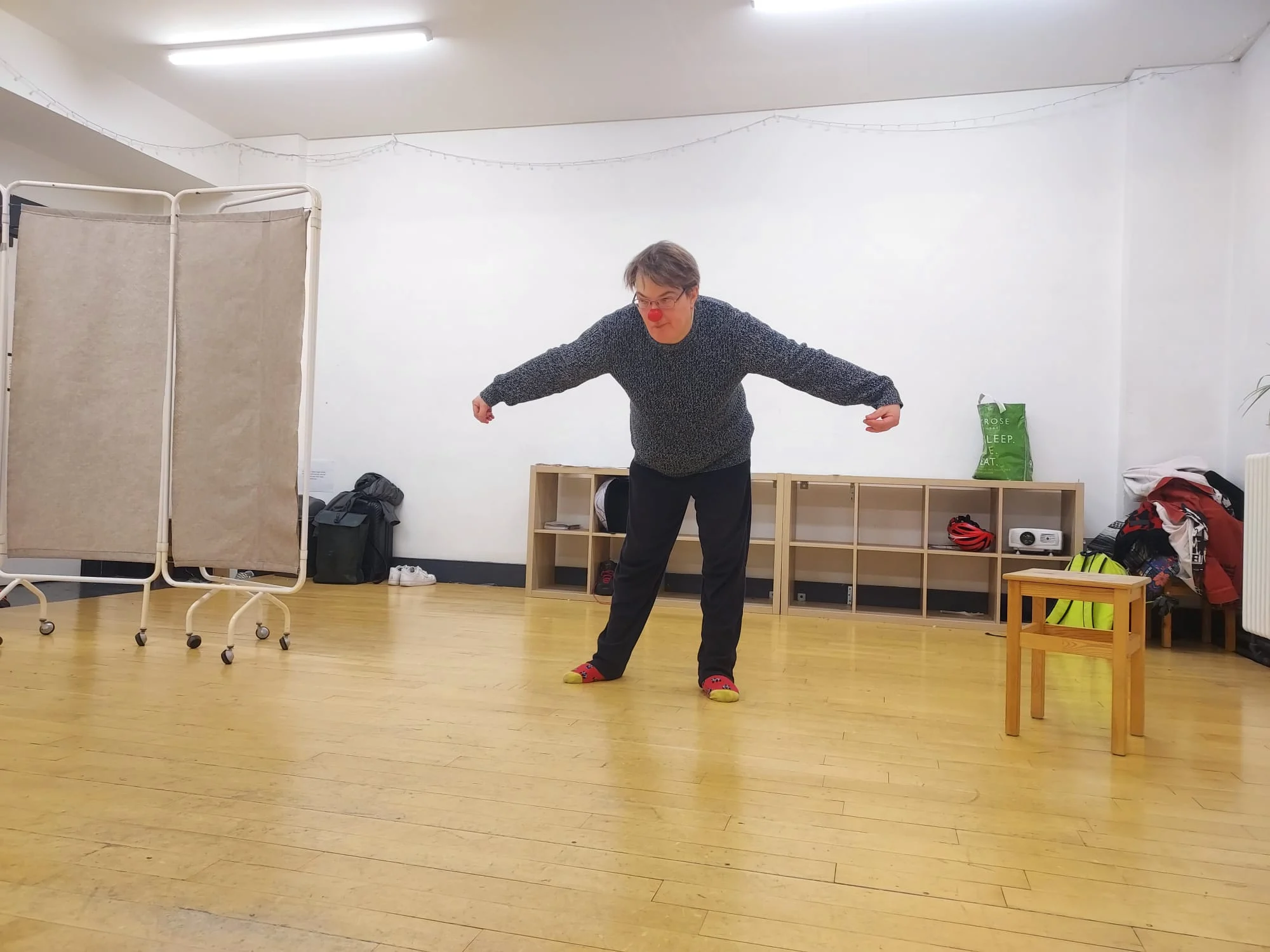
Clowning is often misunderstood—reduced to red noses & big shoes. But clowns come in all different forms and styles. Everyone has an inner clown, an extension of themselves, and part of our process has been guiding RAWD members to discover who their clowns are.

Beyond laughter, we at Ugly Bucket champion the clowning practice as a dynamic tool for community bonding, self exploration, and social change. It’s not just about glorious stupidity, it’s about listening, taking up space, making bold choices, and connecting authentically with others. Why is clowning an unexpected yet perfect protest tool? Because when people are laughing, they’re listening, and Don’t Call Us, We’ll Call You gives RAWD members the platform to be heard. 

Clowning, like access, is deeply personal. In this project, we’ve seen RAWD members emerge in ways we couldn’t have predicted. We’ve been challenged to adapt our practice, to innovate, and to discover new ways of learning. This wasn’t about simplifying protest—it was about reimagining how we learn. When the method shifts, the possibilities expand.

Don’t Call Us, We’ll Call You shows its audience that not only can RAWD members handle it, but they can tear up the rulebook, re-write their script, and laugh along every step of the way.

Don’t Call Us, We’ll Call You takes place on Saturday 5th July 4pm and Monday 7th July 7.30pm at Unity Theatre and Wednesday 9th July 7.30pm and Saturday 12th July 2pm at Theatre Porto in Ellesmere Port.

Buried Treasure By ArtsGroupie CIC: The Pool of Life

By John Maguire

Buried Treasure By Arts Groupie CIC - The Pool of Life

In this latest instalment of Buried Treasure, ArtsGroupie CIC’s John Maguire invites us on a vivid literary journey through Liverpool’s past, as captured by some of history’s greatest writers.

Liverpool, like most cities, is in a constant flux of change. As fresh cargo arrives, so do innovative ideas and cultures. Enriching and re-energising ‘the pool of life,’ as Jung referred to the metropolis. Many artists have tried to create on the written page, a picture of the port. Recently we have seen an influx of dramas on the big and small screen, for example the epic, This City Is Ours. It is refreshing to hear the warming twang of a Liverpool accent start to filter into mainstream media now, a Scouse Renaissance. This month I want to look back and see how writers sought inspiration on the banks of the River Mersey.

American writer, Herman Melville transports modern residents back to when Liverpool was a thriving dock filled with workers and sailors. His novel “Redburn: His First Voyage” is heavily influenced by his own 1839 visit to Liverpool, England. The story follows Wellingborough Redburn, a young man, as he experiences life at sea and the hardships of a merchant ship, eventually arriving in Liverpool. The novel explores themes of identity, coming-of-age, and the harsh realities of the working class. It is autoethnographic, drawing on Melville’s own observations and experiences. 

As we sailed ahead the river contracted. The day came, and soon, passing
two lofty landmarks on the Lancashire shore, we rapidly drew near the
town, and at last, came to anchor in the stream.

Looking shoreward, I beheld lofty ranges of dingy warehouses, which
seemed very deficient in the elements of the marvellous; and bore a most
unexpected resemblance to the warehouses along South-street in New
York. There was nothing strange; nothing extraordinary about them. There
they stood; a row of calm and collected ware-houses; very good and
substantial edifices, doubtless, and admirably adapted to the ends had
in view by the builders; but plain, matter-of-fact ware-houses,
nevertheless, and that was all that could be said of them.

To be sure, I did not expect that every house in Liverpool must be a
Leaning Tower of Pisa, or a Strasbourg Cathedral; but yet, these
edifices I must confess, were a sad and bitter disappointment to me.

The novel references familiar streets and many local landmarks are apparent. 

Buried Treasure By Arts Groupie CIC - The Pool of Life - Liverpool's Waterfront

The great champion of the underclass and highlighter of social issues, Charles Dickens, loved Liverpool and would often visit. It is alleged he would describe the port, when giving one of his esteemed penny readings (tickets cost just a penny to open accessibility to all), as ‘My favourite city outside of London.’ But one assumes this to be a carefully scripted line repurposed to match whatever city he happened to be performing in. A trick often employed by modern day popstars during stops on an international tour.

He became a special constable so he could roam the docks late at night – only police officers were permitted to do so at this time. A plaque to commemorate this can be found outside the excellent watering hole – THE BRIDEWELL. For before it used to administer beverages to people, it would attempt to keep justice, serving as a police station during the Victorian era. His experience is illustrated in Chapter 5 of The Uncommercial Traveller.

“Mercantile Jack was hard at it, in the hard weather: as he mostly is in all weathers, poor Jack. He was girded to ships’ masts and funnels of steamers, like a forester to a great oak, scraping and painting; he was lying out on yards, furling sails that tried to beat him off…..he was washing decks barefoot, with the breast of his red shirt open to the blast, though it was sharper than the knife in his leathern girdle; he was looking over bulwarks, all eyes and hair; he was standing by at the shoot of the Cunard steamer, off to-morrow, as the stocks in trade of several butchers, poulterers, and fishmongers, poured down into the ice-house; he was coming aboard of other vessels, with his kit in a tarpaulin bag, attended by plunderers to the very last moment of his shore-going existence…in the midst of it, he stood swaying about, with his hair blown all manner of wild ways, rather crazedly taking leave of his plunderers, all the rigging in the docks was shrill in the wind, and every little steamer coming and going across the Mersey was sharp in its blowing off, and every buoy in the river bobbed spitefully up and down, as if there were a general taunting chorus of ‘Come along, Mercantile Jack! Ill-lodged, ill-fed, ill-used, hocussed, entrapped, anticipated, cleaned out. Come along, Poor Mercantile Jack, and be tempest-tossed till you are drowned!”

Buried Treasure By Arts Groupie CIC - The Albert Dock

The 30th of June marks the passing of one of my favourite creatives, the Father of Culture, William Roscoe. With his birthday being the same day as International Women’s Day I always like to remember his death day. Take a moment to reflect on what he did for Liverpool. His writing, particularly his poetry can be quite antiquated. The language can jar against our modern ear. To write my play A Portrait of William Roscoe, I spent time looking at the man’s private papers, notebooks, and letters. I filtered and selected words that would take the audience back to the Liverpool in the 1700’s/early 1800’s.

I would like you now to scan over the few lines, taken from his poem Mount Pleasant – 1777

How numerous now her thronging buildings rise!
What varied objects strike the wandering eyes,
where rise yon masts her crowded navies ride,
and the broad rampire checks the beating tide,
along the beach her spacious streets extend,
her areas open, and her spires ascend,

In loud confusion mingled sounds arise,
the docks re-echoing with the seamen’s cries,
the massy hammer sounding from afar,
the bell slow tolling, and the rattling car, and thundering oft the cannons horrid roar,
in lessening echoes dies along the shore.

Then close your eyes and breathe. Picture a thriving Mersey and hear the city.

I often walk to the river by the Pier head when I am in town. Take a moment to pause, read these lines aloud, close my eyes. Try and ignore the screech of seagull. You are instantaneously, transported back to this era.

Instant time travel.

Give it a go! 


Culture Radar – Dr Matt Greenhall (University of Liverpool)

Dr Matt Greenhall - University of Liverpool

This week our Culture Radar guest is Director of Libraries, Museums and Galleries, University of LiverpoolDr Matt Greenhall.

Loved: I recently visited the Open Eye Gallery and saw Widline Cadet’s exhibition about her family’s journey from Haiti to the USA (Gallery 2). The juxtaposition between the large format photographs and collages of textures made for a thought-provoking exhibition. As a very amateur photographer, I always appreciate Open Eye’s exhibitions and how they make me see the world slightly differently each time!

Looking forward to: I’m really looking forward to this year’s Liverpool Arab Arts Festival (July). Last year’s events were incredible – moving, thought provoking, and funny, bringing together people from across the city, region and far beyond in celebration and dialogue. This year’s festival programme is so rich, with different artists, performers, and creatives, showcasing both traditional and contemporary artforms. I’m going to go to as much as possible!

Trivia: We’ve recently been on a digital journey within Libraries, Museums and Galleries at the University of Liverpool and have begun digitising parts of our heritage and cultural collections to make them available online. The University’s digital heritage lab provides access to a growing portion of the collections we hold, allowing you to explore them online. These are open to everyone, and we hope this resource will raise the visibility of our collections, and encourage more people to see them in person!

RAWD’s Protest Against Passiveness: Don’t Call Us, We’ll Call You

RAWD Charity Launch Event Image
Credit: Jack Ehlen

Arts organisation RAWD launch their biggest show to date during Disability Pride Month. Artistic Director Steffi Sweeney talks about how their members are continuing a tradition of pride and protest.

A New Chapter For RAWD

The RAWD Protest began long ago. Almost ten years on, the drum is still banging, the flag is still flying and now… the phone is ringing. 

This July marks a major milestone for RAWD. We officially launch as a charity – and we’re doing it the only way we know how: with bold creativity, fierce pride, and stages full of disabled artists. Across the month our artists are premiering directorial film debuts at FACT, performing live music gigs at the Valley Theatre in Belle Vale and, as is RAWD tradition, there will be disabled artists packing out stages across the North West.

But to understand where we’re going, it helps to look at where we’ve been. RAWD began over a decade ago as a disability drama group meeting weekly in a church hall. Since then, we’ve grown into an arts organisation with a mission to tackle inequality and celebrate disabled creativity. Our projects include ‘Boards Are Boring’, which challenged governance structures; ‘Creative Wellness’ exploring inclusive wellbeing; and our ongoing Facilitator Training Programme, which empowers the next generation of inclusive practitioners.

RAWD supported Dora Colquon produce the nationwide tour of her show The Lodger. Credit: Jack Ehlen

Pride, Protest, and Performance

To mark our new chapter as a charity, we’re presenting our biggest-ever month of activity for Disability Pride Month. This year is a key juncture for our organisation as we transition to a registered charity. It is also an important moment for our community as rights are rolled back and vital support is under threat. With our programme of activity in Disability Pride Month we want to make a statement.

Leading our programme is a show with a driving purpose. Partnering with Liverpool’s award-winning clown company Ugly Bucket, Don’t Call Us We’ll Call You has a cast of 35. The show continues another proud tradition of RAWD’s: amplifying the lived experiences of our community. However this time, it hits different. 

“The show is blunt, important and completely stupid.” 
Tom Daly, RAWD Member. 

The questions our members are asking while developing Don’t Call Us, We’ll Call You are: what is protest and where do we fit in this fight? We knew this topic would be difficult to approach so partnering with Ugly Bucket felt like a perfect match to bring levity and power to the project. A company well versed in tackling difficult subjects and presenting important narratives, their techno clown style always delivers their objective: “Taking silliness serious.”

RAWD is adamant that we cannot shy away from the big difficult questions and ultimately our members don’t want to. No-one should be overlooked. It is our strong belief that we have agency to become the changemakers in our own lives, and we need to be part of bigger conversations about the world. In order to equip our members with the tools and skills to do this we “RAWD-ify” the subject matter and broaden our knowledge of what’s come before. 

RAWD presented co-devised show It’s My Party at Unity Theatre in 2024. Credit: Jack Ehlen

Learning from the Past, Demanding a New Future

In developing Don’t Call Us…, we have looked back at a century of disabled activism, the history of our rights, and asked what ought to be done now? One member was shocked that the first Disability Pride date was as recent as 1990. RAWD member Mike said: “There may not have been an event, but we’ve always been proud.”

Our research led us to ‘Telethon’ and more specifically the block telethon protests of 1992. Disabled activists gathered outside the LWT Studios on the South Bank to challenge negative stereotypes and patronizing tone being fostered by Telethon. After this protest Telethon was never broadcast again. Johnny Crescendo, a key figure in the protests can be seen wearing a shirt that reads “Piss on Pity”. Regarding the disabled people being exploited by the TV Show the activist said: “‘Please and thank you’ were the best lines in their script. Passiveness and helplessness was not attractive to me”.

At RAWD we prioritise the value and necessity of the voices of our community. Our work is centered around the perspectives and opinions our members want to uncover. There is a failure within the system that neglects the view of learning disabled people. An assumption that societal barriers limit not only ability but the desire to be an active citizen. 

Don’t Call Us We’ll Call You is a direct protest against these assumptions. A ticket to our show is also an invitation to join the movement, stand beside us and a call to action.  

We ask every artist in the city: 

  • What are you doing for disability awareness month?
  • Do you support disability theatre?
  • Can you join us in the RAWD MOVEMENT?

Don’t Call Us We’ll Call You is part of RAWD’s charity launch programme. 

RAWD 2023 production Super. Credit - Jack Ehlen
RAWD 2023 production Super. Credit: Jack Ehlen

RAWD’s July 2025 Programme

RAWD Charity Launch
Thursday 3rd July 5-8pm at Unity Theatre
Join RAWD for an evening showcasing whats to come this July 2025.
FREE Tickets

Don’t Call Us, We’ll Call You
Saturday 5th July 4pm – Unity Theatre Tickets
Monday 7th July 7.30pm – Unity Theatre Tickets
Wednesday 9th July 7.30pm – Theatre Porto Tickets
Saturday 12th July 2pm – Theatre Porto Tickets

35 Disabled performers. One stage. Inescapable truths and a call for change. Rooted in the spirit of the Block Telethon protests but reimagined through abstract form and modern perspectives, this show moves between two surreal worlds: The glittering illusion of telethon and the unruly power of protest. Expect a dynamic spectacle of clowning, sharp satire, music and physical storytelling.

Tune In: RAWD Music at PSS
Monday 7th July 1pm – Valley Theatre
Over 12 weeks, PSS have been exploring inclusive avenues of songwriting.
Join us for an exclusive live session…

My Way High Way
Friday 11th July 1.30pm – Valley Theatre
PSS’s in-house RAWD group perform their co-devised show.

Directing Difference: Film Double Bill
Tuesday 22nd July – FACT

RAWD proudly presents two powerful directorial debuts by artists breaking boundaries in film. A rare chance to experience bold new perspectives from creatives breaking through major industry barriers. Sam Hooper, a theatre-maker with Down Syndrome presents I Move We Move, a vibrant celebration of unity, teamwork, and shared energy, through spoken word, movement, and music. Alana Wadkin, a creative artist with Athetoid Cerebral Palsy, debuts Everyone’s Bitchin’ About Al. The culmination of her work developing a Directing Communication Board with RAWD for artists who are non-verbal. This innovative tool redefines how direction can be communicated – and this film proves its creative power. Tickets on sale soon!

Threads of Protest
Tuesday 29th July 7.30pm – Storyhouse, Chester

RAWD Fundraiser
Thursday 31st July 7pm – Future Yard, Birkenhead Tickets
A line-up of special musical guests celebrate the end of our month-long programme and help raise money for RAWD. Guests to be announced soon.

To find out more about RAWD visit rawdproject.co.uk.

Culture Radar – Nicole Konigs Balfry (Zest Event Management)

Nicole Konigs Balfry

This week our Culture Radar guest is Director, Zest Event ManagementNicole Konigs Balfry.

Loved: As an event manager, I love a spectacle and I try to get to as many events (for R&D purposes!) as I can. A highlight in May was Bring the Fire Project’s Fire Gala at the Bombed Out Church, which was utterly mesmerising.

Looking forward to: I’m gutted that one of my favourite festivals in Liverpool’s events calendar Africa Oyé, is not taking place in 2025. For consolation, my friends and I have got tickets to see Black Uhuru at Future Yard later this month.

Trivia: I’m born and bred Swiss and have been living up my continental roots since January, working with the European diaspora communities at Liverpool European Festival. You can dip into European culture and heritage all through June, please visit liverpooleuropeanfestival.co.uk for the festival events.

Independents Biennial 2025: Preview

By Abbie Billington

Independents Biennial 2025

Liverpool Biennial returns this summer once again showcasing cutting-edge contemporary visual art across the city region. Running alongside it is the Independents Biennial, with 22 newly commissioned works by 64 artists. Independents Biennial sets out to highlight the incredible work of the city’s grassroots artists, an integral part of the backbone of Liverpool’s creative scene.

Independent galleries and Liverpool’s creative networks are placed into the spotlight, as artists are given a chance to make a name for themselves in the UK’s largest and longest-running free festival of art, as well as celebrating Liverpool’s creativity and cultural significance. 

What makes the Independents Biennial truly special is its commitment to non-traditional spaces. Art isn’t just confined to galleries – the festival utilises all spaces to showcase its artists work, including Hilbre Island off the coast of the Wirral, Belle Vale shopping centre and empty units in St Helens town centre. It celebrates the versatility of art, and how artists can use any space and turn anything into phenomenal, thought-provoking pieces of art. 

Independents Biennial will span each of Liverpool’s six boroughs, with each location offering something unique and inspirational. Sefton, Knowsley, Wirral, St Helens, Halton and Liverpool city centre will host these 64 independent artists and provide them and their work with a home for the summer.

Independents Biennial: Our Highlights

While the entire programme promises to be unforgettable, we’ve picked out a few exhibitions that are especially worth checking out…

Ghost Art School The Right Map

The Right Map by Ghost Art School

You won’t want to miss The Right Map by Ghost Art School, a collective that exists between margins and creates art that challenges the conventions of traditional institutions. The Right Map is described as “a constellation of art exhibitions across Liverpool, unfolding under the banner of the Independents Biennial.” It brings together a series of exhibitions across the city region, including UNSTABLE in Port Sunlight, In Search of Swallows and Amazons in Kensington, Account in Birkenhead, and Slipstream on Blundell Street in the city centre.

Tom Stockley and Ruaíri Valentine

Building on this theme of place and disruption, Tom Stockley and Ruaíri Valentine bring their deep dive into Wirral psychogeography to the festival with Weird Wirral. Inspired by a gothic poem, the duo turns to folklore and legend, guiding us through the shorelines and landscapes of the Wirral to uncover traces of magic and forgotten stories hidden in the land.

Claire Beerjeraz

Meanwhile, at the Victoria Gallery, Claire Beerjeraz offers a powerful reflection on the legacies of colonialism and slavery. Their multidisciplinary exhibition explores how these histories are displayed, contained, and remembered within institutional spaces. With a tapestry of spoken word and clay, Claire weaves together personal and collective memory, urging us to look beneath the surface of memorials and museum walls—and to reimagine how art institutions can hold space for difficult truths.

Amy Flynn Technofossils

Amy Flynn Technofossils

In another standout piece, artist Amy Flynn invites us to consider the legacy of our modern waste through Technofossils—human-made objects and materials that will persist in the geological record for millions of years. Her pewter cast sculptures are deliberately alluring at first glance: sparkling gemstones and shiny metals entice the viewer in. But look closer, and you’ll find the contours of outdated mobile phones and discarded plastic food containers—rubbish masquerading as treasure. This journey through desire and disgust mimics the cycle of consumerism, exploring themes of duality: artificial/organic, worthless/precious, temporary/permanent, growth/decay.

Venus in Transit: A Cosmic Journey Through Liverpool

Explore Liverpool’s history through a cosmic lens in this bold, multi-part project that blends astrology, storytelling, and live art. Back in 1639, Toxteth-born astronomer Jeremiah Horrocks became the first person to observe the transit of Venus across the Sun—a pivotal moment in the history of astronomy. In astrology, Venus is associated with beauty and creativity, and this project asks how these Venusian themes have helped shape Liverpool’s identity across the centuries. This is part one of a collaboration between Independents Biennial and the Museum of Liverpool’s Global City series—and promises to be an unforgettable deep dive into the city’s star-studded past and artistic present.

Discover the full Independents Biennial programme

Independents Biennial will take place across Liverpool from 7 June to 14 September 2025. This year’s festival is already shaping up to be one of the most exciting yet. With so much to explore, experience, and be inspired by, Independents Biennial is a must for anyone looking to make the most of the city’s creative summer—it’s definitely at the top of our plans!

Visit independentsbiennial.com/events to explore the latest announcements, event details, and artist highlights.

Liverpool Biennial 2025: Preview

Liverpool Biennial 2025

Liverpool Biennial returns this summer, transforming the city with bold and thought-provoking contemporary art across public spaces, galleries, and unexpected venues.

What is Liverpool Biennial?

Founded in 1998, Liverpool Biennial is the UK’s largest free festival of contemporary art. Since then, it’s presented over 560 artists and created nearly 400 artworks — many of which remain permanently in the city, like Liverpool Mountain at the Albert Dock or The Hummingbird Clock in Derby Square and even The Dazzle Ferry that takes visitors too and from the Wirral every day. The Biennial has presented work by over 560 leading artists, delivered 34 collaborative neighbourhood projects, and received over 50 million visits.

2025 Theme: BEDROCK

This year’s theme is BEDROCK, inspired by Liverpool’s sandstone geology and its deeper social foundations — from family and heritage to community and colonial legacies.

Liverpool Biennial curator, Marie-Anne McQuay said: “The city’s geological foundations and its psyche have provided the starting point for the conversations of Liverpool Biennial 2025, with the invited artists bringing us their own definition of ‘BEDROCK’.”

Three Programme Weekends

The festival unfolds across three key weekends, each focusing on a different layer of BEDROCK:

  • 7–8 June: Civic and colonial history
  • 25–27 July: Family and the things that ground us
  • 12–14 September: Geology and the passage of time

Liverpool Biennial 2025 events and exhibitions:

Here is an insight in what kind of artwork and artists to expect at this year’s Liverpool Biennial 2025.

Outdoor Works:

Anna Gonzalez Nguchi Liverpool Biennial 2025
Anna Gonzalez Noguchi, Real Feel 90, 2021. Courtesy of the artist and Canary Wharf, London. Photography by Sean Pollock
  • Alice Rekab — A multi-city (Liverpool and Edinburgh) billboard project with students, exploring identity and belonging. In partnership with Edinburgh Art Festival. (Liverpool ONE).
  • Anna Gonzalez-Noguchi — Botanical-themed sculpture inspired by the historical import of ‘foreign’ plants into Liverpool, engraved with records of the city’s botanical collections. (Mann Island).
  • Petros Moris — Mosaic works inspired by abandoned playgrounds and personal history (The Oratory, Liverpool Cathedral).
  • Isabel Nolan — A steel and concrete sculpture inspired by a drawing of a stained-glass window held in the St Nicholas Pro-Cathedral archive and the leadwork in the windows of Liverpool Metropolitan Cathedral’s Lutyens Crypt. (St Johns Gardens)

Further works will be exhibited in some unexpected places around the streets of Liverpool:

Anna Gonzalez-Noguchi Eurochemist, Berry Street.

ChihChung Chang 張致中 – Chinatown.

Kara Chin – Berry Street.

Odur Ronald SEVENSTORE, Jamaica Street.

Liverpool Biennial 2025 Venues

Bluecoat

Odur Ronald Liverpool Biennial 2025
Odur Ronald, Waagawulidde (have you heard it), 2024. Photography by Henry Robinson.

The artists at Bluecoat will be focusing on family, chosen family and the cultural heritage which they carry with them and that grounds them.

  • Alice Rekab – A layered installation on intergenerational Irish, Black and Multi-Heritage family life.
  • Petros Moris – Mosaic work exploring cultural memory, also on view at Walker Art Gallery.
  • Amy Claire Mills – Interactive, sensory installation and performance prioritising disability representation.
  • Amber Akaunu – New film Dear Other Mother exploring matriarchal community in Toxteth.
  • Odur Ronald – Large installation of aluminium passports reflecting African migration.
  • ChihChung Chang 張致中 – Ship model-based work reflecting family and naval history, also at Pine Court.

FACT

Kara Chin Liverpool Biennial
Kara Chin, The Park is Gone, 2022. Image courtesy of the artist.
  • Kara Chin – Interactive installation combining urban motifs with manga and gaming aesthetics.
  • DARCH – Sound and ceramic work with Sefton residents about land, roots and belonging.
  • Linda Lamignan – Film exploring animism, palm oil extraction and Nigeria–Liverpool histories.

Liverpool Cathedral

Maria Loizidou Liverpool Biennial 2025
Maria Loizidou, Moi Balbuzard Migrant, 2023, Musee de la Chasse et de la Nature, Paris 2023-24. Photography by Maria Lund.
  • Ana Navas – Glass collages inspired by historic female portraiture and local embroidery archives.
  • Maria Loizidou – Crocheted tapestry of migratory birds highlighting themes of migration and survival

Liverpool Central Library

Dawit L. Petros Liverpool Biennial 2025
Dawit L. Petros, The Open Boat, 2024. 3D Print. Courtesy of the Artist and Tiwani Contemporary, London. Photography by Dawit L. Petros
  • Dawit L. Petros – Dawit presents a research project at Liverpool Central Library that aims to re-read a historic military expedition to the River Nile from 1884-1885 – a British-led expedition which included 379 Voyageurs from across Canada and Quebec including French Canadians, Western Canadians and First Nations. The installation, which has been developed through a residency at Liverpool John Moore’s University, includes sound, video, books and archive material gathered and created in response to Liverpool’s own archives related to shipping and empire.

Open Eye Gallery

Widline Cadet Liverpool Biennial 2025
Widline Cadet, Santiman fantom (Ghost Feelings), 2023. Courtesy of the artist and Nazarian / Curcio.
  • Nandan Ghiya – Sculptural photographs inspired by Hindu mythology and colonial resource extraction.
  • Widline Cadet – Photographic exploration of Haitian-American diasporic memory.
  • Katarzyna Perlak – Horror-inspired queer film set in Liverpool’s Adelphi Hotel. Co-created with local award-winning filmmaking organisation First Take and participants from their REEL: Queer programme, the film adopts a non-linear, poetic narrative and references the genre of horror to explore longing and Queer identity.

Pine Court

Karen Tam Liverpool Biennial 2025
Karen Tam 譚嘉文, Scent of Thunderbolts, 2024. Courtesy of the artist and Toronto Biennial of Art. Photography by Toni Hafkenscheid
  • Karen Tam 譚嘉文 – Multimedia piece on Cantonese opera and sonic memory in diaspora.
  • ChihChung Chang 張致中 – Charcoal rubbing artwork depicting Liverpool’s Chinese Arch. The resulting film documenting the process will be exhibited at Pine Court.

Tate Liverpool + RIBA North

Sheila Hicks Liverpool Biennial 2025
Sheila Hicks, Grand Boules, 2009. Courtesy Alison Jacques, London and Sheila Hicks. Photography by Michael Brzezinski.
  • Hadassa Ngamba – Congo cartography-inspired paintings using colonially extracted materials.
  • Mounira Al Solh – Drawings based on dialogues with displaced communities.
  • Fred Wilson – African flag paintings stripped of colour to question identity and representation.
  • Sheila Hicks – Textile ‘memory balls’ made from garments of friends and family.
  • Christine Sun Kim – Infographic drawings on sound, communication and Deaf culture.
  • Where the Work Begins A display curated by RIBA that explores the connection between art and architecture.

Further highlights include sculptural works by Cevdet Erek which measure the passing of time and relationships, photography and sculpture by Dawit L Petros and a new textile work by Antonio Jose Guzman & Iva Jankovic.

The Black-E

Elizabeth Price Liverpool Biennial 2025
Elizabeth Price, THE WOOLWORTHS CHOIR OF 1979, Installation view. Photography by Michael Pollard
  • Elizabeth Price – Film on post-war Catholic Modernist churches and architectural trauma.

Walker Art Gallery

Antonio Jose Guzman and Iva Jankovic Liverpool Biennial 2025
Antonio Jose Guzman & Iva Jankovic, Orbital Mechanics, 2024. 60th Venice Biennial. Photography by Giorgio Silvestri
  • Antonio Jose Guzman & Iva JankovicConcrete Roots, textile and dub-based installation on resilience.
  • Leasho Johnson – Vivid paintings challenging narratives around the Black queer body.
  • Nour Bishouty – Multimedia work on tourism, memory and fictional landscapes.
  • Jennifer Tee – Tulip-petal collages inspired by Tampan textile patterns.

Further highlights include cast resin works of Dream Stones by Karen Tam 譚嘉文; a new, large-scale textile and embroidery work by Katarzyna Perlak; wall-based works by Cevdet Erek inspired by football stadia layouts; paintings and tapestries of fictional landscapes by Isabel Nolan; and a mosaic work by Petros Moris presented in the Sculpture Gallery.

20 Jordan Street

Cevdet Erek Liverpool Biennial 2025
Cevdet Erek, Bergama Stereo, 2019. Hambuger Bahnhof Museum fur Gegenwart, Berlin, Germany. Courtesy of the artist. Photography by Matthias Volzke.
  • Cevdet Erek – Immersive sound installation replicating the energy of a football stadium.
  • Imayna Caceres – Clay-based installation imagining Liverpool’s lifeforce through mud and nature.

Learning Activities

For families, a storybook designed with input from attendees at Liverpool Biennial’s regular family workshops at Liverpool Central Library, will help children and young people explore ‘BEDROCK’. Elsewhere, artist-led workshops, inspired by Biennial projects will happen throughout the summer holidays.

For schools and the wider community, the Liverpool Biennial Learning Programme also includes a selection of online and physical resources developed with teachers across the city to bring Liverpool Biennial 2025 to life in the classroom.

To find out more about the full Liverpool Biennial programme and plan your visit, head to the Liverpool Biennial website.

To discover more events happening across the Liverpool city region visit our What’s On listings.


Culture Radar – Lisa Allen (Shakespeare North Playhouse)

Lisa Allen by Lucy WIlliams
Credit: Lucy Williams

This week our Culture Radar guest is Shakespeare North Playhouse CEO and Creative Director, Lisa Allen.

Loved: I recently attended the Class Assembly at the Everyman, which was a wonderful experience and an important conversation about working-class representation in the arts. I have generally been out and about, meeting people and getting to know the region; from beautiful parks like Calderstones and Birkenhead to guided tours of venues such as the Tung Auditorium and some fantastic press nights, it’s been a brilliant introduction to LCR’s culture and community.

Looking forward to: As someone who’s still new to the area, I’m just eager to soak it all up! There’s so much happening across the arts and cultural landscape in the Liverpool City Region, and I’m really looking forward to being part of the creative energy that makes it so special.

Trivia: My connection to Liverpool runs deep: my dad worked for many years on the docks in the iconic Liver Building for a shipping firm. That personal connection adds a special meaning to being here and makes this new chapter even more meaningful.

Culture Radar – Dr Samantha Lackey (Liverpool Biennial)

Sam Lackey

This week our Culture Radar guest is DirectorLiverpool BiennialDr Samantha Lackey.

Loved: I loved Holly Johnson at MoL – joyful, nostalgic and deeply moving.

Looking forward to: Aside from Liverpool Biennial (of course!), I’m really looking forward to Independents Biennial which runs concurrently to Liverpool Biennial (7 June -14 September) and will spotlight new work from artists based across Liverpool, Sefton, Knowsley, Wirral and St Helens.

Trivia: With financial support from Paul Hamlyn Foundation and local expertise from DaDa, a Liverpool-based disabled and d/Deaf arts organisation, we have been working to radically expand the accessibility of Liverpool Biennial in recent years, supporting artists, visitors and team members. We continue this work through a Critical Friends group who continue to challenge the Biennial, both through our Festival and interim year programme of commissions, talks and events.