

By John Maguire

In this latest instalment of Buried Treasure, ArtsGroupie CIC’s John Maguire invites us on a vivid literary journey through Liverpool’s past, as captured by some of history’s greatest writers.
Liverpool, like most cities, is in a constant flux of change. As fresh cargo arrives, so do innovative ideas and cultures. Enriching and re-energising ‘the pool of life,’ as Jung referred to the metropolis. Many artists have tried to create on the written page, a picture of the port. Recently we have seen an influx of dramas on the big and small screen, for example the epic, This City Is Ours. It is refreshing to hear the warming twang of a Liverpool accent start to filter into mainstream media now, a Scouse Renaissance. This month I want to look back and see how writers sought inspiration on the banks of the River Mersey.
American writer, Herman Melville transports modern residents back to when Liverpool was a thriving dock filled with workers and sailors. His novel “Redburn: His First Voyage” is heavily influenced by his own 1839 visit to Liverpool, England. The story follows Wellingborough Redburn, a young man, as he experiences life at sea and the hardships of a merchant ship, eventually arriving in Liverpool. The novel explores themes of identity, coming-of-age, and the harsh realities of the working class. It is autoethnographic, drawing on Melville’s own observations and experiences.
As we sailed ahead the river contracted. The day came, and soon, passing
two lofty landmarks on the Lancashire shore, we rapidly drew near the
town, and at last, came to anchor in the stream.
Looking shoreward, I beheld lofty ranges of dingy warehouses, which
seemed very deficient in the elements of the marvellous; and bore a most
unexpected resemblance to the warehouses along South-street in New
York. There was nothing strange; nothing extraordinary about them. There
they stood; a row of calm and collected ware-houses; very good and
substantial edifices, doubtless, and admirably adapted to the ends had
in view by the builders; but plain, matter-of-fact ware-houses,
nevertheless, and that was all that could be said of them.
To be sure, I did not expect that every house in Liverpool must be a
Leaning Tower of Pisa, or a Strasbourg Cathedral; but yet, these
edifices I must confess, were a sad and bitter disappointment to me.
The novel references familiar streets and many local landmarks are apparent.
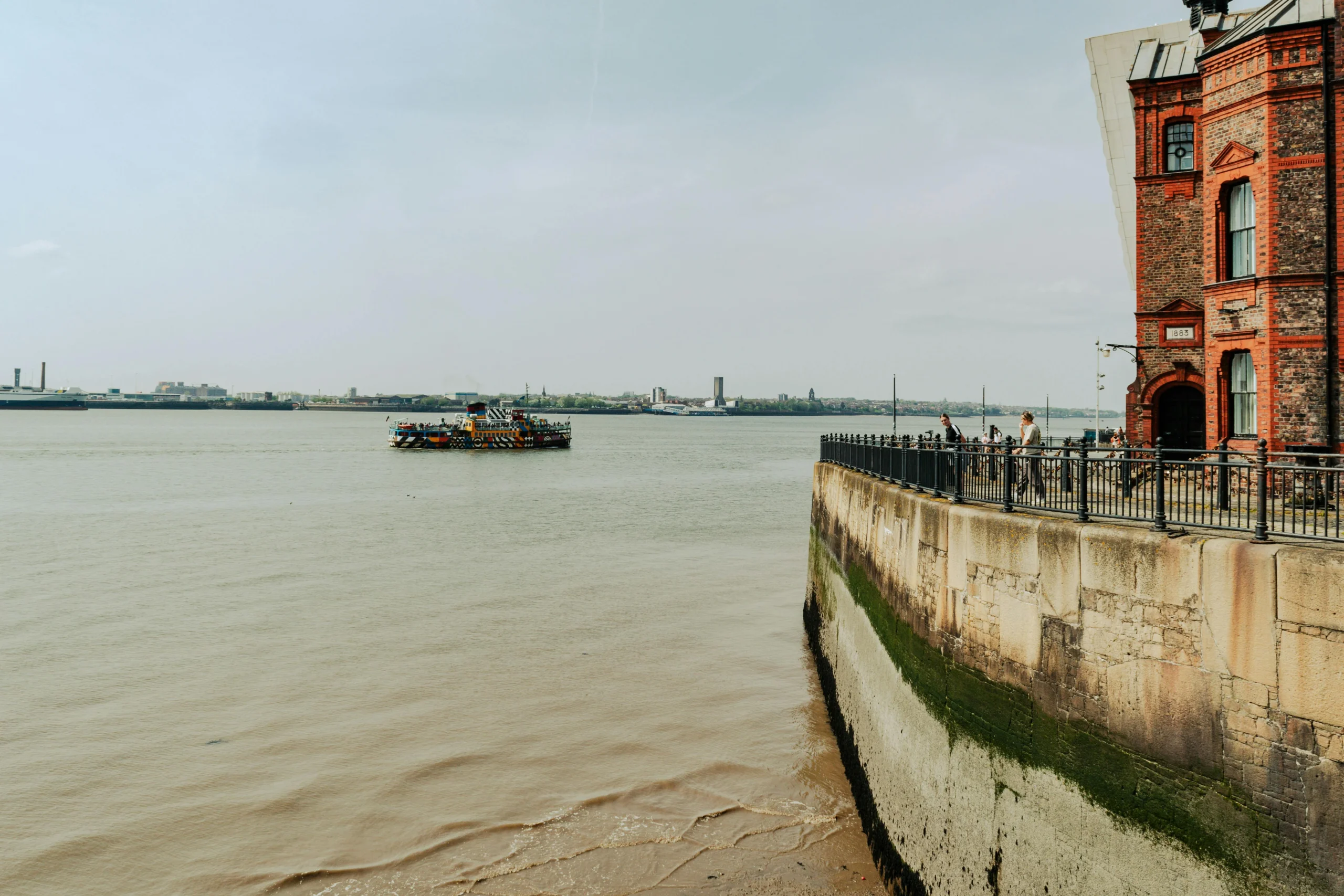
The great champion of the underclass and highlighter of social issues, Charles Dickens, loved Liverpool and would often visit. It is alleged he would describe the port, when giving one of his esteemed penny readings (tickets cost just a penny to open accessibility to all), as ‘My favourite city outside of London.’ But one assumes this to be a carefully scripted line repurposed to match whatever city he happened to be performing in. A trick often employed by modern day popstars during stops on an international tour.
He became a special constable so he could roam the docks late at night – only police officers were permitted to do so at this time. A plaque to commemorate this can be found outside the excellent watering hole – THE BRIDEWELL. For before it used to administer beverages to people, it would attempt to keep justice, serving as a police station during the Victorian era. His experience is illustrated in Chapter 5 of The Uncommercial Traveller.
“Mercantile Jack was hard at it, in the hard weather: as he mostly is in all weathers, poor Jack. He was girded to ships’ masts and funnels of steamers, like a forester to a great oak, scraping and painting; he was lying out on yards, furling sails that tried to beat him off…..he was washing decks barefoot, with the breast of his red shirt open to the blast, though it was sharper than the knife in his leathern girdle; he was looking over bulwarks, all eyes and hair; he was standing by at the shoot of the Cunard steamer, off to-morrow, as the stocks in trade of several butchers, poulterers, and fishmongers, poured down into the ice-house; he was coming aboard of other vessels, with his kit in a tarpaulin bag, attended by plunderers to the very last moment of his shore-going existence…in the midst of it, he stood swaying about, with his hair blown all manner of wild ways, rather crazedly taking leave of his plunderers, all the rigging in the docks was shrill in the wind, and every little steamer coming and going across the Mersey was sharp in its blowing off, and every buoy in the river bobbed spitefully up and down, as if there were a general taunting chorus of ‘Come along, Mercantile Jack! Ill-lodged, ill-fed, ill-used, hocussed, entrapped, anticipated, cleaned out. Come along, Poor Mercantile Jack, and be tempest-tossed till you are drowned!”
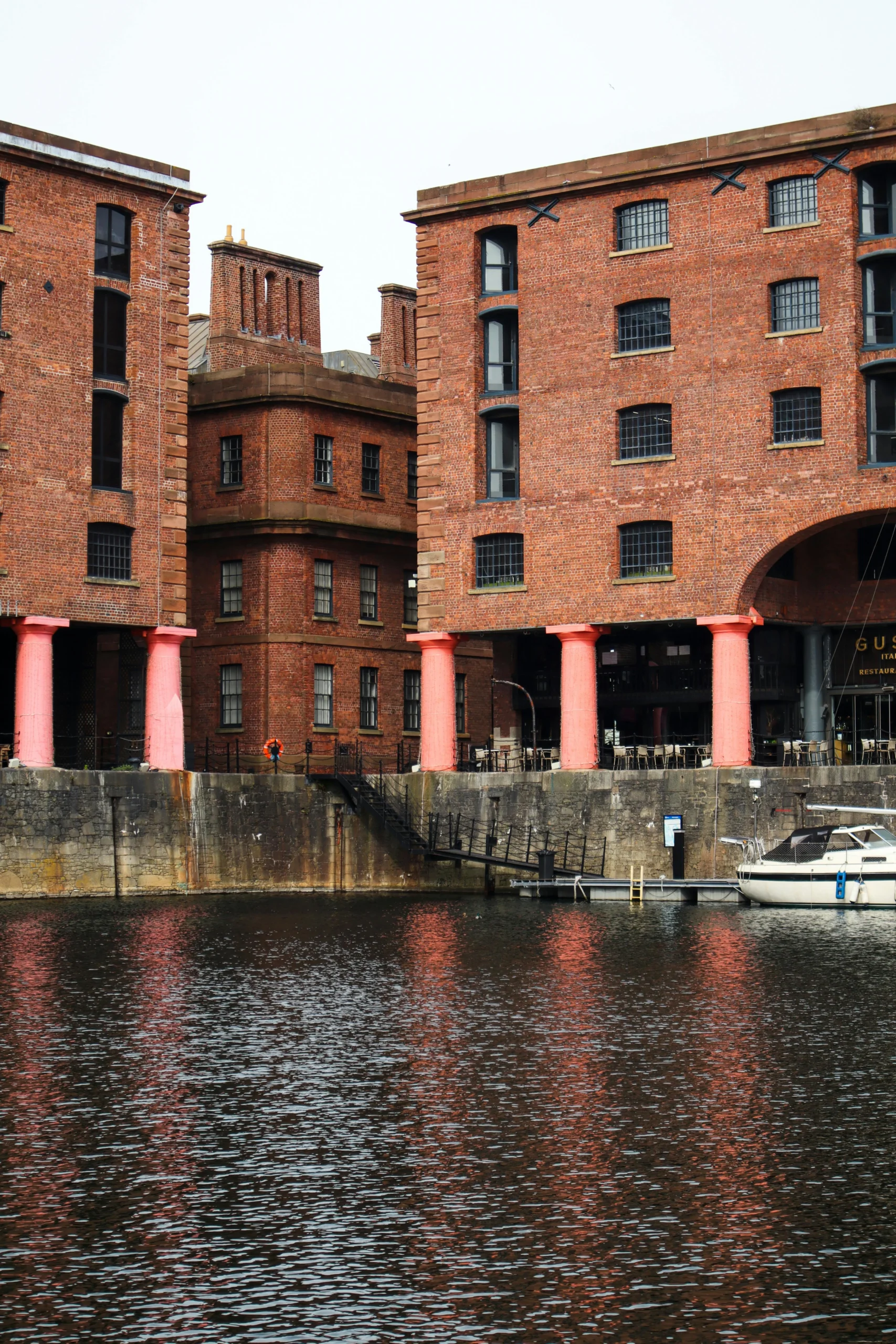
The 30th of June marks the passing of one of my favourite creatives, the Father of Culture, William Roscoe. With his birthday being the same day as International Women’s Day I always like to remember his death day. Take a moment to reflect on what he did for Liverpool. His writing, particularly his poetry can be quite antiquated. The language can jar against our modern ear. To write my play A Portrait of William Roscoe, I spent time looking at the man’s private papers, notebooks, and letters. I filtered and selected words that would take the audience back to the Liverpool in the 1700’s/early 1800’s.
I would like you now to scan over the few lines, taken from his poem Mount Pleasant – 1777
How numerous now her thronging buildings rise!
What varied objects strike the wandering eyes,
where rise yon masts her crowded navies ride,
and the broad rampire checks the beating tide,
along the beach her spacious streets extend,
her areas open, and her spires ascend,
In loud confusion mingled sounds arise,
the docks re-echoing with the seamen’s cries,
the massy hammer sounding from afar,
the bell slow tolling, and the rattling car, and thundering oft the cannons horrid roar,
in lessening echoes dies along the shore.
Then close your eyes and breathe. Picture a thriving Mersey and hear the city.
I often walk to the river by the Pier head when I am in town. Take a moment to pause, read these lines aloud, close my eyes. Try and ignore the screech of seagull. You are instantaneously, transported back to this era.
Instant time travel.
Give it a go!