

Buried Treasure By ArtsGroupie CIC: The Pool of Life

By John Maguire

Buried Treasure By Arts Groupie CIC - The Pool of Life

In this latest instalment of Buried Treasure, ArtsGroupie CIC’s John Maguire invites us on a vivid literary journey through Liverpool’s past, as captured by some of history’s greatest writers.

Liverpool, like most cities, is in a constant flux of change. As fresh cargo arrives, so do innovative ideas and cultures. Enriching and re-energising ‘the pool of life,’ as Jung referred to the metropolis. Many artists have tried to create on the written page, a picture of the port. Recently we have seen an influx of dramas on the big and small screen, for example the epic, This City Is Ours. It is refreshing to hear the warming twang of a Liverpool accent start to filter into mainstream media now, a Scouse Renaissance. This month I want to look back and see how writers sought inspiration on the banks of the River Mersey.

American writer, Herman Melville transports modern residents back to when Liverpool was a thriving dock filled with workers and sailors. His novel “Redburn: His First Voyage” is heavily influenced by his own 1839 visit to Liverpool, England. The story follows Wellingborough Redburn, a young man, as he experiences life at sea and the hardships of a merchant ship, eventually arriving in Liverpool. The novel explores themes of identity, coming-of-age, and the harsh realities of the working class. It is autoethnographic, drawing on Melville’s own observations and experiences. 

As we sailed ahead the river contracted. The day came, and soon, passing
two lofty landmarks on the Lancashire shore, we rapidly drew near the
town, and at last, came to anchor in the stream.

Looking shoreward, I beheld lofty ranges of dingy warehouses, which
seemed very deficient in the elements of the marvellous; and bore a most
unexpected resemblance to the warehouses along South-street in New
York. There was nothing strange; nothing extraordinary about them. There
they stood; a row of calm and collected ware-houses; very good and
substantial edifices, doubtless, and admirably adapted to the ends had
in view by the builders; but plain, matter-of-fact ware-houses,
nevertheless, and that was all that could be said of them.

To be sure, I did not expect that every house in Liverpool must be a
Leaning Tower of Pisa, or a Strasbourg Cathedral; but yet, these
edifices I must confess, were a sad and bitter disappointment to me.

The novel references familiar streets and many local landmarks are apparent. 
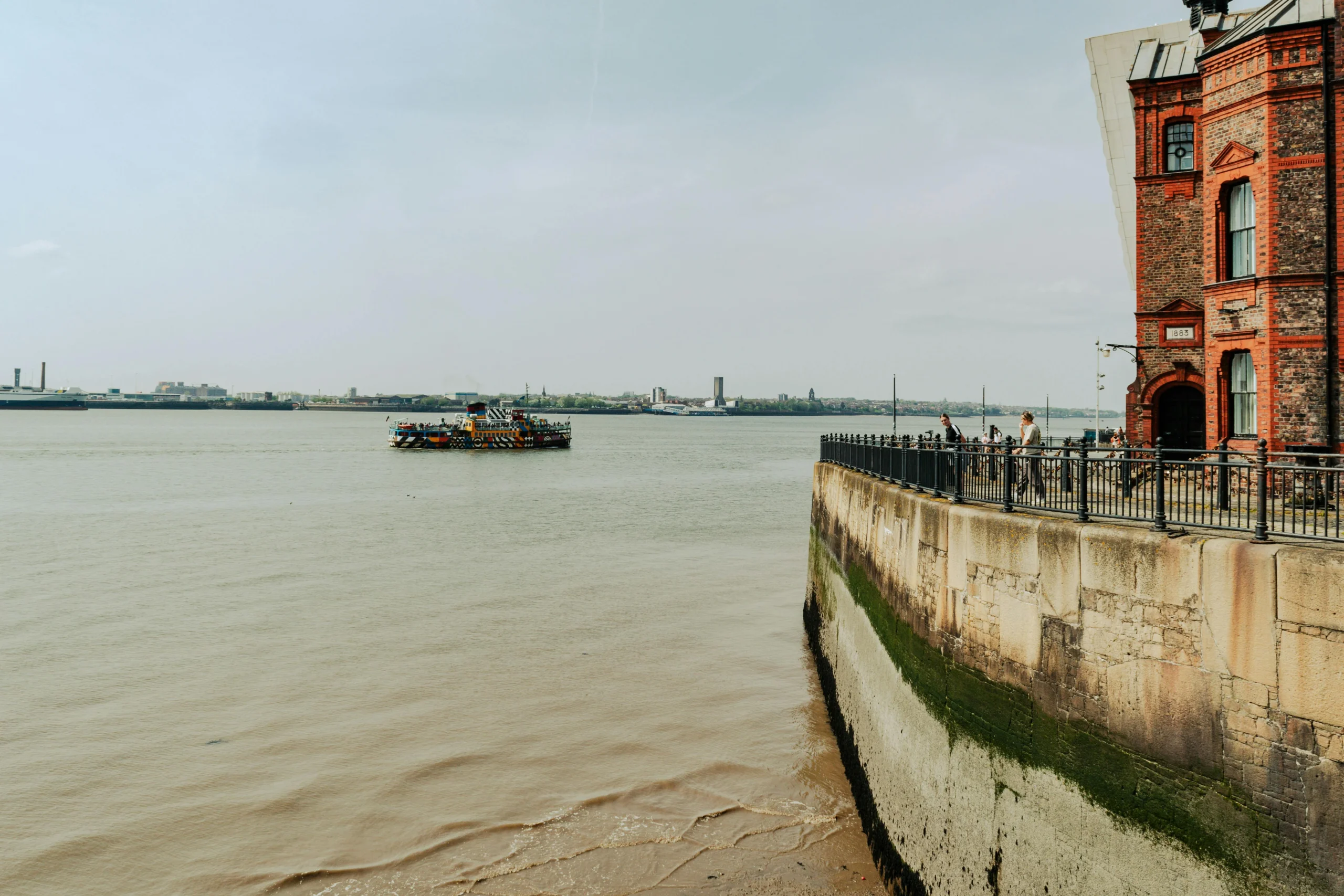
Buried Treasure By Arts Groupie CIC - The Pool of Life - Liverpool's Waterfront

The great champion of the underclass and highlighter of social issues, Charles Dickens, loved Liverpool and would often visit. It is alleged he would describe the port, when giving one of his esteemed penny readings (tickets cost just a penny to open accessibility to all), as ‘My favourite city outside of London.’ But one assumes this to be a carefully scripted line repurposed to match whatever city he happened to be performing in. A trick often employed by modern day popstars during stops on an international tour.

He became a special constable so he could roam the docks late at night – only police officers were permitted to do so at this time. A plaque to commemorate this can be found outside the excellent watering hole – THE BRIDEWELL. For before it used to administer beverages to people, it would attempt to keep justice, serving as a police station during the Victorian era. His experience is illustrated in Chapter 5 of The Uncommercial Traveller.

“Mercantile Jack was hard at it, in the hard weather: as he mostly is in all weathers, poor Jack. He was girded to ships’ masts and funnels of steamers, like a forester to a great oak, scraping and painting; he was lying out on yards, furling sails that tried to beat him off…..he was washing decks barefoot, with the breast of his red shirt open to the blast, though it was sharper than the knife in his leathern girdle; he was looking over bulwarks, all eyes and hair; he was standing by at the shoot of the Cunard steamer, off to-morrow, as the stocks in trade of several butchers, poulterers, and fishmongers, poured down into the ice-house; he was coming aboard of other vessels, with his kit in a tarpaulin bag, attended by plunderers to the very last moment of his shore-going existence…in the midst of it, he stood swaying about, with his hair blown all manner of wild ways, rather crazedly taking leave of his plunderers, all the rigging in the docks was shrill in the wind, and every little steamer coming and going across the Mersey was sharp in its blowing off, and every buoy in the river bobbed spitefully up and down, as if there were a general taunting chorus of ‘Come along, Mercantile Jack! Ill-lodged, ill-fed, ill-used, hocussed, entrapped, anticipated, cleaned out. Come along, Poor Mercantile Jack, and be tempest-tossed till you are drowned!”
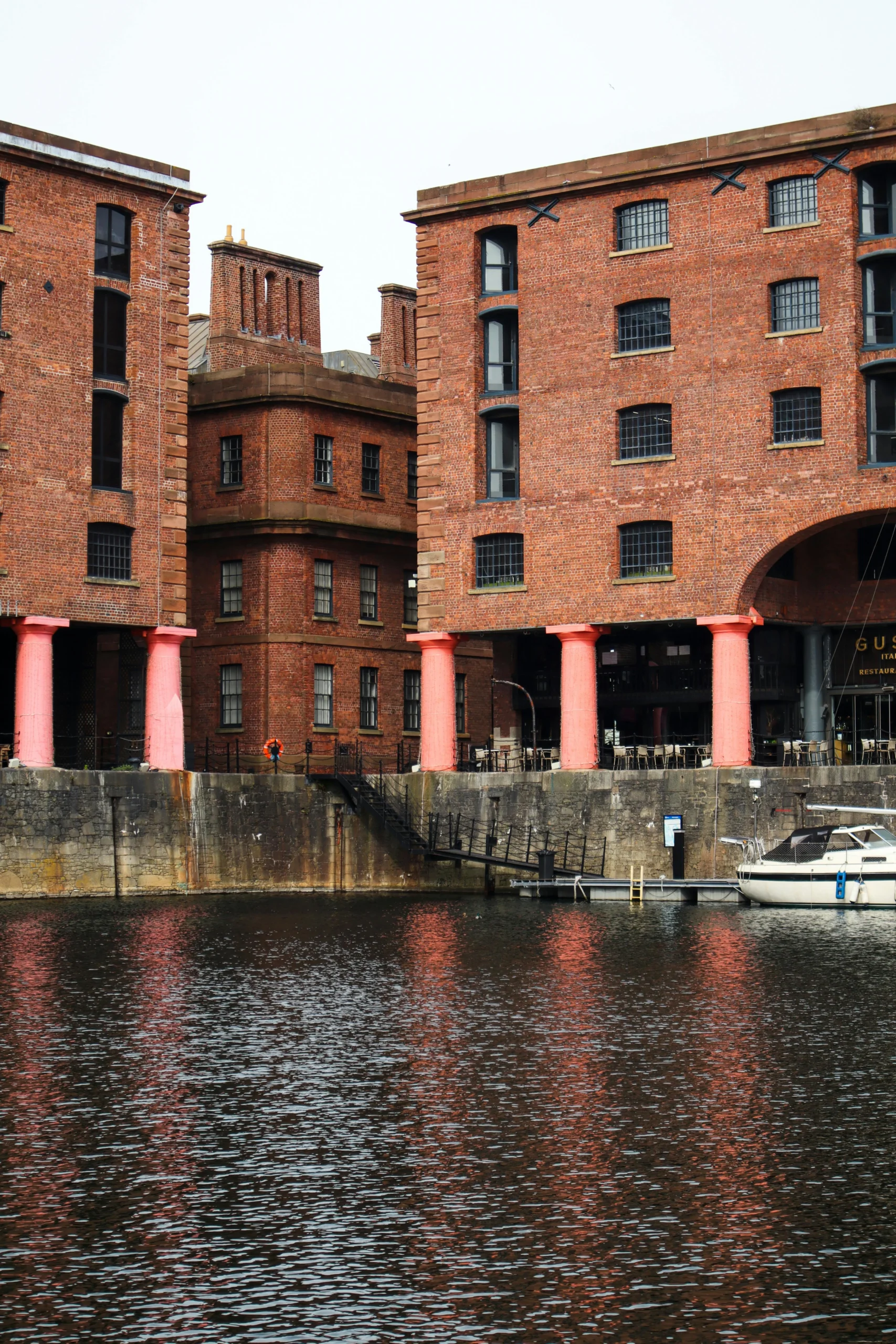
Buried Treasure By Arts Groupie CIC - The Albert Dock

The 30th of June marks the passing of one of my favourite creatives, the Father of Culture, William Roscoe. With his birthday being the same day as International Women’s Day I always like to remember his death day. Take a moment to reflect on what he did for Liverpool. His writing, particularly his poetry can be quite antiquated. The language can jar against our modern ear. To write my play A Portrait of William Roscoe, I spent time looking at the man’s private papers, notebooks, and letters. I filtered and selected words that would take the audience back to the Liverpool in the 1700’s/early 1800’s.

I would like you now to scan over the few lines, taken from his poem Mount Pleasant – 1777

How numerous now her thronging buildings rise!
What varied objects strike the wandering eyes,
where rise yon masts her crowded navies ride,
and the broad rampire checks the beating tide,
along the beach her spacious streets extend,
her areas open, and her spires ascend,

In loud confusion mingled sounds arise,
the docks re-echoing with the seamen’s cries,
the massy hammer sounding from afar,
the bell slow tolling, and the rattling car, and thundering oft the cannons horrid roar,
in lessening echoes dies along the shore.

Then close your eyes and breathe. Picture a thriving Mersey and hear the city.

I often walk to the river by the Pier head when I am in town. Take a moment to pause, read these lines aloud, close my eyes. Try and ignore the screech of seagull. You are instantaneously, transported back to this era.

Instant time travel.

Give it a go! 
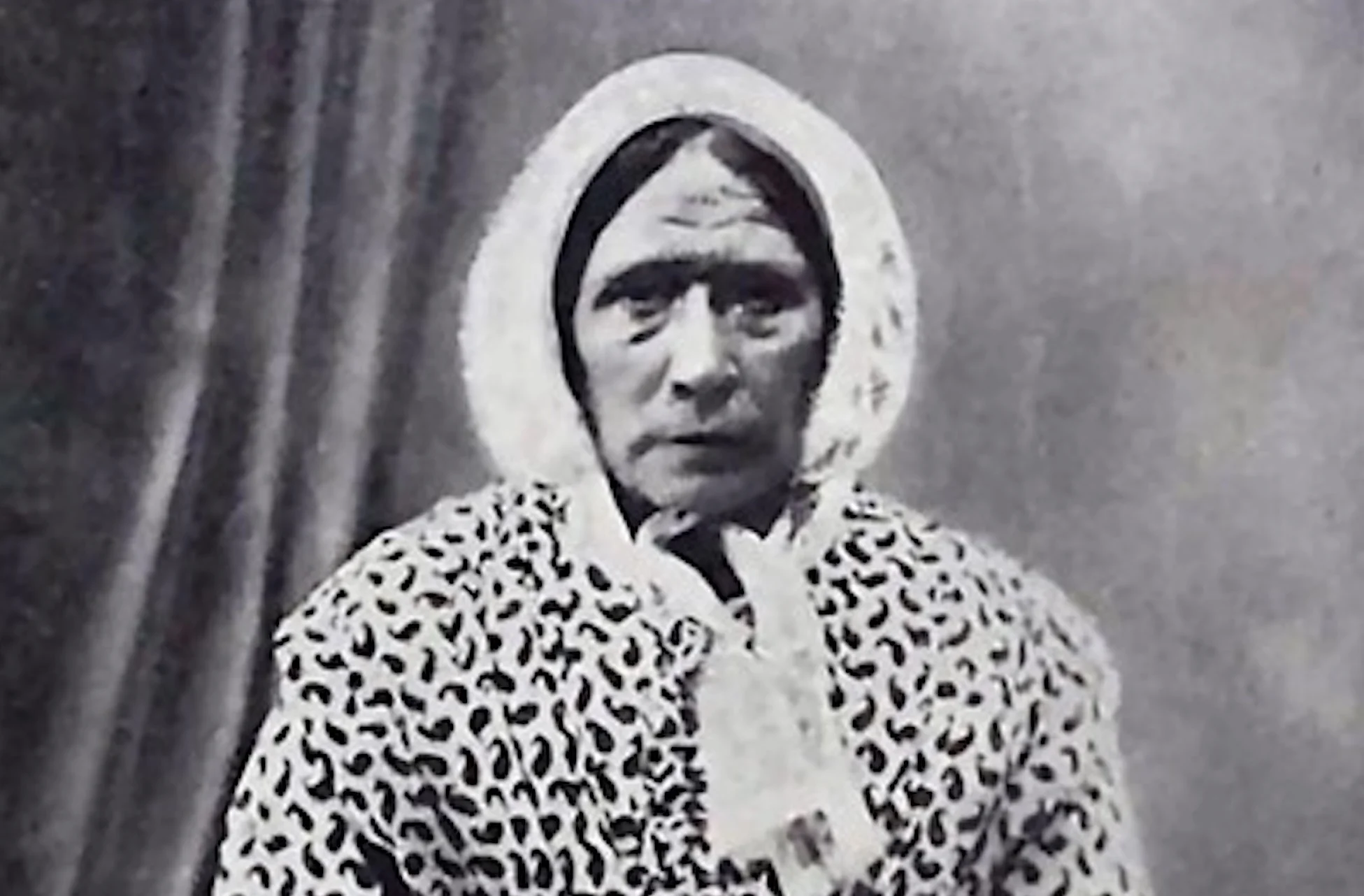
 

Buried Treasure With Arts Groupie CIC: Kitty Wilkinson – Liverpool’s Saint of the Slums and Queen of the Washhouse

By John Maguire

Kitty Wilkinson

The latest edition of Buried Treasure with John Maguire of Arts Groupie CIC delves into the life of one of Liverpool’s true working-class heroes and a pioneer in public health, Kitty Wilkinson. From the tragedy of losing her family at sea to her transformation from servant to a key figure in Liverpool’s history, Kitty’s legacy endures. 

With March marking two important dates, International Women’s Day and St. Patricks Day, this months Buried Treasure focuses on a Working Class Heroine and public health pioneer, Kitty Wilkinson (1786–1860). Her efforts to promote public hygiene helped stem the outbreak of cholera in the city and led to the opening of the first combined washhouse and public baths facility in Britain.

Kitty is buried in St James’ Cemetery, a former quarry in the shadow of the Anglican Cathedral. It opened in 1829 and contains a total of 57,839 recorded graves. The cemetery architect was John Foster and the landscaping was by John Shepherd, the curator of the Botanic Garden in Liverpool. A marble statue to this amazing lady was unveiled in St George’s Hall in Liverpool in 2021, and currently is the only woman represented there.

Kitty Wilkinson Play
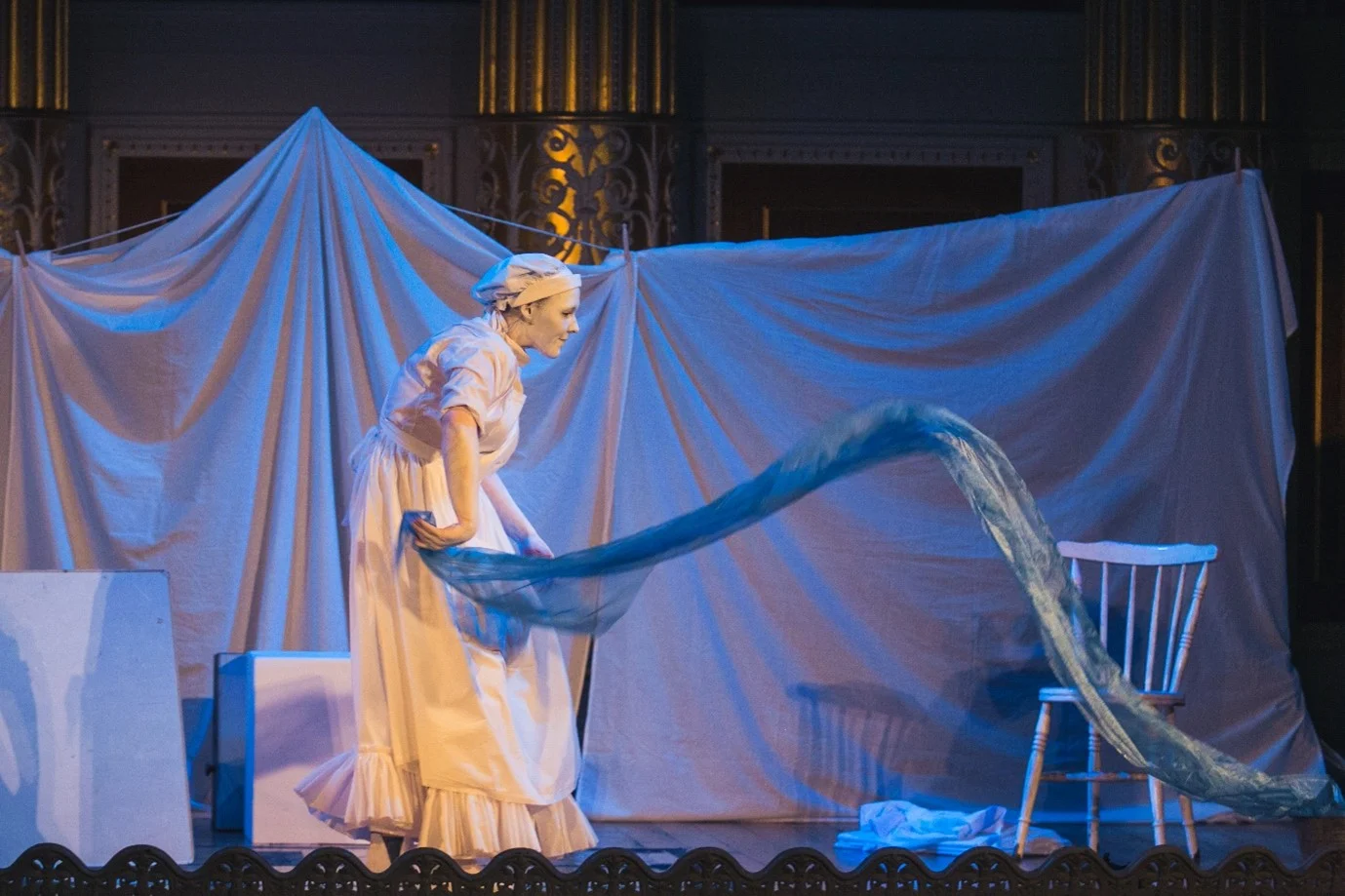
Kitty: Queen of the Washhouse – a performance at St Georges Hall, Concert Room in 2022 –
Kitty brings the Mersey to the stage.

Catherine Wilkinson (Kitty), originally from Derry, Ireland migrated to Liverpool with her family in 1796 when she was nine years old. Tragedy struck during the sea crossing when the ship they were travelling on crashed in the river Mersey and both Kitty’s father and youngest sister drowned.

The surviving members of the family settled in the North West but two years later Kitty was sent to work at a cotton mill in Lancashire as an indentured servant. Mill work was harsh, exhausting and challenging, with children charged with some of the more dangerous jobs, such as cleaning the floors under moving machinery. Kitty worked in this environment until she was 21 years old, when she returned to Liverpool to care for her ill mother.

During the early years of the 1800s Kitty married a French sailor but was left widowed with two young children when her husband drowned at sea. In 1823 she married Tom Wilkinson and over the next few years worked as a domestic servant and also set up a school for orphans in her own home. 

Liverpool experienced rapid population growth during the 19th century, putting a huge demand on housing stock and leading to the development of court housing.

The courts, or alleys, were accessed by a passage from a main road that opened on to a yard with houses facing one another. A toilet was typically situated at one end with a cold water standpipe in the centre. Courts varied in size but usually there were about four to ten houses in each. Sanitation in the courts was poor or non-existent, while washing facilities for personal purposes or laundry were also limited.


Nobody was ever the poorer for what they gave a neighbour in distress.


Kitty was the only person in her street to have a boiler, and understanding the need for a facility among her community for washing linen using hot water, she set herself up as a laundress. The service she provided was to become invaluable and ultimately lifesaving, especially during the outbreak of cholera in the city in 1832.

Kitty invited her neighbours and those living in the nearby courts and slums to use her hot water and facilities for a small fee. Drawing on her experience in domestic service, she also taught the women how to clean their laundry and what products to use to get the best results.

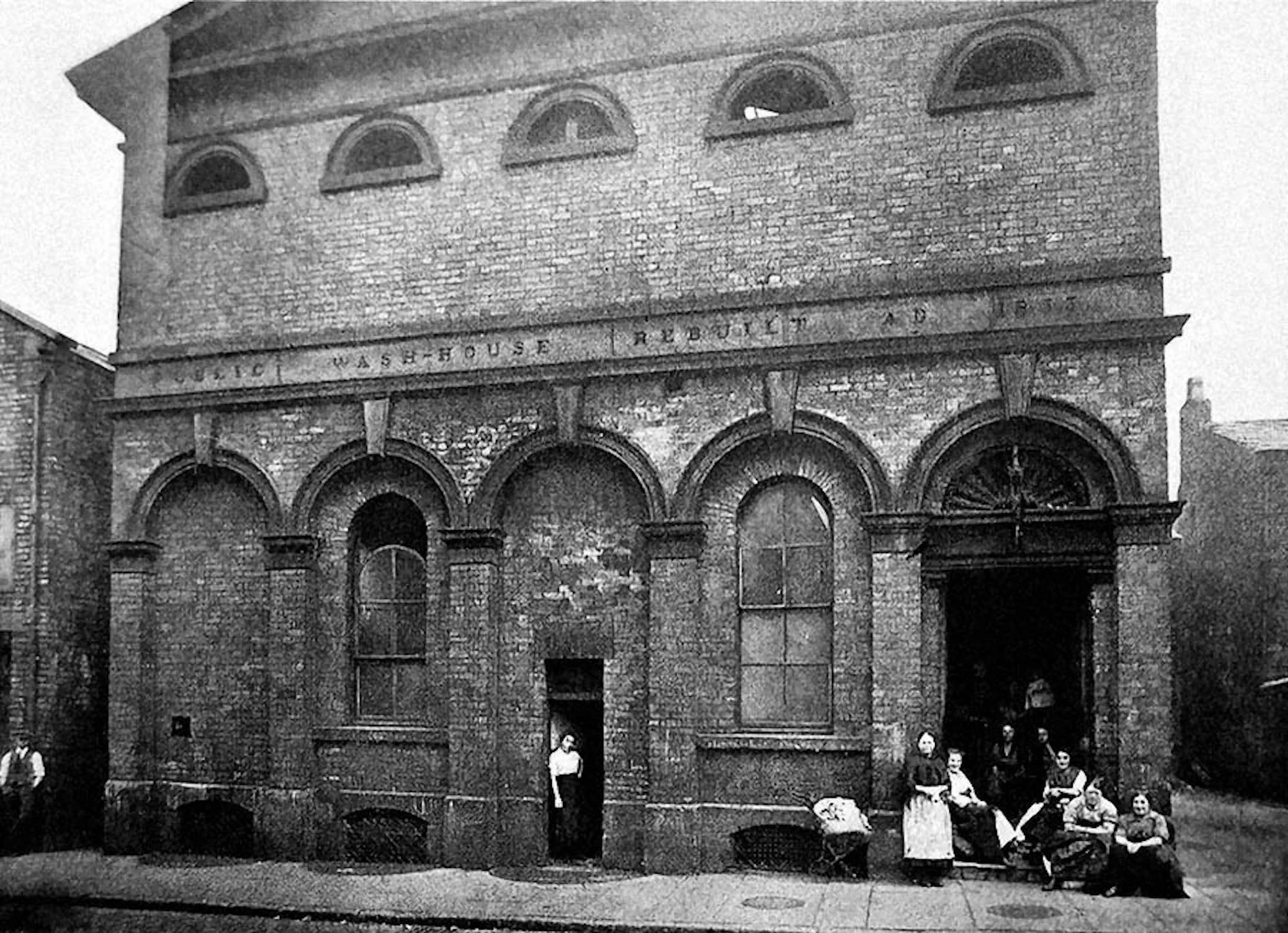
Kitty Wilkinson - Frederick Street Wash House
Frederick Street Wash House

Not only an entrepreneurial woman but also a socially aware individual, Kitty provided space nearby for the women to leave their children while they did their washing. She also began campaigning for public baths where the poor could wash themselves. Her efforts came to the attention of business man and philanthropist, William Rathbone, and the District Provident Society who raised funds to help her in her campaign and this eventually led to the opening of the first public bath and wash house on Upper Fredrick Street in 1842. Kitty was later appointed Superintendent of the establishment.  

Kitty Wilkinson was greatly respected for her endeavours, becoming known affectionately as the ‘Saint of the Slums’ and in 1846 was presented with an inscribed silver teapot from Queen Victoria in recognition of her contribution to society. 

To find out more about Liverpool’s Irish Connections, please visit the Liverpool Irish Festival website, where you can find a print at home map for a free walking tour – Liverpool Famine Trail and a digital app.

Additionally, at National Museums Liverpool there is a Liverpool Irish Community trail

Exploring Liverpool’s Intriguing Myths and Legends

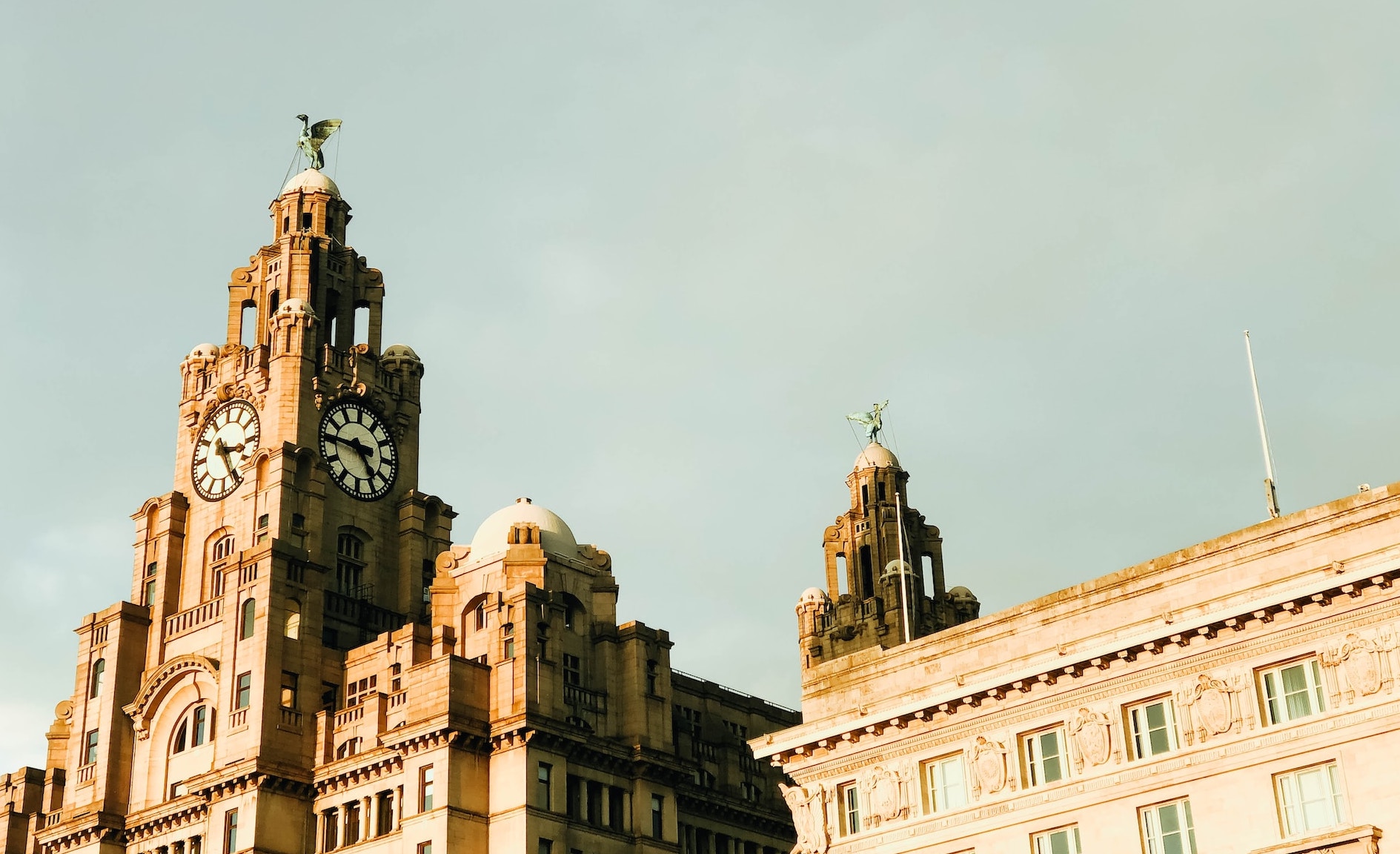
Liverpool Liver Building

Liverpool is home to an array of myths and legends, from haunted hotels and pyramid tombs to Bold Street’s time slips. Here’s a selection of some of the city’s most notorious tales.

1. William Mackenzie’s Tomb

The legend of William Mackenzie is of him selling his soul to the devil in exchange for always winning at poker. The deal being, as soon as his body was buried, his soul would go to hell for eternity.

After a massive poker winning streak, he was so rich, he was able to afford quirky last requests in his will. In an attempt to avoid being buried and going to hell, Mackenzie had his own pyramid/mausoleum built, in which he is entombed sitting in his favourite gaming chair, holding a royal flush.

The pyramid is still situated in St Andrews Church on Rodney Street, Mackenzie is now thought to be buried beneath the pyramid, which wasn’t finished until seven years after his death.

William Mackenzie’s Tomb: St Andrew’s Church, Rodney Street.

2. Adolf Hitler

Adolf Hitler is alleged to have spent time in Liverpool while his half-brother Alois Hitler Jnr was living at 102 Upper Stanhope Street, Toxteth, between November 1912 to May 1913.

The claim was made by his sister-in-law in a wartime memoir. She was initially unable to sell the manuscript and most historians dismiss the work as being a fabrication written in an attempt to cash in on her famous relation, as there’s no corroborating evidence.

Liverpool actor Paul McGann made a fascinating documentary short about Hitler’s Liverpool links in 2011, watch it here.

3. Liver Birds leaving Liverpool

Perched on top of the historic Royal Liver Building, the Liver Birds are said to have originated in 1207 when King John was granted a Royal Charter to register the city of Liverpool as a borough.

Stories surrounding Liverpool’s famous Liver Birds, known as Bella and Bertie, are almost as old as the birds themselves. It has been said they are based on a mythical bird that once looked out over the shoreline. Legend has it that if the two birds were to mate and fly away, the city would cease to exist.

Another urban legend suggests that while the female bird is is looking out to sea, the male is looking the other way, waiting for the pubs to open in town.

Royal Liver Building: Pier Head.

4. Origins of Scouse dish

The stew-like dish of Scouse – or lobscouse – from which Liverpool residents derive their famous nickname, doesn’t originate from Liverpool. The popular stew-style dish comes from Norway and became popular in port cities. The dish is still eaten by sailors in northern Europe today.

Scouse arrived in Liverpool via the busy docks and became a hit. The name is believed to be derived from the Norwegian lapskaus, Swedish lapskojs and Danish labskovs.

For the perfect scouse recipe, see the National Museums Liverpool recommendation here.

4. Adelphi Hotel

One of the most frequently spotted spirits at Liverpool’s historic Adelphi Hotel is that of Raymond Brown, a pageboy who died after becoming trapped in the baggage room lift at the age of fifteen.

Although the accident occurred in 1961, Richard is still seen wandering throughout the hotel, clad in his uniform and offering a helping hand to guests struggling with their bags.

In 2022, the Liverpool Echo reported on a sighting with video footage, the footage was made by startled guests staying at The Adelphi, after an Elton John concert.

Adelphi Hotel: Ranelagh Street, Liverpool.

5. Paul is dead

The ‘Paul is dead’ conspiracy theory claims that Paul McCartney died in 1966 and was replaced by a lookalike.

Rumours suggest that clues in Beatles songs, played backwards, revealed the truth. Played backwards, Strawberry Fields Forever features John Lennon saying what sounds like ‘I buried Paul’ towards the end of the song.

The Beatles themselves played along by throwing in hints in their music, while always stressing that it was just a myth. Paul even took the joke as far as releasing a live album in 1993 called Paul is Live.

6. Bold Street time slips

A time slip is a paranormal experience where a person accidentally travels through time.There have been a host of reports down the years of Bold Street time slips, many documented by Liverpool writer and expert on the occult, Tom Slemen.

In the most noted cases, the people involved suddenly see shop fronts, vehicles and fashions change to the way they were decades before. They report an eerie quiet, followed by a darkening of the sky, just before the transformation occurs. So far, most of the sightings have centred around the 1950s and ’60s.

One explanation given for the timeslips, is high voltage rails in the underground railway system, creating a portal through time. The rails form concentric circles – the centre of which, is roughly under Bold Street and over to Brooks Alley.

7. Croxteth Hall

The magnificent 230-room Croxteth Hall in the West Derby suburb of Liverpool is considered one of the most haunted locations in Liverpool.

Croxteth Hall had been known to generations of locals as being incredibly haunted, but it was through footage that appeared on the national news in 2009, that its haunted reputation extended.

In the CCTV footage, the figure of what appears to be the shape of a man appears from the bushes, slowly moving along a path leading up to the house before disappearing. Many people believe this is the ghost of Hugh William Osbert Molyneaux, the 7th Earl of Sefton.

Croxteth Hall: Croxteth Hall Lane, Liverpool.