
R.O.S.E – Factory International: Review

By Eden Wilkinson

R.O.S.E At Factory International - Photo Credit - @ebun.co.uk
Photo Credit – @ebun.co.uk

R.O.S.E: Sharon Eyal, Gai Behar, and Young with Ben UFO: Review

For this review we headed over to Manchester’s New Century Hall to check out Factory International’s recent show, R.O.S.E.

Factory International is a new event venue which opened in June this year at Aviva Studios, a landmark new cultural space designed by the Office for Metropolitan Architecture (OMA). Factory International produces a year-round programme of original creative work, music, and special events, including R.O.S.E.

R.O.S.E. is an experience which introduces a symbiosis of the DJ, audience, and performer. It presents a culture where club-goers and professional dancers exist within the same space to create a new and immersive way to enjoy music and dance.

So, you may ask why as a Liverpool-based platform we’re covering this Manchester event. Well, firstly we want to highlight the unique nature of a show like R.O.S.E. Secondly, Manchester is super-close to us and thirdly, shows like this are worth travelling down the M62 (or taking the train) for.

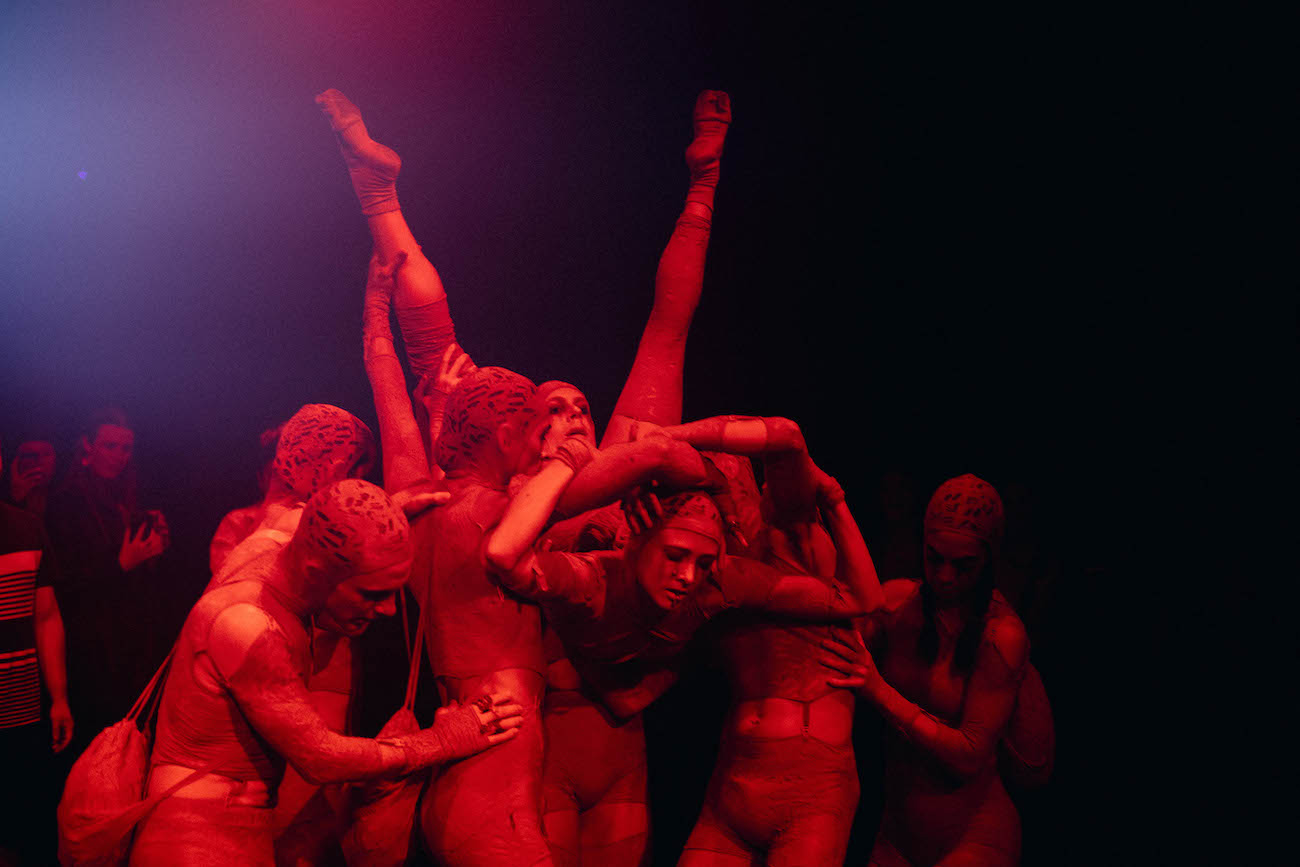
Curated by Factory International, choreography by Sharon Eyal, Gai Behar and London based record label ‘Young’ came together to present a collaboration of dance and music. Set within Manchester’s iconic New Century Hall the night mixed UK club culture with dark hedonistic choreography. The DJ for the evening was Ben UFO, a man who has garnered a reputation as one of dance music’s most wide-ranging selectors. He played during and after the dancer’s performances, with his contemporary selection of songs perfectly accompanying the ballet and contemporary dance elements of the performances. By contrast, exaggerated vogue elements of the choreography gave the distorted, boundary-blurring style signature to Sharon Eyal.

The choreography consisted of isolated movements that reflected breaks in the track. There was also a certain unpredictability to the experience; static movements in the movement would transform into travelling phrases where the dancers would make their way into and amongst the crowd.

R.O.S.E - Factory Internationl - Photo Credit - @ebun.co.uk
Photo Credit – @ebun.co.uk

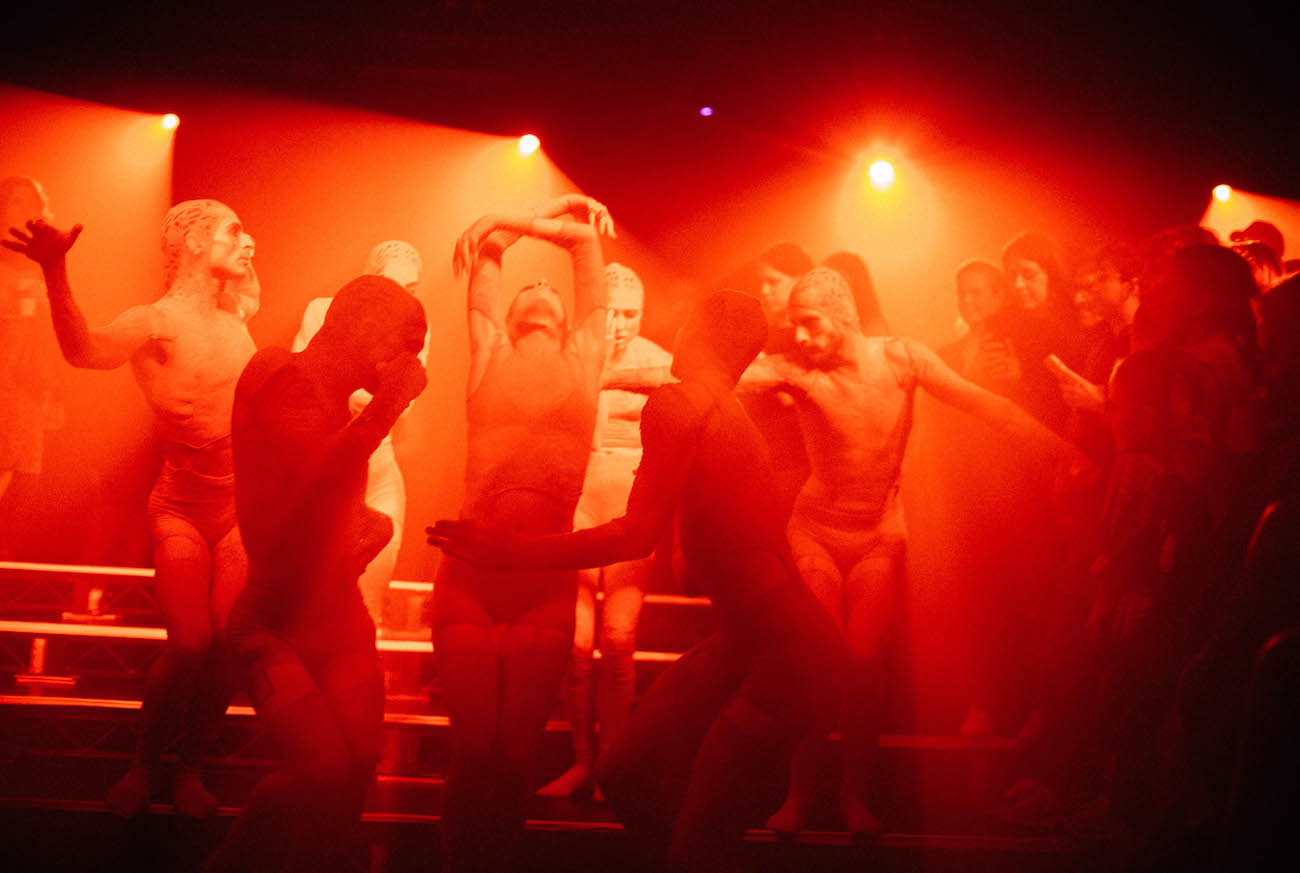
With a mixture of solo pieces and group unison choreography, the atmosphere was constantly evolving within New Century Hall. Solo dancers slipped effortlessly through the audience whilst group sections felt intimidating and affronting. The burnt orange down lighting on the dancer’s cast silhouettes that merged into the bodies of the observers, making this an intimate experience whereby the audience add to the overall performance and composition of the art. A certain energy would be left on the floor after the dancers’ performances that would travel into the energy of the crowd like a form of osmosis.

It is great to see contemporary dance and the culture of dance music working in unison to bring new immersive experiences into the mainstream.

This is an exciting time for shared experiences of immersive art, one that we hope to see replicated in the future.

R.O.S.E ran in Manchester from the 12 July 2023 – 15 July 2023. 

Visit the Factory International website to see their programme of upcoming events, including Yayoi Kusama: You, Me And The Balloons, which is running now until 28 August.

Photography by Ebun Lauren – @ebun.co.uk

From Industrial Past to Creative Haven: Discovering Liverpool’s Baltic Triangle

By Ade Blackburn

From Industrial Past to Creative Haven: Discovering Liverpool's Baltic Triangle

Liverpool’s Baltic Triangle is a thriving district that has emerged from its industrial roots to become one of the city’s most exciting and dynamic areas. The Baltic Triangle is a testament to Liverpool’s resilience, transforming from a once bustling hub of warehouses and factories to a vibrant cultural epicentre that showcases the city’s artistic and entrepreneurial spirit.

The Baltic Triangle is a hive of activity, featuring venues, creative spaces, a vintage market and an artist-led gallery. The area provides an excellent alternative to the mainstream of the city centre.

In this article we’ll take a look at some of the best cultural and creative spaces in the Baltic Triangle.

1. Gustav Adolf Kyrka (Nordic Church) 

During the 19th Century, Liverpool was a major stop-off point for Scandinavians making the arduous journey across the seas to find their American dream. Gustav Adolf Kyrka became a place of sanctuary to thousands of emigrants on their way to the ‘New World’. The church is one of just four octagonal churches in England and of great architectural significance.

Today, it’s been adapted for the local community, offering a range of events such as theatre, craft fairs, coffee mornings and choral evenings. The church also holds regular Heritage Open Days, when visitors can tour the Grade II listed building.

Gustav Adolf Kyrka (Nordic Church): 138 Park Lane, L1

2. The Royal Standard

The Royal Standard is an artist-led gallery, established in order to showcase the most exciting, innovative exhibitions and events. They work with the most outstanding recent graduates and emerging artists, as well as more established practitioners.

The gallery has a host of upcoming Liverpool Biennial 2023 exhibitions, including works by artists Luke George and Maeve Thompson. They also hold a monthly life drawing session.

The Royal Standard: 5 Mann Street, L8

3. Baltic Market

Baltic Market is a great place to call-in for a bite to eat on a visit to the Baltic Triangle. Located at the Cains Brewery Village, they are known as the home of halloumi fries, frozen gin slush and wood-fired pizzas. Local traders at the food court include Christakis and Polpetta.

Now celebrating their sixth year, the market was Liverpool’s first street food market and is still well worth discovering.

Baltic Market: Cains Brewery Village, Stanhope Street, L8

4. McKeown Rice Exhibition Plinth

The Mckeown Rice Plinth near the Baltic Creative campus was curated by Castle Fine Arts Foundry and has been host to some incredible sculptures of the past ten years. The plinth enables both established and new artists to exhibit their work in the area.

The space is dedicated to two of Baltic’s founding members, Claire McKeown and Paul Rice. Both sadly passed away, but their work, dedication and contribution to the area is remembered through the art hosted at this fantastic space.

McKeown Rice Exhibition Plinth: 49 Jamaica Street, L1

5. Hangar 34

Hangar 34 is an event warehouse space, specialising in nightlife, live music and exhibitions. The venue recently hosted the acclaimed Rave UKraine event, a live link-up with a Kyiv venue and part of the Eurovision 2023 celebrations. The groundbreaking day featured Hot Chip, James Lavelle and experimental Ukrainian DJ Mingulitka.

Upcoming shows at Hangar 34 include The Wonderstuff, Eddi Reader and Liverpool’s Miles Kane.

Hangar 34: 34 Greenland Street, L1

6. HOBO Kiosk

Discover the friendliest and strangest little pub in the Baltic Triangle, HOBO Kiosk‘s interior has a lovely, vintage magic and charm. The pub also hosts small and secret gigs, anything from electronica to jazz, plus a film club night and a weekly quiz.

With carefully selected local beers, unique design and atmosphere, HOBO Kiosk is ideal for a quiet drink or a lively conversation across its vintage tables.

Hobo Kiosk: 9 Bridgewater Street, L1

7. Camp and Furnace

Right at the heart of the Baltic Triangle is Camp and Furnace. This multipurpose venue is an enormous space, that manages to remain cavernous yet atmospheric, regularly staging live gigs and DJ led club nights.

The venue has hosted many legendary shows and festivals, including Liverpool International Festival of Psychedelia, which featured classic bands such as Super Furry Animals, Goat and The Black Angels. The festival attracted visitors and acclaim from around the world.

Camp and Furnace: 67 Greenland Street, L1

8. Red Brick Vintage

Red Brick Vintage is a giant warehouse of vintage, antiques, retro, salvage, hand-crafted, brocante, collectables, vinyl and more. A collection of over fifty independent businesses under one roof. From its inception in 2018, Red Brick has welcomed and supported independent traders, local artists and startup businesses.

A great place to wander around for a few hours and find a special bargain.

Red Brick Vintage: 70 Stanhope Street, L8

9. For All Liverpool’s Liver Birds

For All Liverpool’s Liverbirds is probably the most Instagrammed mural in Liverpool. Created by Liverpool street artist Paul Curtis, the idea was inspired by the city’s famous Liverbirds. Paul was originally a geologist in the oil industry before returning to Liverpool in 2016 to embark on a career as an artist.

Since its unveiling, the mural has appeared as the backdrop to thousands of visitors and tourists to the city, including The Duchess of Cornwall.

For All Liverpool’s Liver Birds: 43 Jamaica Street, L1


Find events happening in the Baltic Triangle and beyond by checking out our What’s On listings.

Get Into A Rhythm With These Dance Classes In The Liverpool City Region

Whether you’re looking to learn a new skill, sharpen up on your moves or start a new hobby there’s some amazing dance classes in the Liverpool city region that you can join.

From the energetic and inclusive tap dance sessions at the female-led Sole Rebel to the world-renowned Bungee-Assisted Dance technique taught by Wired Aerial Theatre, there’s something for everyone. Explore cultural dance experiences with Movema’s World Dance classes, swing into the rhythm with Mersey Swing, or try the elegance of traditional Chinese dance with Pagoda Arts. Whether you’re a beginner or a seasoned dancer, the Liverpool city region has a class to ignite your passion for dance.

Dance Classes in Liverpool - Sole Rebel
Sole Rebel

Sole Rebel

The fantastic female-led Sole Rebel offer fun, non-syllabus tap dance classes with a focus on technique, musicality, choreography and improvisation. There’s classes for Beginners, Advanced Beginners & Intermediate/Advanced dancers.

Movema

Movema is an inclusive World Dance organisation, with activities, classes and workshops for people of all ages and backgrounds. You will have so much fun taking part in a Movema class, we guarantee it.

Wired Aerial Theatre Bungee-Assisted Dance Classes

The internationally acclaimed Wired Aerial Theatre are the creators and world’s foremost performers of Bungee-Assisted Dance technique. They offer a variety of dance workshops, whether you want to learn their signature technique, aerial circus or other harness techniques, they have something for whatever your level of ability.

Mersey Swing

Mersey Swing CIC is a dance school that specializes in swing dancing. They offer a variety of classes, including Lindy Hop, Balboa, and Charleston. They also have a number of social dancing events throughout the year.

Pagoda Arts

Pagoda Arts is dedicated to promoting Chinese culture in the Liverpool city region and they offer a variety of activities, including music lessons, tai chi classes, and Chinese dance classes. Their dance classes focus on traditional Chinese dance styles, taught by experienced instructors. Whether you’re a beginner or have some dance experience, Pagoda Arts welcomes dancers of all levels to learn the grace and beauty of Chinese dance. Visit their what’s on listings to find classes. 

Live Wire Dance Studio

Live Wire Dance Studio was established in 2009 and is a creative space in the heart of Liverpool City Centre.  Supporting dancers by offering year round, clean, affordable, central studio space for classes, rehearsals, workshops and more. 

Live Wire’s aim is to help build the dance community in Liverpool by helping teachers, students, professionals and amateurs alike connect with each other and share knowledge, information and experiences.

To find more creative workshops, classes and events check out our What’s On Listings section.

Fascinating Liverpool Monuments

By Ade Blackburn

Fascinating Liverpool Monuments - Billy Fury Statue
Billy Fury Sculpture

The city of Liverpool has a greater number of public sculptures than any other location in the United Kingdom, aside from Westminster. Here’s a selection of some of the fascinating monuments on display in the city.

1. Bessie Braddock Sculpture

Bessie Braddock was the Labour Party MP for Liverpool Exchange from 1945-70. She was an outspoken campaigner for better health, housing and education for the poor.

She rejected a ministerial post because, like her husband, Council Leader Jack Braddock, she preferred to remain locally-focussed and be a fierce advocate for her home city.

She was affectionately known as ‘Battling Bessie’ and was admired both locally and nationally.

On display: Lime Street Station

2. All Together Now – Christmas Truce 1914

A sculpture commemorating the World War One Christmas truce. Two fibreglass figures, about to shake hands, capture the moment British and German soldiers stopped fighting and played football on Christmas Day 1914.
Titled All Together Now, the statue, designed by Andy Edwards, is on display at Liverpool’s bombed-out church. St Luke’s Church, which faces down Bold Street, is itself a monument to the 1941 Blitz on Liverpool.
The building was almost destroyed by an incendiary bomb in May 1941 and has remained as a burnt-out shell ever since.
On display: St. Luke’s ‘Bombed-Out’ Church Gardens

3. William Mackenzie Tomb

The tomb of engineer William MacKenzie, situated in the graveyard of the former St Andrew’s Church in Rodney Street, Liverpool, is often talked about. It is said that he is not buried there, but instead sat above ground and also that his ghost roams the locality.

Legend has it that he was not buried but sat upright in the tomb. The story goes that McKenzie was supposedly entombed seated at a table with a winning hand of cards in his bony fingers.

Just like something out of a novel, William Mackenzie wasn’t buried in any old tomb. Instead, his burial site boasts a 4.57-metre pyramid-shaped tombstone, embellished with a turquoise placard and inscription. For history, mystery, and architecture fans headed to Liverpool, consider adding Mackenzie’s tomb to your itinerary.

On display: St Andrew’s Church Grounds

4. Bill Shankly Sculpture

Sculptor Tom Murphy’s most popular work and an integral part of the Liverpool Tourist trail. Since its unveiling in 1997, thousands of football fans across the world have been pictured with this Bill Shankly Sculpture which stands at the entrance to Anfield.

Commissioned by Calsberg Internation for Liverpool Football Club, it is cast in bronze, stands 14 feet high off the ground on a plinth of Scottish granite – in deference to Shankly’s Scottish Mining background.

On display: Entrance to Anfield Football Stadium

5. Billy Fury Sculpture

Billy Fury was born Ronald Wycherley in Haliburton Street in The Dingle, Liverpool on 17 April 1940. He first found fame in the early 1960s and is remembered as one of the most famous stars in the history of British rock and roll. His total record sales were on a par with acts such as Elvis, The Beatles and Cliff Richard.

His statue, made by Liverpool sculptor Tom Murphy in 2003, was commissioned by ‘The Sound of Fury’ fan club following six years of fundraising and donations from fans, both members and non members, from home and abroad.

The sculpture was very kindly donated to National Museums Liverpool by ‘The Sound of Fury’ as a lasting tribute to Billy, one of Liverpool’s greatest stars.

On display: Outside of Piermaster’s House, Albert Dock

6. Kitty Wilkinson Sculpture

An Irish migrant to Liverpool, Kitty Wilkinson‘s public hygiene efforts helped curb the cholera outbreak of 1832 and eventually led to the opening of the first combined washhouse and public baths in the United Kingdom.
Her legacy began when the ‘Saint of the Slums’ invited residents with infected clothes or linen to use her boiler – the only one in the neighbourhood – to clean them, thus saving many lives.
In 2012, a marble statue of Kitty was unveiled in St George’s Hall and it remains the only female sculpture in the famous building.
ArtsGroupie‘s play about her life, ‘Kitty: Queen of the Washhouse’ is coming to the hall in October 2023. It celebrates the Liverpudlian pioneer who was a community champion.
On display: St George’s Hall

Our Top 10 Best Music Venues In Liverpool

By Dan Aynlsey

The Best Music Venues in Liverpool - The Cavern

Breaking out into the music industry is hard, but in terms of cities, there may be no better place in the country than Liverpool. With a thriving music scene, Liverpool is renowned for being the birthplace of many iconic, timeless bands.

With that being said, here are some of the best music venues in Liverpool for music lovers and up-and-coming musicians.

1. The Cavern Club

Was it ever going to be anywhere else?

The Cavern Club is an iconic venue that holds a special place in music history. Located on Mathew Street, it became synonymous with The Beatles’ early years and their rise to fame. It is known as the birthplace of the “Merseybeat” sound.

The Cavern Club was established in 1957 and quickly became a popular spot for local musicians and music enthusiasts. The club is known for its arched ceiling and underground ambiance, adding to its distinctive character.

During the 1960s, The Beatles performed extensively at the Cavern Club, racking up an impressive 292 appearances. Their energetic and charismatic performances drew crowds and marked a turning point in popular music. The Cavern Club became synonymous with the “Beatlemania” phenomenon and remains forever tied to the band’s rise to global fame.

Today, the Cavern Club continues to be a thriving music venue that celebrates its rich musical heritage while also showcasing a wide range of contemporary artists and bands. It offers multiple stages, including the iconic Cavern Club stage, the larger Cavern Live Lounge, and the intimate Cavern Pub. Each stage offers its own unique atmosphere, catering to different styles of music.

The Cavern Club hosts a diverse array of live performances, covering various genres such as rock, pop, indie, blues, and tribute acts. It continues to host both established and emerging bands to showcase their talent.

The club’s association with The Beatles is celebrated throughout, with memorabilia, photographs, and artworks paying homage to the band’s legendary performances. When you visit you can explore Beatles-themed exhibits, including the famous brick wall signed by fans from around the world.

The Cavern Club is the most legendary music venue in all of Liverpool as it established the most important band to come out of Liverpool, and perhaps the biggest band in the entire world.

If you are a musician or just in Liverpool and want to visit somewhere not only iconic, but somewhere which offers great music, you must visit The Cavern Club.

2. The Jacaranda

The Jacaranda is a legendary music venue in Liverpool. Affectionately known as ‘The Jac’, it has a rich musical history and has hosted performances by numerous famous bands. Established in 1958 by Allan Williams, The Jacaranda became synonymous with the rise of the Merseybeat era and the legendary band, The Beatles. It was at The Jacaranda where the band members, including John Lennon and Stuart Sutcliffe, would gather, perform, and socialise, establishing the venue as a pivotal meeting point for Liverpool’s emerging musicians.

Williams actually became the first manager of The Beatles, and in his book, ‘The Man Who Gave the Beatles Away’, he described The Jacaranda’s cramped basement as one of the UK’s first true multicultural venues. Williams said: ‘It brought together a mixed audience of immigrants, bohemians, and students to enjoy a blend of musical acts that ranged from calypso and steel drum acts to an emerging generation of Rock and roll bands.’

The venue has retained its original charm and character, with vintage decor, including red velvet seats, retro furnishings, and classic rock ‘n’ roll memorabilia adorning the walls. This nostalgic ambiance transports visitors to the heyday of the 1960s music scene, immersing them in a unique and historic atmosphere. To this day it continues to be a platform for local musicians to perform and connect with audiences, carrying on the tradition established during the Beatles era.

Situated in the heart of Liverpool’s Ropewalks district, The Jacaranda benefits from its vibrant and eclectic surroundings. The venue’s intimate setting creates an up-close and personal experience, allowing for a strong connection between artists and attendees.

Beyond its musical offerings, The Jacaranda has expanded its influence as a creative space.

It now includes Jacaranda Records Phase One, a record store and bar just down the road on Seel Street, where visitors can browse and purchase vinyl records, enjoy a drink, and engage in conversations about music and culture.

3. EBGBs

EBGBs hosts a diverse range of gigs, including indie, rock, alternative, and electronic music. The venue has a stylish and edgy aesthetic, with an industrial-inspired interior featuring exposed brick walls, dim lighting, and a spacious layout. This is then combined with a great sound system creates a raw, engaging experience.

Located in the heart of Liverpool’s vibrant nightlife district, EBGBs benefits from its proximity to other entertainment venues, bars, and restaurants. This makes it an ideal destination for a night out, where attendees can easily explore the surrounding area and fully enjoy the city’s lively atmosphere.

4. The Zanzibar Club 

The Zanzibar Club has a high reputation for supporting new, emerging bands, focussed mainly on the rock and alternative genres.

The Zanzibar has a long-standing legacy, dating back to the 1980s when it first opened its doors. Since then, it has played a pivotal role in shaping Liverpool’s music culture by providing a platform for local musicians to showcase their talent. Like many of the venues before it, The Zanzibar boasts a compact layout. This closeness fosters an electric and engaging atmosphere, making every performance feel special and memorable, which is both beneficial for the musicians and the crowd.

The venue’s location in the heart of Liverpool’s city centre contributes to its appeal. Located on Seel Street, it is surrounded by a thriving cultural and nightlife scene, making it a popular destination for locals and visitors alike. Its proximity to other music venues, bars, and restaurants allows attendees to easily explore and enjoy the vibrant atmosphere of Liverpool’s entertainment district.

Whether attending a live music performance, dancing at a club night, or immersing yourself in the energy of the crowd, The Zanzibar Club offers a memorable and immersive experience for music enthusiasts of all kinds.

5. The O2 Academy

The O2 Academy Liverpool is situated on Hotham Street, near the city centre.

The building where the O2 Academy Liverpool is located was initially known as the New Academy Building and was completed in 1905. It was originally designed as a warehouse and was used for storing goods. The building had a distinctive and ornate façade, featuring elements of Edwardian architecture. In the 1950s, the building underwent a significant transformation and became the Locarno Ballroom. During this period, it served as a popular dance hall, hosting live music performances and social events. Many notable artists and bands of the time performed at the Locarno Ballroom, including The Beatles, The Rolling Stones, and The Who.

In 2003, the building underwent another renovation and became part of the O2 Academy group, a chain of music venues operated by Academy Music Group. It was rebranded as the O2 Academy Liverpool, joining other O2 Academy venues in cities such as London, Birmingham, Glasgow, and Bristol.

Since becoming the O2 Academy Liverpool, the venue has continued to host a diverse range of live music events. It has welcomed both local and international artists from various genres, contributing to Liverpool’s vibrant music scene. The O2 Academy Liverpool is known for its excellent sound quality and lighting production. The venue has invested in high-quality audio systems to ensure that the music and performances are delivered with clarity and impact.

The venue is designed to accommodate live music performances and provides an intimate setting for music lovers. The venue can hold approximately 1,200 people, creating an immersive experience where the audience can be close to the stage and the performers.

Its history, with its various transformations and name changes, reflects the dynamic nature of Liverpool’s music culture and the venue’s ability to adapt to changing musical trends and preferences.

6. The Shipping Forecast

The Shipping Forecast is a vibrant music venue located on Slater Street in Liverpool. Named after the iconic BBC Radio broadcast that provides weather reports for maritime areas, the venue creates a unique, immersive atmosphere.

The venues interior has a distinctive aesthetic, combined with low lighting and intimate seating arrangements, contributes to the venue’s intimate and welcoming atmosphere, allowing attendees to feel immersed in the live music experience.

The Shipping Forecast tends to focus on indie and rock music; however, it is known to host DJ sets and club nights which provides a diverse range of genres.

7. District

District is a dynamic music venue, located in Liverpool’s Baltic Triangle area. It has established itself as a prominent cultural space, hosting live music events, art exhibitions, club nights, and a variety of creative gatherings.

The venue itself is characterised by its spacious layout and industrial-inspired design. Its large main room provides ample space for live performances, while the bar area offers a more relaxed atmosphere for socialising.

District has gained a reputation for its eclectic programming, which spans across a wide spectrum of musical genres. From indie rock and alternative to electronic, hip-hop, and experimental sounds, the venue’s line-up caters to diverse musical tastes.

Being in the Baltic Triangle, it is surrounded by a creative hub of other iconic venues. This means it is a perfect place to enjoy live music, whether you are a musician or a listener.

8. 24 Kitchen Street

This is a popular music venue, again located in Liverpool’s Baltic Triangle area. Known for its unique warehouse-style setting and eclectic programming, it has become a vibrant hub for live music, DJ sets, club nights, and cultural events.

The venue has an industrial style aesthetic, with its exposed brick walls and raw interior, creates a distinct atmosphere that sets it apart from traditional music venues. Its edgy and unconventional setting lends itself well to a diverse range of musical genres, attracting a wide array of performers and audiences.

24 Kitchen Street has gained a reputation for its diverse programming and underground music scene, representing various genres such as electronic, alternative, indie, hip-hop, and more.

In addition to live music, 24 Kitchen Street is known for its DJ sets and club nights, featuring local and international DJs spinning a variety of genres, including house, drum and bass, and techno. Beyond its music-focused events, 24 Kitchen Street occasionally hosts art exhibitions, spoken word performances, workshops, and other cultural gatherings.

9. Invisible Wind Factory

The Invisible Wind Factory is a multi-purpose venue located at Liverpool’s North Docks area. It is a former wind turbine factory that has been converted into a space for live music, club nights, comedy shows, and more. The venue has a capacity of up to 1,200 people and is known for its unique atmosphere and sound system.

The Invisible Wind Factory was opened in 2017 by the team behind the Kazimier, one of Liverpool’s most popular music venues. The venue has quickly become a favourite among music fans in the city, hosting a wide range of artists from all over the world.

In addition to live music, the Invisible Wind Factory also hosts a variety of other events, including club nights.

The Invisible Wind Factory is located in the Ten Streets district of Liverpool, which is a rapidly developing area with a growing number of bars and restaurants.

10. Arts Club

The Arts Club is known for its eclectic mix of music, from local up-and-coming bands to touring international artists. You can catch everything from rock and pop to jazz and folk on the stage here.

The Arts Club history spans back to 1814 when it served as the Royal Institute of Arts & Literature being granted Royal Charter in 1821, at that time one of the only Arts Institutes outside of London. Charles Dickens himself even lectured here during his time in Liverpool. Over the years the building has been a series of venues from Barfly, through to the Masque and most recently Arts Club.

Arts Club has 3 great live stages (the theatre space at 550 capacity, the treehouse at 450 capacity and a new embryo stage at 100 capacity). There is full in-house production, full screen LED Video, 4am club nights and a daytime events programme. Local live promoter Revo from EVOL Promotions will be holding the diary and are keen to hear from any interested bands, DJs or club promoters for bookings & hires at: info@Arts-Club-Liverpool.com or DM on Instagram @artsclubliverpool.

So, there is our complete rundown of our favourite music venues in Liverpool. Now, if you’re looking for live events to go to be sure to check out our What’s On listings and discover your next gig.

Liverpool Makers Bazaar Spotlight On Mersey Glass Works

By Pauline Neville

Merseyglass 1

I met Stephanie as a regular maker, at The Liverpool Makers Bazaar where she exhibits and sells her plethora of fabulous and unique glass items, alongside framed pieces.

She feels it’s an absolute joy to have people visit her there and is usually surrounded by entranced children who are understandably drawn to her world of tiny colourful creatures and seemingly suspended galaxies.

To chat for this piece, Stephanie suggested we meet at her fabulous glass workshop in an industrial estate in Garston, on the banks of the Mersey. It is a magical place somewhere between an industrial laboratory and one of the most interesting art exhibitions I’ve ever seen. A neon heart pulses silently on its wooden plinth, multicoloured glass rods nestle in their wooden cubbyholes awaiting selection and mysterious machines wait quietly for Stephanie to kick them into life.

Her passion for her art is apparent when from the start she enthuses, “People never forget seeing glass melting in real life for the first time, it stays with them always… it is a profound honour to be able to share this with them.”

She does this by offering 3 hour beginners glass blowing experiences. Unusually, for this medium, they are very hands on which Stephanie believes allows her students to really get to know the material. Reviews of her courses and repeat bookings would seem to bear this out. Courses can be booked via AirBnB experiences or feel free to contact her directly on any of the methods given at the end of the article.

Stephanie is driven to educate especially young people, as scientific glassblowing is a red listed heritage craft and predicted to become extinct within the next two generations.

Previous roles which led her to this point have always erred on the side of creativity. She began with a BA in Performing Arts, resulting in her running a Liverpool Arts Associations Arena Art & Design Association. She describes this period as satisfying but unprofitable.

Merseyglass 2

But, when 12 years ago, she attended a training course on neon sign making, she was hooked. The frustrating thing was that having discovered her ideal medium in glass she couldn’t find anywhere to apprentice, nor any further training she could undertake. Persevering, she discovered another week long course in neon sign making, held at a Paris technical college the Lycée Dorian. 

Always up for a challenge, she applied and found herself making neon signs by day and as a group the students wandered the streets of Paris at night admiring the many neon signs already in situ. Often stopping outside busy restaurants to discuss the merits of a particular sign to the bewilderment of the diners inches away from them on the other side of the restaurant window.

Through the Lycée Dorian, she was recommended to the renowned master scientific glass blower Paul Pinnet, then living in Warrington and running the scientific glassblowing workshop at The Heath in Runcorn’s chemical industry.

Paul offered her a coffee and a look round his workshop and she found herself being invited to become his apprentice. She trained with and worked alongside Paul for 2 years until his retirement. Stephanie recalls fondly how he insisted that he was an engineer whilst creating beautiful art in the form of tiny glass animals often within animals, as practice pieces.

“Even the contents of the bins were beautiful” she told me, “containing as they did many fragments of coloured glass and rejected glass creatures that didn’t meet Paul’s exacting standards. If you had photographed the contents of those bins and blown it up it would have been fabulous abstract art in itself!”

Together they worked as scientific glass blowers producing all manner of test tubes and vessels to exact scale plans accurate to within 1 mm. Once Paul left for the day Stephanie was permitted to remain and began experimenting herself, creating increasingly artistic pieces. Menageries of tiny mythical glass creatures to start but gradually developing her unique signature style. She is still developing and experimenting with form and light. She says “I just like making little things, tiny pieces of joy”. Stephanie puts her success down to wanting to practice stating that glassblowing is a calling rather than a profession. 

Merseyglass 3

Her range of memorial glass came into being when she was experimenting with different materials and testing what could tolerate the temperatures needed to create the glass. As her practice progressed she developed the idea that ash from loved ones could be housed in beautiful memorial glass art. These pieces are completely unique and are a collaboration with the bereaved to ensure that the finished item expresses the personality of the lost family member.

In 2014 Steph acquired her glass workshop. To run this she says that she needs to be part gas fitter, part electrician all alongside maintaining the creative drive.

I was lucky enough to have Stephanie give me an interesting and informative demonstration of one of her glass making techniques, her detailed knowledge of the subject and passion once more evident. Aside from being mesmerising, it was interesting to witness where science becomes art and I was reminded that Einstein said “Creativity is intelligence at play.” I would recommend the experience whole heartedly.

Stephanie may be contacted by email; merseyglassworks@gmail.com and via her website; www.merseyglassworks.co.uk.

You can also chat to Stephanie by phone on 07870738399, or better yet in person at the Liverpool Makers Bazaar next event on Sunday 18 June. We hope to see you there.

Curtain Up: Historic Liverpool Cinemas and Theatres

By Ade Blackburn

Historic Liverpool Theatres and Cinemas

Liverpool has a fascinating and rich heritage of theatres and cinemas. These architectural gems stand as a testament to the city’s passion for entertainment and the arts throughout the decades. Here’s a selection of some of the most-loved and celebrated venues in the city.

1. The Futurist

Opened on 16th September 1912, as Lime Street Picture House, the venue was a very upmarket city centre cinema, with a tiled Edwardian façade and circle auditorium, richly decorated with plasterwork in the French Renaissance style.

In 1920, the building was renamed The Futurist, a name the building still held until its demolition in August 2016. The ABC owned Futurist was very popular, despite competition from the huge Paramount and Forum cinemas nearby, which sometimes forced The Futurist into taking off-circuit films.

Eventually, as ABC tripled their main cinema (the ex-Forum directly across the street), The Futurist was closed in July 1982, during a run of Mel Brooks’ Blazing Saddles.

2. Royal Court Theatre

Built in the 18th Century, the circus owner, John Cooke, bought the site for his circus shows, plays, operas and concerts, and it became known as Cooke’s Royal Amphitheatre of Arts. In 1881, the building was redesigned by Henry Sumner as a regular theatre and re-opened as the Royal Court Theatre.

The interior of the building displays a nautical theme, in line with Liverpool’s seafaring traditions. The basement lounge even has its design based on the Queen Mary Liner.

Although the Blitz of World War Two destroyed many of the surrounding buildings, The Royal Court remained intact. Throughout the war, many well-known artists performed in the Royal Court, including Ivor Novello, Margot Fonteyn, John Gielgud and Richard Burton. In 1990, the building was finally listed as Grade II.

3. Rialto Cinema

The Rialto Cinema in Toxteth was a famous landmark throughout the 1950s and early 60s. The Liverpool architects of the building were Gray and Evans of North John Street. They were tasked with designing a complex that would accommodate a cinema, ballroom, billiard hall, a large cafe and twelve good sized shops, all under one roof!

The ballroom was decorated with large painted murals on the walls, providing grand Venetian views for their customers. The Liverpool Echo even described the interior of the Rialto as staggering.

The Rialto closed in February 1964, with a screening of Doris Day in The Thrill of it All and the venue was later converted into a bingo hall. The historic building was burned down in the L8 uprising of 1981 but has since been rebuilt and now houses offices, flats and shops.

4. Playhouse Theatre

This much-loved Liverpool venue originated in 1866 as a music hall, and in 1911 developed into a repertory theatre. The grand interior was decorated in an impressive Greek Revival style.

The Playhouse is the oldest repertory theatre in the UK and nurtured the early careers of many actors, some of whom went on to achieve national and international fame. Future stars who learned their craft at the Playhouse include Noel Coward, Richard Burton, Patricia Routledge and Anthony Hopkins.

The theatre also helped foster the early-careers of many Merseyside writers, including Alan Bleasdale and Willy Russell. One of the Playhouse’s great successes was a staging of Russell’s Blood Brothers in 1983.

5. The Gaumont Palace 

The Gaumont Palace cinema was based in Anfield, a large art deco building, just one hundred metres from the football ground. Central marble steps led customers to five pairs of glazed oak doors, which were complete with stainless steel fittings. The cinema even had gold stage curtains and a movable floor to accommodate an orchestra.

The Gaumont’s heyday was the 1940s but the building has since played an important role within the local community. In the nineties, the venue reopened as the Liverpool Lighthouse, operating an Urban Gospel Arts Centre in the heart of Anfield.

Liverpool Lighthouse still thrives today, with a wide range of activities for the community. They received a Health and Wellbeing award from Liverpool City Region Culture and Creativity in 2023.

6. Olympia Theatre (Renamed Eventim Olympia)

The Olympia Theatre was designed by architect Frank Matcham in 1905. The auditorium boasted three balconies and its ornate interior was decorated with elephants and Indian panelling.

The theatre had a vast stage and was also designed to house circus events – the elephant, horse and lions’ accommodation still survives below the stage. Performing animals would appear in the auditorium by being lifted from the basement where they lived. Evidence of the lift mechanism and living areas can still be found under the theatre.

Since reopening as a music venue, the Eventim Olympia, has played host to some legendary gigs, including Mogwai, The Specials and Ocean Colour Scene.

7. The Epstein Theatre

Liverpool’s legendary Crane Brothers’ music shop had been trading for several years, when they opened a music hall above their store on Hanover Street. Many amateur drama groups staged productions there, and led to its renaming as the Crane Theatre in 1938.

The venue is a stunning Grade II listed building and retains many of its impressive original features. The interior has a proscenium arch-type stage and superb acoustics for music shows. The theatre was renamed The Neptune by Liverpool Corporation in 1967, the new name being a reference to the city’s maritime history.

Since it’s 2011 reopening as The Epstein Theatre, the venue has firmly re-established it’s place as a popular destination for drama, panto and comedy.

8. Everyman Theatre

Originally known as Hope Hall, the building was conceived as a dissenter’s chapel, opening in 1837, but was soon re-imagined as a concert hall, and later as a cinema, known as Hope Hall Cinema.

The cinema’s situation on Hope Street, and its friendly and bohemian environment, meant that it gradually took on another role in the 1960s, becoming an unofficial meeting place for artists, musicians, poets and actors. The people became known in the area as ‘The Liverpool Scene’.

This group of artists eventually took on the task of converting the building into a theatre with a new apron stage, new seating, and new dressing rooms for its artistes. The Everyman Theatre opened in 1964 and soon became the spawning ground for a great many well known names of today.

Things To Do This Summer 2023 In Liverpool

By Artemis Archer

Things To Do In Liverpool This Summer 2023

Eurovision this year sets the scene for another exciting summer in the region. Assuming you haven’t overdone the celebrations there’s plenty more thought provoking, creative events to enjoy throughout the summer.

1. Children’s Workshops & Events

For fun and engaging activities for children there’s a wealth of choices across the region. 

At Calderstones Park, The Reader’s Storybarn has workshops to inspire the imagination of the little ones and their grown ups. You’ll find Incy Wincy Wanders, Tiny Acorn Tall Tales, Story Explorers as well as lots of other seasonal events. Find out more about what’s on here. 

Head over to the World Museum for summer bug hunts every Wednesday through the school summer holidays (19 July – 6 September). 

At the Walker Art Gallery there are family-friendly craft and create sessions with different themes every Thursday and Friday from 27 July – 31 August. They also run Babbling Babies sensory play sessions for pre-crawlers under the age of 12 months. 

Sole Rebel, the female dance company that moves to its own beat, offers a variety of tap dancing classes for children and adults and also has a movement class for ‘pre-crawling babies and mummas’.

Delamere Forest
Delamere Forest

2. Scenic Walks

You’ll find a wealth of scenic walks and trails for a great family day-out across the Liverpool City Region. 

If it’s the coast you’re drawn to there are a variety of walks and cycle trails such as the Wirral Way. Follow the coastal path from Seacombe Ferry to New Brighton for scenic views of the Liverpool waterfront.

You’ll find one of Britain’s largest areas of wild dunes at Ainsdale and Birkdale Sandhills Nature Reserve, which is home to stunning sand dunes, pine woods and coastline. You can explore the wildlife, as you make your way along approximately 8-miles of footpaths.

Enjoy exploring the meadows and woodlands of Croxteth Hall and Country Park which was the ancestral home of the Molyneux family, the Earls of Sefton. It was given to the City of Liverpool following the death of the last Earl in 1972.  The Victorian walled garden which houses a unique range of plants is open to visitors over the summer months.

A little beyond the region but still a reasonable traveling distance away is Delamere Forest where there are some excellent walks to choose depending on ability.

If you prefer a more leisurely stroll head to one of the city parks such as Sefton Park, Newsham Park or Everton Park. At Everton Park you can climb the steps from Shaw Street for one of the best views over the city.

Africa Oyé Festival Photo Credit Mark McNulty
Photo Credit Mark McNulty

3. Summer Festivals

There’s an excellent selection of festivals happening in the region over the summer, from local music and family festivals to larger events such as festival of African music and culture Africa Oyé in a Sefton Park. This year’s line up includes dancehall and reggae artist Tanya Stephens and Seun Kuti with his band Egypt 80. Seun is the youngest son of Afrobeat godfather and political activist Fela Kuti.

Liverpool Pride returns this year with a march and a main area where there will be stages and a variety of acts and entertainment. There’ll be related Pride events throughout the summer but the peak event is the march on Saturday 30 July at the Pier Head.

Over the 24-27 August Creamfields, one of the biggest electronic music festivals, is back.

For fun for the whole family over the August bank holiday head to Camp Castle in the historic ruins of Halton Castle in Runcorn. The Castle is also home to other exciting one day festivals over the summer. Look out for other one-day festivals happening throughout the region.

LuYang-NetiNeti-at-Zabludowicz-Collection.-Installation-View.-Photo-David-Bebber-3
LuYang’s Arcade at FACT

4. Museums & Galleries

The city’s museums and galleries are free for most exhibitions and a low cost way to spend a day out with the family.

The Museum of Liverpool, Walker Art Gallery and Tate Liverpool all host free workshops as well as their regular exhibitions. 

As part of the Museum of Liverpool’s Our City, Our Stories programme Liverpool 8 Against Apartheid can be seen. This display shows the connections between the city’s black community, Nelson Mandela and the anti apartheid movement. 

At the Walker Art Gallery there’s a major new photographic exhibition Photie Man: 50 Years of Tom Wood. Wood is an influential photographer whose work helped to establish the medium as a fine art. He has dedicated much of his career to the people and places of across Merseyside. Highlights include his widely acclaimed Bus Series (‘All Zones Off Peak’). 

St Helens’ Heart of Glass are facilitating a number of artist collaborations to create new murals in the town. Sphere of Nature was a collaboration between artists Faunagraphic, Liz Von Graevnitz and SHAP to create a mural on Tickle Avenue in Parr.  Ideas for the design were taken from local residents and the new mural has transformed a grey building into a plethora of flora and fauna to feed the imagination of the community. 

In August HYPE (Helping Young People Everywhere) festival is on at the Museum of Liverpool. As part of the festival there will be an exhibition, creative workshops for young people and activities to celebrate International Youth Day on 12 August. 

At The Lady Lever Art Gallery this summer you can check out Flower Fairies and explore the inspirations behind Cicely Mary Barker’s paintings.

At FACT experience LuYang’s Arcade Liverpool. The multimedia artist transforms the gallery space into a retro-futuristic arcade to transport you to entertaining and thought-provoking worlds. 

Make Hamilton Square

5. Get Creative

If you fancy getting creative you won’t have to look very far for something that appeals whether it’s life drawing or something more energetic like a bit of tap dancing with Sole Rebel. There are a broad range of creative adult classes throughout the summer. 

Make over in Hamilton Square, Birkenhead, have a programme of creative workshops on offer such as introduction to creating your own herbal medicines. Make now have a new workshop space up and running in Huyton Village in addition to their sites in Birkenhead and North Docks. 

Drop into Squash in Toxteth as they have a programme of events on offer. Embracing an arts, food and environmental focus they observe, celebrate and honour the 8-fold year; eight ritual thresholds – 4 solar festivals (seasonal solstices and equinoxes) & 4 earth festivals (Samhain, Imbolc, Beltaine & Lammas). Pop into the Squash cafe for a taste of their delicious food. 

If you feel inspired to share some poetry there are numerous opportunities at open mics including A Lovely Word every first Thursday of the month downstairs at the Everyman. The Dreaming is a regular event at the The Reader Bar and Restaurant that welcomes poetry, cabaret and music. Go down early to book yourself a slot!

Historic Liverpool Theatres and Cinemas

6. Theatre & Comedy

Rain or shine high octane productions of A Midsummer Night’s Dream and Romeo and Juliet will take place outdoors at Calderstones Park. Take along your own chair or blanket to sit on and dress for the weather.

Lewis Carroll’s Alice in Wonderland at The Playhouse is described as, ‘funked-up remix of Lewis Carroll’s classic, where musical streams and digital dreams collide in a riotous adventure for all the family!’ The production spins a familiar story into a Wonderland like no other before. 

Showcasing some of the best women comedians and spoken word artists in the North West, Fem De La Femme female comedy and spoken word is downstairs at the Everyman on Thursdays. They also take over the venue for three consecutive nights of comedy late June.

Don’t forget the city is the home of Liverpool Institute of Performing Arts and there are high quality theatre productions and dance shows on offer from their students over the summer. In June their second year students will perform a variety of dance styles and narrative storytelling through movement.

For more events happening over the summer and beyond check out our What’s On section.

Baltic Weekender 2023: Preview

By Dan Aynsley

Baltic Weekender 2023 Liverpool Preview
Photo Credit: Baltic Weekender Facebook

It’s that time of year again, the sun is finally out and summer finally seems to be upon us. The warmer weather also marks the return of festival season and the Baltic Weekender is one of the first major summer events of 2023.

Brought to you by Abandon Silence and 24 Kitchen Street, the Baltic Weekender is one festival you certainly don’t want to miss. Liverpool’s multi-genre, multi-venue festival is back in 2023 with its biggest line up yet, featuring acts covering house, techno, disco, grime, rap, drum and bass and more.

The festival takes place on Friday 2 and Saturday 3 June, and it promises to be a festival for any DJ lover. As always, the event will take over the Baltic Triangle in Liverpool, performing at a multitude of venues, with 8 stages of music being on show. Venues include the likes of Camp and Furnace and 24 Kitchen Street, with two great days of music guaranteed.

The festival boasts an array of headliners combined with the finest local selectors, with 60+ artists from Liverpool and beyond. Headlining the Friday is 30-year-old, Dance/Electronic DJ Interplanetary Criminal who hails from Manchester. He will be performing back-to-back with Main Phase. Adam Emil Schierbeck, aka Main Phase, is a DJ from Copenhagen, Denmark, who at the time of writing is performing across the UK. Other artists on the Friday include: Daiz-E, Tubz, Gerd Janson and more.

The Saturday also boasts an impressive line-up. Headlining on the Saturday is French electronic/dance DJ, Folamour, who has made quite a name for himself on Soundcloud, surpassing 65k followers already. A man who performs all over, he is currently doing two more shows in the UK before jetting off to Ibiza, Leipzig and Marseille. Before all that though he is in Liverpool for the Baltic Weekender. Acts such as MLF, Jade Edwards, Plush and more will also be performing on the Saturday.

Furthermore, the event will not just be teeming with life, but also with food, as independent pop-up food stalls will be across the Baltic Triangle for you to grab a bite to eat during the festival.

If you are in Liverpool at the time, and you are a lover of the dance music, hot weather, and overall immaculate vibes, the Baltic Weekender is one for you. The festival experience, inside a bustling city full of life, what is not to love?

Baltic Weekender
2-3 June 2023
Various venues across the Baltic Triangle
Tickets; prices start from £17.50+BF per person, Weekend tickets from £30.00+BF per person.

Things To Do In Liverpool & The City Region On A Tight Budget

Things To Do In Liverpool On A Tight Budget

In this article, we’re delving into some of the best free activities that Liverpool has to offer. Whether you’re a budget-conscious traveller or simply seeking an adventure that won’t cost a penny, you’ll discover some great ways to explore the city on a tight budget.

1. World Museum

The World Museum, located on William Brown Street, is a great day out which is suitable for all ages. Entry to the museum is free, and it has a wide range of attractions, which are frequently updated.

Inside you can dive into the recently refurbished aquarium; or discover the wonders of space through scientific instruments and the Planetarium.

Further attractions include the Treasure House Theatre, the Bug House, as well as the Jurassic exhibit, and World Cultures gallery and Weston Discovery Centre.

The museum also boasts a café and a gift shop where you can drop in at the end of your visit.

World Museum: William Brown Street, Liverpool, L3 8EN

2. Walker Art Gallery

The Walker Art Gallery, where entry to the permeant collection is free, is a brilliant outing for every art lover.

The building itself is stunning, but what is housed on the inside is even better, with breath-taking paintings ranging from all the way back in the 13th century to the present day. You can see work from the likes Rubens, Rembrandt, Turner and Stubbs, Pre-Raphaelite artworks by Rossetti and Millais, Impressionist works by Monet and Degas and contemporary works by Hockney, and Wylie.

Further attractions include the sculpture gallery, the craft and design gallery and the Big Art for Little Artists gallery, which is a gallery designed specifically for children up to 8 years of age.

Walker Art Gallery: William Brown Street, Liverpool, L3 8EL

 3. Sefton Park

Sefton Park is arguably the best park in the city. Classified as a Grade One listed park by English Heritage, the sprawling 200-acre space boasts a boating lake, replica statues of Eros and Peter Pan and two cafés, as well as being home to the beautiful Sefton Park Palm House.

With the park only a short walk from the bohemian Lark Lane, you can tie in a stroll down the lane, visiting the arts shops, independent cafes and restaurants.

Sefton Park: Liverpool, L17 – 4km south-east of the city centre

4. Royal Albert Dock

On the dock there are plenty ways you can spend money, however, if you are just going out for a day of sightseeing the docks are perfect. There is plenty of seating, areas to buy food and drink, but you can always bring your own. It’s a really scenic location to relax, have a nice walk, and sit and watch the sea catching up with some friends.

Royal Albert Dock: Liverpool, L3 4AD

5. Tate Liverpool

Tate Liverpool can be found at the Royal Albert Dock and is another great place to visit for free.

Entry is free to the majority of galleries, unless there is a special exhibit on, in which there may be a small cost, however, there is still lots to see for free.

It is the most visited gallery of visual art outside London and home to the national collection of modern and contemporary art in the north of England. If you visit you can enjoy over 85 pieces of art, ranging from vibrant paintings to drawings and large sculptures. Plus, the displays are being updated all the time, so there is always something new to see.

If you are down on the dock and you are thinking of something different to do, Tate Liverpool is certainly worth a visit.

*Tate Liverpool at the Royal Albert Dock is currently closed for renovation work. You can find Tate at RIBA North, Mann Island just a few minutes walk from its usual loaction.

Tate Liverpool: Royal Albert Dock Liverpool, L3 4BB

Heritage Open Days Tours with Bryan Biggs
Bluecoat

 6. Sudley House

A bit further out of the city centre, located in the suburbs of Liverpool, Sudley House is often described as one of Liverpool’s hidden gems. Originally built in the mid-19th century as a private residence for shipbuilder George Holt, Sudley House was later bequeathed to the city in 1944, along with its impressive art collection. Today, it stands as a museum and art gallery, inviting visitors to explore its magnificent architecture and admire its extensive collection of artwork.

The mansion’s elegant rooms are filled with paintings (by renowned artists such as Turner, Gainsborough, and Millais), beautiful period furniture, elaborate chandeliers, and intricate woodwork. The rooms are meticulously restored to their original Victorian splendor, providing a glimpse into the lavish lifestyle enjoyed by the Holt family.

Entry inside the house is free, and donations are welcome. It is open Tuesday to Sunday, 10am – 4pm.

Sudley House: Mossley Hill Road Aigburth, Liverpool, L18 8BX

 7. Liverpool Anglican Cathedral

Liverpool Cathedral is an awe-inspiring location and entry is free (donations welcome). It’s superb for a look around, both the grounds and the cathedral itself.

Walking around the Cathedral, which is so quiet and colossal at the same time actually creates a rather relaxing, peaceful feeling, and it is a definite must see if you are in Liverpool.

The Cathedral also hosts exhibitions and events from time to time so be sure to check their events schedule before you visit. There is a gift shop inside as well as a café.

Liverpool Cathedral: St James’ Mount, Liverpool L1 7AZ

8. Museum of Liverpool 

The Museum of Liverpool is the world’s first national museum to be devoted to the history of a regional city.

Attractions include the stage where John Lennon and Paul McCartney first met, Ben Johnson’s Liverpool Cityscape, a life-size Liverbird, the first Ford Anglia from Ford’s Halewood production line and Chris Boardman’s famous Lotus sport bike.

Through the museum you’ll learn about the city’s rich history, culture, and people through interactive displays, exhibitions, and artefacts. Entry is free, with occasional paid exhibitions.

Museum of Liverpool: Pier Head, Liverpool, L3 1DG

9. The Bluecoat

The Bluecoat is a historic building located in the heart of Liverpool. It is the city’s oldest surviving building with a rich history dating back to 1717.

Originally built as a school, the Bluecoat has transformed over the years and is now a thriving contemporary arts centre. The building itself is a beautiful example of Georgian architecture, with its distinctive blue façade giving it its name. The building features a central courtyard which is surrounded by interconnected galleries.

Bluecoat serves as a hub for the creative community in Liverpool, hosting a wide range of artistic exhibitions, performances, workshops, and events. The galleries at the Bluecoat showcase a diverse range of contemporary art forms, including painting, sculpture, photography, installations, and multimedia works.

Furthermore, the Bluecoat features a café and a shop, offering visitors a place to relax, grab a bite to eat, or browse unique art-related merchandise, books, and gifts.

Entry is free, although some events may require tickets.

The Bluecoat: School Lane, Liverpool, L1 3BX

10. St George’s Hall

St. George’s Hall is a magnificent neoclassical building located in the heart of Liverpool. It stands as one of the city’s most iconic landmarks and a testament to the architectural grandeur of the 19th century.

The exterior of St. George’s Hall is a stunning sight to behold, characterised by its imposing Corinthian columns, intricate friezes, and a grand flight of steps leading up to the entrance. Inside, the building features a range of impressive spaces that reflect its original purpose as a multi-functional venue. The Great Hall is the centrepiece, known for its remarkable proportions and exquisite detailing.

The Great Hall was originally used for a variety of functions, including concerts, banquets, and public gatherings, and continues to host events to this day. The building is extremely well-known, recently featured in the new ‘Batman’ film which starred Robert Patterson. Visitors have the opportunity to explore the building’s history through guided tours that offer insights into its architecture, design, and historical significance.

Additionally, the building is surrounded by St. John’s Gardens, a peaceful green space, that provides an ideal spot for a leisurely stroll or a picnic while enjoying views of St. George’s Hall and the cityscape.

St George’s Hall: St George’s Pl, Liverpool, L1 1JJ

Birkenhead Park by Ryan Warburton Via Unsplash
Birkenhead Park

11. Williamson Art Gallery & Museum

Williamson Art Gallery & Museum is just minutes from the heart of Birkenhead.

Their wide-ranging permanent collections include painting, sculpture, furniture, prints and decorative arts. They are also home to the largest public collection of Della Robbia pottery in the UK – Birkenhead’s contribution to the Arts & Crafts movement.

Meanwhile, their superb ship models celebrate the region’s fascinating maritime history. They also host a range of temporary exhibitions and events.

Williamson Art Gallery: Slatey Rd, Oxton, Birkenhead, Prenton, CH43 4UE.

12. Birkenhead Priory & St Mary’s Tower

Nestled on the banks of the River Mersey stands Birkenhead Priory, boasting the title of the oldest building in Merseyside. Founded in 1150, this Benedictine monastery witnessed nearly 400 years of history, offering solace to travellers and supervising the early Mersey Ferry crossings. Today, its evocative ruins speak volumes of the past.

Adjacent to the priory stands St Mary’s Tower, a poignant landmark. Originally part of the town’s first parish church, the tower now serves as a memorial to the 99 souls lost aboard the submarine Thetis in 1939. Climb its 101 steps, and you’ll be rewarded with unparalleled views of the river, Liverpool, and the historic Cammell Laird shipyard, where Thetis itself was built.

While the priory itself is mainly ruins, the remaining structures offer a glimpse into medieval life. Explore the Chapter House, a Grade II* listed building showcasing Norman architecture, and step into the Scriptorium chapel dedicated to the training ship HMS Conway.

Take a walk through the grounds, soak in the rich history, and witness the stunning panorama from the tower. It’s a journey through time, offering reflection and a deeper appreciation for the region’s heritage.

Birkenhead Priory & St Mary’s Tower: Priory Street, Birkenhead CH41 5JH

13. Birkenhead Park

Known affectionately as the “People’s Garden”, Birkenhead Park has a variety of features, including a boating lake, playgrounds, and walking trails. It is also home to the Edward Kemp Community Garden, which provides a space for people to learn about gardening and grow their own food. Birkenhead Park is a UNESCO-shortlisted site and is considered to be one of the most important parks in the world.

Birkenhead Park: Park Drive, Birkenhead, Wirral, CH41 4HY

14. Lady Lever Art Gallery

The Lady Lever Art Gallery is home to a unique collection of art. The gallery’s collection includes over 2,000 works of art, from paintings and sculptures to ceramics and decorative arts. The collection spans a wide range of cultures and periods, from ancient Egypt to the 20th century.

Lady Lever Art Gallery: Port Sunlight Village, Wirral CH62 5EQ

15. Port Sunlight River Park

Port Sunlight River Park is a 30-hectare green space that boasts views of the Mersey, Wirral and North Wales. Visitors can enjoy nearly 3 miles of footpaths, look at the views, watch ships, go birdwatching, enjoy sculptures, a picnic, cycle, and take part in a geocache trail. The park is a great place to relax and enjoy the outdoors. It is also home to a number of sculptures, including a large sundial and a statue of the park’s founder, William Lever.

Port Sunlight River Park: Dock Road North, Bromborough, Merseyside CH62 4TQ

16. New Brighton Waterfront & Street Art

New Brighton has plenty to offer for a day out, from taking a stroll along the waterfront to checking out Victoria Road’s impressive collection of street art.

New Brighton Promenade: Wallasey CH45 2NW