

By John Maguire
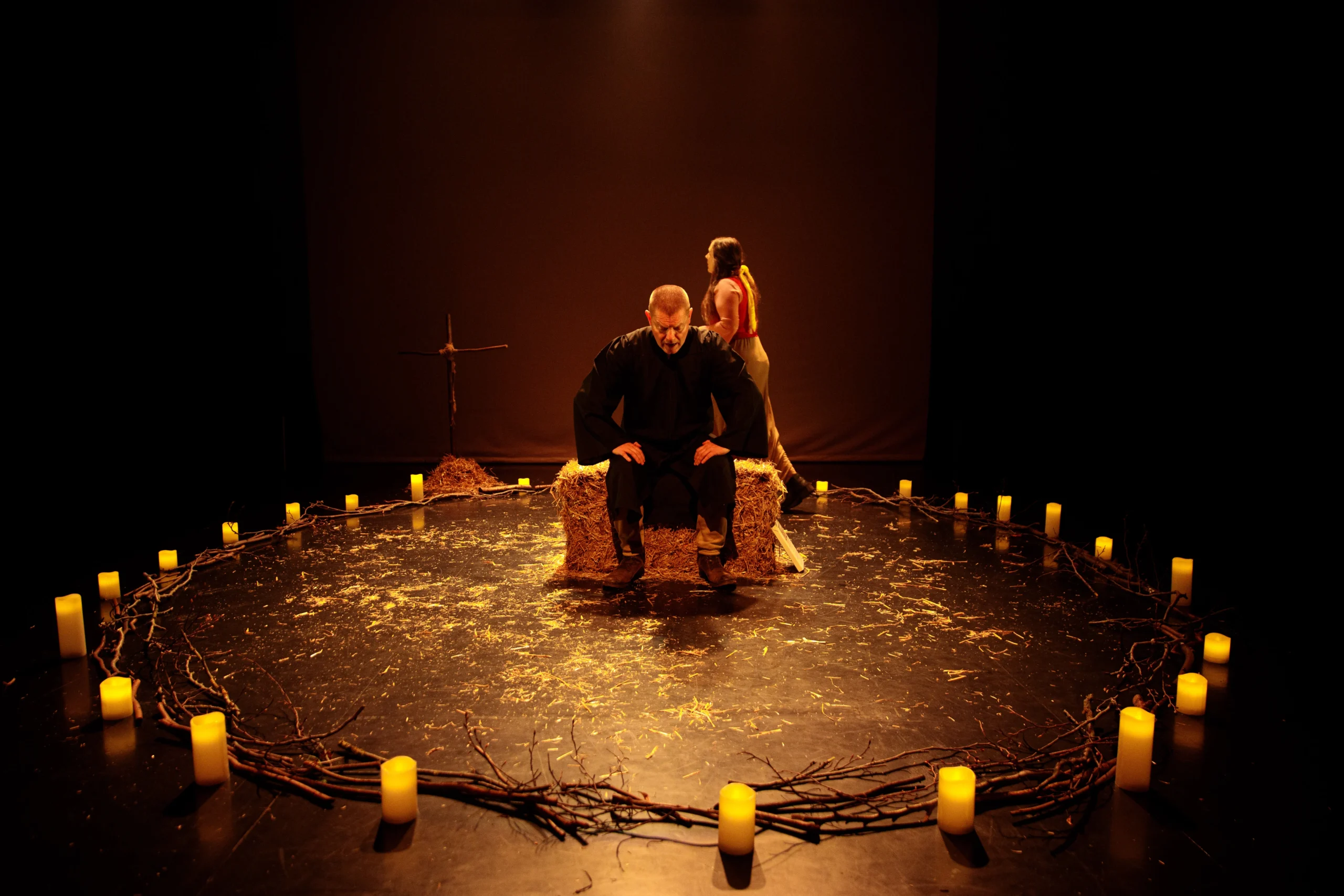
In this latest edition of Buried Treasure, John Maguire of ArtsGroupie CIC explores the defiant story of Helena Scheuberin, the dark origins of witch-hunting text Malleus Maleficarum, and the enduring relevance of The Hammer and Helena as the production returns to Shakespeare North Playhouse.
When David Griffiths, the playwright, asked me to play the character of Heinrich Kramer in his play The Hammer and Helena, we had already collaborated successfully on productions like 1984, The Signalman, and Ghost Stories for Christmas, so I was immediately interested in the project.
As a pagan, I am drawn to the legacy of witches and the historic persecution of intelligent women in a patriarchal society. When I heard the story of Helena Scheuberin, I was hooked: a rebellious woman who stood her ground and became the inspiration behind one of the most hateful books ever written: the Malleus Maleficarum.
The play, The Hammer and Helena, explores the origins of this vile book.
Innsbruck, 1485.
A witch trial sees Helena become the obsession of a 55-year-old religious zealot, Heinrich Kramer, who had secured a Papal Bull (an official decree from the Pope) after being denied inquisitorial authority in Germany, triggering a chain of events that doomed women for centuries. The themes covered in this piece of history echo today, for example, the online hate and misogyny we see rampant across social media.
Helena’s persecution happened after Johannes Gutenberg invented the printing press. When the Malleus Maleficarum by Kramer was published in 1487, this new technology allowed the text to become an immediate bestseller across Europe, spreading witch-hunting doctrine faster than hand-copied manuscripts ever could. A tool with the ability to share knowledge and educate was hijacked to spread hatred and fear.
The book was born out of the obsession he developed with Helena, an influential, well-known member of her community and married to a burgher. I picture her as a Princess Diana figure. Heinrich’s sermons bordered on sadism and the pornographic. Helena refused to stay silent, disrupting one of Kramer’s sermons by publicly proclaiming he was an evil man in league with the devil. When Helena stopped attending his church and encouraged others to boycott him, Kramer confronted her in the street, leading to a public argument.
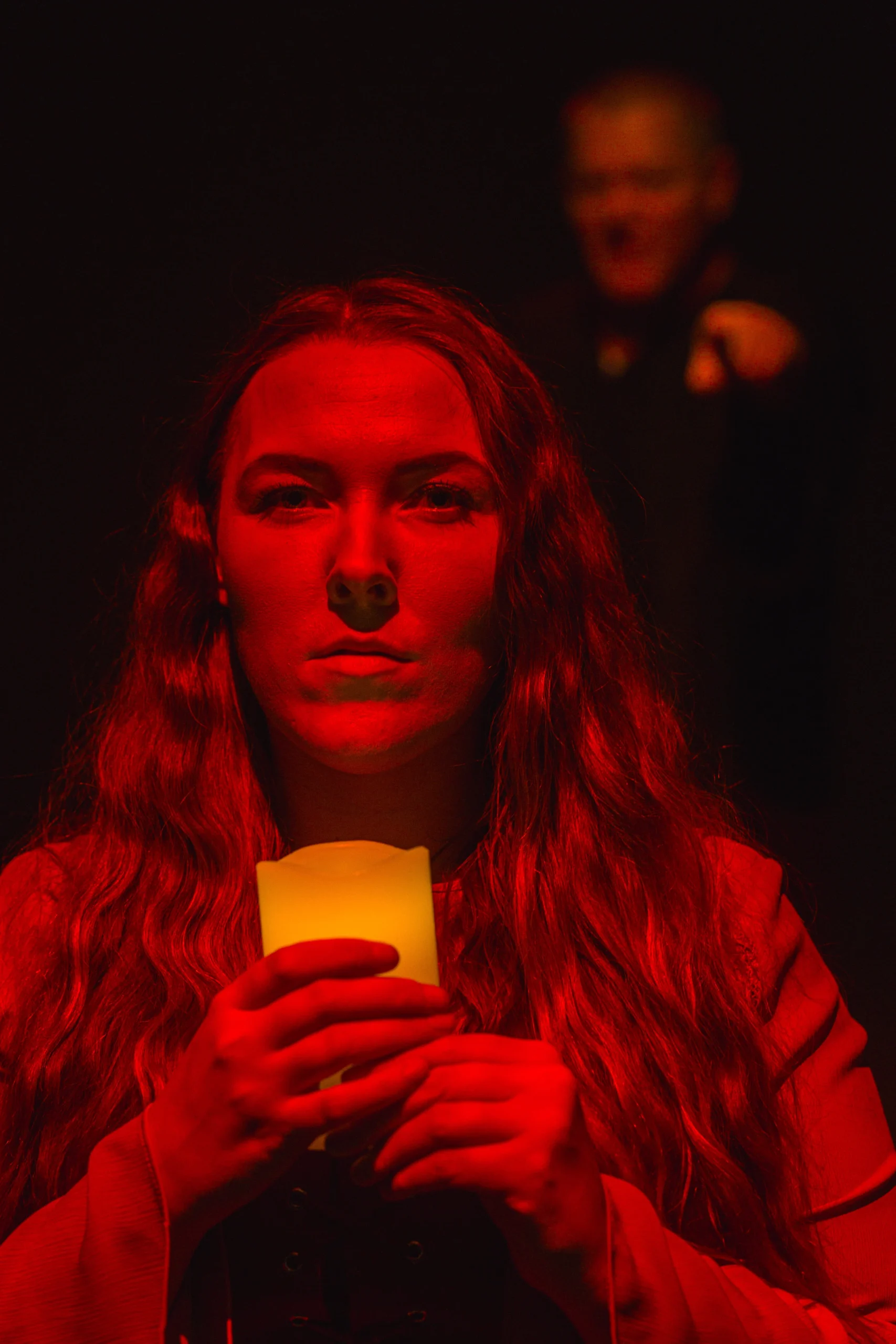
She was reported to have said, ‘Fie on you, you bad monk, may the falling evil take you.’ Heinrich fell over and claimed her words had acted as a maleficent magical curse.
A petty man whose ego was bruised because a woman refused to submit to his authority. Strikingly familiar with today. Outraged by her defiance, Kramer put Helena and thirteen others on trial for witchcraft, even bizarrely accusing her of using magic to murder a local knight whose doctor had simply warned him to stop visiting her. During proceedings, Helena had the backing of her husband, community and the finances to pay for legal counsel. Her defence lawyer raised procedural objections while Kramer fixated heavily on her sexuality. Helena won her case with the presiding Bishop declaring Kramer had ‘presumed much that had not been proved.’ Kramer was disgraced and discredited, expelled from Innsbruck by the Bishop for his sheer insanity and obsession with Helena, and banished from the diocese.
In 1487, humiliated by his defeat, he wrote the Malleus Maleficarum, translated as ‘The Hammer of Witches’, specifically to strip away judicial protections for accused women and ensure secular courts could execute suspects without any interference from the bishops. This single act of male spite went on to become the foundation for witch-hunting doctrine. It influenced King James VI of Scotland (later James I of England), who penned his own text, Dæmonologie, drawing heavily on Kramer’s insane ideas. Decades later, Puritans carried these legal precedents across the Atlantic to Salem, Massachusetts, to persecute and murder innocent women.
In the ArtsGroupie production of The Hammer and Helena, Helena confronts her accuser one final time with her soul on the line.
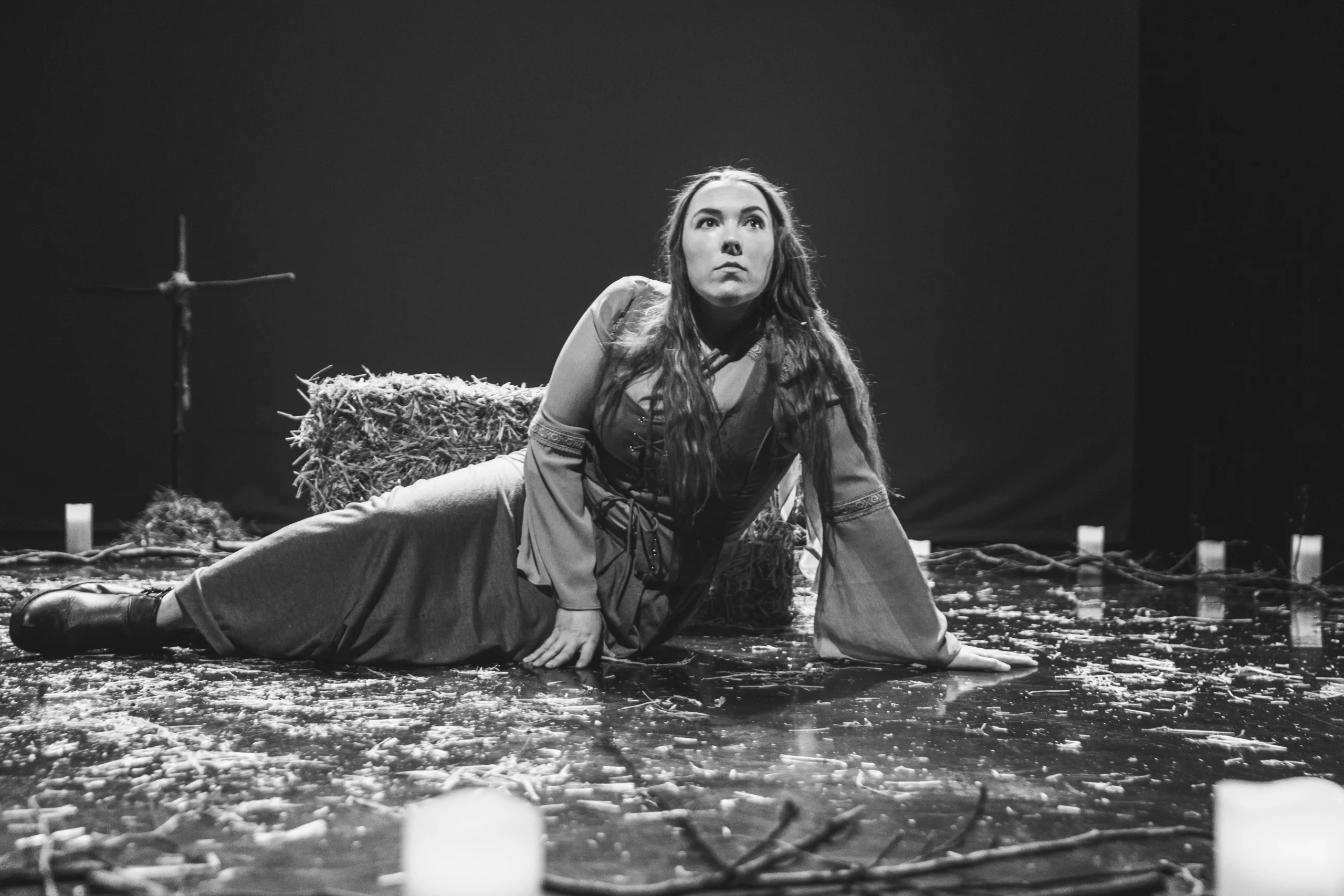
Helena is played by talented local creative, Samantha Alton, who says,
“As an actress, I found it easy to put myself into the role. Women I know, if you’re out there, you know that we come across these creepy men who overstep the mark and push against the boundaries that we set. Some of us are friendly by nature, but if you make eye contact with somebody, that’s it: they think they are taking you home or deserve your phone number. This relationship is something every woman will recognise. It will make the women in the seats squirm, but it will also make some men in the audience see aspects of themselves.”
Writer and Director David Griffiths commented,
“To speak such truth to power with the odds so highly stacked against her was an inspiration. I was struck by how little things had changed in the intervening centuries. There are so many similarities to the present day. I hope we all have the strength of conviction of Helena Scheuberin to see us through our current political landscape.”
At a time when toxic masculinity is increasing, and patriarchal bullying is rife, artists should provoke and encourage discourse. This is the reason the play went to the Edinburgh Fringe last year. A costly exercise, for the Festival has become an option mainly for people from wealthy, middle-class backgrounds who can afford to pay the fees needed to showcase work. As co-director of Artsgroupie, I said from the outset that as a company we would only go if we had a piece that spoke to people and had something to say on the ‘now.’ At a time in our society when people are arrested for protesting, it felt important to make a stand against patriarchal bullying and the pure abhorrence and misinformation we see coming from the army of haters, like Andrew Tate.
Having started at the Unity Theatre and trialled at Shakespeare North Playhouse before our community-funded run at the Edinburgh Fringe, it feels fitting to bring The Hammer and Helena back home one final time to Shakespeare North.
The Hammer and Helena
15th & 16th October
Shakespeare North Playhouse
Tickets