

By John Maguire
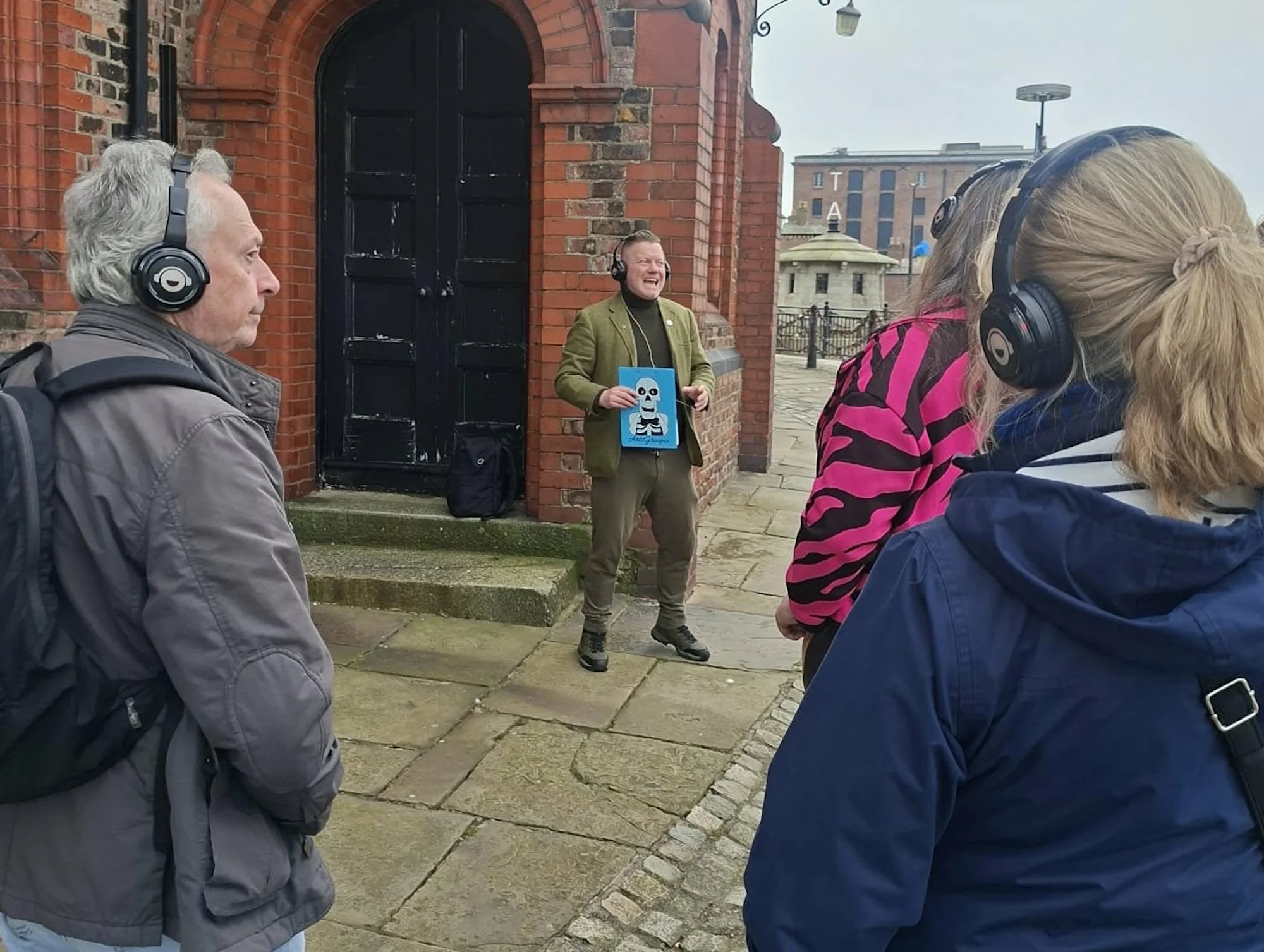
In this instalment of Buried Treasure, ArtsGroupie’s John Maguire reveals how Liverpool’s streets become a living archive through immersive Irish Famine trail walks.
History is often treated as a date in a textbook or an artefact in a museum. But in Liverpool, history is a living, breathing map. It’s visible when you look up above the modern shop fronts, or walk along our Victorian warehouses along the docks of the Mersey, yet it remains hidden in the masses of modern developments that don’t really stand up next to some of our architectural masterpieces. Indeed, the number of memory-stick buildings going up can make part of the city feel like Manchattan – the nickname I heard for Manchester, from a taxi driver. I love the info I get from the cabbies in the city – like the fact that, as so many people get knocked down on Hanover street, it has been nicknamed RANOVER street.
In this edition of Buried Treasure, we will be talking about Artsgroupie’s approach on our heritage walking tours and the work we’ve undertaken on the Liverpool Irish famine trail walks – a two hour tour – practicing, what is known as Living Historiography: uncovering the invisible layers of An Gorta Mór (The Great Hunger) that still define the topography of our city today.
The Tour Toolkit: Two Ways to See the City
To truly understand the Irish experience in Liverpool, the trails use two special lenses that help us see the streets in a whole new way. Don’t worry, there’s no test at the end, just an awareness of the past and a new perspective on the street we live in.
- Living Historiography (History as a continuous process): Rather than viewing 1847 as a closed chapter, we treat the streets and dock walls as a “living document.” We explore how the echoes of An Gorta Mór continue to shape Liverpool’s social and physical landscape today.
- Psychogeography (How a place makes you feel): This is the study of how an environment, the biting wind off the Mersey, the narrowness of a court alley, or the scale of a building, shapes our emotions. We use this to help people walk in the footsteps of the Irish refugees, connecting their feelings in 1847 to ours in 2026.
Through years of meticulous work by the Liverpool Irish Festival’s history research group, we’ve moved beyond the “what” and “when” to the “where” and “how.” These tours transform the city centre into a primary source, layering the sounds and stories of 1847 over the modern bustle of the city using a new trail app and noise-cancelling headsets.
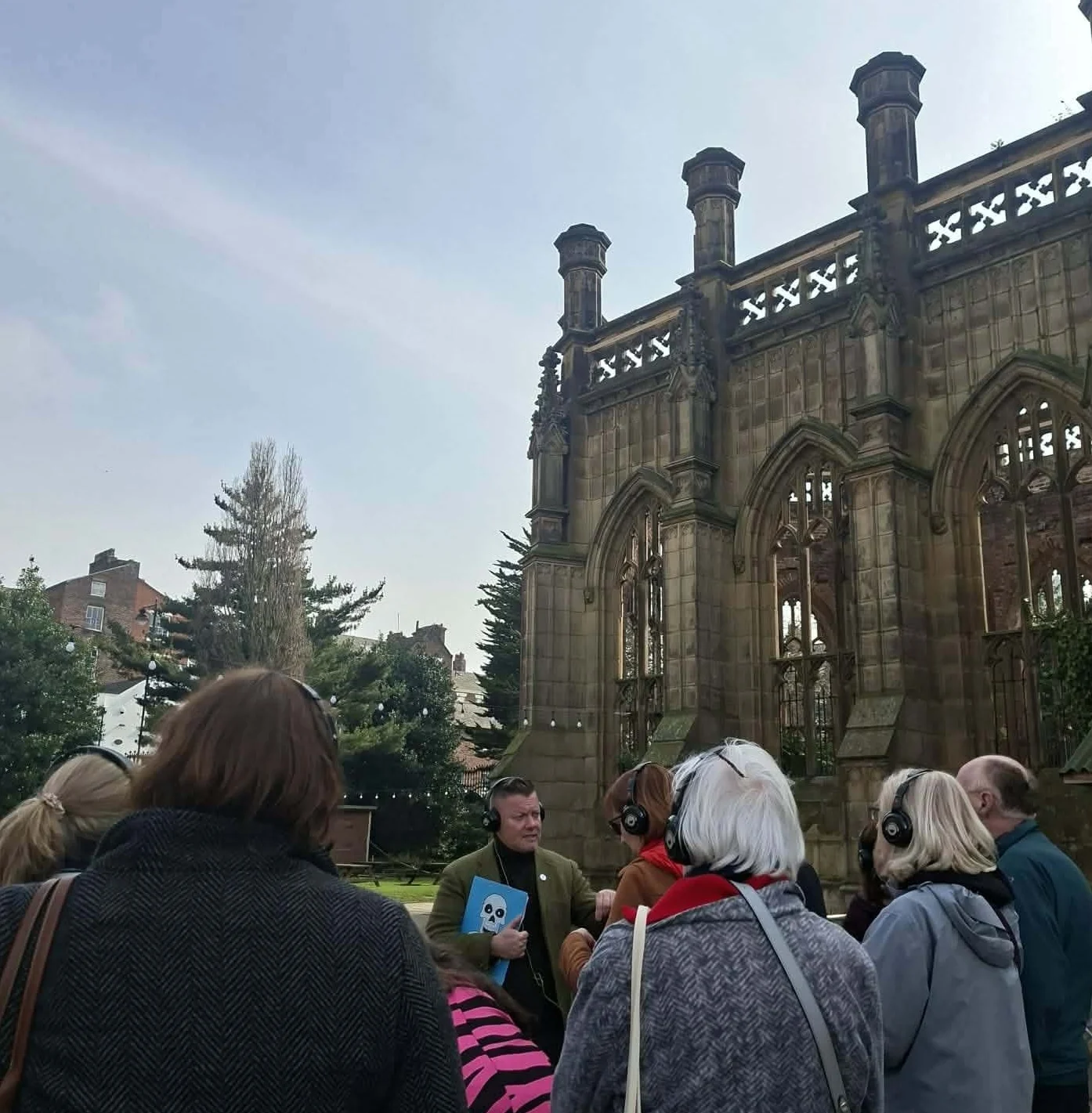
An Gorta Mór Introductory Tour
Duration: 2 Hours | Focus: Liverpool’s historical landscape as a place of sanctuary.
This comprehensive walk traces the path from the harsh exposure of the waterfront toward the sites that offered food and safety.
- Local Philanthropy & Survival: Learn how the “Select Vestry” (local government) and everyday Scousers fought to provide medical care and food when the national government was slow to act.
- Fenwick Street Relief Station: Stand at the very site where, in 1847, thousands of people queued daily for life-saving soup and bread.
- Brownlow Hill Workhouse: Explore the history of what was once the largest workhouse in Britain (now the site of the Metropolitan Cathedral), a final, desperate safety net.
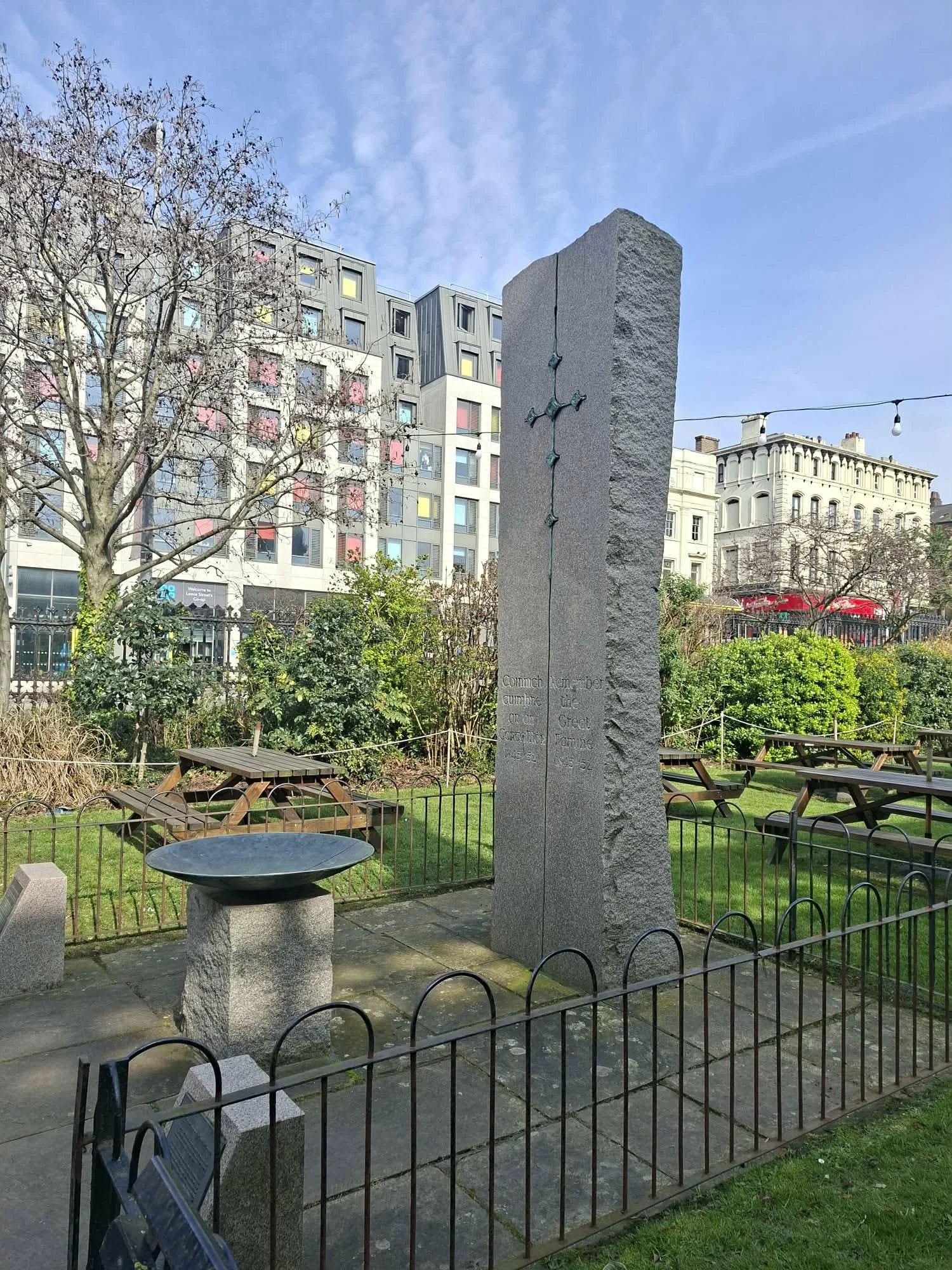
- A National Landmark: The tour culminates at the Liverpool Irish Famine Memorial at St Luke’s Church. Created by renowned sculptor Eamonn O’Doherty, it remains the only major freestanding monument to the Great Hunger in all of England.
This journey highlights the incredible benevolence of the local people and the lasting impact Irish refugees had on the city’s identity.
Once you’ve walked this trail, you’ll never see the dock front or the backstreets of the business district the same way again.
Tour Dates (11am – 1pm): 17th May | 21st June | 19th July
- Meeting Point: The Pilotage Building (near the Museum of Liverpool). Please arrive 15 minutes early.
- Technology: Tours use headsets to enhance the storytelling and eradicate city noise (seagulls, traffic, etc.).
- Booking: Essential by 5 pm on the Friday before each walk. Donations are welcome and support the ongoing research of the Liverpool Irish Festival.
Booking Link: eventbrite.co.uk/liverpool-irish-famine-trail
Liverpool’s weather is a key character in this story. Since you’ll be out for up to two hours and we start at the waterfront, dress for the wind and rain!